admin
admin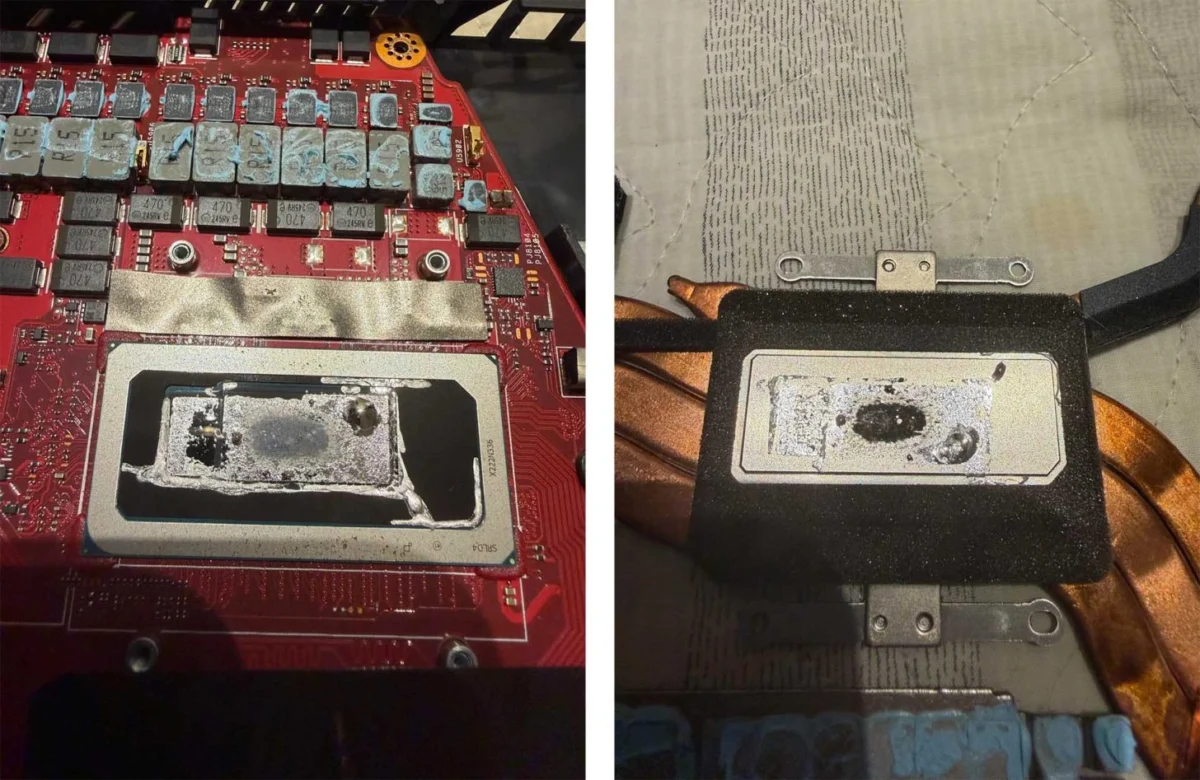
The high-performance gaming laptop market has long been a battleground for thermal efficiency, with manufacturers increasingly turning to exotic cooling solutions to manage the heat generated by modern high-wattage processors and graphics units. Among these solutions, liquid metal (LM) has emerged as a premium standard for top-tier machines, promised as a superior thermal interface material (TIM) capable of significantly outperforming traditional silicon-based greases. However, a recent incident involving an ASUS Zephyrus M16 owner has reignited a long-standing debate regarding the long-term reliability and safety of liquid metal applications in consumer electronics. The report, which surfaced on community forums, details significant internal damage to a premium gaming laptop, suggesting that the very material intended to protect the hardware may have contributed to its premature failure.
The Incident: A Case Study in Thermal Degradation
In February 2023, a user identified as "nicknickmeetnick" on Reddit purchased an ASUS Zephyrus M16, a flagship device known for its thin profile and powerful internal specifications. Despite its primary branding as a gaming machine, the owner reported using the device primarily for programming and engineering tasks—workloads that, while demanding, typically do not subject hardware to the sustained peak thermal stress found in modern AAA gaming.

After several months of use, the laptop began experiencing sudden power-offs, a classic symptom of thermal throttling or emergency hardware shutdown triggered by critical temperature thresholds. Upon disassembling the unit to investigate the cause and potentially refresh the thermal interface, the owner discovered evidence of severe corrosion and chemical degradation. According to the user’s documentation, both the copper heatsink and the silicon crystal of the processor die showed signs of pitting and staining. The owner hypothesized that ASUS had potentially mixed the liquid metal with abrasive chemical stabilizers or that the material had reacted negatively with the surrounding components, leading to a "catastrophic" state for the cooling assembly.
The user’s findings highlighted a troubling reality for owners of high-end portables: even when used within reasonable parameters, the sophisticated cooling mechanisms intended to extend the life of the machine can, under certain conditions, become a liability. Following a thorough cleaning and the application of a high-quality traditional thermal paste, the user reported a dramatic recovery in performance, claiming a three-fold increase in frame rates during gaming tests compared to the throttled state of the corroded system.
The Science and Risks of Liquid Metal
To understand the controversy, it is necessary to examine the properties of liquid metal. Most liquid metal TIMs used in the industry are gallium-based alloys, such as Galinstan (a mixture of gallium, indium, and tin). These alloys remain liquid at room temperature and possess thermal conductivity ratings often exceeding 70 W/mK, whereas high-end traditional thermal pastes typically hover between 5 and 15 W/mK.

However, the advantages of liquid metal come with significant engineering challenges:
- Electrical Conductivity: Unlike traditional ceramic or silicon-based pastes, liquid metal is highly electrically conductive. If even a microscopic droplet escapes the processor die and touches a surface-mounted device (SMD) on the motherboard, it can cause an immediate short circuit, often resulting in permanent hardware failure.
- Chemical Reactivity: Gallium is notoriously reactive with certain metals, most notably aluminum. Through a process known as liquid metal embrittlement, gallium infiltrates the crystal lattice of aluminum, turning a structural metal into a brittle, crumbly substance. While most manufacturers use nickel-plated copper to mitigate this, any imperfection in the plating can lead to the gallium "eating" into the copper heatsink over time.
- Application Difficulty: Applying liquid metal requires a high degree of precision. It does not "spread" like paste; it must be "painted" onto the surface. In mass production, this is often handled by automated dispensers, but even then, the fluidity of the material poses a risk of "pump-out" due to thermal expansion and contraction cycles.
To combat these risks, ASUS and other manufacturers employ specialized rubber gaskets and foam barriers designed to "seal" the liquid metal around the processor die. The recent report suggests that these barriers may not be infallible, or that the specific formulation of the LM used in the 2023 Zephyrus M16 may have unforeseen long-term interactions with the hardware.
Contextualizing ASUS’s Thermal Strategy
ASUS was one of the first major OEMs to commit to liquid metal across its entire ROG (Republic of Gamers) lineup. Starting around 2020, the company marketed "ROG Intelligent Cooling" as a cornerstone of its brand identity. By partnering with Thermal Grizzly, a leader in the enthusiast cooling market, ASUS sought to differentiate its products by offering lower operating temperatures and higher boost clocks than competitors.

This strategy was largely successful in reviewers’ benchmarks, where ASUS machines often led the pack in thermal-to-noise ratios. However, the move was not without its critics in the repair community. Independent repair technicians have frequently noted that liquid metal-equipped laptops are significantly more difficult to service. If a user wishes to upgrade a component that requires removing the heatsink, they face a high risk of spilling the LM, and the cleaning process is labor-intensive, requiring specialized solvents and extreme care.
The reported corrosion in the Zephyrus M16 raises questions about the "batch quality" of the materials used. In large-scale manufacturing, cost-saving measures can sometimes lead to changes in chemical formulations. While there is no official evidence that ASUS purposefully used "abrasive chemicals," the interaction between the gallium alloy and the silicon die or the nickel plating on the heatsink can sometimes result in a "dry-out" effect, where the liquid components are absorbed, leaving behind a crusty, less conductive residue that can be mistaken for corrosion.
The Rise of Phase Change Materials as an Alternative
The incident has shifted the spotlight toward Honeywell PTM7950, a Phase Change Material (PCM) that is rapidly becoming the preferred choice for both enthusiasts and some competing OEMs. PTM7950 is a solid pad at room temperature, making it as safe and easy to apply as a standard thermal pad. However, once the processor reaches approximately 45°C, the material melts into a liquid state, filling the microscopic imperfections between the die and the heatsink with efficiency that rivals liquid metal.

Industry analysts suggest that PTM7950 offers several advantages over liquid metal for mass-produced consumer electronics:
- Longevity: PCMs are highly resistant to "pump-out" and do not dry out over years of use.
- Safety: Being non-conductive and chemically stable, it poses zero risk to the motherboard or the structural integrity of the heatsink.
- Performance: While its raw thermal conductivity is lower than liquid metal on paper, its ability to maintain a very thin bond line (BLT) allows it to perform within a few degrees of LM in real-world scenarios.
Lenovo has already begun utilizing similar phase-change materials in its Legion series of gaming laptops, branded as "Legion Coldfront." The success of these machines has put pressure on ASUS to reconsider its reliance on liquid metal, especially as reports of "dry-out" or "shifting" LM applications continue to surface on enthusiast forums.
Chronology of the Zephyrus M16 Thermal Debate
The discussion surrounding the Zephyrus M16’s cooling is part of a broader timeline of thermal management evolution:

- 2020: ASUS announces the standard use of liquid metal on the CPU for all ROG laptops with 10th Gen Intel Core processors.
- 2021-2022: The Zephyrus M16 gains popularity. Initial reviews praise its thermals, though some users report "coil whine" and high idle temperatures.
- Early 2023: The updated Zephyrus M16 (GU604) is released, featuring higher TGP (Total Graphics Power) limits, necessitating even more aggressive cooling.
- Late 2023 – Early 2024: An uptick in user reports regarding "thermal spikes" on specific CPU cores suggests uneven liquid metal distribution or "migration" within the gasket.
- August 2024: Detailed reports of corrosion and pitting surface, leading to a community-wide recommendation for "re-pasting" with PTM7950.
Industry Implications and Recommendations
As of this writing, ASUS has not issued a formal recall or a public statement regarding the specific claims of abrasive chemical mixtures in their liquid metal. Historically, manufacturers treat such incidents as isolated cases or attribute them to environmental factors such as high humidity or user tampering.
However, the implications for the industry are clear. As laptop components become more power-hungry, the margin for error in thermal design shrinks. If a premium cooling solution like liquid metal requires a level of manufacturing precision that cannot be consistently maintained at scale, it may be phased out in favor of more robust, "idiot-proof" materials like PTM7950.
For current owners of the Zephyrus M16 or other liquid metal-equipped laptops, the consensus among the hardware community is one of proactive monitoring. Users are encouraged to:

- Monitor Core Deltas: If one CPU core is significantly hotter (15-20°C) than others, it may indicate that the liquid metal has shifted or "pitted" the surface.
- Evaluate Performance: Sudden drops in clock speeds or FPS during sustained workloads are primary indicators of thermal interface failure.
- Consider Professional Maintenance: For those out of warranty, replacing the factory liquid metal with a high-performance phase-change material like PTM7950 and using high-viscosity thermal putty (such as UPSIREN UTP-X Ultra) for VRMs and VRAM can provide a "set-and-forget" solution that eliminates the risks of liquid metal.
The tech industry remains at a crossroads between peak theoretical performance and long-term consumer reliability. While liquid metal remains the king of thermal conductivity, the growing body of evidence regarding its volatility in mobile form factors suggests that its reign may be challenged by safer, more durable innovations in material science. For now, the case of the corroded Zephyrus M16 serves as a cautionary tale for the "bleeding edge" of laptop engineering.