Sonny Valindra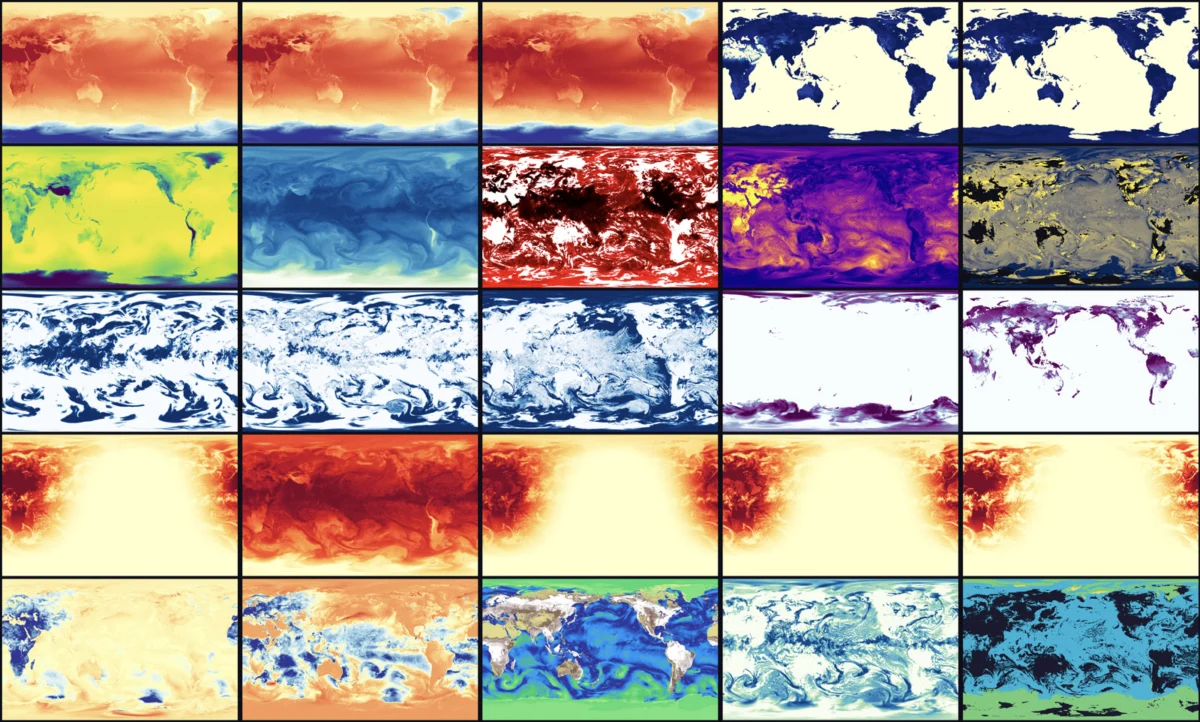
The transformative power of deep learning, particularly the advancements seen in Large Language Models (LLMs), is not confined to the realm of text generation and analysis. These sophisticated artificial intelligence techniques are now fundamentally reshaping scientific disciplines, and meteorology stands at the forefront of this paradigm shift. Traditionally, the intricate task of weather simulation required the immense computational power of supercomputers. However, recent breakthroughs in AI have enabled weather models to run with unprecedented efficiency, some now capable of operating on standard laptop hardware. This democratization of weather forecasting technology promises to unlock new levels of accuracy and accessibility, but the true challenge lies not just in generating forecasts, but in making them actionable for individuals and organizations worldwide.
Addressing this critical need, WindBorne Systems, a pioneering startup, has announced a significant $37 million Series B funding round. The company, known for its innovative approach to weather data collection using the world’s longest-flying weather balloons, plans to leverage this capital infusion to tackle the complex problem of translating advanced weather predictions into practical applications. The funding round was co-led by prominent venture capital firms Khosla Ventures and Galvanize, with additional strategic investments from Translink Capital, Lux Capital, and existing investors. This substantial investment values WindBorne Systems at $250 million post-funding, underscoring strong market confidence in its vision and technology.
Founded in 2019, WindBorne Systems embarked on a mission to revolutionize weather data acquisition. Their initial strategy centered on developing and deploying a novel network of low-cost weather sensors mounted on high-endurance balloons. This approach was designed to gather a unique and comprehensive dataset that could overcome the limitations of existing observation methods. The rapid evolution of AI weather forecasting models over the past four years has been a critical enabler for WindBorne. Previously, the cost and complexity of supercomputing infrastructure made it nearly impossible for private companies to develop sophisticated, in-house weather simulation capabilities. WindBorne’s foresight in building a proprietary data collection system, coupled with the advent of accessible AI forecasting tools, has allowed them to move beyond simply gathering data to actively generating their own advanced predictions.
A Global Network for Unprecedented Data
WindBorne’s operational footprint is already impressive and continues to expand. The company currently operates 20 launch sites strategically positioned across the globe, maintaining a constant fleet of approximately 600 balloons in the atmosphere at any given time. This extensive network allows for the collection of vital weather data from regions that are historically difficult to monitor, including the treacherous and dynamic environment within the eye of a typhoon. This capability was highlighted in a recent deployment where their balloons provided critical data from within one of the most intense tropical cyclones, offering unprecedented insights into storm dynamics.
Beyond atmospheric data, WindBorne is innovating its sensor deployment methods. The company is beginning to deploy advanced aerial sensor packages designed to descend into the ocean, functioning as a network of floating buoys. These instruments are engineered to continue collecting crucial measurements even after impacting the water’s surface, providing valuable oceanic and atmospheric interaction data that is vital for improving weather and climate models.
John Dean, CEO of WindBorne Systems, describes this intricate network as a "planetary nervous system." This proprietary dataset, meticulously gathered and curated, forms a significant competitive advantage for WindBorne’s forecasting model. This unique data is then integrated with publicly available datasets from government weather agencies worldwide, creating a comprehensive and highly accurate input for their AI models.
The Power of Balloon Data in Forecasting
"We demonstrated that when you add balloons to the forecast, you get more accurate forecasts, and the value per data point is much stronger than satellites," stated Dean in an interview with TechCrunch. He further elaborated on the commercial viability of their approach, noting, "We’ve also been growing revenue while we’re doing that, so that de-risked the demand signal to VCs." This dual focus on technological innovation and demonstrable revenue generation has clearly resonated with investors.
The effectiveness of WindBorne’s approach has already been validated by significant governmental partnerships. The U.S. National Weather Service is a key customer, purchasing the company’s data to augment their own forecasting efforts. Additionally, the U.S. Air Force and U.S. Navy are engaged with WindBorne through research partnerships. These collaborations are instrumental in developing advanced forecasting models tailored for operational environments, such as those required for naval vessels that may experience intermittent connectivity to global communication networks. The ability to provide reliable, on-board weather intelligence is critical for mission planning and operational safety in such scenarios.
Expanding Horizons: From Government to Commercial Applications
With this substantial Series B funding, WindBorne is poised to significantly expand its market reach, with a strategic focus on the commercial sector. Currently, their commercial engagement is primarily with investment funds that utilize sophisticated weather data for predictive analysis of commodity prices and other business outcomes. The new capital will be allocated towards enhancing computational resources, transitioning the balloon network’s satellite communications to a more robust and potentially cost-effective mesh radio network, and, crucially, building out a dedicated go-to-market team. This expansion is aimed at penetrating a broader range of private sector industries.
The challenge of scaling sensing businesses to the private sector has been a well-documented hurdle in recent years. Numerous startups in areas like earth-observing satellite networks have struggled to translate their data into widespread commercial adoption. A primary reason for this difficulty is the inherent complexity and specialized expertise required to extract actionable value from such datasets. Consequently, many of these ventures have found it more feasible to engage with government agencies, which possess established workflows and a historical precedent for utilizing advanced observational data.
The existing landscape of private weather forecasting companies largely operates by repackaging or refining governmental forecasts for media outlets. They also cater to niche requirements, such as providing specialized forecasts for aircraft de-icing operations or optimizing ship routing. A segment of speculators also utilizes weather data for financial market predictions. However, the current funding round and the broader AI advancements suggest a potential shift in this market dynamic. The increasing efficiency of AI-driven data analysis is making it more accessible for businesses to derive tangible benefits from granular weather intelligence.
Saloni Multani, a partner at Galvanize and co-lead of the funding round, articulated this sentiment: "The private weather market has been limited because integrating weather forecasts into broader business decision-making has traditionally been expensive and difficult. We think AI changes that equation. Better forecasts make the effort worthwhile, and AI makes it much easier to connect those forecasts to the decisions businesses are trying to make." This perspective highlights the dual impact of AI: not only does it enable more accurate and accessible forecasts, but it also streamlines the integration of this information into core business strategies.
Broader Implications for the Future of Weather Intelligence
The implications of WindBorne’s advancements extend far beyond the immediate scope of their business. The ability to deploy sophisticated weather models on less powerful hardware democratizes access to high-fidelity meteorological data. This could empower a wider array of industries, from agriculture and renewable energy to retail and logistics, to make more informed, weather-resilient decisions. For instance, farmers could optimize planting and harvesting schedules with greater precision, renewable energy operators could better predict solar and wind output, and supply chain managers could proactively mitigate disruptions caused by extreme weather events.
The trend towards leveraging AI for scientific discovery and operational efficiency is accelerating. As exemplified by WindBorne, the convergence of novel data collection methods and cutting-edge AI algorithms is unlocking new frontiers in fields that were once constrained by technological and financial limitations. The success of WindBorne Systems in securing significant funding signals a growing investor appetite for companies that are not only innovating on the technological front but also demonstrating a clear path to market impact and revenue generation.
The ongoing evolution of weather forecasting, driven by companies like WindBorne and the underlying advancements in AI, suggests a future where weather intelligence is not just a forecast, but an integral component of strategic planning across virtually every sector of the global economy. As AI continues to mature, its role in translating complex scientific data into actionable insights will only become more pronounced, promising a more resilient and adaptable world in the face of an increasingly dynamic climate.