Sonny Valindra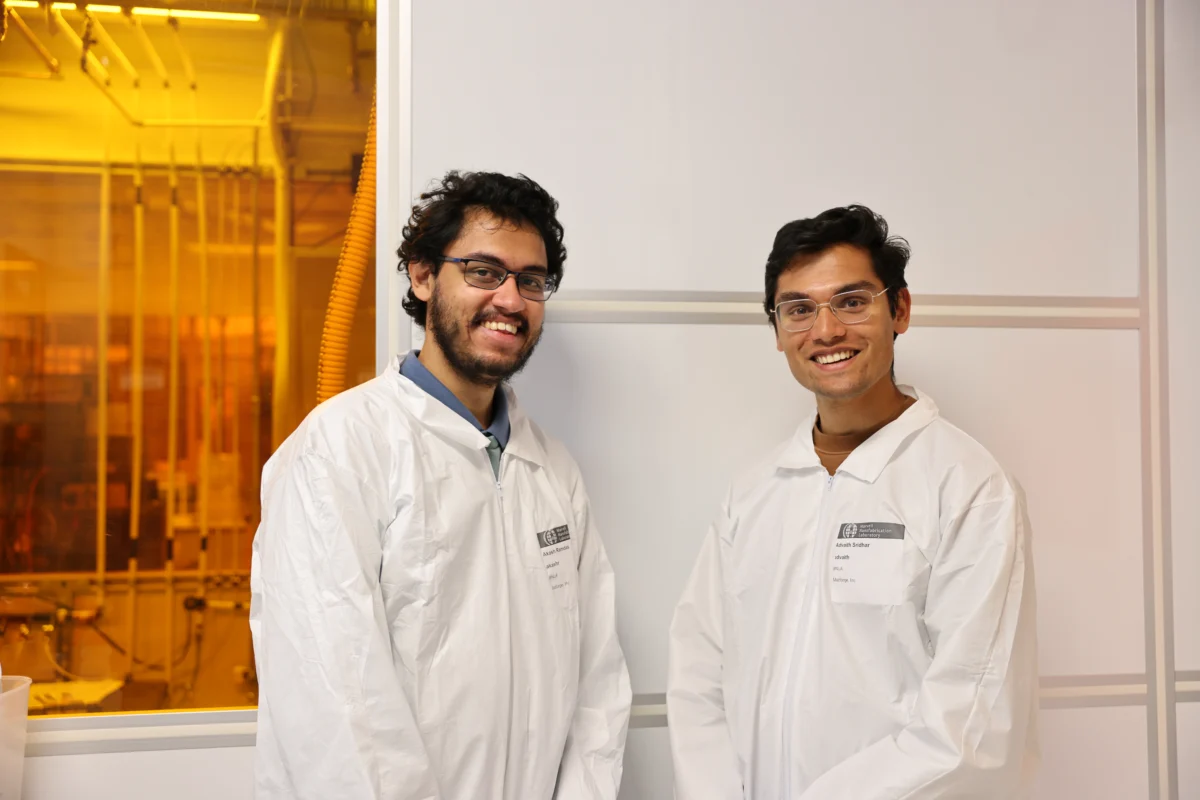
The insatiable demand for artificial intelligence has created a formidable challenge: the immense heat generated by AI-powered chips. This thermal burden is a significant contributor to the escalating electricity consumption and cooling requirements of data centers worldwide. In a compelling display of innovation, entrepreneurs are now leveraging the very technology driving this problem to devise its solution. Discovered Materials, a nascent startup, has emerged with a bold plan to harness swarms of AI agents to accelerate the discovery of novel materials capable of building more efficient and cooler integrated circuits.
The company recently announced the successful closure of a $9 million seed funding round, spearheaded by Lightspeed India Partners. This significant investment follows Discovered Materials’ successful incubation at Y Combinator, with additional backing from Peak XV Partners and prominent angel investors including Paul Graham, Gokul Rajaram, and Thariq Shihipar. This infusion of capital signals strong market confidence in the startup’s ambitious approach to a critical technological bottleneck.
The Genesis of Discovered Materials: A Fusion of Expertise
The foundation of Discovered Materials lies in the synergistic partnership between its co-founders, Advaith Sridhar and Akash Ramdas. Ramdas brings to the table a profound academic background, having earned a doctorate in materials science from Stanford University, where his research delved into the fundamental properties of matter at the atomic level. Complementing this deep scientific expertise is Sridhar’s practical experience in the realm of AI agents, honed through his work at companies like Persona AI and Luma Labs. This dual specialization forms the bedrock of the company’s innovative methodology.
Their collaborative effort has culminated in the development of a sophisticated software pipeline. This system intricately integrates advanced AI models, notably those from Anthropic, within a custom-designed harness. The AI agents are tasked with generating a multitude of potential material candidates. Subsequently, these promising leads are subjected to rigorous scrutiny through simulations powered by foundational physics models that the Discovered Materials team has meticulously trained. This two-pronged approach ensures that generated material hypotheses are not only novel but also grounded in physical principles, significantly increasing the likelihood of discovering practical solutions.
Accelerating Discovery: From PhD Research to AI-Powered Scale
The transformative power of their AI-driven approach is starkly illustrated by the dramatic acceleration in the discovery process. Advaith Sridhar highlighted this leap in efficiency in a recent interview, stating, "[Ramdas] was doing maybe 20 guesses a day during his PhD. We’re able to do thousands of guesses a day now by having these agents run 24/7 on the cloud, exploring research directions that he gives them." This exponential increase in computational exploration, operating around the clock, represents a paradigm shift from the painstaking, often manual, experimental cycles characteristic of traditional materials science research.
To underscore their progress and provide a benchmark for the field, Discovered Materials officially released examples of hundreds of newly identified materials today. Alongside these discoveries, they unveiled their "Material Discovery Bench," a platform designed to meticulously track and evaluate the performance of frontier AI models in tackling complex material science challenges. This initiative aims to foster transparency and collaboration within the burgeoning field of AI-driven materials discovery.
Navigating the Competitive Landscape and the Core Challenge
Discovered Materials is not operating in a vacuum. The pursuit of AI-driven materials discovery has attracted significant attention, with established players and emerging startups like MatNex, SandboxAQ, and CuspAI also launching similar ventures. However, Discovered Materials is strategically positioning itself by focusing laser-like on the specific thermal challenges inherent in semiconductor materials. This specialization aims to differentiate them in a crowded field and address a pressing, high-impact problem. The company claims to have already identified several materials that possess properties comparable to those currently utilized by major chip manufacturers, though specific details remain proprietary for competitive reasons.
The path to commercially viable materials is fraught with intricate engineering trade-offs. A material that exhibits superior thermal conductivity or heat dissipation properties might prove prohibitively difficult to manufacture into functional integrated circuits. Alternatively, its desirable thermal characteristics could come at the expense of crucial electrical performance. This complex interplay of properties underscores the multifaceted nature of material innovation.
Hemant Mohapatra, the Lightspeed partner who led the seed funding round, eloquently described this challenge: "It’s a bit of playing whack-a-mole with atomic structures. A material is only useful in the real world if all of them converge at once, which is what makes this a really interesting search problem." This analogy captures the delicate balance required to identify materials that not only possess the desired fundamental properties but also meet the stringent manufacturing and performance criteria of the semiconductor industry.
The Future of Materials Science: Prediction and Validation
Mohapatra anticipates that the ability to predict novel substances will become increasingly commoditized as AI models continue to advance. He believes that the true differentiator for companies like Discovered Materials will lie in their ability to go beyond mere prediction. Ramdas’s extensive background in materials science, coupled with the company’s capacity to operate a dedicated laboratory for rapid experimental validation, sets them apart. This integrated approach, combining AI-driven hypothesis generation with swift empirical testing, is seen as a critical advantage in navigating the "engineering trade-space."
Discovered Materials’ business model is centered on intellectual property. Upon identifying valuable candidate materials, the company intends to pursue patents for their application in specific technologies, such as GPUs, or for the manufacturing processes that utilize these novel substances. These patents would then be licensed to chipmakers, creating a revenue stream directly tied to their research breakthroughs. Sridhar expressed optimism that they will have patent-worthy materials within the next year, indicating an aggressive timeline for commercialization.
The Long Road to Commercial Impact: Lessons from AI’s Promise
Despite the burgeoning excitement surrounding AI’s potential in materials discovery, tangible commercial impact remains a relatively nascent phenomenon. The closest parallel in a related field is Insilico Medicine’s Renterosib, a drug discovered using generative AI that has progressed to Phase II clinical trials. In the materials sector, while promising candidates have emerged from entities like MatNex with their rare-earth-free permanent magnets and from Panasonic and Citrine Informatics with new semiconductor materials, widespread commercial deployment at scale has yet to materialize.
This reality informs the current landscape of AI-driven materials science. Mohapatra posits that the bottleneck is no longer the generation of potential material candidates, but rather the meticulous process of "filtering them correctly and synthesizing them." The ability to accurately predict which theoretical materials will translate into practical, manufacturable, and high-performing components is the key to unlocking widespread adoption.
Sridhar acknowledges this inherent complexity, recognizing that while Discovered Materials’ unique data and expertise provide a competitive edge against larger, resource-rich laboratories, the ultimate validation requires hands-on, physical work. "A lot of this will involve actually going into wet labs and like making things as well. And this is the process that cannot be sped up," he conceded. This candid assessment underscores the enduring importance of experimental science in complementing the rapid advancements of artificial intelligence. The journey from theoretical discovery to tangible product remains a rigorous and time-consuming endeavor, demanding a harmonious integration of computational power and fundamental scientific exploration. The success of Discovered Materials will hinge on their ability to master this intricate dance between the digital and the physical realms.