Clarissa Hana
A Kosovar national, Ardit Kutleshi, has formally admitted to operating Rydox, a sprawling and sophisticated illegal online marketplace that served as a central hub for the distribution of stolen personal information, compromised login credentials, sensitive credit card details, and a wide array of cybercriminal tools. This admission of guilt marks a significant victory for international law enforcement agencies in their ongoing battle against organized cybercrime. Kutleshi’s plea comes after a coordinated global effort that dismantled the marketplace and led to his arrest and subsequent extradition to the United States.
The Genesis and Scope of Rydox
The Rydox marketplace, operating under the domain Rydox[.]cc, emerged as a formidable entity in the dark web ecosystem, facilitating illicit transactions involving some of the most valuable commodities for cybercriminals: compromised data and the means to perpetrate further attacks. Between February 2016 and its eventual shutdown in December 2024, Rydox played a pivotal role in the illicit digital economy. Court documents reveal the staggering scale of its operations: over 7,600 documented sales of login credentials, credit card information, and stolen personal data, including Social Security numbers, names, and addresses belonging to thousands of United States citizens.
Beyond personal data, Rydox was a veritable bazaar for cybercriminals, offering an extensive catalog of over 321,000 "cybercrime products." This diverse inventory catered to more than 18,000 registered users, providing them with everything from malicious software and hacking tools to specialized devices and instructional materials designed to facilitate a broad spectrum of cyber illicit activities. The marketplace’s success was built on a tiered system that incentivized both buyers and sellers, fostering a robust criminal enterprise.
A Global Network Unraveled: The Arrests and Seizure
The takedown of Rydox was not an isolated incident but the culmination of a meticulously planned and executed international law enforcement operation. In December 2024, a significant breakthrough occurred when Kosovo law enforcement, in collaboration with Albania’s Special Anti-Corruption Body (SPAK), apprehended 28-year-old Ardit Kutleshi. At the time of his arrest, Kutleshi was identified as a key administrator of the Rydox platform. Alongside him, two other individuals identified as Rydox administrators, Jetmir Kutleshi and Shpend Sokoli, were also taken into custody.
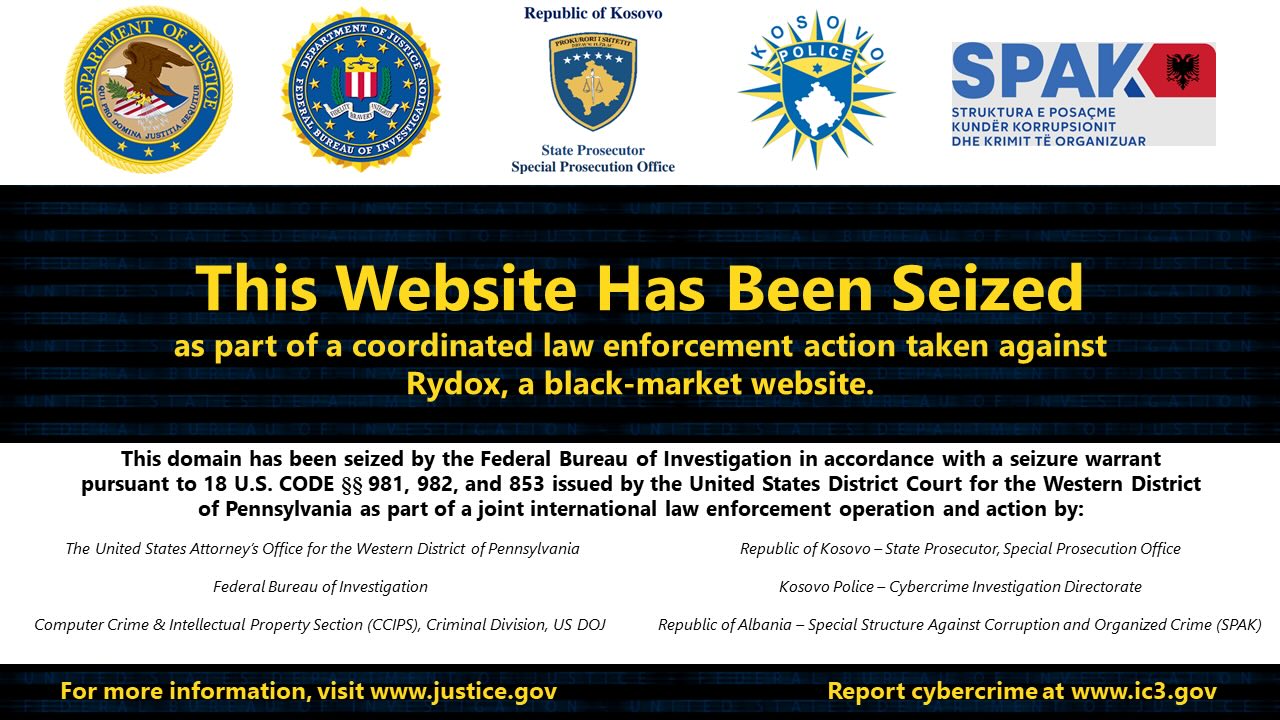
This coordinated action had immediate and far-reaching consequences. The operation not only led to the arrests but also resulted in the complete shutdown of the Rydox marketplace. Furthermore, law enforcement successfully seized the Rydox[.]cc domain, effectively severing its online presence. The physical infrastructure supporting the marketplace was also targeted, with servers located in Kuala Lumpur, Malaysia, being seized with the crucial assistance of the Royal Malaysian Police. This multi-jurisdictional effort underscored the global nature of cybercrime and the necessity of international cooperation to combat it effectively.

From Kosovo to the U.S. Courts: The Extradition and Charges
Following his arrest in Kosovo, Ardit Kutleshi was extradited to the United States in 2025. Upon his arrival, he faced a formidable array of charges directly related to his role as an administrator and operator of the Rydox marketplace. These charges included conspiracy to commit identity theft, aggravated identity theft, two counts of identity theft, access device fraud, and money laundering. The indictment detailed the intricate web of illicit activities that Kutleshi allegedly orchestrated and profited from through his leadership of Rydox.
The charges reflect the severity of the crimes committed and the far-reaching impact of Rydox’s operations. Identity theft and access device fraud directly harm individuals and financial institutions, while money laundering charges address the sophisticated financial mechanisms used to obscure the origins of illicit proceeds. The conspiracy charges highlight the organized nature of the criminal enterprise, emphasizing that Kutleshi was not acting alone but was at the head of a network of individuals engaged in illegal activities.
Official Statements and the FBI’s Perspective
The successful dismantling of Rydox and the subsequent guilty plea by its alleged architect have drawn significant attention from law enforcement agencies. Brett Leatherman, Assistant Director of the FBI’s Cyber Division, provided a clear and concise statement emphasizing the gravity of Rydox’s operations and the success of the joint efforts. "Rydox put cybercriminal tools and sensitive data up for sale, including the stolen identities and logins of thousands of people," Leatherman stated. "The FBI and its foreign partners shut the marketplace down, and now the man who created it and ran it pleaded guilty."
This statement underscores the FBI’s commitment to pursuing cybercriminals and highlights the effectiveness of international collaboration. The FBI’s Cyber Division plays a critical role in investigating and prosecuting complex cybercrimes, and the Rydox case is a testament to their dedication and the capabilities of their global partnerships. The plea agreement signifies a significant step towards accountability for those who facilitate large-scale cybercriminal activities.
The Mechanics of Illicit Commerce: How Rydox Operated
Rydox was not merely a passive forum for illegal trade; it was a sophisticated platform designed to facilitate and profit from criminal transactions. Users were required to deposit cryptocurrency into their Rydox accounts before they could make any purchases. The marketplace supported a variety of popular cryptocurrencies for these transactions, including Bitcoin (BTC), Monero, Ripple, Ethereum, Litecoin, Perfect Money, Tron, and Verge. These deposited funds were channeled into Rydox-controlled cryptocurrency wallets, serving as the financial engine for acquiring illicit goods and services.
The economic model of Rydox was designed to maximize profit for the platform and its administrators. Registered users who wished to become authorized sellers on the marketplace were required to pay a one-time fee, which fluctuated between $200 and $500. This fee granted them access to the platform’s selling infrastructure. Upon a successful sale, the seller would receive 60% of the proceeds, while Rydox, and by extension its administrators like Kutleshi, retained the remaining 40%. This revenue-sharing model created a strong incentive for both sellers to actively list their stolen data and tools, and for the platform to attract and retain a large user base, thereby generating substantial revenue from commissions.
Legal Ramifications and Sentencing
Ardit Kutleshi’s plea of guilty to aggravated identity theft and money laundering conspiracy carries substantial legal consequences. He is scheduled to be sentenced on February 9, 2027. The potential penalties he faces are severe, reflecting the seriousness of the charges. For the money laundering conspiracy charge, Kutleshi faces a maximum penalty of 20 years in prison. The aggravated identity theft count carries a mandatory minimum sentence of two years in prison, underscoring the law’s intent to deter such offenses.
The sentencing will be a critical juncture in the case, signaling the ultimate consequence for his alleged role in operating one of the largest illicit marketplaces. The prosecution will likely present evidence detailing the full extent of the harm caused by Rydox’s operations, while the defense may argue for leniency. The judge’s decision will take into account various factors, including the duration of the criminal enterprise, the volume of illicit transactions, and the impact on victims.
A Broader Trend: Increased Enforcement Against Dark Web Markets
The prosecution of Ardit Kutleshi and the takedown of Rydox are not isolated events but part of a broader and intensifying global effort by law enforcement to disrupt and dismantle illicit online marketplaces. In recent years, there has been a marked increase in successful operations targeting dark web vendors and administrators. This trend suggests a growing sophistication in law enforcement’s capabilities to track, investigate, and prosecute individuals involved in these clandestine digital economies.
For instance, earlier in 2027, the owner of the Incognito dark web drugs market was sentenced to 30 years in prison in February. This case, while focused on narcotics, demonstrates the severe penalties meted out to operators of large-scale dark web enterprises. Furthermore, a California man who sold fentanyl and methamphetamine on the Nemesis dark web marketplace was sentenced to more than 26 years in federal prison. These high-profile cases, alongside the Rydox prosecution, send a clear message to those operating in the shadows of the internet: the risk of detection and severe legal consequences is growing.
The implications of these enforcement actions extend beyond the individuals apprehended. The disruption of major marketplaces like Rydox can have a ripple effect throughout the cybercriminal ecosystem. It can lead to a temporary scarcity of certain illicit goods and services, potentially forcing cybercriminals to adapt their methods or seek out less established platforms. However, it also highlights the constant cat-and-mouse game between law enforcement and criminals, with new markets and methods inevitably emerging. The continued success of these operations relies on sustained international cooperation, technological innovation in digital forensics, and robust legislative frameworks to combat evolving cyber threats. The plea of Ardit Kutleshi represents a significant victory, but the fight against organized cybercrime remains a complex and ongoing challenge.