Metty Iskandar
Generative artificial intelligence is rapidly transforming the digital landscape, permeating services, powering application development, and enhancing existing functionalities. As the volume of AI-driven products escalates, discerning which innovations are truly impactful and worth exploring becomes a significant challenge. This ongoing series aims to illuminate the most compelling and novel AI applications and services available, providing readers with a curated guide to the cutting edge of this transformative technology.
The term "vibecoding" has emerged within developer circles, signifying the ability to create functional and aesthetically pleasing digital experiences with relative ease, often facilitated by AI-assisted tools. This democratizes app and website creation, lowering the barrier to entry for individuals who may not possess traditional programming expertise. The following exploration delves into a selection of these "vibecoded" online projects, highlighting those that stand out for their ingenuity, user engagement, and novel applications of AI.
The Satisfying Simplicity of Digital Wood Splitting
One particularly captivating project that has garnered attention is a surprisingly engaging digital firewood splitter. Created by New York-based digital artist Gavin Shapiro, the "Firewood Splitting Simulator" is emblematic of a growing trend of simple, yet deeply satisfying, online experiences that leverage AI and modern web technologies. This project, along with others of a similar ilk, can be found on Shapiro’s website, offering a glimpse into the creative potential unlocked by accessible AI development tools.

The premise of the Firewood Splitting Simulator is elegantly straightforward: users can simulate the act of splitting logs using their computer mouse. A left-click initiates the axe’s descent, while mouse movement allows for camera control and the precise angling of each strike. This interactive element introduces a subtle physics-based dynamism, enabling users to cleave logs into a myriad of shapes and patterns. As users continue to split wood, their digital pile grows, creating a simple yet compelling feedback loop that contributes to the project’s charm.
The development of the Firewood Splitting Simulator was not a purely automated process. Shapiro detailed the meticulous human input involved: "I 3D scanned my stump and my ax and my wood and recorded my ax motions and splitting sounds and made it into a super satisfying firewood splitting simulator," he stated in a post on X (formerly Twitter). This multi-faceted approach, combining 3D scanning of physical assets, motion capture, and sound recording, was then integrated with emerging AI technologies and the three.js JavaScript library, with assistance from Antigravity and Claude, to create the final interactive experience. The project exemplifies a thoughtful blend of artistic vision and technological implementation, showcasing how AI can augment, rather than merely replace, human creativity and craftsmanship.
While the Firewood Splitting Simulator is free to access, its addictive nature has been noted by users. Its success lies in its ability to provide immediate, tactile-like feedback and a sense of accomplishment through a simple, well-executed simulation. This project serves as a prime example of how AI can be used to create engaging, playful, and artful digital experiences that resonate with a broad audience, moving beyond purely utilitarian applications.
Expanding Horizons: Other Notable AI-Driven Applications and Services
Beyond the realm of digital recreation, generative AI is powering a diverse array of tools that offer practical utility and enhance creative workflows. The following curated selection highlights other recent AI applications and services that merit attention for their innovative features and potential impact.

Fonts.free: Democratizing Typography with AI
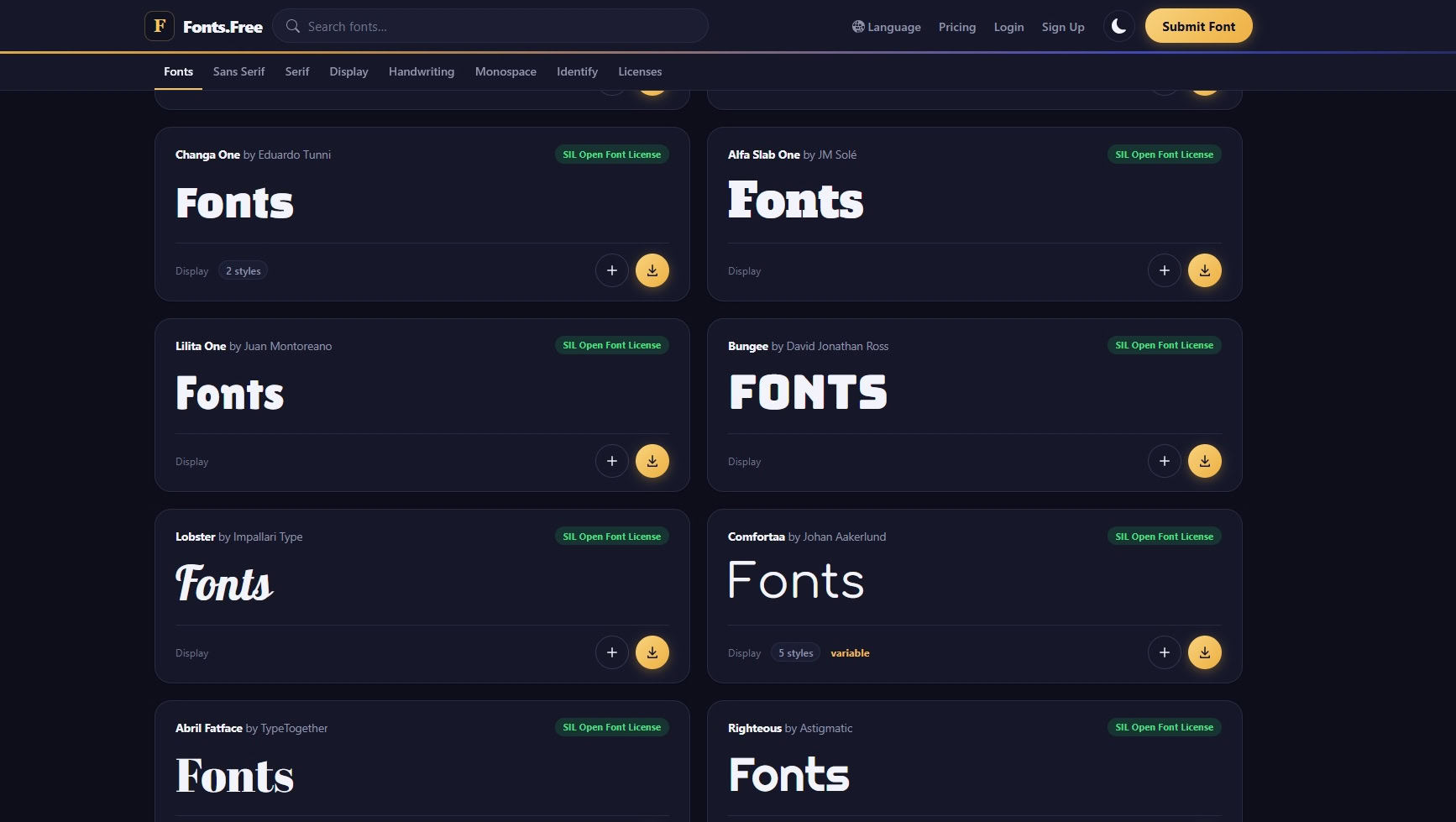
In the domain of digital design and content creation, typography plays a crucial role in visual communication. Fonts.free emerges as a valuable resource, offering a comprehensive library of over 2,000 fonts sourced from licensed owners. While numerous online repositories for fonts exist, Fonts.free distinguishes itself through its streamlined user experience, making the acquisition and integration of new fonts remarkably simple.
The utility of such a resource is particularly evident for users who engage in custom widget creation or other design-intensive tasks on their devices. For instance, individuals using advanced customization tools like KWGT (Kustom Widget Maker) on Android often require fonts that are not pre-installed on their operating systems. Fonts.free simplifies the process of obtaining and implementing these external typography assets, thereby enhancing the creative possibilities for users seeking to personalize their digital environments. This AI-assisted aggregation and delivery of font resources represents a practical application of technology that supports creative endeavors.
F1Predictions: AI-Powered Insights for Motorsports Enthusiasts
Following the recent trend of AI tools providing predictive analytics for sports, F1Predictions offers a specialized application for Formula 1 aficionados. This platform leverages AI to generate predictions for race weekends, meticulously scoring these forecasts against actual race outcomes. The website presents a polished interface, featuring dedicated sections for each racing session and detailed predictions for drivers and teams.
A notable example of F1Predictions’ predictive capabilities was its forecast for the Dutch Grand Prix. The AI indicated a dominant performance by Lando Norris, predicting he would secure pole position in both qualifying sessions, win the Sprint race, and ultimately clinch victory in the main Grand Prix. Such detailed and specific predictions not only engage fans by offering talking points but also demonstrate the growing sophistication of AI in analyzing complex sporting data. The platform’s ability to process vast amounts of historical data, driver statistics, car performance metrics, and track conditions allows it to generate nuanced forecasts that resonate with the intricate dynamics of Formula 1 racing. This application highlights the potential for AI to enrich fan engagement and provide new avenues for understanding and appreciating sporting events.
Coolcakebro: AI-Facilitated Digital Gifting and Social Connection
In a more whimsical yet heartwarming application, Coolcakebro utilizes AI to enable users to create and send personalized digital cakes to friends, family, and loved ones. The platform allows for a wide variety of cake designs, incorporating custom messages to add a personal touch. A unique feature includes the ability to add up to 12 virtual candles, which recipients can "blow out" by interacting with the digital cake.
Once a cake is designed, it can be shared digitally with the intended recipient. This service, while simple, offers a charming and accessible way to convey greetings and celebrations, particularly for long-distance relationships or when a physical gift is not feasible. The AI’s role here is likely in streamlining the design process, perhaps by offering template suggestions or assisting in the rendering of various cake elements. While it doesn’t replace the tradition of sharing a real cake, Coolcakebro demonstrates how AI can foster social connection and facilitate expressions of affection in the digital age. Its success lies in its emotional resonance and the ease with which users can create and share these virtual tokens of appreciation.
The Broader Implications of Accessible AI Development
The proliferation of "vibecoded" projects like the Firewood Splitting Simulator, Fonts.free, F1Predictions, and Coolcakebro signifies a fundamental shift in how digital content and services are created. Generative AI tools are empowering a new generation of creators, enabling them to bring imaginative concepts to life with unprecedented speed and efficiency. This democratization of development has several key implications:
- Increased Innovation: Lowering the technical barriers to entry fosters a more diverse range of creative ideas and experimental projects. This can lead to unexpected breakthroughs and the development of niche applications that cater to specific interests.
- Enhanced User Engagement: Projects that focus on simple, satisfying interactions, like the firewood simulator, demonstrate that AI-powered experiences can be inherently enjoyable and addictive, driving user retention and word-of-mouth marketing.
- Democratization of Utility: Tools like Fonts.free and F1Predictions show how AI can make complex functionalities, such as font management or sports analytics, accessible to a wider audience, enhancing productivity and enjoyment for non-experts.
- Artistic Expression: Digital artists like Gavin Shapiro are using AI as a medium to explore new forms of interactive art and digital experiences, pushing the boundaries of traditional creative disciplines.
- Economic Opportunities: The rise of accessible AI development opens new avenues for freelance creators, small businesses, and startups to rapidly prototype and launch digital products without substantial upfront investment in traditional development teams.
As generative AI continues to evolve, we can anticipate even more sophisticated and impactful applications emerging across various sectors. The projects highlighted here represent just a fraction of the innovation currently underway, underscoring the transformative potential of AI in shaping our digital future. The trend towards accessible, AI-assisted creation is not merely a technological advancement; it is a cultural shift that is redefining creativity, utility, and human connection in the digital realm.