Lina Irawan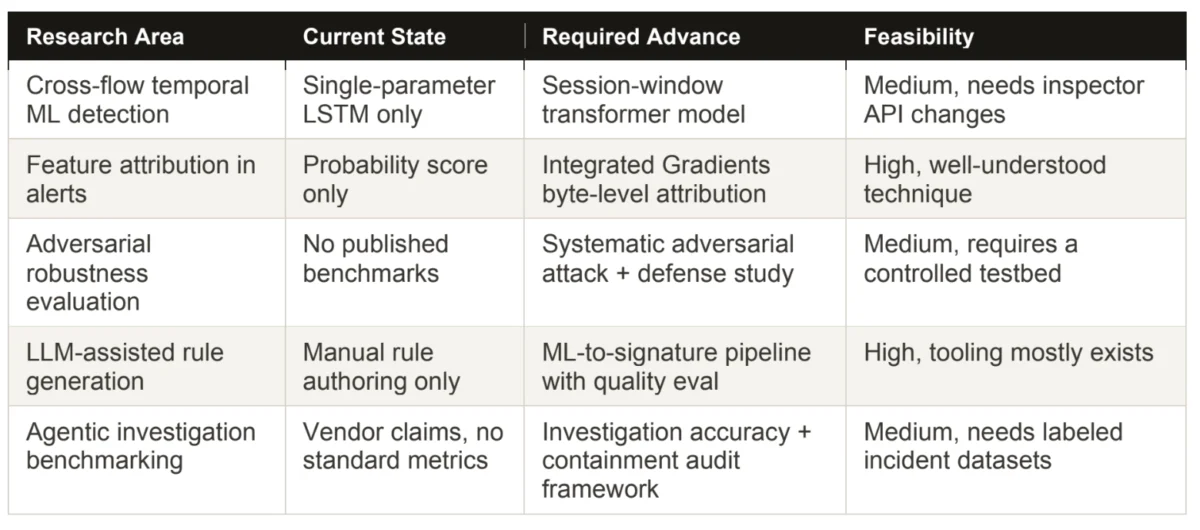
The persistent gap in Intrusion Detection Systems (IDS) has long been the primary vulnerability in network security, existing in the space between known signatures and the novel tactics chosen by adversaries. While classic Snort signatures remain precise instruments for identifying known exploits with minimal overhead, their reliance on specificity is a double-edged sword; a minor modification to an attack payload can bypass a rule written for a specific Common Vulnerabilities and Exposures (CVE) identifier. To address this structural limitation, the cybersecurity industry has pivoted toward a hybrid model that integrates machine learning (ML) and agentic artificial intelligence into the traditional packet-processing pipeline.
The Problem of Exposure Time and Signature Specificity
Traditional IDS models operate on the premise of verifiable knowledge. A researcher identifies a vulnerability, reverse-engineers the exploit, and crafts a signature that matches the attack’s "fingerprint" at the wire level. This approach ensures a low false-positive rate but introduces a critical "exposure time" window. Between the emergence of a novel exploit and the deployment of a validated rule, organizations remain vulnerable for days or even weeks.

Cisco Talos addressed this challenge in March 2024 with the launch of SnortML, a native machine learning engine designed for Snort 3. Unlike traditional anomaly detection systems that often rely on high-latency cloud reputation services, SnortML performs inference entirely on the local device. By operating within the same processing pipeline as standard rules, the system produces verdicts in under a millisecond, effectively closing the gap between signature updates and zero-day exploit attempts.
Chronology of Technical Advancements in Network Defense
The transition toward AI-driven network defense has followed a rapid timeline over the last 24 months, marked by significant software releases and architectural shifts:
- March 2024: Cisco Talos introduces SnortML for Snort 3, initially focusing on SQL injection (SQLi) detection using pre-trained TensorFlow models.
- April 2025: IBM launches the Autonomous Threat Operations Machine (ATOM), a multi-agent framework designed to automate investigation and remediation workflows sitting above SIEM analytics.
- August 2025: Trend Micro releases its Agentic SIEM, moving toward autonomous correlation and investigation rather than simple conversational interfaces.
- Late 2025: SnortML expands its coverage classes to include Cross-Site Scripting (XSS) and command injection, delivered via the Lightweight Security Package (LSP) system.
- Early 2026: Emerging research begins focusing on "Byzantine-resilient" federated learning to protect automated retraining pipelines from adversarial poisoning.
Technical Architecture: How SnortML Operates at the Byte Level
SnortML’s efficacy stems from its Long Short-Term Memory (LSTM) neural network architecture. This model is preceded by an embedding layer that maps raw byte values to learned vector representations. Unlike simple frequency analysis, this method captures the relationships between bytes. For example, a byte value of 0x27 (an apostrophe) followed by 0x4F 0x52 (the "OR" operator) carries specific context related to SQL injection patterns that the embedding layer encodes.
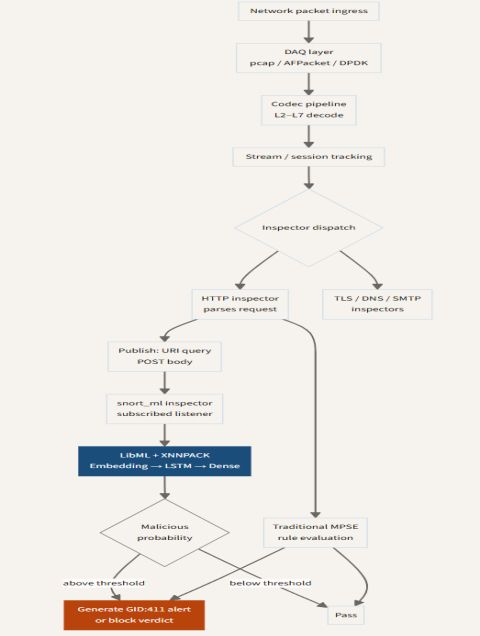
The system utilizes two primary components: the snort_ml_engine module, which loads pre-trained models into memory, and the snort_ml inspector, which subscribes to data feeds from existing service inspectors. When an HTTP inspector finishes parsing a request, it publishes the URI query string or POST body to an internal event bus. The SnortML inspector then processes this data through the classifier, returning a probability score.
To maintain performance under heavy network loads, SnortML utilizes LibML, an inference library that leverages XNNPACK for hardware-accelerated matrix operations. On a 4.7 GHz AMD processor, a single classification pass takes approximately 350 microseconds. Furthermore, Snort 3 utilizes adaptive model selection, choosing between 256, 512, or 1024-byte models based on the length of the input query. This ensures that shorter, simpler queries are not over-processed by larger models, maintaining both speed and accuracy.
Supporting Data: Performance and the Labor Market
The move toward automation is driven as much by technical necessity as it is by a global talent shortage. According to 2025 industry data, the global cybersecurity workforce gap remains at approximately four million unfilled positions. A survey conducted that same year found that 82% of Security Operations Center (SOC) analysts expressed concern that the sheer volume of alerts caused them to miss genuine threats.
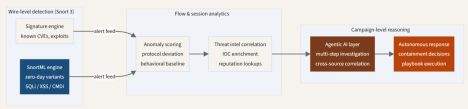
In this context, the performance metrics of SnortML provide a compelling case for automated triage:
- Latency: Inference is completed in ~350 microseconds, fitting within the strict per-packet processing budgets of high-throughput firewall appliances.
- Efficiency: The parallel execution of ML and signatures allows for "composite confidence." An alert where both a signature and the ML engine fire (e.g., a 0.97 probability score) is treated with significantly higher priority than a standalone ML detection.
- Scalability: By shifting the initial triage of novel variants to the ML layer, organizations can reduce the manual burden on analysts, who currently spend hours investigating variants of known attacks.
From Detection to Agentic Reasoning
While SnortML operates at the "wire level," analyzing individual packets and parameters, the industry is increasingly moving toward "agentic AI." This represents a shift from conventional ML models, which have no memory of prior inputs, to autonomous agents that maintain state across multi-step investigations.
An AI agent does not simply follow a fixed SOAR (Security Orchestration, Automation, and Response) playbook. Instead, it decides what to examine next based on its findings. It may query a SIEM for related events, check a file hash against threat intelligence platforms, or pull user activity from an identity provider. By the time a human analyst reviews the case, the agent has already assembled the necessary context, reducing investigation time from hours to seconds.
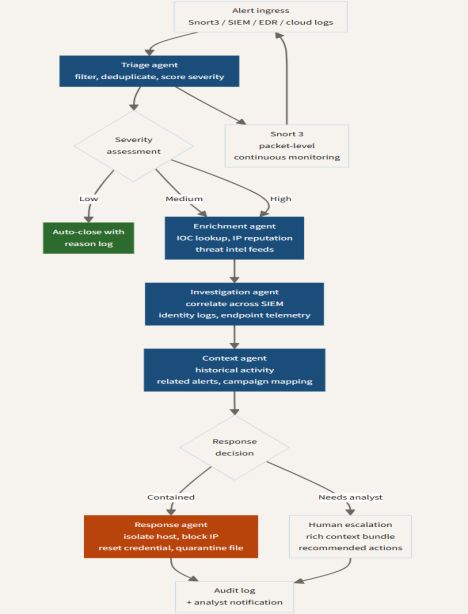
IBM and Trend Micro’s 2025 releases signify this shift toward "Agentic SOC" architectures. In these environments, Snort 3 acts as the primary sensor, feeding a continuous stream of event data into a reasoning tier. This tier consists of specialized agents—triage agents for deduplication, enrichment agents for IOC data, and investigation agents for cross-source correlation.
Official Responses and Industry Implications
Security experts emphasize that SnortML and agentic AI are not intended to replace human judgment but to augment it. Cisco Talos has noted that the parallel operation of signatures and ML is a "deliberate engineering decision." Signatures provide a low-noise floor for known patterns, while ML catches the "long tail" of novel variants.
However, the adoption of these technologies introduces new risks. Security researchers have pointed out that "adversarial ML" is no longer a theoretical threat. If an attacker understands the decision boundary of an ML model, they can craft traffic that evades detection while still executing an exploit. Furthermore, if an agentic system is given too much authority to block IPs or reset credentials, an adversary could weaponize the defense system to trigger a denial-of-service (DoS) attack against legitimate infrastructure.
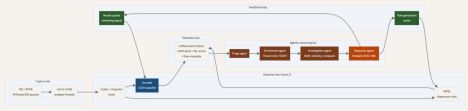
The consensus among lead engineers is that the most effective posture is asymmetric: heavily automate the investigation and enrichment phases, but remain conservative with automated response. Human-in-the-loop (HITL) systems ensure that high-stakes containment decisions are verified by an analyst who has been provided with an AI-assembled context bundle.
Broader Impact: The Future of the Feedback Loop
The most significant long-term impact of this technology lies in the creation of a closed feedback loop. Currently, most deployments are "one-way"; Snort detects an event, an agent investigates it, and a human closes the ticket. The next frontier involves flowing that data back to the sensor.
By capturing confirmed exploits that were initially caught by ML but lacked a signature, organizations can use Large Language Models (LLMs) to automatically draft candidate Snort rules. This would allow a system to "harden" its classical coverage in real-time, ensuring that once a novel variant is identified, it is permanently added to the low-overhead signature library.
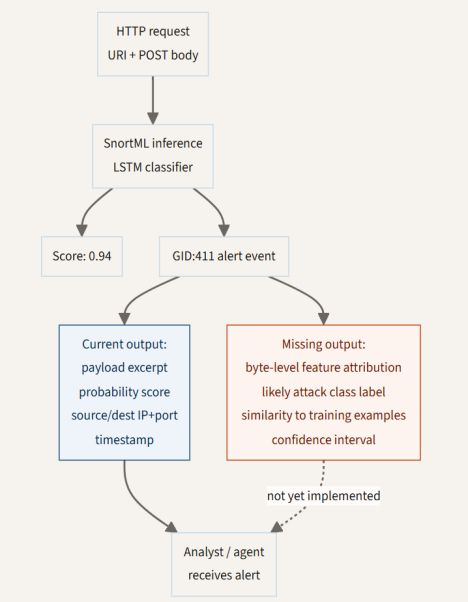
As of early 2026, research into "Byzantine-resilient" systems is addressing the security of these retraining pipelines. Ensuring that an attacker cannot "poison" the training data with crafted false positives is essential for the reliability of future autonomous defense systems.
The integration of SnortML into Snort 3 represents a fundamental maturation of network security. By moving beyond the rigidity of signatures and the latency of cloud-based detection, organizations are building a defense layer capable of operating at the speed of modern exploits. When coupled with the emerging reasoning capabilities of agentic AI, the cybersecurity industry is moving toward a model where the system does not just watch for attacks, but actively reasons through them, evolving its own defenses in the process.