
 Vera Intan Clara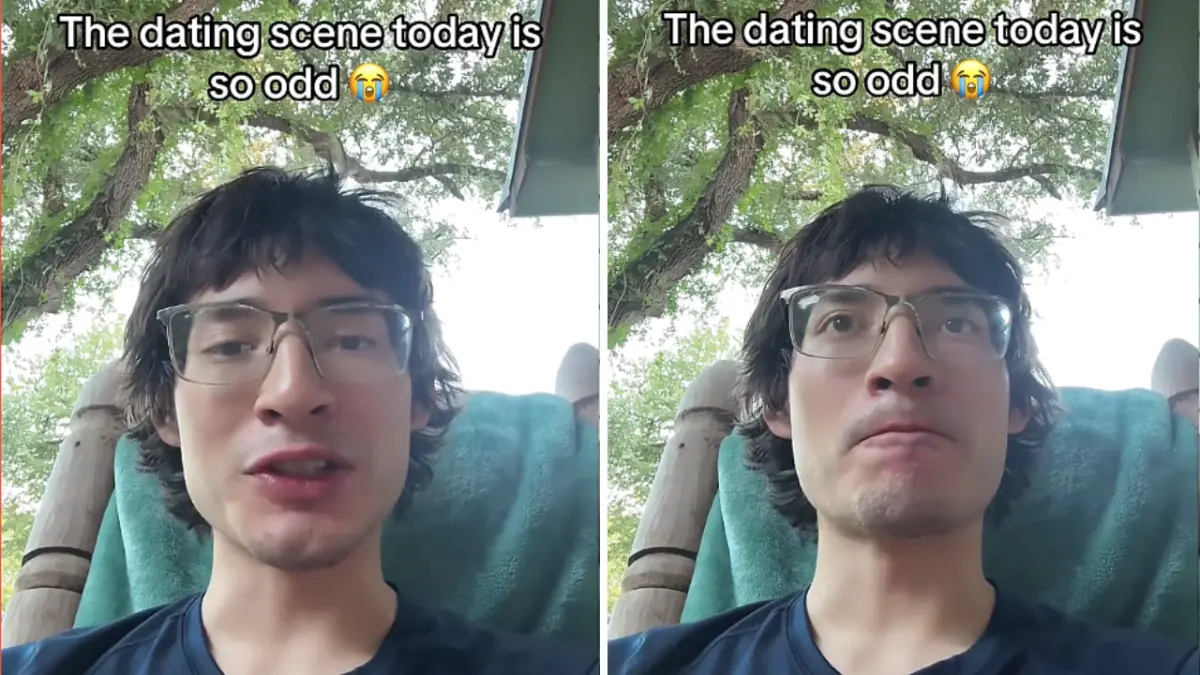
A TikTok video posted by creator @palladiumpaladin, identified as Caleb, has ignited a widespread discussion about the contemporary dating landscape, garnering over 235,000 views and 927 comments, reflecting a pervasive sentiment that dating has fundamentally changed, becoming increasingly "weird" and performative. Caleb, who recently re-entered the dating scene after years in a long-term relationship, articulated a common frustration among many, describing the experience as an enigma where genuine connection is obscured by curated self-images and ambiguous communication.
The Genesis of the Viral Observation
Caleb’s video, uploaded in recent weeks, quickly resonated with a broad audience, particularly those who have navigated the complexities of modern romance. His central premise revolves around a perceived shift in communication and authenticity within dating interactions. He noted that the very definition of "flirting" appears to have dissolved into a series of "riddles," where individuals struggle to convey or comprehend genuine interest. This ambiguity, he suggested, stems from a pervasive focus on sounding "suave" or maintaining an aura of mystery, often at the expense of clear, heartfelt communication aimed at truly understanding another person.
The creator observed that asking fundamental, everyday questions—the traditional bedrock of getting to know someone—can now be met with confusion or even seen as peculiar. This implies a cultural redefinition of what constitutes a "normal" and "healthy" conversation in a dating context, where authenticity might be perceived as a vulnerability to be guarded rather than an asset to be shared.
The Performative Paradox: Self-Image Over Self
Central to Caleb’s critique is the belief that modern dating has become overtly performative, driven by an intense focus on self-image. He described an environment where individuals are "super hyper-aware and hyper-fixated on their self-image," leading to interactions that feel anything but natural or authentic. This hyper-focus manifests in curated personalities and strategically presented narratives, transforming dating into a series of carefully managed appearances rather than spontaneous encounters.
Caleb eloquently compared this experience to "trying to see each other through mirrors," where individuals project the version of themselves they wish to be seen, rather than revealing their true selves, complete with imperfections. He argued that prospective partners are interested in the real person they might build a life with, not a carefully constructed persona. This "mirror" analogy highlights a profound disconnect, where the pursuit of an idealized self-presentation inadvertently obstructs the very intimacy and understanding that dating is meant to foster.
Historical Context and the Digital Revolution in Dating
To fully appreciate Caleb’s observations, it is crucial to understand the evolution of dating. Historically, courtship was often a structured affair, guided by societal norms, family involvement, and community oversight. The mid-20th century saw the rise of "dating" as a more independent, leisure-based activity, often involving face-to-face interactions in public spaces. Communication was direct, largely unmediated by technology, and social cues were more explicitly understood.
The late 20th and early 21st centuries, however, ushered in a profound transformation with the advent of the internet and, subsequently, mobile technology. The launch of dating websites like Match.com in the mid-1990s began to shift interactions online, but the real revolution came with smartphone applications. Tinder, launched in 2012, popularized the "swipe" mechanism, rapidly accelerating the volume and superficiality of initial encounters. Following apps like Bumble, Hinge, and countless others further normalized digital introductions, making them the primary gateway for many to the dating world.
This digital shift brought about both convenience and unforeseen challenges. While dating apps offer an unprecedented pool of potential partners and break down geographical barriers, they also introduce elements of gamification, instant gratification, and a "paradox of choice" that can lead to superficial evaluations and a sense of endless options, potentially diminishing commitment and investment in any single connection.
Supporting Data and Expert Perspectives
Caleb’s anecdotal observations find resonance in broader societal trends and psychological research. Data consistently shows a significant reliance on dating apps. A 2023 Pew Research Center study revealed that about three-in-ten U.S. adults have used a dating site or app, with younger adults (under 30) being the most prolific users. While many report positive experiences, a substantial portion also describes feelings of frustration and exhaustion.
Sociologists and psychologists have identified several factors contributing to the "weirdness" Caleb describes:
- The Authenticity Gap: Dr. Sherry Turkle, a sociologist at MIT, has extensively written about how digital interactions can create an "authenticity gap," where individuals feel compelled to present an idealized version of themselves online, making genuine self-disclosure more difficult in person. This curated online persona often spills over into real-world dating, creating the performative dynamic Caleb highlights.
- Fear of Vulnerability and Rejection: As noted by commenters on Caleb’s video, a pervasive fear of rejection and vulnerability is a significant barrier. In an era where "ghosting" (suddenly ceasing all communication) is common, and social media amplifies public scrutiny, individuals may adopt defense mechanisms, such as emotional detachment or ambiguous communication, to protect themselves from perceived hurt. Psychologists link this to various attachment styles, particularly avoidant attachment, which has been observed to be prevalent in modern dating dynamics.
- Social Media’s Influence on Self-Perception: Platforms like Instagram and TikTok cultivate an environment of constant self-presentation and comparison. Users are accustomed to curating their lives for an audience, selecting the most flattering photos and crafting engaging captions. This ingrained habit of self-editing extends to dating, where individuals feel immense pressure to appear perfect, interesting, and desirable, rather than simply being themselves. This constant self-monitoring can lead to increased anxiety and a feeling that one is always "on stage."
- Communication Breakdown: The reliance on text-based communication, often characterized by emojis, memes, and succinct messages, can hinder the development of nuanced conversational skills. When faced with in-person interactions, individuals may struggle with active listening, reading non-verbal cues, and engaging in sustained, meaningful dialogue, contributing to the "riddles" Caleb described. A 2022 study by the American Psychological Association noted a rise in social anxiety among young adults, which could further exacerbate difficulties in natural communication.
Commentary Echoes and Broader Implications
The comments section of Caleb’s video served as a powerful testament to the widespread nature of his observations. Users overwhelmingly agreed, offering their own experiences and insights. One commenter articulated the fear of vulnerability directly: "Everyone’s afraid of rejection and thinks having any kind of vulnerability is cringe." This highlights a cultural shift where showing genuine emotion or direct interest can be perceived negatively, contrasting sharply with traditional notions of building connection.
Another commenter lamented the perceived disdain for "starter questions," crucial for initial acquaintance: "Everyone hates a starter question ’cause it’s not ‘deep convo’ but, like, I don’t know you! I’m gonna ask what your favorite book is because I’m trying to get to know you!" This underscores the tension between a desire for "deep" connections and the necessary foundational steps to build them, often bypassed in a rush for intensity or novelty.
A separate user pinpointed the issue of strategic self-presentation: "Everyone is wayyyyy too hyper focused on not being seen as ‘eager’ and it’s crazy because if you like someone, you should want to be vulnerable, intimate. It’s like all this awkward tension for absolutely no reason. Everything is about perception now." This sentiment captures the performative tightrope walk many navigate, where appearing indifferent or "cool" is prioritized over expressing genuine interest, creating a climate of unnecessary tension and emotional distance.
The implications of these trends are far-reaching. On an individual level, dating fatigue, increased loneliness, and mental health challenges like anxiety and depression are becoming more prevalent. The constant pressure to perform and the difficulty in forming authentic connections can lead to burnout and a sense of disillusionment with the dating process. This can delay or even prevent the formation of stable, long-term relationships, impacting individual well-being and societal cohesion.
From a broader sociological perspective, if dating becomes increasingly superficial and performative, it could erode the foundational skills necessary for successful partnerships: empathy, clear communication, vulnerability, and mutual understanding. This could lead to a generation less equipped to navigate the complexities of sustained intimate relationships, potentially impacting marriage rates, family structures, and community bonds. The search for connection, a fundamental human need, becomes a more arduous and often frustrating journey in this evolving landscape.
Conclusion: Navigating the Modern Romantic Maze
Caleb’s viral TikTok video serves as more than just an individual’s lament; it is a cultural touchstone reflecting a collective bewilderment at the state of modern dating. His observations, supported by the widespread agreement in the comments and validated by sociological and psychological insights, paint a picture of a dating scene where authenticity is elusive, communication is muddled, and self-image often trumps genuine connection.
While technology has offered unprecedented access to potential partners, it has also introduced complexities that challenge traditional notions of courtship and intimacy. The emphasis on curated profiles, the fear of vulnerability, and the constant pressure to perform contribute to an environment where forming deep, meaningful relationships can feel like navigating a maze of mirrors. The ongoing dialogue sparked by creators like Caleb highlights the urgent need for individuals and society to reflect on these trends and perhaps rediscover the value of clear communication, raw vulnerability, and authentic self-expression in the enduring human quest for connection. The challenge lies in peeling back the layers of performativity to find the genuine person underneath, a task that seems increasingly difficult yet remains as vital as ever.








