Garick Elordi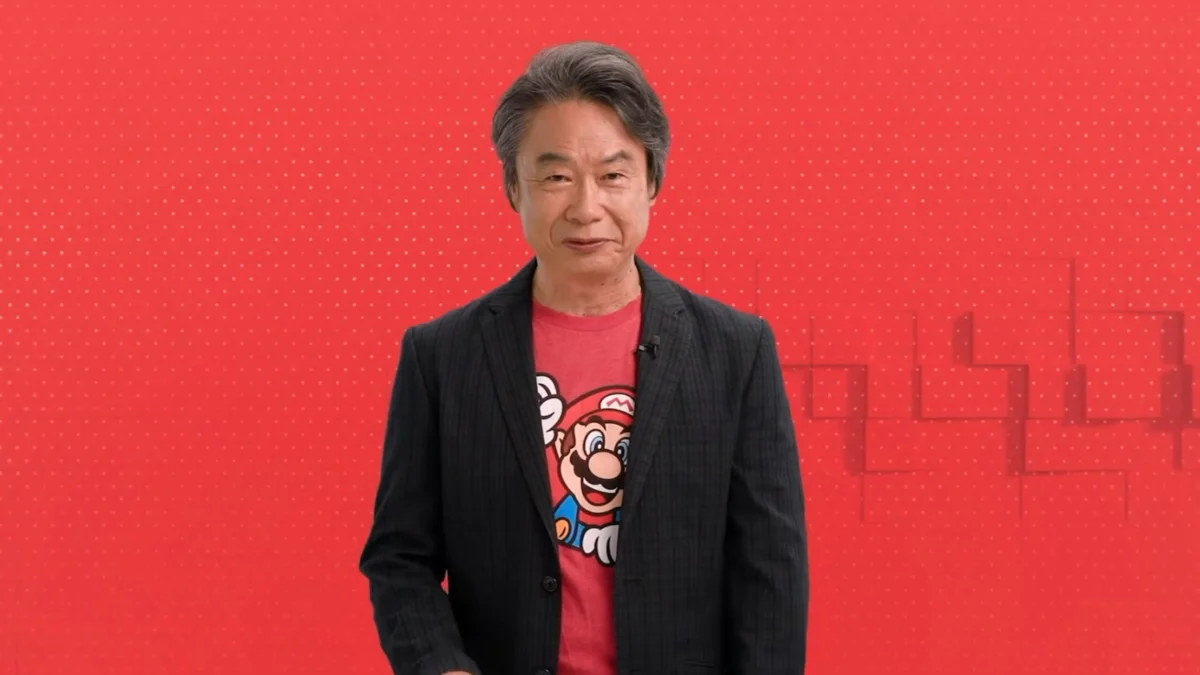
In a comprehensive interview with the venerable Japanese gaming publication Famitsu, Shigeru Miyamoto, the legendary creator behind the Super Mario and Legend of Zelda franchises, provided a rare glimpse into Nintendo’s internal philosophy regarding the evolution of hardware and the changing desires of the global gaming audience. Miyamoto, who currently serves as Nintendo’s Representative Director and Fellow, suggested that the industry has reached a tipping point where raw technical specifications—such as processing power, high-resolution graphics, and frame rates—are no longer the primary drivers of consumer interest. His comments come at a pivotal moment for the Kyoto-based company as the Nintendo Switch family of systems enters its eighth year on the market, defying traditional console life cycles and setting the stage for a highly anticipated successor.
The Evolution of Consumer Priorities
Reflecting on the unprecedented longevity of the Nintendo Switch, Miyamoto expressed satisfaction that the hybrid console has remained relevant for nearly a decade. "I was happy that the Switch lasted for 8 to 9 years," Miyamoto told Famitsu. "I think that customers are no longer just looking for specs." This assertion marks a significant departure from the historical "bit wars" of the 1990s, where Nintendo, Sega, and later Sony competed aggressively on the basis of graphical fidelity and processing megahertz.
Miyamoto’s perspective is rooted in the observation that the "ideal" gaming experience is one where software accessibility takes precedence over hardware power. He emphasized that the ultimate goal for Nintendo is to ensure that when a consumer purchases a piece of software, they can enjoy it seamlessly on the hardware they already own. This philosophy has allowed Nintendo to carve out a unique market position, often referred to as the "Blue Ocean" strategy, which prioritizes innovative gameplay and unique user interfaces over the high-fidelity arms race pursued by competitors like Sony Interactive Entertainment and Microsoft’s Xbox division.
A History of Disruption: From the Wii to the Switch
To understand Miyamoto’s current stance, one must look at the chronology of Nintendo’s hardware development. The company’s pivot away from the "power race" began in earnest with the release of the Nintendo Wii in 2006. While the PlayStation 3 and Xbox 360 were pushing high-definition graphics, the Wii utilized standard definition and focused on motion-controlled gameplay. Despite its technical inferiority, the Wii went on to sell over 101 million units, proving that "way of play" could trump "visual display."
This was followed by the Nintendo DS, which introduced dual screens and touch capabilities to the handheld market, eventually becoming one of the best-selling gaming devices of all time with 154 million units sold. While the subsequent Wii U struggled to find an audience, the lessons learned from its failure—and the success of the 3DS—informed the creation of the Switch. By merging the home console and handheld markets into a single "architecture," Nintendo solved a major internal efficiency problem. Miyamoto noted that having a single platform allows Nintendo to focus its entire creative force on one ecosystem rather than splitting resources between disparate hardware configurations.
The Efficiency of "Minimal Effort" and Production Optimization
During the interview, Miyamoto made a lighthearted but poignant comment about the company’s internal goals. "We still want to make a living with minimal effort, to live without working," he joked. While framed as a jest, the underlying message speaks to the necessity of production efficiency in an era where game development costs are skyrocketing.
In the modern AAA gaming landscape, budgets for flagship titles on the PlayStation 5 and Xbox Series X frequently exceed $200 million, with development cycles stretching to six or seven years. By focusing on a single, stable hardware architecture like the Switch, Nintendo has been able to maintain a steady cadence of high-quality releases without the massive overhead required for 4K, ultra-realistic assets. This efficiency has allowed Nintendo to remain highly profitable even as its hardware ages. As of the latest financial reports, the Nintendo Switch has sold over 143 million units globally, placing it within striking distance of the PlayStation 2’s all-time record of 155 million.
The Fragmentation of the Mobile Market
Miyamoto also touched upon the challenges posed by the smartphone gaming market. While smartphones are "everywhere" and possess significant computing power, they present a fragmented landscape for developers. Because of the vast array of devices with different screen sizes, operating systems, and performance levels, creating a consistent experience across all mobile hardware is difficult and labor-intensive.
Nintendo’s strategy has been to offer a dedicated alternative: a closed ecosystem where the hardware and software are designed in tandem. Miyamoto believes this synergy allows for "gameplay that only we can create." This approach is exemplified by titles like The Legend of Zelda: Tears of the Kingdom, which pushed the aging Switch hardware to its limits through innovative physics and systems-driven gameplay rather than purely visual spectacle.
Comparative Industry Analysis: The Struggles of the Graphics Arms Race
The timing of Miyamoto’s comments coincides with a period of introspection for Nintendo’s primary rivals. Sony and Microsoft are currently navigating the mid-point of the ninth console generation, a period marked by rising hardware costs and a slowing rate of technological return.
Sony’s PlayStation 5, while successful, has faced challenges regarding the cost of manufacturing and the extended timelines for its first-party studios. Recent reports indicate that Sony has had to recalibrate its approach to PC ports and live-service games to offset the massive investments required for high-end single-player experiences. Similarly, Microsoft’s Xbox division has undergone significant restructuring, including the acquisition of Activision Blizzard and a shift toward a multi-platform publishing model, as it grapples with the plateauing growth of the traditional console market.
Miyamoto’s assertion that "players simply want something at home that runs the games they want to play" suggests that the "Next-Gen" allure of 8K resolution and ray-tracing may be losing its potency as a primary selling point. Instead, reliability, library depth, and ease of use appear to be the new pillars of consumer loyalty.
The Future: Anticipating the "Switch 2"
As the Nintendo Switch enters its sunset years, the industry’s eyes are fixed on the "Switch 2" (a placeholder name for the successor). Nintendo President Shuntaro Furukawa has confirmed that an announcement regarding the successor will be made within the current fiscal year, which ends in March 2025.
Based on Miyamoto’s remarks, analysts expect the next console to prioritize backward compatibility and a continuation of the hybrid form factor rather than a radical leap into high-end VR or 4K/120fps gaming. By maintaining a similar "architecture," as Miyamoto suggested, Nintendo can ensure a smooth transition for its massive user base of 143 million people. The goal is to provide a "new way to play" that feels like a natural evolution rather than a technical reset that leaves older software behind.
Implications for the Global Gaming Market
The shift in priorities highlighted by Miyamoto has broader implications for the global games industry. If the most successful hardware manufacturer of the decade is de-emphasizing specs, it may signal a broader move toward "lifestyle gaming" and "platform ecosystems" over "hardware powerhouses."
The success of the Steam Deck and other handheld PCs further supports Miyamoto’s theory. While these devices are powerful, their popularity stems from their ability to let players access their existing libraries in a portable format. Consumers are increasingly valuing the flexibility of where and how they play over the specific pixel count of the image.
Conclusion
Shigeru Miyamoto’s insights reflect a company that is comfortable in its own skin, unburdened by the need to mirror the technical trajectories of its competitors. By focusing on the "ideal" of software-centric hardware and production efficiency, Nintendo has managed to turn the Switch into a cultural phenomenon that has outlasted many of its more powerful predecessors.
As the industry moves toward a future defined by cloud gaming, subscription models, and rising development costs, Nintendo’s commitment to "minimal effort" through architectural stability and creative innovation may prove to be the most sustainable path forward. For Miyamoto and Nintendo, the "specs" are merely a tool—the true magic remains, as it always has, in the play.