admin
admin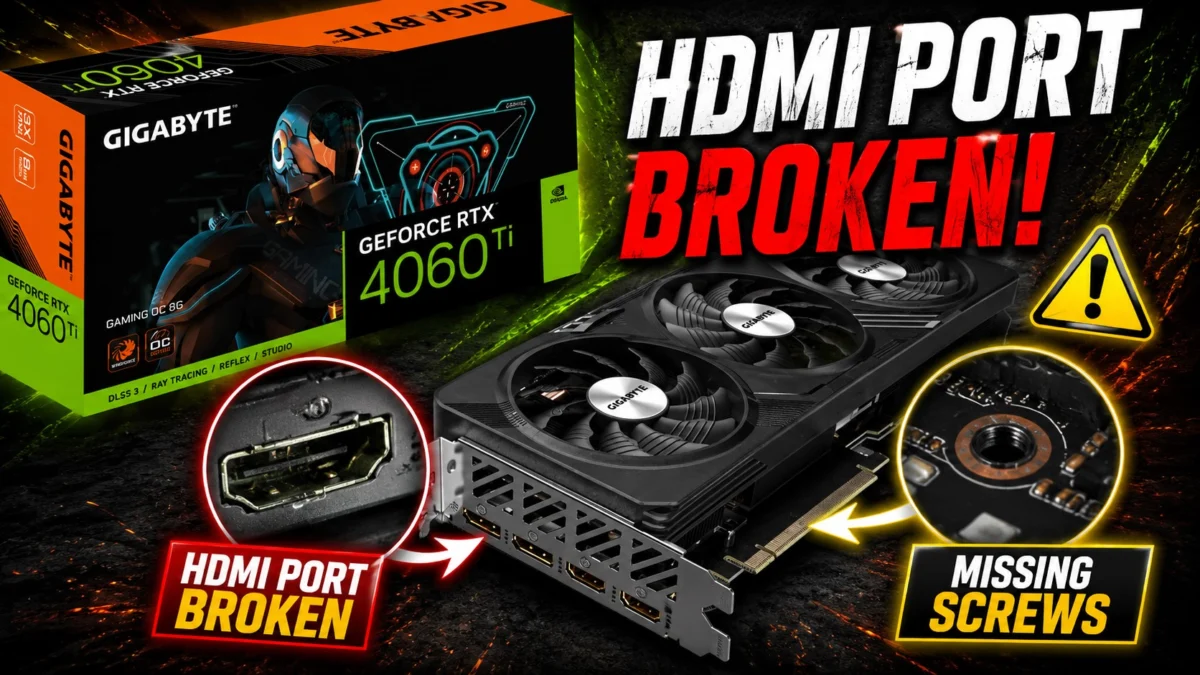
The hardware in question is a Gigabyte RTX 4060 Ti (Model: GV-N406TGAMING OC-8GD), a mid-to-high-range graphics card popular among gamers for its performance-to-price ratio. According to the user’s report, the card was originally submitted for service due to a "No Display" issue—a common fault that can stem from various internal failures ranging from power delivery issues to VBIOS corruption. However, the subsequent handling of the RMA (Return Merchandise Authorization) process has sparked a broader conversation regarding the quality of after-sales support provided by major hardware manufacturers in the Indian market.
Chronology of the RMA Dispute
The timeline of events began on August 1, 2026, when the customer brought the GPU to the Nehru Place Service Centre. The official intake receipt (RMA No: DE1-2680021) documented the condition of the card at the time of submission. Crucially, the intake notes specified "NO DISPLAY, PART RUSTED, TRY FOR SAME VGA CARD REPAIR AND RETURN." There was no mention of physical damage to the external ports or missing internal components at this stage. This document serves as a vital piece of evidence, as it establishes the baseline condition of the hardware before it entered the custody of Gigabyte’s technicians.
Upon returning to the service center to collect the purportedly repaired card, the customer discovered that the physical integrity of the GPU had been compromised. The HDMI port, essential for display connectivity, was visibly broken. Furthermore, several assembly screws that secure the card’s shroud and cooling assembly were missing. When the customer confronted the staff regarding these discrepancies, a technician reportedly admitted on video that the HDMI port had been damaged and the screws misplaced during the diagnostic and repair process.
Despite this admission from the technical staff, the situation escalated when the service center manager intervened. According to the customer, the manager attempted to minimize the negligence, stating that "a missing screw is common" in the industry. More significantly, the manager allegedly attempted to reclassify the damage as Customer Induced Damage (CID). In the world of hardware warranties, a CID classification is often a "death sentence" for a claim, as it voids the manufacturer’s obligation to provide a free repair or replacement, shifting the financial burden entirely onto the consumer.
Technical Analysis of the Reported Damage
The damage described by the user—a broken HDMI port and missing screws—suggests a lack of precision during the disassembly and reassembly phases of the repair. Modern graphics cards like the RTX 4060 Ti are complex pieces of engineering with tight tolerances. The HDMI and DisplayPort housings are soldered directly to the PCB (Printed Circuit Board) and are reinforced by the I/O bracket. Breaking such a port typically requires significant physical force or improper alignment when trying to fit the PCB back into the shroud.
The absence of screws is equally concerning from a technical standpoint. Screws in a GPU are not merely aesthetic; they provide the necessary mounting pressure for the heatsink to make contact with the GPU die and the VRM (Voltage Regulator Module) components. If screws are missing or improperly tightened, it can lead to uneven thermal contact, resulting in localized hotspots that can permanently degrade the silicon or cause the card to trigger a thermal shutdown.
Following the initial confrontation, the service center reportedly attempted a secondary repair to rectify the damage they had caused. The manager later provided photos via email showing that the missing screws had been replaced and the HDMI port had been "repaired or replaced externally." However, the customer reports that upon testing the card again, it remained completely non-functional. The original "No Display" issue persisted, and the card is now described as "completely dead," suggesting that the internal circuitry may have suffered further damage during the multiple, arguably botched, repair attempts.
The Significance of Nehru Place and Local Service Standards
Nehru Place serves as the epicenter of the PC hardware trade in Northern India. For a major brand like Gigabyte, the performance and reputation of its Nehru Place service center are critical. This market handles thousands of components daily, and the service centers located here are expected to maintain high standards of professional conduct.

However, the high volume of service requests in such markets can sometimes lead to a "factory line" approach to repairs, where speed is prioritized over precision. The customer’s experience highlights a potential systemic issue in how RMAs are handled in high-traffic regions. When a service center fails to document damage they caused and instead blames the customer, it undermines the trust between the brand and its user base.
Broader Context: Gigabyte’s Recent Quality Control Challenges
This incident does not exist in a vacuum. It follows a series of reports regarding quality control (QC) lapses within Gigabyte’s manufacturing and service pipelines. Recently, the company faced criticism after it was discovered that some GPUs had left the factory with the protective plastic film still attached to the VRM thermal pads. This oversight prevented proper heat transfer, leading to rapid thermal degradation and hardware failure.
Additionally, Gigabyte has previously faced scrutiny over its PCB design on certain high-end cards, where users reported cracking near the PCIe locking tab. While the company has taken steps to address some of these issues through design revisions, the cumulative effect of these reports has made the community particularly sensitive to any perceived negligence in Gigabyte’s service department.
Consumer Rights and Legal Recourse in India
In India, consumer rights are protected under the Consumer Protection Act, 2019. The act provides a framework for addressing "deficiency in service" and "unfair trade practices." By documenting the intake condition of the GPU and capturing the technician’s admission on video, the customer in this case has built a strong foundation for a legal claim should Gigabyte fail to provide a satisfactory resolution.
The use of the E-Daakhil portal—a digital platform for filing consumer complaints—has become a common route for tech enthusiasts to seek redressal against multinational corporations. Legal experts note that when a service provider returns a product in a worse condition than it was received, and attempts to shift the blame to the consumer despite evidence to the contrary, they may be liable for not only the replacement cost of the hardware but also compensation for mental agony and litigation expenses.
Industry Implications and the Importance of Documentation
This case serves as a cautionary tale for both consumers and manufacturers. For consumers, the primary takeaway is the absolute necessity of documentation. The fact that the user had an official receipt stating the card only had a "No Display" issue and "Part Rusted" (but no physical breakage) was the only thing preventing the service center from successfully claiming the HDMI port was broken by the user before arrival.
For manufacturers, the incident underscores the need for better oversight of authorized service providers. While Gigabyte is a global leader in hardware, its brand equity is heavily dependent on the local experience of its customers. A single dismissive manager or a negligent technician can cause disproportionate damage to a brand’s reputation when their actions are broadcast to a global audience on platforms like Reddit.
As of the latest updates, the user has escalated the matter to Gigabyte’s higher management and is awaiting a formal resolution. The community’s reaction has been one of overwhelming support for the user, with many calling for a complete replacement of the unit given the multiple layers of mishandling involved.
Conclusion
The dispute at the Nehru Place service center highlights the friction points in the global tech supply chain, where high-end engineering meets local service realities. As PC components become increasingly expensive and complex, the expectation for professional, transparent, and accountable after-sales service continues to grow. Whether Gigabyte will take decisive action to rectify this specific grievance and implement broader reforms in its service protocols remains to be seen. For now, the "No Display" issue of one RTX 4060 Ti has become a very public display of the challenges facing consumer hardware support in the modern era.