Evan Lee Salim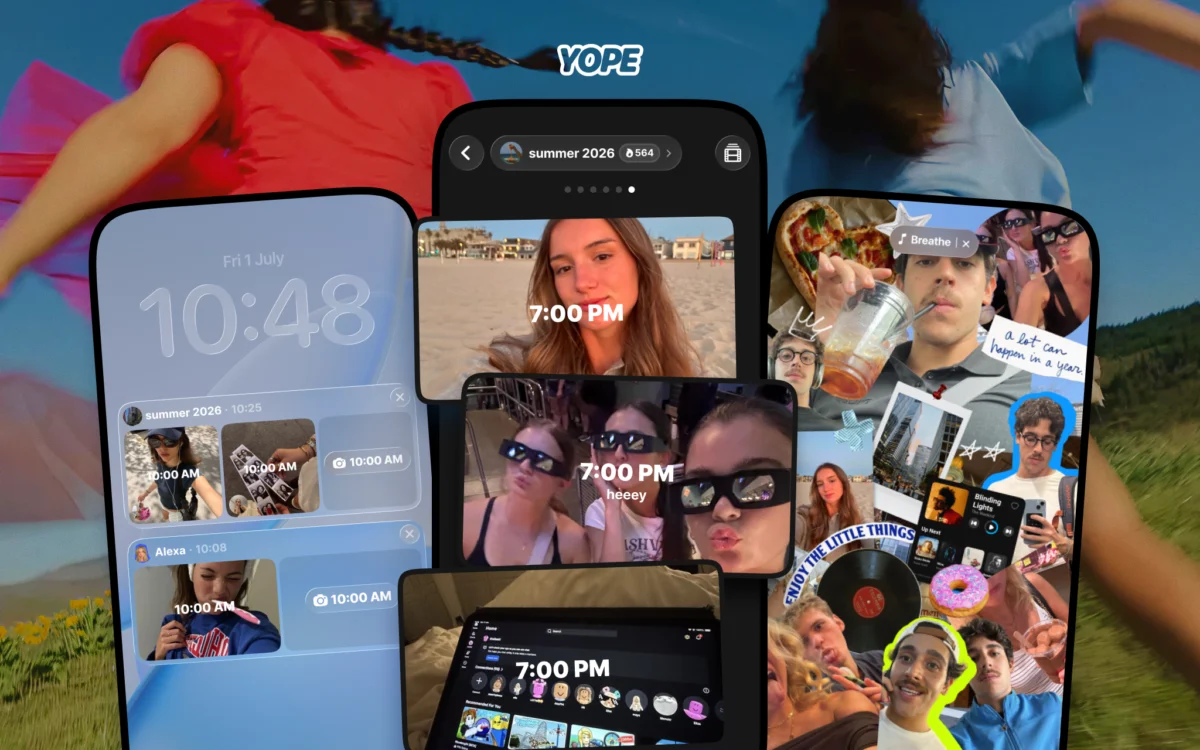
As the landscape of social media has dramatically shifted from intimate online spaces for connecting with friends to expansive, algorithm-driven entertainment platforms, a new contender, Yope, is strategically positioning itself as the future of digital interaction. The startup is meticulously crafting a social networking experience defined by the complete absence of algorithms, advertising, and public content, aiming to restore genuine, private connection. This innovative approach has now attracted significant investor confidence, culminating in a $12.3 million seed funding round led by Northzone, bringing Yope’s total funding to an impressive $20 million.
The Evolution of Social Media and the Call for a New Paradigm
For over a decade, social media platforms like Facebook, Instagram, Snapchat, and TikTok have dominated the digital sphere, fundamentally altering how individuals communicate, share, and consume content. Initially conceived as tools to foster connections among friends and family, these platforms have evolved into complex ecosystems driven by sophisticated algorithms designed to maximize engagement, often through the relentless promotion of trending content, viral videos, and influencer culture. This shift, while fostering massive user bases and unprecedented advertising revenue, has also given rise to a litany of concerns. Users frequently report feelings of anxiety, pressure to maintain a curated online persona, and a general dilution of genuine connection in favor of performing for a broader, often anonymous, audience. The constant influx of targeted advertisements further erodes the user experience, transforming personal spaces into commercial battlegrounds.
It is against this backdrop that Yope emerges, not as another incremental improvement, but as a foundational reimagining of social media’s purpose. The company explicitly takes on the established tech giants by advocating for a return to what it terms "micro communities"—small, private groups where friends and family can interact authentically. Within these secure digital enclaves, users are encouraged to share photos, videos, messages, and soon, engage in interactive games, all without the omnipresent gaze of public feeds or the manipulative influence of algorithms.

Yope’s Distinctive Philosophy: Privacy, Authenticity, and User Control
The concept of private, algorithm-free social media is not entirely novel. Various applications over the years have attempted to carve out niches centered on privacy or ephemeral content. However, many have struggled to achieve significant scale or sustain user engagement without resorting to features that eventually mimic the mainstream, often by incorporating creator content to keep users captivated. Yope aims to break this cycle by prioritizing and actively encouraging connections between real-world friends. Its design philosophy positions the app as much a communication tool as a photo-sharing or life-update platform, emphasizing utility and intimacy over virality and performance.
A cornerstone of Yope’s design is its default privacy settings. All accounts are private from the outset, and crucially, there is no algorithmic feed dictating what users see or how they interact. This fundamental departure from industry norms means users are not subjected to content pushed by AI-driven recommendations or pressured to engage with posts that might otherwise go viral. Furthermore, Yope’s business model deliberately eschews advertising, a stark contrast to nearly every major social platform today. Instead, the company is focused on developing a premium, subscription-based experience tailored for its most active and engaged users, signaling a commitment to user experience over ad-driven monetization.
The Genesis: Understanding User Needs Through Extensive Research
The strategic direction of Yope is not born from mere speculation but from extensive, data-driven research. Bahram Ismailau, Yope’s London-based co-founder and CEO, revealed that the team undertook a monumental research effort, conducting over 100,000 interviews with young people worldwide. Aided by advanced AI tools, this comprehensive study sought to unravel the intricate ways in which younger generations interact with and perceive existing social networks.

The findings were illuminating and directly informed Yope’s development. Researchers discovered that approximately 30% of young social media users were actively employing what are commonly referred to as "photo dump" or "spam" accounts. These secondary, often private, accounts serve as spaces where users can share more candid, unpolished, and authentic photos and videos with a select, smaller group of real-life friends, free from the pressures of curating a perfect public image. Concurrently, a significant portion of individuals had largely abandoned public sharing altogether, relying almost exclusively on private messaging to maintain connections.
Ismailau articulated the core problem identified during this research: "Young people don’t have any place to self-express if they are not ready to be an influencer." He emphasized that despite the public-facing nature of dominant platforms, teens still harbor a strong desire for self-expression, but crucially, they want to do so within a framework of greater privacy and control. This unmet need presented a "big opportunity to create a new space for young people to be social," leading to the inception of Yope, which Ismailau proudly describes as "an AI-native social platform for young people and the next generation."
AI as an Enhancer of Connection, Not Content Creation
It is important to clarify Yope’s approach to Artificial Intelligence. Ismailau explicitly stated that the team does not envision AI as a tool for generating content. Instead, Yope leverages AI as a powerful enabler for fostering deeper and more meaningful connections among users. This includes, for instance, the development of AI-powered mini-games that friends can play together directly within the app, a feature anticipated to launch in the coming month. Beyond in-app entertainment, Yope also aims to utilize AI to facilitate real-life meetups, perhaps by assisting users in finding tickets to events, recommending suitable restaurants, or locating bars where friends can gather to watch a football game. This innovative application of AI underscores Yope’s commitment to bridging the digital and physical worlds, reinforcing real-world friendships.
A Nostalgic Nod to Customization: Recalling the Myspace Era

Yope’s user interface and customization options bear a striking resemblance to an earlier, beloved era of social media: Myspace. Users on Yope create highly personalized profiles by sharing photos, which can be transformed into cut-out stickers. Rather than being confined to traditional albums, these photos are displayed in a dynamic, collage-like, almost "chaotic" arrangement across each user’s "wall." This design choice evokes a sense of personal ownership and creative freedom. Soon, Yope plans to further enhance this personalization, allowing users to add their interests, favorite music, integrate mini-games, and fully customize the aesthetic of their space with various colors and wallpapers. This emphasis on individual expression and digital ownership stands in stark contrast to the often uniform and algorithmically structured feeds of contemporary platforms, providing a nostalgic yet fresh take on online identity.
The app also thoughtfully integrates several now-standard features from existing social platforms, ensuring a familiar and intuitive user experience. These include in-app messaging, AI-created recaps of top moments, and convenient lock screen widgets that display friends’ photos. During the onboarding process, Yope meticulously guides new users through setting up these various features, granting necessary permissions for photo access and friend discovery, and encouraging the initiation of private chats—all designed to facilitate immediate engagement within their chosen micro-communities.
Impressive Growth and Investor Confidence
The combination of Yope’s unique philosophy and well-executed features has translated into remarkable user adoption and engagement. The platform now boasts nearly 15 million registered users, a significant milestone for a startup challenging entrenched giants. These users collectively share an astonishing volume of content, ranging from 10 million to 20 million individual photos, videos, or stickers daily. These metrics strongly suggest a high degree of regular and active use. Ismailau proudly states that over 50% of Yope’s user base opens the app at least five days per week, effectively categorizing them as power users—a testament to the app’s sticky and engaging nature.
Intriguingly, Yope’s appeal extends beyond its primary young demographic. Ismailau notes that approximately 20% of active users have extended invitations to older family members to join them on the app, highlighting its potential for broader intergenerational appeal and its ability to foster genuine family connections in a private, comfortable environment.

This impressive organic growth and robust user engagement did not go unnoticed by the investment community. Ismailau confirmed that Northzone, a venture capital firm with a strong track record of backing successful consumer apps such as Spotify and Klarna, proactively approached Yope, initiating the funding conversation rather than the other way around. Northzone ultimately led the $12.3 million seed round, with additional participation from Inovo, Redseed, and Geek Ventures. This latest infusion of capital brings Yope’s total funding to $20 million, providing a substantial war chest for future development and expansion.
Pär-Jörgen Pärson, Partner at Northzone, articulated the firm’s enthusiasm in a statement: "Yope is a fresh, empowering and safe take on social media where the users are in full control of their experience in contrast to the predatory practices of Meta, TikTok or X." He further expressed Northzone’s excitement to collaborate with Bahram Ismailau, Paul Rudkouski (co-founder), and their team to scale the service "far beyond the current millions of users and half a billion moments shared." This strong endorsement from a prominent investor underscores the perceived market potential and the critical need for an alternative social media model.
It is worth noting that the current iteration of Yope represents the culmination of two prior strategic pivots. TechCrunch previously covered an earlier version of the company, indicating a journey of refinement and adaptation that has ultimately led to the current, successful model, which has been in development for approximately two years. This iterative process speaks to the team’s resilience and commitment to finding a truly resonant product-market fit.
Challenges and the Path Forward
While Yope’s early success is undeniable, the path forward is not without its challenges. Operating in a market dominated by tech behemoths with virtually limitless resources and vast user bases requires significant strategic acumen. Yope’s subscription-based model, while promising a cleaner user experience, faces the hurdle of convincing users to pay for a service that many have come to expect for free. Scaling without the viral loops often generated by algorithms also demands innovative approaches to user acquisition and retention.

The $12.3 million funding round is earmarked to address these challenges and fuel Yope’s ambitious growth plans. The capital will be primarily utilized to further develop the product, enhancing existing features and introducing new ones like the AI-driven games and real-life meetup integrations. Additionally, the funding will support the expansion of the Yope team, which currently stands at around 35 dedicated individuals, bringing in more talent to drive innovation. A key strategic move will also be the establishment of an office in the United States, signifying an intent to deepen its presence in one of the world’s largest and most influential technology markets.
Yope is currently available for free download on both iOS and Android platforms, inviting users globally to experience a different kind of social connection. As the digital landscape continues to evolve, Yope’s bold proposition offers a compelling vision for a more private, authentic, and user-controlled social media future, potentially influencing the next generation of online interaction. Its journey will be closely watched by industry observers eager to see if it can truly disrupt the status quo and usher in an era where genuine connection once again takes precedence over endless scrolling and algorithmic engagement.