admin
admin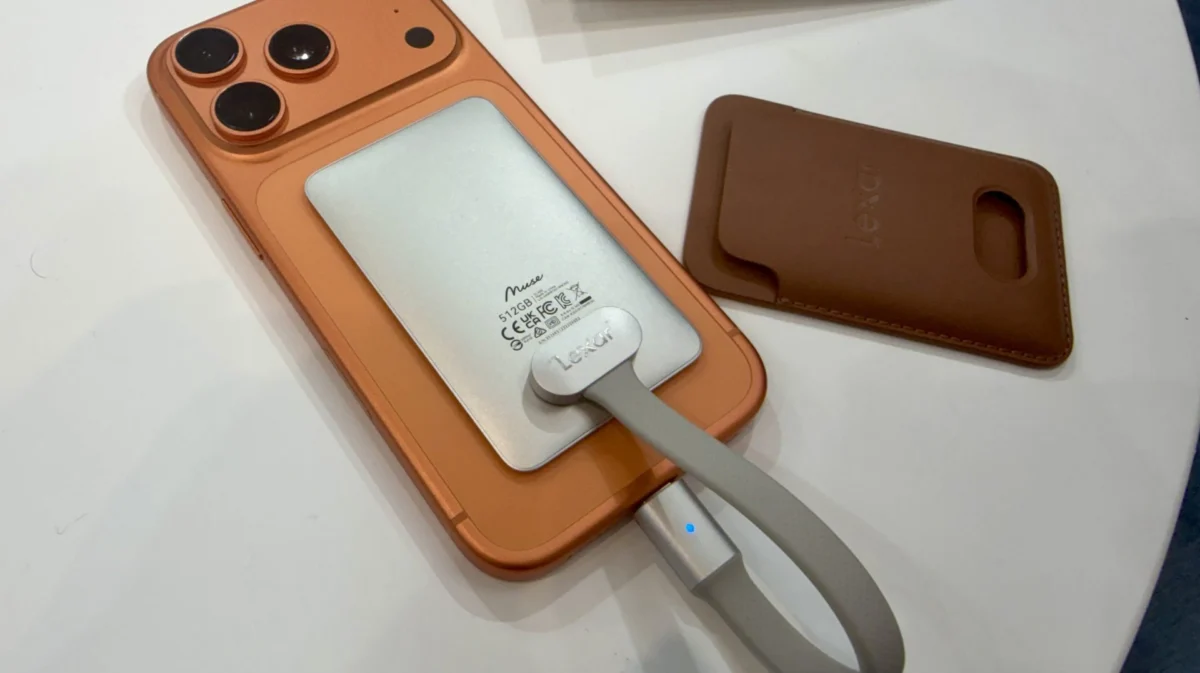
The landscape of portable storage underwent a significant transformation at the Internationale Funkausstellung (IFA) 2026 in Berlin, as Lexar officially unveiled the Muse, an ultra-slim portable Solid State Drive (SSD) that challenges the physical limitations of modern external storage. Marketed as the world’s thinnest portable SSD, the Lexar Muse represents a departure from the "brick" aesthetic common in the industry, instead opting for a profile that mimics the sleekness of a high-end smartphone. With a maximum thickness of only 3.8mm at its center, tapering down to a razor-thin 1mm at its edges, the Muse is engineered to meet the rigorous demands of professional mobile content creators who require high-speed data transfers without the bulk of traditional peripherals.
Engineering the Ultra-Slim Form Factor
The realization of the Muse’s dimensions—80 x 48 mm with a sub-4mm profile—required Lexar to rethink the internal architecture of the standard SSD. Traditional portable drives often utilize a standard M.2 internal drive housed within an enclosure, which necessitates a minimum thickness of approximately 10mm to 15mm to accommodate the drive, the bridge chip, and the protective casing. Lexar’s engineering team bypassed this conventional approach by developing a proprietary ultra-thin PCB (Printed Circuit Board) architecture.
To achieve such extreme thinness, Lexar utilized high-density NAND stacking technology. By vertically stacking memory cells with greater precision and density, the company was able to reduce the horizontal and vertical footprint of the storage modules themselves. Furthermore, the internal component layout was optimized to eliminate any wasted "air gap" space within the device. This internal assembly is protected by a precision-machined unibody metal enclosure. The choice of a metal unibody is not merely aesthetic; it serves a vital functional purpose. In a device this thin, heat dissipation is a primary concern. The metal shell acts as a passive heatsink, drawing heat away from the NAND and controller to maintain peak performance during sustained data transfers.

Innovative Connectivity: The Transition to PogoPin Technology
One of the most radical design choices found in the Lexar Muse is the absence of a standard USB Type-C port on the drive itself. A standard USB-C female port requires a certain vertical clearance that would have made the 3.8mm thickness impossible to achieve. To solve this, Lexar introduced a PogoPin magnetic data connection system.
The drive ships with a proprietary SnapLink Magnetic Cable. This cable utilizes a series of spring-loaded pins (PogoPins) that make contact with gold-plated pads on the surface of the SSD. To ensure a secure and stable connection, Lexar integrated N52-grade neodymium magnets—the strongest grade of permanent magnets commercially available. These magnets ensure that the SnapLink cable aligns perfectly with the data pads every time, providing a connection that is both robust and easy to detach.
For mobile creators, this system offers a distinct advantage over traditional cables. Standard USB ports can become points of mechanical failure, especially when a drive is hanging from a smartphone or camera. The magnetic SnapLink system allows the cable to break away safely if snagged, preventing damage to the drive’s internal circuitry or the phone’s port.
Integration with Mobile Ecosystems and Apple ProRes
The Lexar Muse is specifically optimized for the modern mobile filmmaking workflow. A key feature of its design is the inclusion of a magnetic sleeve, which allows the Muse to be attached directly to the back of a smartphone. This design is fully compatible with Apple’s MagSafe ecosystem, allowing iPhone users to snap the drive onto their device for a seamless, "all-in-one" rig experience.

This integration is particularly relevant given the increasing data requirements of modern smartphones. With the introduction of Apple ProRes 4K video recording at up to 120 frames per second (fps), internal storage on mobile devices can be exhausted in a matter of minutes. The Lexar Muse allows creators to record these massive video files directly to the external SSD. By offloading the storage burden to the Muse, creators can shoot for extended periods without needing to stop and transfer files to a computer, effectively turning a smartphone into a professional-grade cinema camera.
Performance Specifications and Capacity
Despite its diminutive size, the Lexar Muse does not compromise on transfer speeds. The drive is rated for sequential read speeds of up to 1,050 MB/s and sequential write speeds of up to 1,000 MB/s. These figures place it firmly in the upper echelon of USB 3.2 Gen 2 storage devices. Such speeds are essential for the 4K 120fps ProRes workflow, which requires high sustained write speeds to prevent dropped frames during recording.
Lexar has announced that the Muse will initially be available in two storage capacities: 512 GB and 1 TB. While some power users might have hoped for a 2 TB or 4 TB variant, the physical constraints of the 3.8mm chassis likely limited the amount of NAND flash that could be packed into the device at launch. However, for most mobile assignments, 1 TB provides a significant buffer, capable of holding hours of high-bitrate footage.
The Context of IFA 2026 and Lexar’s Market Strategy
The unveiling of the Muse at IFA 2026 underscores a broader shift in Lexar’s corporate strategy. Historically known for its high-performance SD and CFexpress cards, Lexar has increasingly moved into the consumer and professional SSD market. IFA, held annually in Berlin, is one of the world’s oldest and most prestigious industrial exhibitions for consumer electronics and home appliances. It serves as a barometer for the industry, and Lexar’s decision to debut the Muse there highlights the product’s importance as a flagship device.

Industry analysts at the event noted that Lexar is positioning itself to capture the growing "prosumer" market—users who may not be full-time cinematographers but who utilize high-end mobile devices for social media content, journalism, and independent filmmaking. The Muse addresses a specific pain point for this demographic: the need for high-speed storage that doesn’t interfere with the ergonomics of a mobile gimbal or handheld phone rig.
Timeline and Availability
The development of the Muse follows a multi-year trend of miniaturization in the storage industry. While the early 2020s saw the standardization of the "pocket-sized" SSD (roughly the size of a credit card but 10mm thick), the mid-2020s have seen a push toward "wearable" or "attachable" storage.
Lexar’s timeline for the Muse indicates a phased rollout. Following its debut in Berlin in September 2026, the company plans to move into full-scale production to meet a Q4 2026 launch window. This timing is strategically chosen to coincide with the holiday shopping season and the typical release cycle of flagship smartphones, which often drive demand for high-speed accessories. As of the announcement, Lexar has not disclosed the official Manufacturer’s Suggested Retail Price (MSRP), though industry experts speculate that the premium engineering and magnetic connectivity will place it at a higher price point than Lexar’s standard SL-series portable SSDs.
Technical Analysis: Thermal Management and Durability
A critical point of discussion among hardware enthusiasts at IFA involved the thermal profile of a 1mm-thick device. SSDs generate significant heat during high-speed writes. Lexar representatives addressed these concerns by highlighting the efficiency of the unibody metal casing. By using the entire exterior surface area as a heat dissipator, the Muse can manage thermal throttling more effectively than plastic-cased competitors.

Furthermore, the lack of moving parts and the unibody construction provide a high level of physical durability. While Lexar has not yet released specific IP (Ingress Protection) ratings for water and dust resistance, the sealed nature of a PogoPin connection—which lacks the deep cavity of a USB-C port—suggests that the drive may be more resistant to lint and debris accumulation than standard drives.
Implications for the Future of Portable Storage
The Lexar Muse is more than just a thin drive; it is a proof of concept for the future of modular mobile computing. As smartphones become the primary workstations for a generation of creators, the peripherals that support them must evolve to be equally portable. The move away from standardized ports toward magnetic, low-profile connectors could signal a new era of accessory design where the boundary between the "host" device and the "peripheral" becomes increasingly blurred.
If the Muse performs well in the market, it is likely to spark a "thinness war" among storage manufacturers such as Samsung, Western Digital, and Kingston. However, Lexar’s early adoption of the PogoPin/SnapLink system gives it a first-mover advantage in defining how ultra-slim storage should interact with mobile hardware.
Conclusion
The Lexar Muse Ultra-Slim Portable SSD stands as a significant achievement in industrial design and flash storage engineering. By prioritizing a slim profile and innovative magnetic connectivity, Lexar has created a tool that directly addresses the ergonomic and technical needs of the modern mobile creator. As the industry moves toward the Q4 2026 launch, the Muse will likely be watched closely as a benchmark for the next generation of professional mobile accessories. Whether it is recording high-frame-rate ProRes video on a bustling film set or quickly backing up files in the field, the Muse offers a glimpse into a future where high-capacity storage is virtually weightless and effortlessly integrated into the creative process.