Evan Lee Salim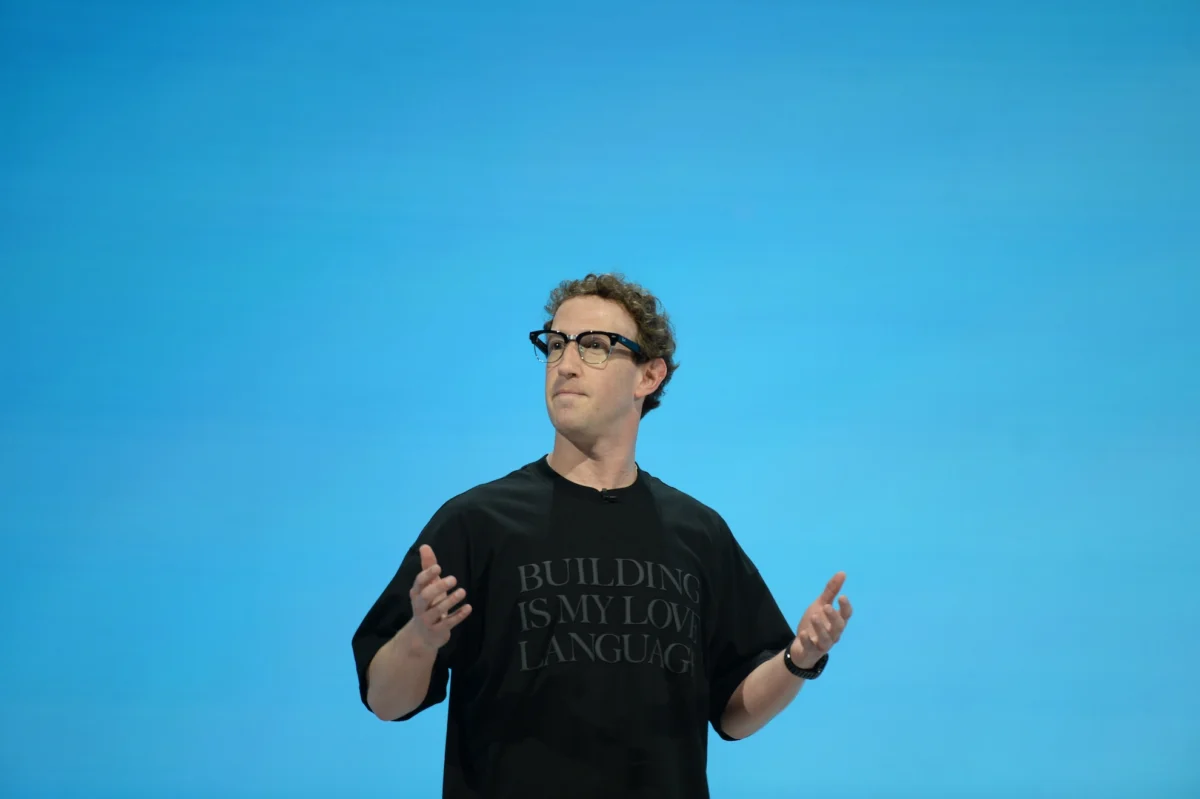
Menlo Park, CA – In a bold declaration of its commitment to artificial intelligence, Meta Platforms Inc. used its annual Connect event on Wednesday to significantly expand the scope and capabilities of Muse, its personal AI agent. Just weeks after its initial debut in early September, Muse has been positioned by CEO Mark Zuckerberg as potentially the company’s most substantial venture into consumer AI to date, signaling a full-scale pivot towards agentic AI integrated deeply into daily life. The keynote address, delivered by Zuckerberg from the company’s Menlo Park headquarters, made it unequivocally clear: Meta is "going all-in on Muse."
The foundational premise of Muse is to serve as an omnipresent digital assistant, designed to streamline and automate everyday tasks by seamlessly interfacing with a user’s myriad applications and services, including critical tools like email and calendars. The Connect event served as a launchpad for a suite of new functionalities and deeper integrations, all aimed at making Muse an indispensable component of users’ digital existence. Zuckerberg articulated a vision where Muse would be ubiquitous, extending its reach to Meta AI glasses and various other Meta-owned platforms, contingent on user preference. This aggressive integration strategy underscores Meta’s ambition to embed its AI agent at the core of personal computing and interaction.
Muse, which relies on the advanced capabilities of Muse Spark—Meta’s proprietary multimodal AI model built specifically for agentic work—is touted by the company as a more accessible alternative to competing AI agents. The core promise is an AI helper capable of automating significant portions of users’ "busy work" from the outset, thereby freeing up valuable time and cognitive load. This focus on immediate, practical utility distinguishes Muse within a rapidly evolving AI landscape.
Mark Zuckerberg, who commenced his keynote speech notably clad in khakis and a black T-shirt emblazoned with "Building is My Love Language," underscored the centrality of Muse to Meta’s long-term strategy. "The centerpiece of our vision for what we’re building is Muse," Zuckerberg stated with conviction. He further elaborated on the profound impact he anticipates, projecting that "In the coming years, I expect that Muse is going to grow into the personal superintelligence that billions of people around the world are going to use to accomplish their goals and improve their lives." This statement alone highlights the sheer scale of Meta’s ambition, aiming for global penetration and a transformative effect on individual productivity and well-being.
Beyond mere utility, Zuckerberg also outlined a robust economic model for Muse, envisioning it as a tool that will not only generate value for its users but, in due course, also for Meta itself. "We’re standing behind this by making Muse free for a huge number of tokens, with the expectation that over time we will profit by taking a small fee from transactions," he explained. This transactional revenue model suggests a future where Muse facilitates commerce, services, and various digital interactions, taking a small percentage of the value it helps create or mediate. This approach is reminiscent of platform strategies seen in other tech giants, where widespread adoption is incentivized before monetized services are introduced.
The Strategic Imperative: Why Muse is Meta’s "Biggest Bet"
Meta’s pivot towards agentic AI with Muse is not an isolated development but rather a calculated strategic move within a fiercely competitive technological landscape. The global race for AI supremacy has intensified dramatically, with companies like OpenAI, Google, Microsoft, and Anthropic investing billions into developing advanced AI models and agents. For Meta, a company that has historically relied heavily on social networking and advertising revenue, investing heavily in AI agents represents a diversification strategy and a bid to secure its relevance in the next era of computing.
The company’s prior investments in AI, particularly in large language models like Llama, have laid the groundwork for Muse Spark. However, Muse represents a significant leap from conversational AI to agentic AI – systems capable of performing tasks autonomously across multiple applications and contexts. This shift is critical as it moves AI from being a passive tool to an active participant in users’ digital lives. The scale of investment, the ambitious integration across Meta’s diverse ecosystem (from social apps to smart glasses), and the stated goal of reaching billions of users, underscore why this is indeed Meta’s "biggest bet." It’s an attempt to redefine the user interface for the internet itself, moving beyond graphical user interfaces to a conversational, task-oriented interaction model.

New Capabilities Unveiled at Connect
The Connect event showcased several groundbreaking features designed to enhance Muse’s functionality and user engagement:
Muse Receives a Distinct Digital Avatar and Real-time Interaction
One of the more engaging announcements at Connect was the upcoming ability for Muse users to summon a unique digital avatar for their personal agent, and subsequently engage in real-time video conversations with it. This feature is powered by a newly developed AI model named Muse Realtime Avatar. The underlying philosophy is to imbue Meta’s hitherto faceless AI software with a recognizable face, body, and voice, thereby significantly enhancing its personable quality and fostering a deeper sense of connection for the user.
This particular feature bears a distinct "Metaverse-ish" quality, which was vividly demonstrated during the Connect keynote. Users will possess the capacity to conduct live, dynamic conversations with their Muse avatar, delegating tasks, seeking information, and asking questions in a more natural and intuitive manner. This move towards anthropomorphic AI agents is a significant step in making AI less like a tool and more like a companion, aligning with Meta’s broader vision of immersive digital experiences. The exact launch timeline for this feature remains somewhat ambiguous, with Meta indicating its availability "in the coming months."
Integration with Meta AI Glasses for Seamless Interaction
Further cementing Muse’s ubiquitous presence, Meta also announced its deep integration with its line of smart glasses. This strategic move means users will soon be able to interact with their Muse agent simply by speaking to their glasses. The agent will activate via a designated wake word, enabling a range of hands-free functionalities. Examples provided included guiding users through personalized workout routines, meticulously logging meals, efficiently booking appointments, and even assisting with the purchase of products observed in the real world. Muse is designed to operate discreetly in the background, offering updates and checking back in upon task completion, promising an unprecedented level of ambient intelligence. This integration with wearable technology represents a significant leap towards truly pervasive AI, blending digital assistance with physical reality.
Empowering Mac Users: Muse Takes Control of Desktop Tasks
Meta confirmed and expanded upon earlier discussions regarding Muse’s expansion to Mac operating systems. This integration will empower users to delegate a wide array of computer-based tasks to their AI agent. Crucially, Muse will possess the capability to operate any application on a user’s desktop, mirroring the functionalities seen in advanced AI agents from competitors like OpenAI and Anthropic. Alexandr Wang, Meta’s Chief AI Officer, articulated the transformative potential during the keynote: "You can have it help you run your small business, or just get work done for you. You can walk away from your computer and it keeps working for you on all the jobs you lined up." This desktop automation feature is poised to revolutionize productivity, allowing users to offload tedious or time-consuming digital chores to their AI assistant.
Muse to Gain Its Own Dedicated Email Address
Acknowledging Muse’s role as a proactive background agent, Meta announced that it is developing a feature to assign Muse its own dedicated email address, to be rolled out "soon." This functionality will allow users to seamlessly incorporate Muse into existing email threads or forward emails to the agent for independent handling. This capability signifies a significant step towards Muse becoming an autonomous digital assistant capable of managing communications, scheduling, and information processing without constant direct human oversight. It’s a key component in enabling Muse to truly "run your small business" or manage personal logistics.
Strategic Partnerships and the Expansion of the Muse Ecosystem
Meta has been actively forging critical partnerships to expand Muse’s transactional and functional reach, solidifying its vision for the AI agent as a powerful tool for commerce and productivity. Collaborations with financial technology giants like Stripe and Shopify underscore Meta’s intent to position Muse as an essential instrument for online shopping and business operations. Wang highlighted that Muse can already access the entire Shopify product catalog agentically and leverage Lync and Shop Pay to facilitate purchases across a vast array of internet offerings. The company has also bolstered its payment integration by adding support for PayPal, further broadening Muse’s commercial utility.

Beyond payment and e-commerce platforms, Meta announced a robust roster of new partnerships with prominent retailers, including Best Buy, Gap, Sephora, Walmart, and Wayfair. Muse will seamlessly connect with these retail applications, alongside travel booking platform Expedia, and soon, grocery delivery service Instacart. Additional connectors include developer platform GitHub, productivity tool Granola, and knowledge management system Notion. This extensive network of integrations is designed to make Muse a central hub for managing diverse aspects of a user’s digital and real-world activities.
Wang also emphasized Meta’s commitment to supporting small businesses, revealing that the company recently opened its platform to developers, allowing them to build their own "connectors" for Muse. The response has been overwhelmingly positive, with over 1,500 applications received in less than a week. Wang remarked, "I think this could be a generational opportunity to start building for a new platform as it takes off, and the response so far has been really great." This developer-centric approach aims to foster a vibrant ecosystem around Muse, ensuring its adaptability and relevance across countless niche applications and industries.
Broader Implications and the Competitive Landscape
Meta’s aggressive push with Muse carries significant implications for the broader technology industry and the future of human-computer interaction. By aiming for a "personal superintelligence" that reaches billions, Meta is directly challenging the established players in the AI agent space and seeking to define the paradigm for how consumers interact with AI.
The emphasis on accessibility and automation of "busy work" targets a vast segment of the market that may find more complex, developer-focused AI tools intimidating. If successful, Muse could significantly alter daily routines, shifting how individuals manage their schedules, communications, purchases, and even personal development. The integration with smart glasses points towards a future where AI assistance is not just on our screens but constantly available in our peripheral vision and auditory field, merging the digital and physical worlds in unprecedented ways.
However, the ambitious vision for Muse is not without its challenges. User trust, particularly concerning data privacy and security, will be paramount. An AI agent that connects to emails, calendars, shopping accounts, and potentially even controls desktop applications will require an exceptionally robust privacy framework and clear communication with users about data handling. The ability of Muse to operate across diverse platforms and applications also raises questions about interoperability standards and potential vendor lock-in, concerns that often accompany the introduction of powerful new platforms.
Furthermore, Meta faces formidable competition. OpenAI’s ChatGPT with its custom GPTs and agentic capabilities, Google’s Gemini with its deep integration into Android and Workspace, and Anthropic’s Claude are all vying for leadership in the AI agent market. Meta’s strategy relies on its vast user base, its integrated ecosystem of social media and hardware (like the smart glasses), and its stated commitment to an open, developer-friendly platform. The success of Muse will ultimately hinge on its ability to deliver on its promise of intuitive, reliable, and truly transformative assistance, while navigating the complex ethical and technical landscape of advanced AI.
In conclusion, Meta’s Connect event served as a powerful testament to its unwavering commitment to AI, with Muse at the forefront of its future strategy. The unveiling of new features—from personalized avatars and smart glass integration to desktop automation and extensive commercial partnerships—paints a picture of an AI agent designed for profound, pervasive impact. As Meta embarks on this "generational opportunity," the evolution of Muse will undoubtedly be a key narrative in the ongoing story of artificial intelligence’s integration into our daily lives.