Sisilia Frederika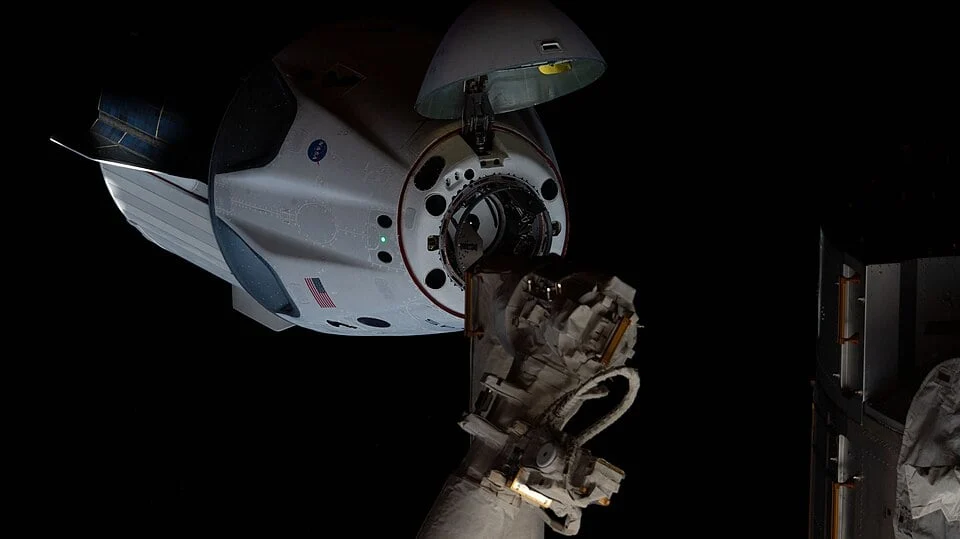
The pursuit of autonomous spacecraft operations has long been a cornerstone of aerospace engineering, yet the complexities of orbital mechanics continue to present formidable challenges that defy traditional computational solutions. A team of researchers at Stanford University has recently unveiled a significant breakthrough in this field, introducing a novel artificial intelligence architecture known as the Out-of-this-World-Model (OWM). Detailed in a pre-print paper titled "GPU-Accelerated Astrodynamics World Models for Spacecraft Rendezvous and Proximity Operations" available on arXiv, this research proposes a shift from rigid, equation-based guidance systems to a more flexible "world model" approach. This AI-driven system utilizes mental simulations to predict and navigate the intricacies of Low Earth Orbit (LEO) environments, potentially setting the stage for a new era of autonomous satellite servicing, debris removal, and interplanetary exploration.
The Counter-Intuitive Physics of Orbital Proximity
To understand the significance of the Stanford research, one must first grasp the extreme difficulty of Rendezvous and Proximity Operations (RPO). While docking with the International Space Station (ISS) may appear as a slow, graceful maneuver in popular media, it is technically equivalent to parallel parking a vehicle into a garage while both the vehicle and the garage are traveling at approximately 28,000 kilometers per hour (17,500 mph). In this high-velocity environment, the laws of motion are famously counter-intuitive.
Unlike terrestrial navigation, where pressing an accelerator results in a simple forward movement, orbital mechanics are governed by the relationship between velocity and altitude. If a spacecraft pilot attempts to accelerate forward to catch up to a target, the increase in kinetic energy raises the craft’s orbit. Due to Keplerian physics, a higher orbit results in a slower angular velocity, causing the craft to actually drift upward and fall further behind the target. To move forward, a craft must often paradoxically slow down to drop into a lower, faster orbit before performing a series of precisely timed "hops" to reach the destination.
Furthermore, the absence of atmospheric friction means there is no natural deceleration. Every action requires an equal and opposite reaction from thrusters, and any miscalculation carries catastrophic stakes. A collision at orbital speeds does not merely dent a hull; it can result in the total destruction of both the visiting craft and the multi-billion-dollar space station, creating a cloud of hyper-velocity debris. This debris field, known as the Kessler Syndrome, could potentially render entire orbital planes unusable, endangering dozens of other satellites and even posing a risk to populations on the ground.
Limitations of Traditional GNC and Computer Vision
For over half a century, space agencies have relied on Guidance, Navigation, and Control (GNC) algorithms to manage these risks. These systems typically utilize the Extended Kalman Filter (EKF), a mathematical tool that estimates the state of a moving system by combining noisy sensor data—such as GPS coordinates and star tracker readings—with the known laws of physics. While reliable, EKFs are limited in their ability to process complex, high-bandwidth data like real-time video.
In modern autonomous docking, engineers have attempted to integrate traditional computer vision to identify docking ports and calculate relative distances. However, the space environment is notoriously hostile to standard vision algorithms. The high-contrast lighting of LEO, where a spacecraft can transition from blinding solar glare to absolute shadow in seconds, often "blinds" these systems. If sunlight glints off a metallic solar array or if a shadow obscures a critical sensor marker, traditional computer vision often fails, requiring human intervention or the aborting of the mission.
Previous attempts to solve these issues using Reinforcement Learning (RL)—the same AI logic that allows computers to beat grandmasters at chess—have met with limited success in the vacuum of space. RL systems are "brute-force" learners; they require millions of trials to master a specific set of rules. If a single variable changes—such as the orientation of a docking port or the presence of an unexpected external component—the RL model often collapses, as it lacks a fundamental "understanding" of the environment it inhabits.
The World Model Breakthrough: Learning Through Intuition
The Stanford researchers, led by D. Eddy, have moved away from the brute-force approach of RL toward a "World Model" architecture. This type of AI is inspired by biological intuition. When a human athlete catches a ball, they do not consciously calculate the gravitational constant or air resistance. Instead, their brain maintains a "mental simulation" or an internal model of how the world works, allowing them to predict where the ball will be based on its current trajectory.
The OWM (Out-of-this-World-Model) operates on a similar principle. It does not simply follow a list of "if-then" rules. Instead, it learns the fundamental physics of its environment through experience. By processing visual data, the OWM "dreams" or simulates dozens of potential future scenarios. It then calculates the probability of success for each scenario and adjusts its thruster outputs to move toward the most favorable "dreamed" future.
Crucially, the OWM is probabilistic. It doesn’t just guess; it measures how certain it is about a specific outcome. This allows the AI to handle uncertainty and unexpected obstacles with a level of nuance that previous systems lacked. If the model encounters a situation it has never seen before, its internal "mental simulation" allows it to generalize its knowledge of physics to find a safe path forward.
Technical Acceleration: AstroJAX and GPU Integration
One of the primary hurdles in developing such a sophisticated model is the computational power required for training. A world model requires hundreds of thousands, if not millions, of simulated flights to "understand" the nuances of orbital drift. On a traditional Central Processing Unit (CPU), training the OWM would have taken weeks or months, rendering it impractical for rapid development.
To solve this, the Stanford team developed a specialized library called AstroJAX. This library is optimized to run on Graphics Processing Units (GPUs). Originally designed for the complex rendering of video games, GPUs are uniquely suited for AI because they can perform thousands of mathematical calculations simultaneously. By migrating the astrodynamics simulations to GPUs, the researchers were able to compress the training timeline significantly.
The results of this technical shift were stark. The OWM required only 500,000 iterations to achieve mastery over complex docking maneuvers. In contrast, a traditional Reinforcement Learning system required 25,000,000 iterations to reach a comparable level of proficiency. This 50-fold increase in efficiency demonstrates that "teaching" an AI the underlying physics of a world is far more effective than forcing it to memorize every possible permutation of a scenario.
Comparative Performance and Experimental Results
The researchers put the OWM to the test against traditional RL models in a series of simulated ISS docking scenarios. The OWM outperformed the RL system across several key metrics:
- Success Rate: In general docking tests across various ISS ports, the OWM achieved a success rate of 53%, nearly double the 29% success rate managed by the RL algorithm.
- Generalization: When presented with a docking port the AI had never seen during its training phase, the OWM was able to adapt its strategy in real-time. The RL model, conversely, frequently failed when faced with novel configurations.
- Obstacle Handling: The researchers introduced "noise" and unexpected obstacles into the simulations, such as a docked capsule already occupying a nearby port. The OWM demonstrated a superior ability to recognize these anomalies and adjust its approach path to avoid collisions.
Despite these successes, the researchers noted that the OWM still struggled with the final "terminal" phase of docking—the last few meters before contact. The model tended to be overly cautious, a result of the high "penalty weighting" the researchers placed on collisions. In the simulation, hitting the station is the ultimate failure, and the AI’s tendency to avoid this at all costs sometimes prevented it from completing the final connection. The authors noted that future iterations will involve fine-tuning these reward structures to balance safety with mission completion.
Chronology of Autonomous Docking Development
The OWM represents the latest chapter in a long history of orbital rendezvous technology:
- 1966: Gemini 8 achieves the first manual docking in history, though a thruster malfunction nearly ends in disaster.
- 1967: The Soviet Union achieves the first fully automated docking between two unmanned Soyuz-type craft (Cosmos 186 and 188) using the "Igla" system.
- 1975: The Apollo-Soyuz Test Project demonstrates international docking capabilities.
- 2012: SpaceX’s Dragon becomes the first commercial spacecraft to berth with the ISS, though it initially required the station’s robotic arm to "grapple" it.
- 2020: SpaceX’s Crew Dragon performs the first fully autonomous docking of a commercially developed crewed vehicle.
- 2024: Stanford’s OWM research introduces the first viable "World Model" AI for proximity operations, moving beyond hard-coded algorithms to learned intuition.
Broader Implications for the Future of Spaceflight
The implications of the OWM extend far beyond docking with the ISS. The space industry is currently undergoing a shift toward "On-Orbit Servicing, Assembly, and Manufacturing" (OSAM). Companies are developing "Life Extension Pods" designed to dock with aging satellites to provide them with new fuel or propulsion. Other missions aim to "harpoon" or net pieces of space junk to drag them into the atmosphere.
These missions involve interacting with "non-cooperative" targets—satellites that may be tumbling, have broken docking ports, or were never designed to be docked with in the first place. Traditional GNC systems struggle with these unpredictable variables. An AI with a "World Model" of physics would be the ideal pilot for such missions, as it could visually assess a tumbling satellite and "predict" its rotation to find the perfect moment to strike or grab.
Furthermore, as humanity looks toward the Moon and Mars, the need for autonomous operations will only grow. The time delay in communications between Earth and Mars (up to 20 minutes) makes real-time remote piloting impossible. Future Mars-bound craft will need to be entirely self-reliant. The ability for a craft to "dream" its way through a landing or a docking sequence without human oversight could be the difference between mission success and a catastrophic loss of life.
While the Stanford researchers acknowledge that OWM is not yet ready for a live mission, the 53% success rate in such a complex simulation is viewed by the community as a foundational milestone. As the model is refined and the "collision penalty" is optimized, the gap between AI performance and human piloting is expected to close. The transition from hard-coded physics to learned "mental simulations" marks a pivotal moment in aerospace engineering—one where the robots are finally beginning to understand the world they inhabit.