admin
admin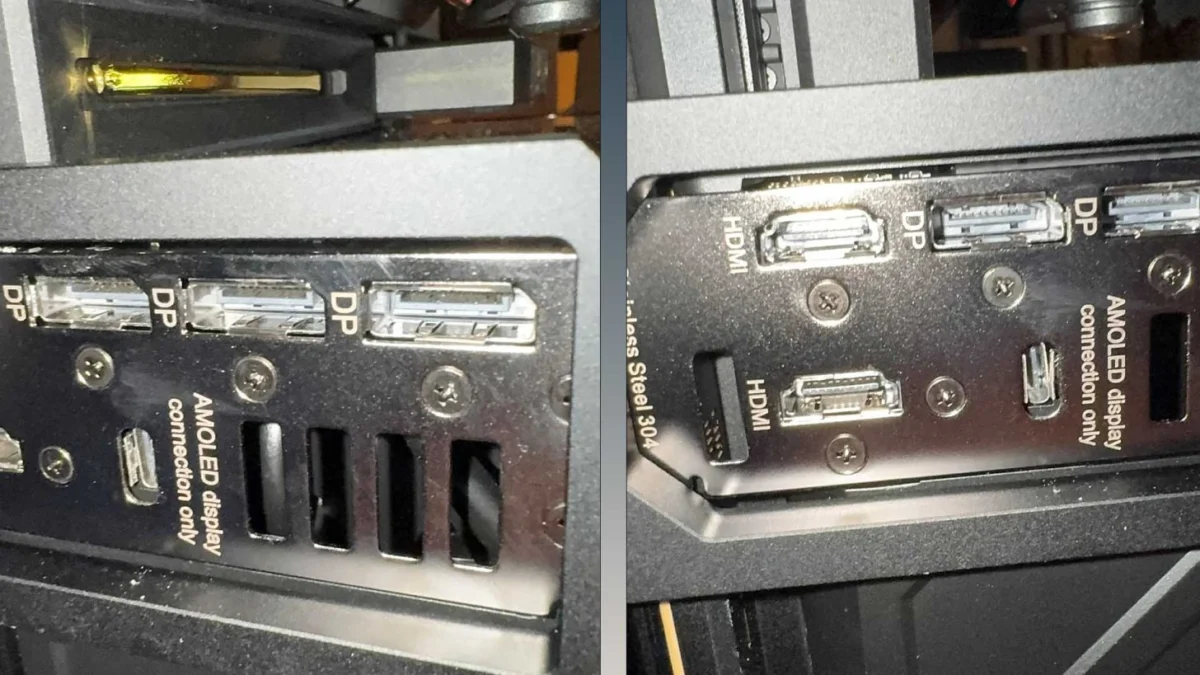
The specific issue involves a recessed USB-C port intended to power the card’s signature AMOLED display. According to reports first surfacing on community platforms such as Reddit, at least one consumer, identified as "Madsoul19897," discovered that the port was seated too far behind the GPU’s faceplate to allow for a physical connection. This defect renders one of the card’s most marketable features—a high-resolution external monitoring display—entirely unusable. For a product marketed as the pinnacle of engineering and design, the presence of a mechanical misalignment has raised questions about the rigorousness of ASUS’s quality assurance protocols for its 20th-anniversary "Edition 20" lineup.
The Evolution of the Ultra-Premium GPU Market
To understand the gravity of the current situation, one must look at the trajectory of the graphics card market over the last several years. Since the launch of the NVIDIA GeForce RTX 30-series in 2020, the industry has seen a massive shift in pricing and availability. High demand driven by cryptocurrency mining, artificial intelligence development, and a surge in home entertainment led to a paradigm shift where flagship GPUs moved from the $700–$1,000 range to the $1,600–$2,000 range. With the introduction of the Blackwell architecture and the RTX 5090, manufacturers like ASUS have pushed the envelope even further, creating boutique, limited-edition versions of already expensive chips.
The ASUS ROG Astral GeForce RTX 5090 Edition 20 represents the zenith of this trend. Boasting a massive 800W power target and a custom cooling solution, it is designed to be the fastest and most visually striking consumer graphics card on the market. The $5,499 price tag for the standalone unit is already several times higher than the expected MSRP of a standard RTX 5090. However, due to limited supply and high demand, major retailers like Newegg have implemented "exclusive deals" that bundle these cards with other high-end components—such as motherboards, power supplies, and memory—often totaling nearly $11,000. This practice, while legally permissible, effectively forces consumers to buy an entire ecosystem of parts just to acquire the elusive graphics card.

Technical Analysis of the Reported Defect
The defect reported by the consumer is not merely a cosmetic blemish but a functional failure. The ROG Astral Edition 20 utilizes a unique USB-C AMOLED port located on the side or rear of the faceplate, designed to connect to an external display that provides real-time telemetry, such as clock speeds, temperatures, and power draw. Documentation and teardown videos of the card suggest that this port is mounted to a daughterboard or bracket that is secured to the internal frame.
In the case of the defective unit, the port appears to have slipped or been improperly mounted during the assembly process, causing it to sit recessed within the GPU’s outer shroud. Because the shroud has a specific cutout for the USB-C cable’s housing, even a few millimeters of displacement can prevent the cable from seating properly. Users have noted that the design appears to have the port "hanging on" to the faceplate with minimal structural reinforcement, leading to criticisms that the internal engineering may not match the card’s robust external aesthetic.
Retailer and Manufacturer Responses
The consumer’s attempt to rectify the situation has highlighted the complexities of modern warranty and return policies for bundled items. Upon contacting Newegg, the retailer from which the $11,000 bundle was purchased, the customer was informed that a direct replacement would only be possible if the specific limited-edition GPU was currently in stock. Given the extreme scarcity of the RTX 5090 Blackwell dies and the limited production run of the Astral Edition 20, stock availability is virtually non-existent.
Newegg reportedly offered a partial refund equivalent to the price of the graphics card alone. However, this solution is problematic for the consumer. If the customer accepts a partial refund and returns the GPU, they are left with approximately $5,500 worth of other hardware components that were purchased specifically to support the 5090. Without the central component of the build, the utility of the remaining bundle is significantly diminished, and the consumer is essentially stuck with an expensive collection of secondary parts.

ASUS, the manufacturer, has also provided a response that has done little to assuage consumer concerns. The company indicated that if a repair is not possible and an identical replacement is not in stock, they would offer a "comparable" version of the GPU. For a collector or enthusiast who specifically paid a premium for the "Edition 20" branding and the unique AMOLED feature, a standard ROG Strix or TUF Gaming version of the RTX 5090—while technically "comparable" in performance—is not a satisfactory replacement in terms of value or prestige.
Supply Chain Constraints and the RTX 5090 Launch
The backdrop of this quality control issue is a global supply chain that remains under significant pressure. Industry analysts suggest that NVIDIA is prioritizing its high-margin AI data center chips, such as the H100 and B200, over consumer-grade gaming GPUs. This has led to a trickle-down effect where board partners like ASUS receive fewer Blackwell dies than required to meet market demand.
When supply is this constrained, manufacturers often rush production lines to fulfill orders, which can lead to a breakdown in quality control. Furthermore, the 800W power requirement of the ROG Astral RTX 5090 necessitates a complex internal layout with massive heat sinks and reinforced PCBs. The sheer weight and complexity of these cards make them more susceptible to assembly errors and shipping damage. The "recessed port" issue may be a symptom of a larger struggle to balance intricate boutique designs with the realities of mass production during a period of component shortages.
Historical Context: ASUS and Quality Assurance
This incident follows a series of high-profile quality control and customer service challenges for ASUS. In the recent past, the company faced significant backlash regarding its RMA (Return Merchandise Authorization) processes, particularly concerning motherboard failures and handheld gaming devices like the ROG Ally. Investigations by tech journalists and consumer advocacy groups previously revealed instances where the company attempted to charge customers for unrelated cosmetic damage when they sent in products for legitimate functional warranty claims.

While ASUS has publicly committed to improving its customer service experience and being more transparent with its warranty policies, the ROG Astral RTX 5090 situation serves as a test of those promises. For a "Gold Standard" product, consumers expect white-glove service. The suggestion that a customer who spent five figures on a computer might have to settle for a "comparable" lower-tier product or a partial refund is seen by many in the hardware community as a failure of brand integrity.
Implications for the PC Building Community
The broader implications of this event touch on the sustainability of the ultra-high-end PC market. As prices for flagship components continue to climb into the thousands of dollars, the margin for error for manufacturers shrinks. Enthusiasts who are willing to pay these prices are typically the most vocal and influential members of the community. A high-profile failure of a flagship product can cause lasting damage to a brand’s reputation among its most loyal customers.
Furthermore, the practice of bundling is likely to come under increased scrutiny. While retailers use bundles to deter scalpers and move slower-selling inventory, the "all-or-nothing" nature of these sales creates a nightmare for consumers when the primary item in the bundle is defective. There are growing calls for retailers to provide more flexible return options for bundled products, particularly when the defect is a documented manufacturing error rather than a case of buyer’s remorse.
Future Outlook and Resolution
As of now, the resolution for the affected consumer remains in limbo, contingent on whether ASUS can source a replacement unit or perform a manual repair of the recessed port. The tech community is closely monitoring the situation to see if this is an isolated assembly error or a systemic design flaw affecting the entire ROG Astral GeForce RTX 5090 Edition 20 production run.

If more units are found to have the same recessed port issue, ASUS may be forced to issue a formal recall or a specialized repair program. In the meantime, potential buyers of the RTX 5090 series are being advised to conduct thorough inspections of their hardware upon arrival, especially concerning the mechanical integrity of ports and connectors.
The saga of the $11,000 GPU bundle serves as a cautionary tale about the intersection of extreme luxury pricing and the technical complexities of modern hardware. As the industry pushes toward even higher power draws and more elaborate cooling solutions, the pressure on quality control and customer support will only intensify. For ASUS, the path forward involves not just fixing a recessed port, but rebuilding the trust of a consumer base that feels increasingly squeezed by high prices and inconsistent product reliability.