Sisilia Frederika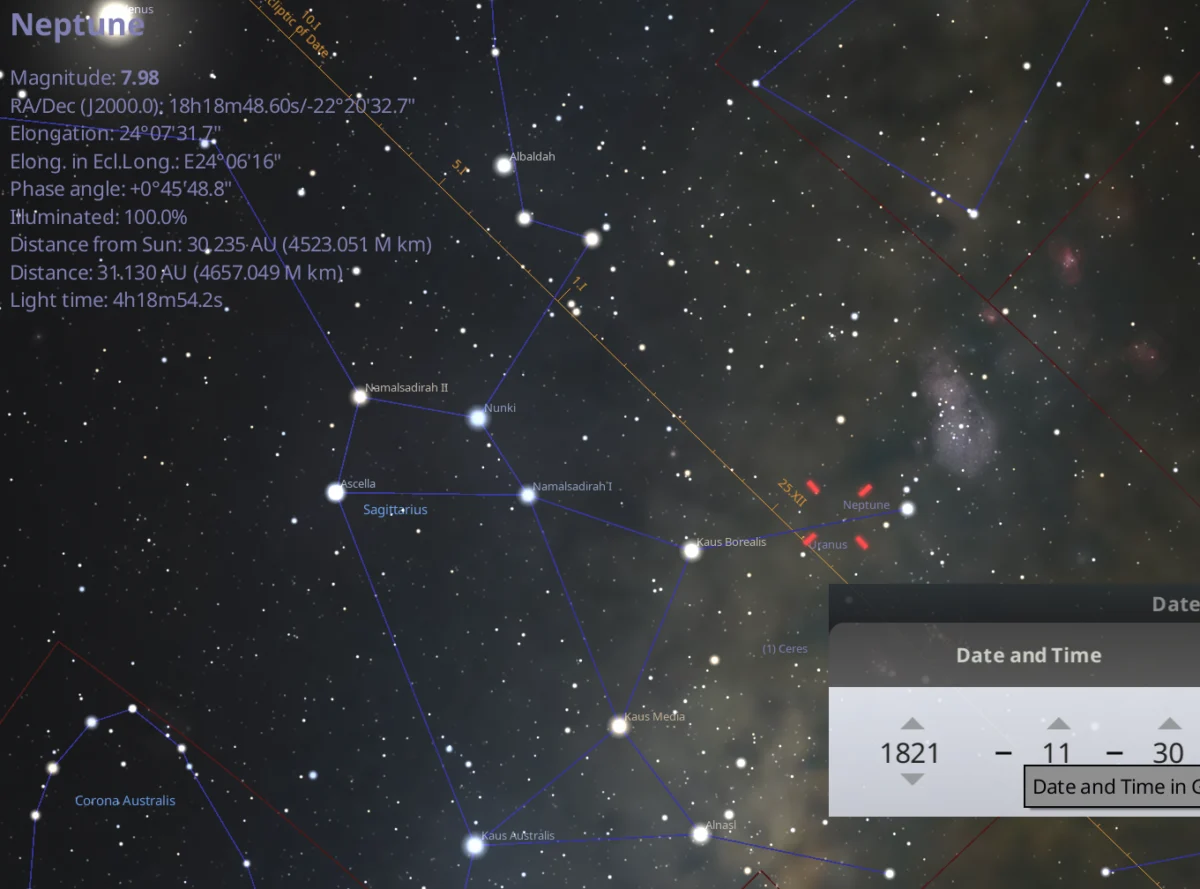
The outermost known planet in the solar system, Neptune, is set to reach opposition on September 26, 2026, marking a significant window for astronomical observation and scientific study. This annual event occurs when Earth passes directly between the Sun and Neptune, placing the ice giant at its closest point to our planet for the year. For professional and amateur astronomers alike, the 2026 opposition is of particular interest due to the planet’s specific positioning near the celestial equator, a placement that offers optimal viewing conditions for observers in both the Northern and Southern Hemispheres.
As the eighth planet from the Sun, Neptune remains an elusive target for most of the year. However, during the period surrounding September 26, the planet will rise in the east as the Sun sets in the west, remaining visible throughout the night and reaching its highest point in the sky around local midnight. At a distance of approximately 4.3 billion kilometers—roughly 29 times the distance between Earth and the Sun—Neptune’s light takes approximately four hours to reach terrestrial telescopes, staking out the cold, dark fringes of the planetary solar system.
The Mechanics and Timing of the 2026 Opposition
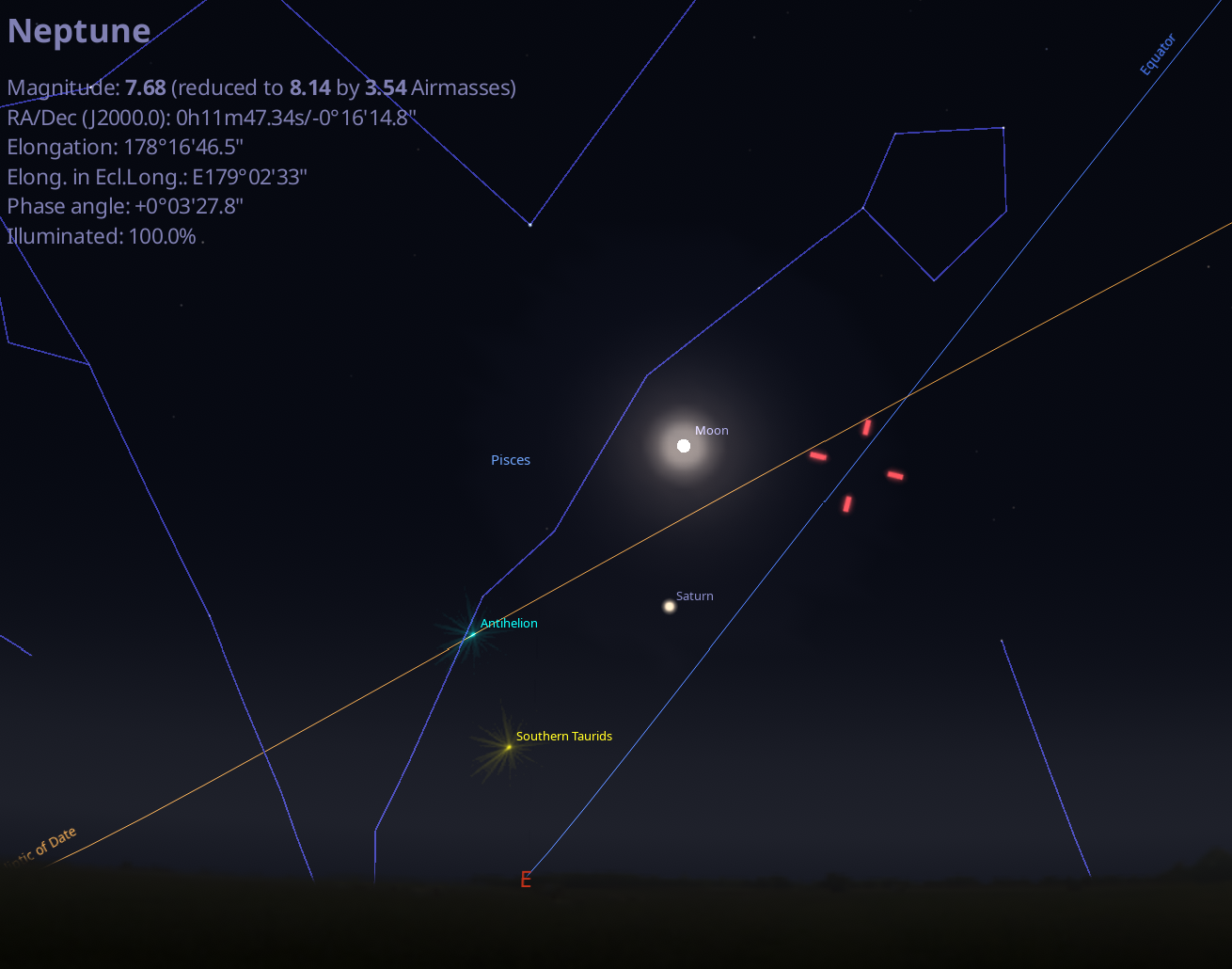
The precise moment of opposition is calculated to occur at approximately 1:00 Universal Time (UT) on September 26, 2026. For observers in North America, this corresponds to 9:00 PM EDT on the evening of Friday, September 25. During this window, Neptune will shine at a magnitude of +7.6, making it technically bright enough to be seen with high-quality binoculars, though a telescope is required to resolve it as a distinct planetary disk rather than a mere point of light.
The 2026 event is part of a slow-moving orbital cycle. Because Neptune takes 164.8 Earth years to complete a single revolution around the Sun, its position in the sky changes very little from year to year. The date of opposition advances by only about four to five days annually. In 2026, Neptune is positioned in the astronomical constellation Pisces, near the March equinoctial point. This specific location is significant because it sits nearly on the celestial equator. Historically, planets at high northern or southern declinations favor one hemisphere over the other; however, Neptune’s current equatorial path ensures that the 2026 opposition is a global event, providing equal access to the ice giant for the international scientific community.
Navigating the Night Sky: The Harvest Moon and Pisces
A notable feature of the 2026 opposition is the presence of the Harvest Moon. By definition, the Harvest Moon is the Full Moon occurring closest to the September equinox. On the night of September 25 and 26, this bright lunar disk will hang in the constellation Pisces, serving as a celestial guidepost for those searching for Neptune. While the brilliance of a Full Moon can sometimes hinder the observation of faint objects, the proximity of the Moon provides a clear reference point for amateur stargazers using star charts to locate the +7.6 magnitude planet.
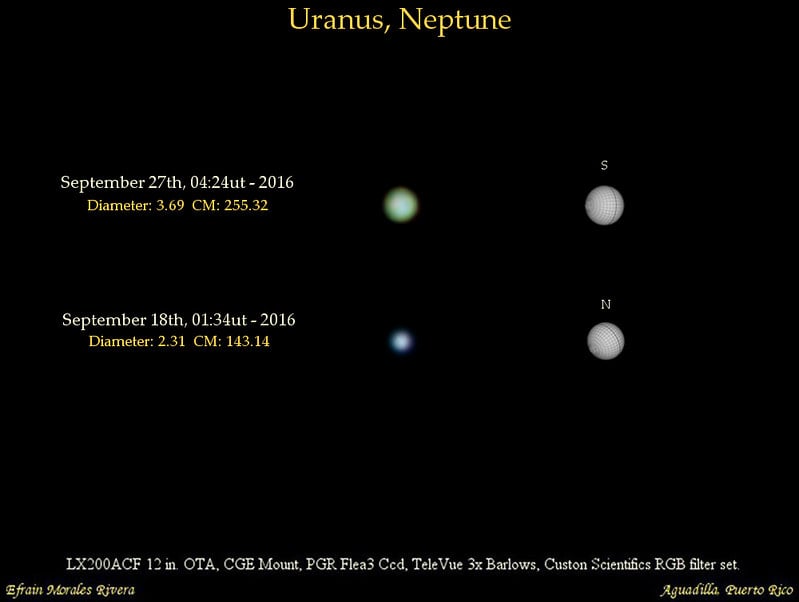
Observers using telescopes will see Neptune as a tiny, 2.4-arcsecond disk characterized by a distinct grayish-blue hue. This color is a result of methane in Neptune’s atmosphere, which absorbs red light and reflects blue light back into space. Unlike the gas giants Jupiter and Saturn, which reveal complex cloud belts and ring systems to modest equipment, Neptune appears as a "star that refuses to snap into focus." High-magnification eyepieces and steady atmospheric conditions are essential to distinguish the planet’s physical dimensions from the surrounding stars of Pisces.
Historical Significance: The Triumph of Mathematical Astronomy
The 2026 opposition serves as a reminder of Neptune’s unique place in the history of science. It remains the only planet in the solar system whose existence was predicted through mathematical calculation before it was ever observed through a lens. Following the discovery of Uranus by William Herschel in 1781, astronomers noted that the seventh planet’s orbit did not conform to the laws of Newtonian physics. There were unexplained "tugs" on Uranus that suggested the gravitational influence of an even more distant world.
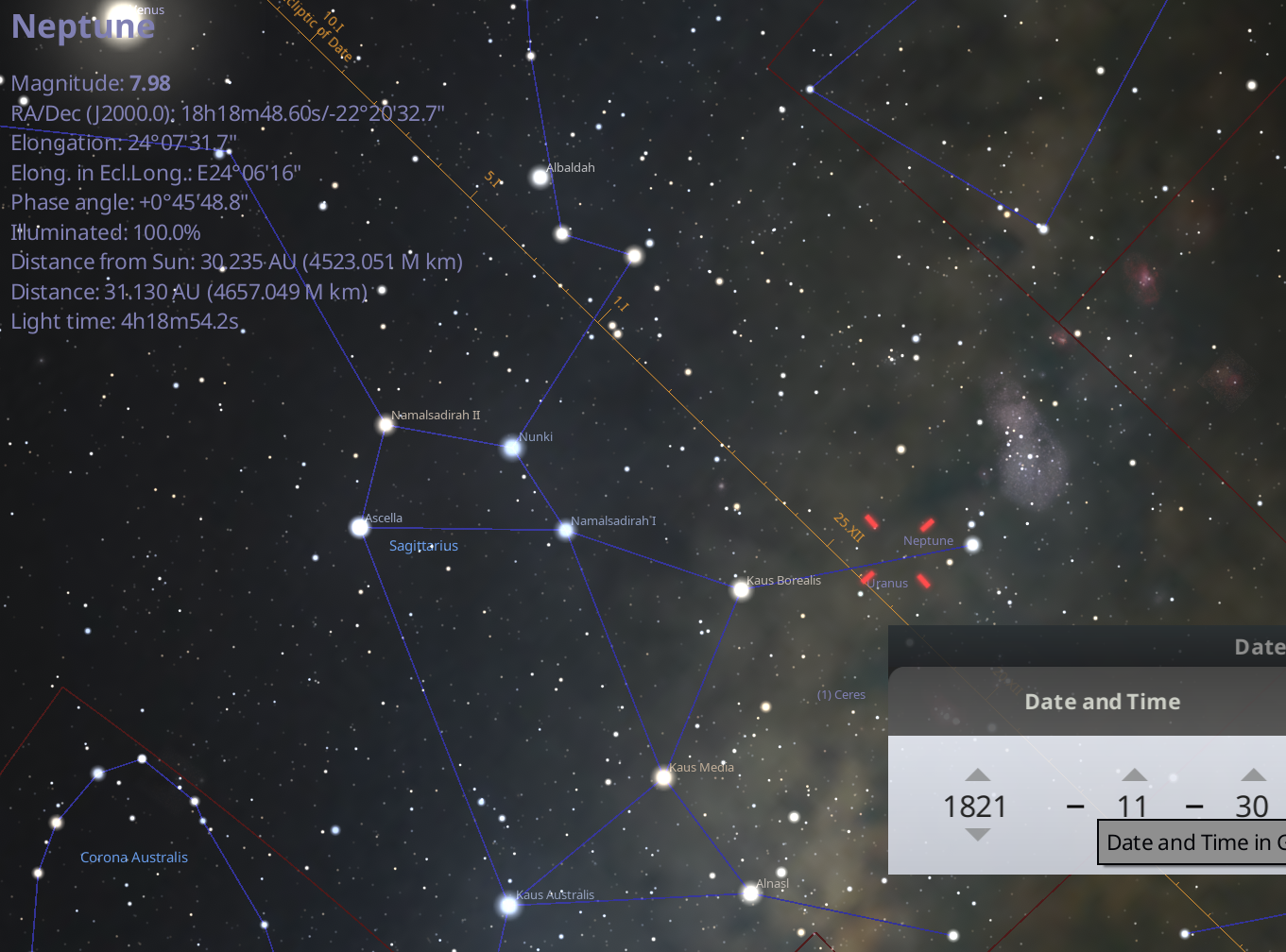
French mathematician Urbain Le Verrier and British mathematician John Couch Adams independently calculated the coordinates of this hypothetical eighth planet. While Adams struggled to gain the attention of the British astronomical establishment, Le Verrier sent his predictions to Johann Gottfried Galle at the Berlin Observatory. On the night of September 23, 1846, Galle and his assistant Heinrich d’Arrest pointed their 9-inch refractor toward the coordinates provided by Le Verrier. They discovered Neptune within one degree of the predicted location.
This discovery was hailed as a definitive proof of celestial mechanics. However, historical records indicate that Neptune had been seen long before 1846 but was misidentified as a star. Most notably, Galileo Galilei’s sketches from December 1612 and January 1613 show a faint object near Jupiter that modern reconstructions confirm was Neptune. Because of its extremely slow motion, Galileo failed to recognize it as a planet, a missed opportunity that delayed the expansion of the known solar system by more than two centuries.
Observing Neptune’s Moons: Triton and Nereid
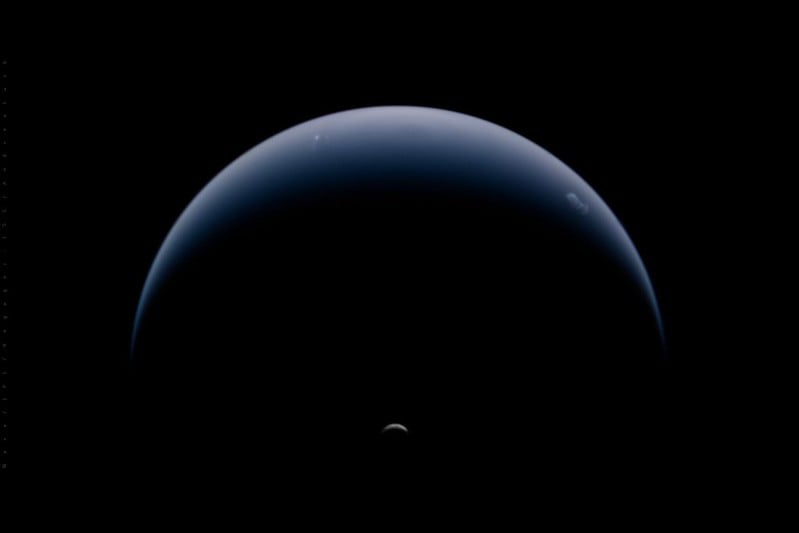
For dedicated observers with large-aperture telescopes—often referred to as "light buckets"—the 2026 opposition offers a chance to spot Neptune’s largest moon, Triton. Shining at magnitude +13, Triton is roughly 40% as bright as the planet itself but requires significant magnification and dark skies to separate from Neptune’s glare. Triton is a world of immense scientific interest; it is the only large moon in the solar system that orbits its planet in a retrograde direction (opposite to the planet’s rotation), suggesting it was once a Kuiper Belt object captured by Neptune’s gravity.
During the weeks surrounding the 2026 opposition, Triton will reach its greatest elongation—the maximum apparent distance from the planet—approximately every six days. At this point, it sits about 15 arcseconds away from Neptune, providing the best opportunity for imaging.
While Neptune has 16 known moons, most are far too faint for amateur equipment. Nereid, the third-largest moon, carries a magnitude of +18 and possesses one of the most eccentric orbits of any satellite in the solar system. Observing or imaging Nereid is considered a "bucket list" achievement for advanced amateur astrophotographers, requiring long-exposure CCD imaging and precise tracking.
Scientific Analysis and the Future of Ice Giant Exploration
Despite its prominence during opposition, Neptune remains one of the least explored frontiers of the solar system. The only spacecraft to ever visit the planet was NASA’s Voyager 2, which performed a historic flyby in August 1989. Voyager 2 revealed a dynamic atmosphere with the "Great Dark Spot," an enormous storm system, and supersonic winds that are the fastest recorded in the solar system, reaching speeds of over 2,000 kilometers per hour.
The 2026 opposition comes at a time when the planetary science community is advocating for a return to the ice giants. The 2023–2032 Planetary Science Decadal Survey, a report produced by the National Academies of Sciences, Engineering, and Medicine to guide NASA’s priorities, listed a "Uranus Orbiter and Probe" as the highest priority for a new flagship mission. While Uranus is the primary target due to launch window efficiencies, a dedicated mission to Neptune remains a long-term goal for the 2040s.
"Neptune and Uranus represent a class of planets—ice giants—that are fundamentally different from the gas giants Jupiter and Saturn," notes an inferred consensus among planetary scientists. "They are composed mostly of ‘ices’ like water, ammonia, and methane, rather than hydrogen and helium. Understanding these worlds is crucial for interpreting the thousands of exoplanets we are discovering around other stars, many of which appear to be ‘sub-Neptunes’ or ‘mini-Neptunes.’"
The delay in returning to Neptune is largely due to the immense distances involved. A mission departing in the 2030s or 2040s would require a decade or more of travel time and sophisticated Radioisotope Thermoelectric Generators (RTGs) to provide power so far from the Sun. Until such a mission is launched, ground-based observations during events like the 2026 opposition remain the primary method for monitoring Neptune’s atmospheric changes and orbital stability.
Preparation for the September 2026 Event
For those planning to observe the opposition, preparation is key. Because Neptune is not visible to the naked eye, a star chart or a smartphone astronomy app is necessary to distinguish the planet from the background stars of Pisces. High-quality 10×50 binoculars are a recommended starting point for beginners, while a telescope with at least 4 to 8 inches of aperture will provide a much more rewarding view of the planetary disk.
Astrophotographers can also use this period to capture the planet’s slow motion. By taking images of the same star field over several nights, the "movement" of Neptune against the stationary background stars becomes apparent. This retrograde loop, caused by Earth’s faster orbital speed "overtaking" the slower-moving Neptune, is a classic demonstration of planetary dynamics.
As September 2026 approaches, the astronomical community looks forward to this alignment. While it may only appear as a modest blue dot in a sea of stars, Neptune represents the edge of our solar neighborhood—a world of extreme weather, mathematical mystery, and untapped scientific potential. The 2026 opposition provides a rare, accessible moment for the public to connect with the most distant planet in our celestial backyard.