Sisilia Frederika
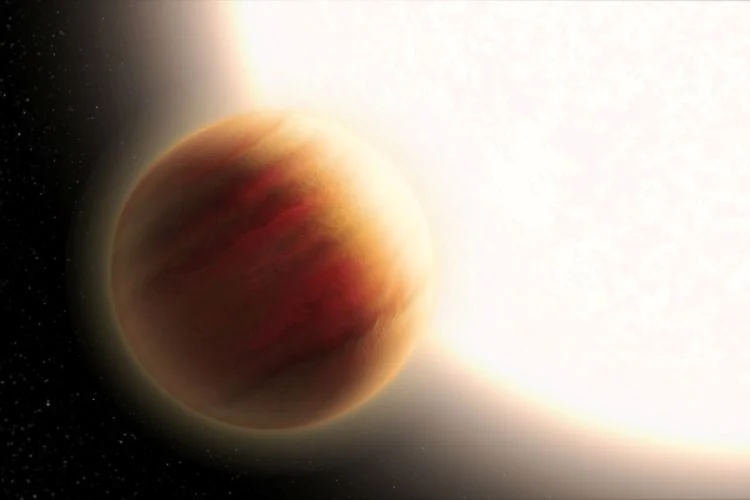
The field of exoplanetary science has undergone a radical transformation over the last decade, transitioning from the mere discovery of distant worlds to the detailed characterization of their atmospheres and surfaces. Among the most enigmatic of these celestial bodies are the "lava worlds"—planets that orbit so close to their host stars that their surfaces are thought to be oceans of molten rock. Recent observations conducted by an international team of researchers using NASA’s James Webb Space Telescope (JWST) have provided groundbreaking evidence regarding HD 3167 b, an Earth-sized exoplanet located approximately 154 light-years away. The study, published in The Astrophysical Journal Letters, suggests that this "colder" lava world may possess an atmosphere, a finding that contradicts existing models of planetary evolution and atmospheric retention.
The Discovery of an Atmospheric Anomaly
HD 3167 b is a "super-Earth" with a radius approximately 1.6 times that of our home planet and a mass roughly 4.8 times greater. It orbits a K-type star, a class of stars that are slightly smaller and cooler than the Sun but are known for their longevity and prevalence in the Milky Way. Despite the star’s lower temperature relative to the Sun, HD 3167 b resides in an incredibly tight orbit, completing a full revolution in just 0.96 Earth days.
In the hierarchy of exoplanets, lava worlds are typically categorized by their equilibrium temperatures. "Hotter" lava worlds, such as 55 Cancri e, reach temperatures high enough to vaporize rock, creating a thin, mineral-based atmosphere composed of gaseous silicates. Conversely, "colder" lava worlds—those at the lower end of the high-temperature spectrum—were previously hypothesized to be "bare rocks." Scientists believed that these planets lacked the thermal energy to maintain a vaporized rock atmosphere and were too close to their stars to retain volatile gases like water vapor or carbon dioxide against the onslaught of stellar winds.
However, the data retrieved by the JWST indicates that HD 3167 b is defying these expectations. By observing the planet’s secondary eclipse—the moment when the planet passes behind its star from the perspective of Earth—the research team was able to measure the thermal emission from the planet’s dayside. To their surprise, the dayside was significantly cooler than theoretical models for a bare-rock planet predicted.
Thermal Redistribution and the Role of the Atmosphere
The discrepancy between the predicted and observed temperatures of HD 3167 b suggests a phenomenon known as heat redistribution. On tidally locked planets—where one side eternally faces the star and the other remains in permanent darkness—the dayside usually reaches extreme temperatures while the nightside remains frigid. If a planet has no atmosphere, the heat remains trapped on the dayside.
The JWST observations revealed that HD 3167 b’s dayside is not as hot as it should be, implying that a mechanism is transporting thermal energy from the dayward hemisphere to the nightward hemisphere. The most plausible mechanism for such large-scale heat transport is an atmosphere.
"This result is significant because it suggests that even on these extreme, scorched worlds, the presence of an atmosphere is not limited to the hottest examples," noted Brandon Park Coy, a PhD student at the University of Chicago and the lead author of the study. "If HD 3167 b has an atmosphere, it forces us to reconsider the threshold at which planets lose their envelopes to space."
Chronology of the HD 3167 System Exploration
The HD 3167 system has been a subject of intense scientific interest since its discovery. The system’s history provides a timeline of how rapidly exoplanetary science has advanced:
- 2016: The system was first identified by NASA’s K2 mission, a second life for the Kepler Space Telescope. Astronomers discovered two planets, HD 3167 b and HD 3167 c, using the transit method.
- 2017-2020: Follow-up observations using ground-based radial velocity instruments, such as HARPS and HIRES, allowed scientists to calculate the masses of the planets. During this period, a third planet, HD 3167 d, was also detected.
- 2021: Researchers noted a peculiar orbital alignment in the system. While HD 3167 b has a standard orbit, planets c and d were found to be in polar orbits, suggesting a violent or complex dynamical history.
- 2023-2024: The James Webb Space Telescope’s Mid-Infrared Instrument (MIRI) was pointed toward HD 3167 b to conduct secondary eclipse spectroscopy. This led to the current findings regarding the planet’s unexpectedly low dayside temperature.
Comparative Planetology: From Io to Exoplanets
To understand the nature of HD 3167 b, scientists often look to analogs within our own solar system. Jupiter’s moon Io is the most volcanically active body in our neighborhood, often referred to as a "lava world." However, the mechanisms driving Io’s geology are vastly different from those of HD 3167 b.
Io is heated internally through tidal friction caused by the gravitational tug-of-war between Jupiter and other Galilean moons like Europa and Ganymede. This internal heat manifests as hundreds of active volcanoes that spew sulfur and silicate lava. In contrast, HD 3167 b is heated externally. Its proximity to its host star means the stellar radiation itself is the primary energy source, melting the surface from the outside in.
The discovery of an atmosphere on HD 3167 b adds a new layer to this comparison. While Io has a very thin, transient atmosphere of sulfur dioxide, the potential atmosphere on HD 3167 b could be much more substantial, potentially consisting of heavier molecular species that have survived the star’s radiation.
The Magma Ocean Phase and Earth’s Ancient History
The study of lava worlds is not merely an exercise in cataloging distant oddities; it is a vital component of understanding the history of our own planet. Scientists believe that shortly after its formation, about 4.5 billion years ago, Earth was a lava world.
During the Hadean Eon, the energy released from the collision of planetesimals and the decay of radioactive isotopes kept the Earth’s surface in a molten state. This "magma ocean" phase was critical for the differentiation of Earth’s layers—the sinking of iron to form the core and the rising of lighter silicates to form the mantle and crust.
"We think that very early in the solar system’s history, when the terrestrial planets formed, they were extremely hot due to the energy from all of the planetesimal collisions," Brandon Park Coy explained. "Earth had what’s known as a magma ocean stage with an entirely liquid surface. This result gives us a window into studying what conditions may have been like in Earth’s first couple of million years."
By observing HD 3167 b, researchers are essentially looking back in time. Understanding how an atmosphere interacts with a liquid rock surface can provide clues about how Earth’s first atmosphere formed and how it eventually cooled enough to support liquid water.
Technical Data and Observations
The research utilized the MIRI instrument on the JWST, which operates in the mid-infrared spectrum. This wavelength is ideal for detecting thermal emissions from relatively "cool" objects like exoplanets. The team monitored the system for several hours, capturing the precise moment the planet’s light disappeared behind the star.
Key data points from the study include:
- Brightness Temperature: The measured brightness temperature was lower than the predicted "sub-stellar" temperature, which assumes no heat redistribution.
- Geometric Albedo: The observations also helped constrain the planet’s albedo (reflectivity). A higher albedo could also explain a cooler surface, but the data more strongly points toward atmospheric circulation.
- Atmospheric Composition: While the presence of an atmosphere is suspected, its exact composition remains a subject for future study. Potential candidates include a "steam" atmosphere of water vapor or a thick envelope of carbon dioxide, though silicate vapors cannot be entirely ruled out.
Global Collaboration and Future Implications
The study was a massive international effort involving institutions from the United States, United Kingdom, China, and Spain. This collaboration highlights the global nature of modern astronomy and the shared interest in answering fundamental questions about the universe.
The implications of this research extend beyond the HD 3167 system. If "colder" lava worlds can maintain atmospheres, it suggests that the "cosmic shoreline"—the theoretical boundary that determines whether a planet can retain an atmosphere based on its gravity and the radiation it receives—might be more complex than previously thought.
Furthermore, the discovery impacts the search for habitable worlds. If planets in such extreme environments can hold onto their gaseous envelopes, it increases the likelihood that planets in the "Goldilocks zone" of smaller, more active stars (like M-dwarfs) can also retain atmospheres despite intense stellar activity.
As the James Webb Space Telescope continues its mission, more lava worlds will be scrutinized. Future observations of HD 3167 b will likely involve transmission spectroscopy, where scientists look at the starlight filtering through the planet’s atmosphere as it transits the star. This could provide a definitive "chemical fingerprint" of the gases present.
The mystery of HD 3167 b serves as a reminder that the universe frequently defies human expectations. Each new piece of data from the JWST forces a refinement of planetary models, bringing humanity one step closer to understanding the diverse array of worlds that populate our galaxy and the unique history of our own home.