Sisilia Frederika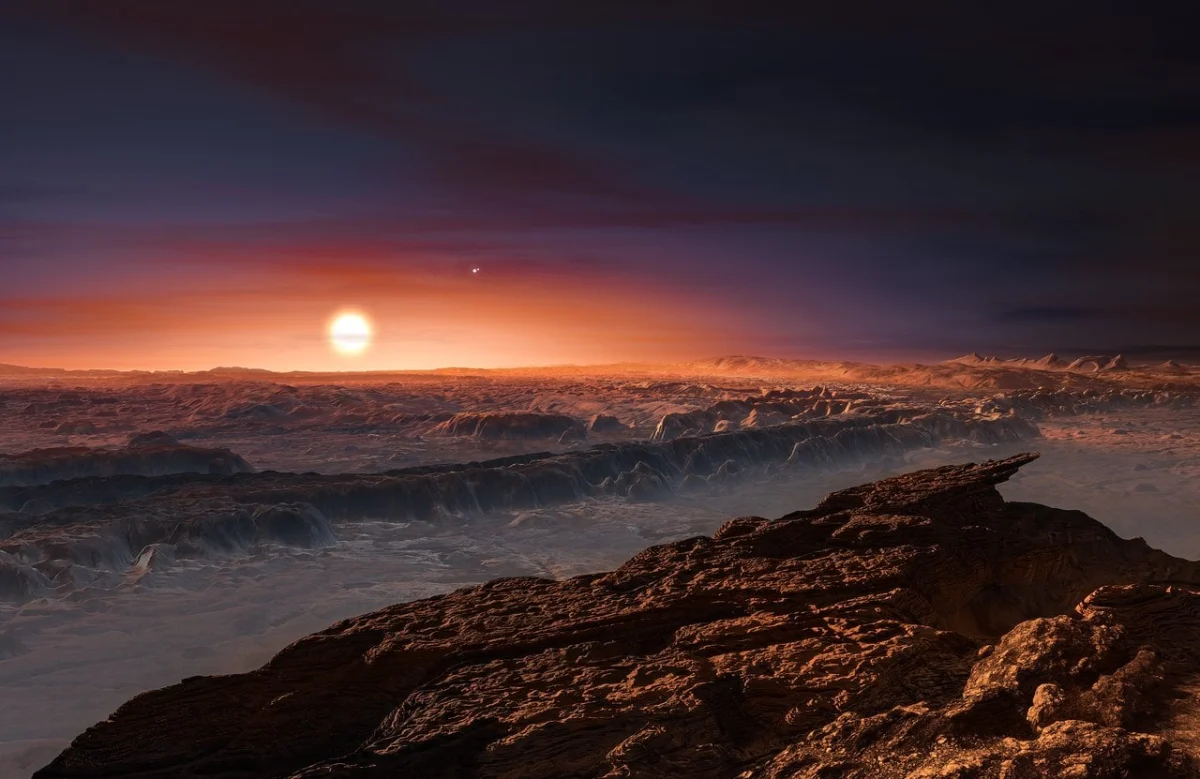
The search for life beyond Earth has long been guided by the principle of "following the water" and identifying planets within the "Goldilocks zone" of their host stars. However, as astronomical technology advances, the debate within the astrobiology community has shifted toward more nuanced metrics for prioritizing which of the thousands of confirmed exoplanets deserve the precious observation time of instruments like the James Webb Space Telescope (JWST). A seminal paper recently published in the International Journal of Astrobiology by Dr. Christopher Doughty of Northern Arizona University proposes a transformative framework for this search. The study suggests that the total amount of carbon a planet has successfully integrated into its biological systems—a metric known as cumulative carbon fixation—serves as a primary indicator of how far life on that world may have evolved.
For decades, the prevailing proxy for the existence of intelligent life has been the age of a planet’s host star. The logic underpinning this "Stellar Age Proxy" is straightforward: if a star is older than the Sun, its orbiting planets have had a longer window of stability in which to foster evolutionary processes. On Earth, it took approximately 4.5 billion years to produce a technological civilization. Consequently, scientists have historically prioritized stars that are 5 to 8 billion years old. However, Dr. Doughty’s research challenges the sufficiency of time alone, arguing that the rate of biological activity is a far more critical variable in the equation of intelligence.
The Evolutionary Speed Hypothesis and Net Primary Production
The core of Doughty’s argument rests on the Evolutionary Speed Hypothesis (ESH), a concept well-established in terrestrial biology but newly applied to the cosmos. ESH posits that environmental factors—specifically temperature and energy availability—dictate the pace of evolution. On Earth, this is most visible when comparing the biodiversity of the tropics to that of the polar regions. In the warm, sun-drenched tropics, metabolic rates are higher, and biological activity is nearly constant. This fuels larger populations and shorter generation times, which in turn leads to a higher frequency of genetic mutations. These mutations provide the raw material for natural selection, accelerating the diversification of life and increasing the statistical likelihood of complex traits, such as intelligence, emerging.
To quantify this on a planetary scale, the researchers utilized Net Primary Production (NPP). In ecology, NPP is the rate at which photosynthetic organisms, such as plants and algae, convert atmospheric carbon dioxide and sunlight into organic matter (biomass) through photosynthesis. By calculating the potential NPP of an exoplanet, scientists can estimate the total "metabolic budget" available to that planet’s biosphere. Doughty argues that the cumulative NPP—the sum of all carbon fixed by life over the entirety of a planet’s history—is a proxy for the total number of "lives lived" on that planet. The more lives lived, the more opportunities evolution has had to "solve" the problem of intelligence.
Benchmarking the Earth: From Single Cells to Civilization
To validate this framework, the study establishes a baseline using Earth’s own biological history. The researchers divided Earth’s timeline into distinct phases based on the complexity of life and the corresponding rates of carbon fixation. For the first three billion years of Earth’s history, the biosphere was dominated by single-celled organisms in the oceans. During this era, carbon fixation occurred at a relatively sluggish pace. The study calculates that prior to the Cambrian explosion—roughly 541 million years ago—the total cumulative carbon fixed by Earth’s biological systems was approximately 2.4 x 10^25 grams.
The transition to multicellularity and the eventual colonization of land by plants triggered a massive surge in NPP. As complex ecosystems emerged, the rate of carbon capture skyrocketed. By the time the first recognizable ancestors of modern humans appeared, the cumulative carbon fixed had risen to 9.4 x 10^25 grams. This four-fold increase in biological "throughput" over a relatively short geological period suggests that intelligence is not merely a product of time, but a product of an energized biosphere reaching a specific threshold of cumulative biological experience. Using these figures, the researchers created a three-zone scale to categorize exoplanets: those likely harboring single-celled life, those with multicellular life, and those with the potential for intelligent civilizations.
The TRAPPIST-1e Paradox: Why Some Habitable Worlds May Be Stagnant
The study applied this NPP framework to several high-profile exoplanets, most notably TRAPPIST-1e. Located just 40 light-years away, TRAPPIST-1e has long been considered one of the best candidates for life because it resides in the habitable zone of a cool red dwarf star. However, when viewed through the lens of cumulative carbon fixation, the planet’s prospects for complex life appear dim.
The researchers identified three significant barriers to high NPP on TRAPPIST-1e. First, the planet is tidally locked, meaning one side permanently faces its star while the other remains in eternal darkness. This restricts photosynthesis to only one hemisphere, effectively halving the planet’s potential biological productivity. Second, red dwarfs like TRAPPIST-1 emit the majority of their energy in the infrared spectrum. While terrestrial plants are optimized for visible light, infrared photons carry less energy and do not penetrate deeply into water. This would severely limit the productivity of any marine-based biosphere, where life on Earth originated. Finally, climate models suggest that TRAPPIST-1e may suffer from limited precipitation. On Earth, water is not only a biological necessity but a key driver of nutrient cycling. Without robust rainfall to weather rocks and wash minerals into the seas, the "fuel" for photosynthesis remains locked away, throttling the evolution of complex life.
Identifying High-Potential Candidates: K2-3d and GJ 1061c
While TRAPPIST-1e may be a biological "slow-burner," the study identified other candidates that could significantly outperform Earth in terms of evolutionary speed. The most promising candidate is K2-3d, a rocky exoplanet approximately 143 light-years from Earth. K2-3d is slightly larger than Earth and maintains a warmer average temperature. According to the study’s calculations, K2-3d possesses a potential NPP of 1.74 times that of Earth. This higher metabolic rate suggests that even if K2-3d is younger than Earth, its biosphere may have already "processed" enough carbon to reach the threshold of intelligence.
Another standout candidate is GJ 1061c, located a mere 12 light-years away. Although it orbits a red dwarf, its specific orbital characteristics and age—estimated at 7 billion years—give it a cumulative NPP of 1.03 times that of Earth. Despite the limitations of its host star’s light spectrum, the sheer longevity of GJ 1061c has allowed it to eke out a cumulative biological history comparable to our own. These findings suggest that while proximity and "habitability" are important, they are secondary to the total energy flux processed by the planet’s biology.
Methodological Limitations and Scientific Critique
Dr. Doughty and his co-authors are careful to note that their NPP framework is a theoretical model based on several significant assumptions. One major point of contention within the scientific community is whether tidally locked planets can support complex life at all. On Earth, most organisms require a "sleep cycle" or a period of circadian rhythm to perform essential biochemical repairs. On a planet with a permanent day-side, the lack of a natural dark cycle could potentially disrupt these processes, though some astrobiologists argue that life might evolve alternative mechanisms for repair.
Furthermore, the model assumes that evolution is a somewhat steady, incremental progression linked to carbon fixation. However, many paleontologists subscribe to the theory of "punctuated equilibrium," which suggests that evolutionary transitions occur in sudden, rapid bursts triggered by environmental shifts or genetic breakthroughs, rather than a slow accumulation of biomass. If intelligence is a "black swan" event rather than a statistical inevitability of high NPP, then carbon fixation may be a less reliable proxy than the study suggests.
Implications for Future Space Missions
Despite these caveats, the research provides a vital new tool for mission planners. With the upcoming launch of the Habitable Worlds Observatory (HWO) and the ongoing operations of the JWST, the ability to prioritize targets based on their "evolutionary potential" is invaluable. Instead of simply looking for oxygen or methane—biosignatures that can be produced by simple microbial life—astronomers can now look for "technosignatures" on planets that have the cumulative carbon history necessary to support a technological civilization.
The study concludes that while the universe may be teeming with life, the subset of planets where life has evolved into something recognizable as "intelligent" may be much smaller than previously thought, limited to those worlds capable of high-intensity carbon fixation. By shifting the focus from "how long has this planet existed?" to "how much life has this planet supported?", Dr. Doughty’s work offers a more refined roadmap for answering the ultimate question: are we alone in the universe? This framework does not promise the discovery of aliens, but it ensures that when we do point our most advanced telescopes at the stars, we are looking at the worlds where the "biological clock" has been ticking the fastest.