Sisilia Frederika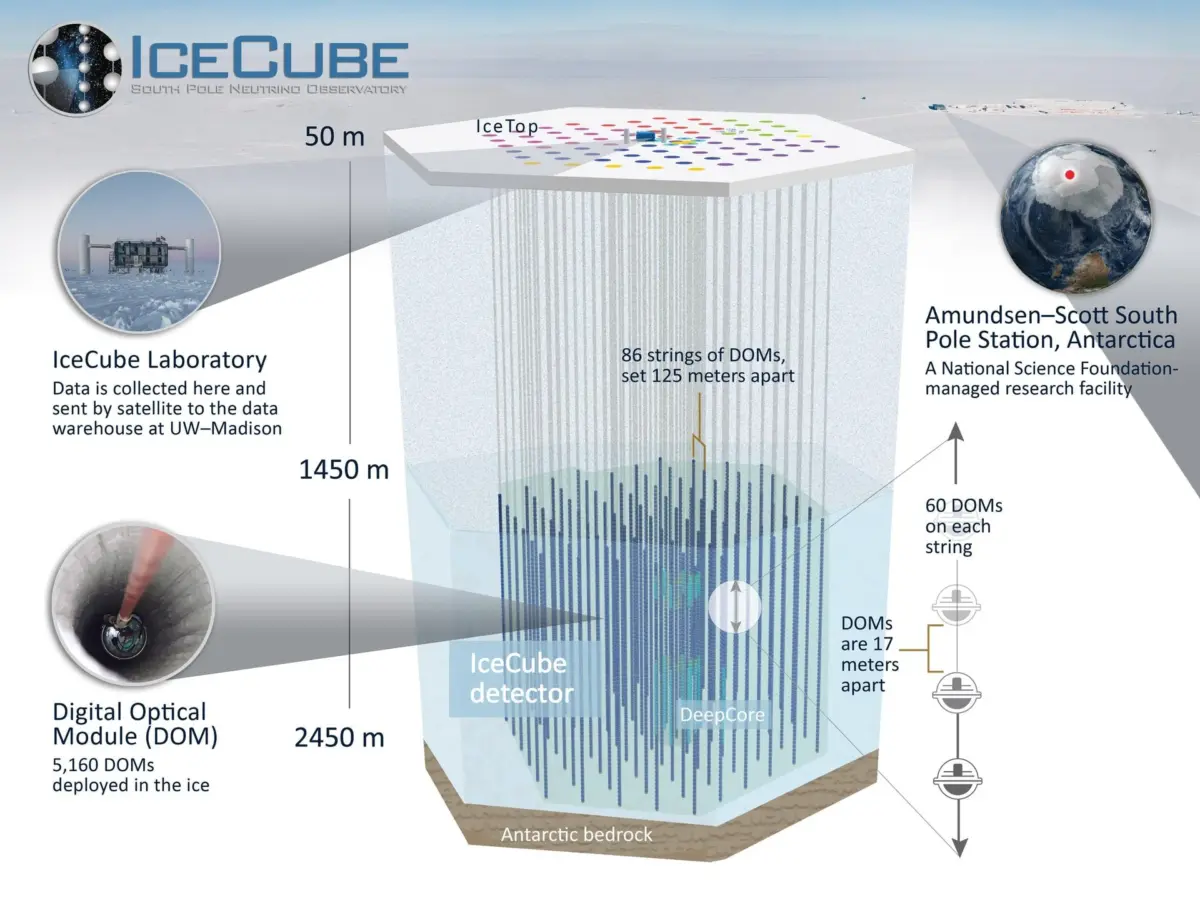
The Royal Swedish Academy of Sciences announced on October 6, 2026, that the Nobel Prize in Physics has been awarded to Francis Halzen, a Professor of Physics at the University of Wisconsin–Madison, for his pioneering leadership in the development of the IceCube Neutrino Observatory. The Academy cited Halzen’s "decisive contributions" to the facility and the subsequent discovery of high-energy neutrinos of astrophysical origin, a breakthrough that has effectively inaugurated the era of neutrino astronomy. This recognition marks the fifth time the Nobel Committee has honored research related to neutrinos, underscoring the particle’s central role in our evolving understanding of the fundamental laws of the universe.
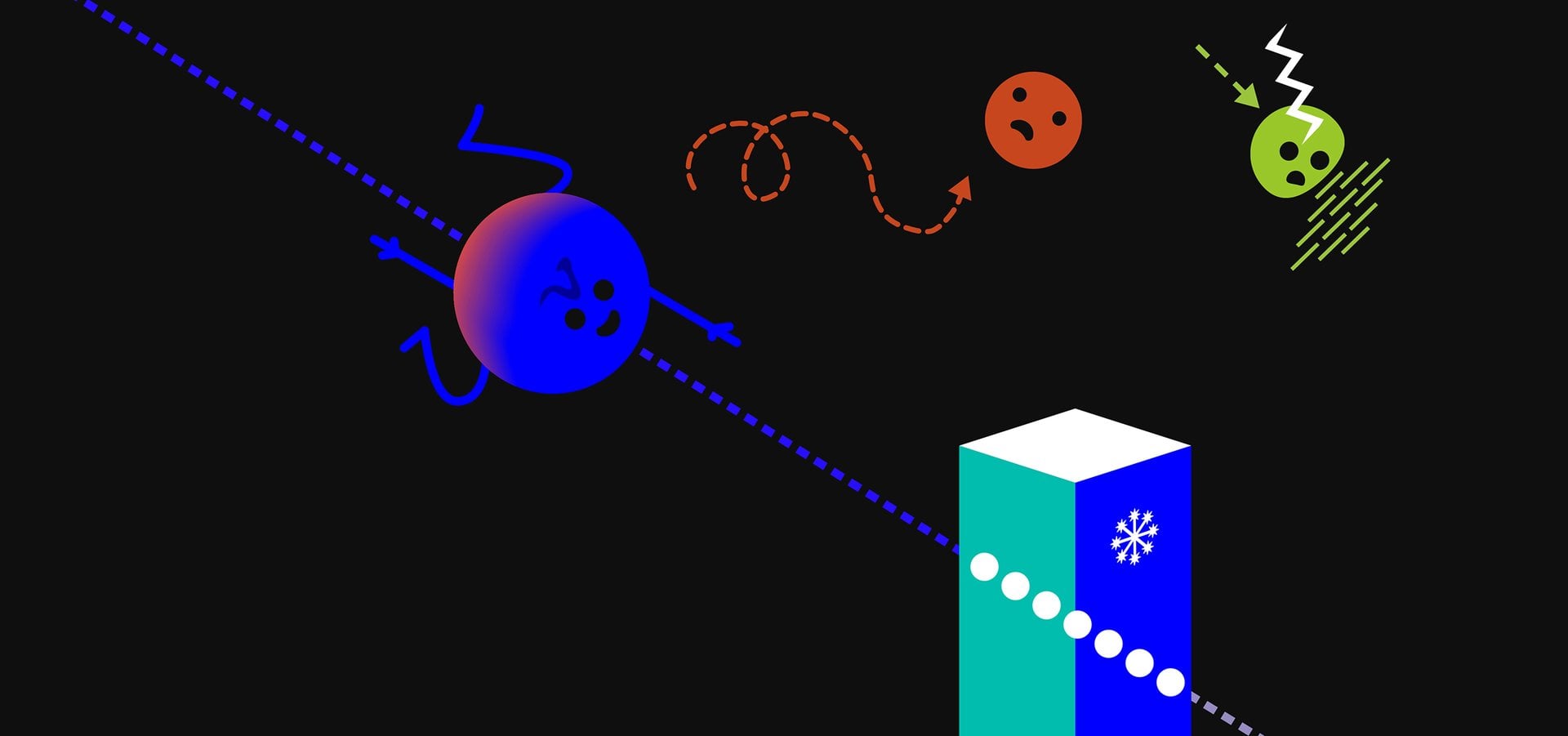
The selection of Halzen highlights a career-long dedication to capturing the "ghost particles" of the cosmos. Neutrinos are among the most abundant particles in the universe, yet they are notoriously difficult to detect because they lack an electrical charge and possess a mass so infinitesimal that it was long believed to be zero. Unlike photons, which can be blocked by dust or gas, or charged particles, which are deflected by magnetic fields, neutrinos travel in straight lines from their sources, passing through planets, stars, and entire galaxies unimpeded. This quality makes them ideal messengers for observing the most violent and distant phenomena in the universe, provided a sufficiently large and sensitive "net" can be built to catch them.
The Evolution of Neutrino Science and the Nobel Legacy
To understand the significance of Halzen’s 2026 Nobel Prize, one must view it within the context of a century of physics. The neutrino was first postulated by Wolfgang Pauli in 1930 to explain missing energy in beta decay, but it took 26 years for Clyde Cowan and Frederick Reines to experimentally confirm its existence in 1956—a feat that earned Reines the Nobel Prize in 1995.
Subsequent Nobel Prizes reflected the deepening complexity of the particle. In 1988, Leon Lederman, Melvin Schwartz, and Jack Steinberger were honored for the discovery of the muon neutrino. In 2002, Raymond Davis Jr. and Masatoshi Koshiba received the prize for the detection of cosmic neutrinos, specifically those originating from the Sun and the 1987A supernova. In 2015, Takaaki Kajita and Arthur B. McDonald were recognized for the discovery of neutrino oscillations, which proved that neutrinos have mass.
Halzen’s award represents the culmination of this progression. While previous prizes focused on the intrinsic properties of the neutrino or its presence in our solar neighborhood, the 2026 prize recognizes the use of neutrinos as a tool for deep-space exploration. By detecting high-energy neutrinos from outside our galaxy, Halzen and the IceCube collaboration have provided a new "eye" with which to view the high-energy universe, moving beyond the limitations of traditional light-based telescopes.
The Physics of a "Persnickety" Particle
The difficulty in detecting neutrinos stems from their interaction—or lack thereof—with matter. They interact almost exclusively through the weak nuclear force, one of the four fundamental forces of nature, which has an extremely short range. For a neutrino to be detected, it must undergo a rare direct collision with an atomic nucleus.
Furthermore, neutrinos exhibit a quantum mechanical property known as flavor oscillation. They exist in three "flavors"—electron, muon, and tau—and they spontaneously transform from one to another as they travel through space. Because they lack a fixed mass and instead exist as a superposition of three mass states, they defy the conventional behavior of matter. This "persnickety" nature required a detector of unprecedented scale, far beyond the 50,000-ton water tanks used for solar neutrino detection, such as the Super-Kamiokande in Japan.
The Construction of the World’s Largest Telescope
Francis Halzen’s vision, which began to take shape in the 1980s, was to use the Earth itself as a shield and the Antarctic ice sheet as a detection medium. The concept led to the Antarctic Muon and Neutrino Detector Array (AMANDA) and eventually the IceCube Neutrino Observatory.
Constructed between 2005 and 2010, IceCube is an engineering marvel located at the Amundsen–Scott South Pole Station. Rather than building a conventional tank, engineers used a hot-water drill to melt holes nearly 2.5 kilometers deep into the ultra-pure Antarctic ice. Into these holes, they lowered 86 strings holding a total of 5,160 Digital Optical Modules (DOMs). These sensors are designed to detect Cherenkov radiation—a faint blue glow produced when a high-energy neutrino occasionally strikes an atom in the ice, creating a secondary particle (like a muon) that travels faster than the speed of light in that medium.
The resulting detector encompasses a full cubic kilometer of ice, effectively functioning as a gigaton-scale observatory. The sheer volume of the ice allows IceCube to capture neutrinos with energies millions of times higher than those produced in terrestrial particle accelerators like the Large Hadron Collider.
A Chronology of Discovery
The path to the 2026 Nobel Prize was paved by a series of landmark discoveries made by the IceCube collaboration under Halzen’s leadership:
- 2013: The First Cosmic Neutrinos. IceCube researchers announced the detection of 28 high-energy neutrinos that originated from outside our solar system. These were the first "astrophysical" neutrinos ever observed, nicknamed "Bert" and "Ernie" by the team.
- 2017: The Blazar Breakthrough. In a historic moment for multi-messenger astronomy, IceCube detected a high-energy neutrino (IceCube-170922A) and traced its origin back to a blazar—a giant elliptical galaxy with a rapidly spinning black hole at its core—located 4 billion light-years away. This event was confirmed by traditional telescopes observing gamma rays, marking the first time a source of cosmic neutrinos was identified.
- 2022: Mapping the Milky Way. The collaboration released the first-ever neutrino map of our own Milky Way galaxy. Because the galactic plane is thick with dust that blocks light, the neutrino map provided a revolutionary view of the high-energy processes occurring in our "backyard."
- 2024-2025: Gravitational Wave Correlation. Recent data from IceCube has shown correlations between neutrino bursts and gravitational wave signals detected by LIGO-Virgo-KAGRA, providing a more complete picture of cataclysmic events like neutron star mergers.
Global Reactions and Scientific Impact
The announcement of Halzen’s Nobel Prize has been met with widespread acclaim across the scientific community. In a statement released shortly after the announcement, the University of Wisconsin–Madison Chancellor praised Halzen’s "unwavering persistence in the face of skepticism," noting that many in the 1980s believed a cubic-kilometer detector was an impossible dream.
"Francis Halzen didn’t just build a detector; he opened a new window onto the universe," said Dr. Olga Botner, a former spokesperson for the IceCube Collaboration. "This prize recognizes that neutrino astronomy is no longer a theoretical pursuit—it is a proven, vital branch of physics that tells us things about black holes and supernovae that light simply cannot."
The National Science Foundation (NSF), which provided the bulk of the funding for IceCube, highlighted the international nature of the achievement. The project involves over 300 scientists from 53 institutions in 14 countries. The award is seen as a validation of large-scale international collaboration in "Big Science."
Implications for the Future of Physics
The recognition of Halzen’s work arrives at a pivotal moment for the field. The success of IceCube has spurred plans for "IceCube-Gen2," an expansion that would increase the detector’s volume by a factor of eight. This next-generation observatory aims to detect even rarer, higher-energy neutrinos and perhaps provide clues to the nature of dark matter or the asymmetry between matter and antimatter in the early universe.
Furthermore, the 2026 Nobel Prize reinforces the shift toward multi-messenger astronomy. By combining data from neutrinos, gravitational waves, and the electromagnetic spectrum (light), scientists can now study the universe in "surround sound" and "high definition."
Francis Halzen’s contribution has solved one of the oldest mysteries in astronomy: the origin of cosmic rays. For decades, scientists knew that high-energy protons were hitting Earth’s atmosphere, but they couldn’t trace them back to their sources because magnetic fields scrambled their paths. Because neutrinos are produced alongside these cosmic rays and travel in straight lines, IceCube has finally allowed physicists to point back to the cosmic accelerators—such as active galactic nuclei and starburst galaxies—where these particles are born.
As the scientific community celebrates this fifth Nobel Prize for neutrino research, the focus remains on the vast, unexplored frontier that Halzen has helped reveal. The "persnickety" neutrino, once a mere theoretical ghost, has become the primary tool for mapping the most energetic and violent corners of the cosmos. Through the ice of the South Pole, humanity has finally learned to listen to the silent whispers of the stars.