Sisilia Frederika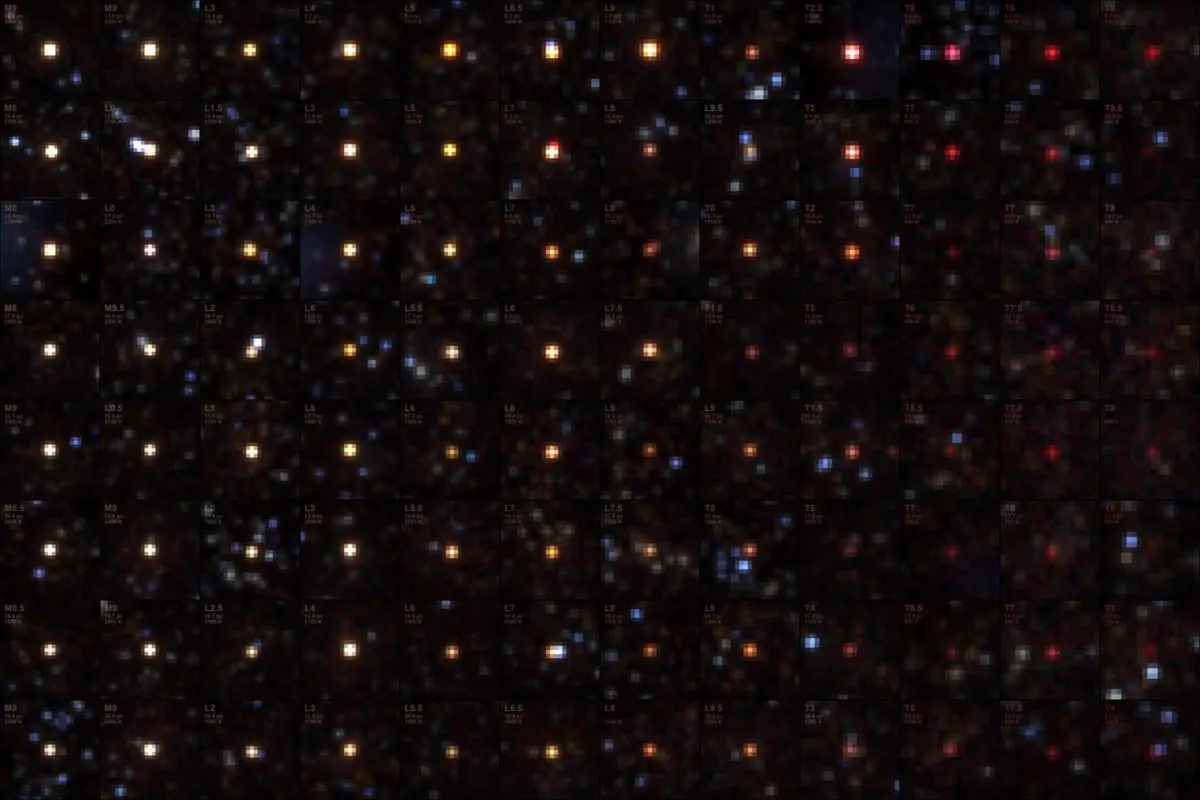
The traditional classification of celestial bodies into stars and planets has long faced a challenge from a group of enigmatic objects known as brown dwarfs. Often described as "failed stars," these substellar entities occupy the mass gap between the heaviest gas giant planets and the lightest red dwarf stars. While they are central to our understanding of stellar evolution and planetary atmospheres, new research suggests that our current theoretical frameworks for describing them are fundamentally flawed. A study published in The Astrophysical Journal Letters, led by Zafar Rustamkulov of the California Institute of Technology (Caltech) and NASA’s Jet Propulsion Laboratory (JPL), has utilized data from the Spectro-Photometer for the History of the Universe, Epoch of Reionization, and Ices Explorer (SPHEREx) to reveal that leading atmospheric models fail to accurately predict the physical and chemical characteristics of these objects.
The Nature of the Substellar Gap
Brown dwarfs represent a unique phase of cosmic evolution. Unlike stars, which possess sufficient mass to trigger the nuclear fusion of hydrogen in their cores, brown dwarfs are too small to sustain this process. Conversely, they are significantly more massive than traditional gas giants like Jupiter, typically ranging from 13 to 80 times the mass of the solar system’s largest planet. Because they cannot maintain a stable internal heat source through fusion, brown dwarfs undergo a dramatic transformation over billions of years. They gradually cool, contract in size, and increase their rotational velocity as they age.
Detecting these objects is a significant challenge for astronomers. Because they do not emit the intense visible light characteristic of stars, they are largely invisible to standard optical telescopes. However, they do radiate heat from their interiors, which was generated during their initial gravitational collapse. This heat escapes as infrared radiation, passing through the object’s upper atmosphere. As this light filters out, molecules within the atmosphere—such as water vapor, methane, and carbon monoxide—absorb specific wavelengths. By analyzing these absorption patterns through spectroscopy, scientists can deduce the chemical composition, temperature, and gravity of the brown dwarf.
The Evolution of Infrared Surveys
Historically, our understanding of brown dwarfs was built upon data from broadband surveys. Instruments such as the Two Micron All-Sky Survey (2MASS) and the Wide-field Infrared Survey Explorer (WISE) were instrumental in discovering thousands of these objects. However, these telescopes utilized broadband filters, which provide a low-resolution overview of an object’s light profile. While these surveys could determine the general color and temperature of a brown dwarf, they lacked the resolution to distinguish individual spectral lines.
The launch and subsequent entry into service of the SPHEREx mission in May 2025 marked a paradigm shift in this field. Designed to map the entire sky in 102 continuous wavelength channels, SPHEREx provides a level of spectral detail previously unavailable for large-scale surveys. Covering wavelengths from 0.75 to 5 microns, the telescope captures approximately 80% of the total heat energy released by brown dwarfs. This comprehensive coverage allows researchers to perform high-fidelity spectroscopy on a vast number of targets simultaneously, moving beyond the "blurry" images of the past to a high-resolution "fingerprinting" of substellar atmospheres.
A High-Fidelity Sequence of Nearby Neighbors
In their recent study, Rustamkulov and his team leveraged the initial data release from SPHEREx to compile a detailed sequence of 33 nearby brown dwarfs. These targets are located within a range of 7 to 100 light-years from Earth, providing a representative sample of the local substellar population. The study specifically targeted the three coolest spectral classes:
- L Dwarfs: The warmest of the group, with temperatures hovering around 2,200 degrees Celsius. At these temperatures, clouds of liquid iron and silicates are thought to form in their atmospheres.
- T Dwarfs: Intermediate objects with temperatures ranging between 700 and 1,000 degrees Celsius. These are characterized by the emergence of methane in their spectra.
- Y Dwarfs: The coldest known class of brown dwarfs, which can reach temperatures as low as -20 degrees Celsius—colder than a typical winter day on Earth.
To ensure the robustness of their findings, the researchers accounted for variables such as low surface gravity and low metallicity (the abundance of elements heavier than hydrogen and helium). By capturing a diverse array of features, the team aimed to test the limits of current theoretical models across the entire spectrum of brown dwarf types.
The Failure of Current Atmospheric Models
The core of the research involved comparing the SPHEREx observations against five of the most prominent theoretical models used in modern astrophysics: Sonora Diamondback, Sonora Elf Owl, BT-Settl, ATMO2020, and ATMO2020++. These models are the standard tools used by astronomers to interpret the data from both brown dwarfs and exoplanets. They rely on complex simulations of chemistry, thermodynamics, and radiative transfer to predict what an object’s spectrum should look like.
The results were unexpected: none of the five models accurately matched the observed data across the full spectral range. One of the most significant discrepancies was found in the near-infrared flux peaks between 1 and 2.5 microns. Furthermore, the models consistently missed a critical "opacity window" at approximately 4.0 microns. This is a specific wavelength where light should easily escape the atmosphere, yet the theoretical predictions failed to align with the actual brightness measured by SPHEREx.
Even more concerning were the physical dimensions predicted by the models. To force a match with the observed light, the models often predicted sizes for the brown dwarfs that were physically unrealistic. In some instances, the predicted radii were off by as much as 20% to 50%. These errors suggest that the models are attempting to compensate for a poor understanding of underlying atmospheric chemistry by distorting the physical scale of the objects.
Insights into Atmospheric Mixing and Chemistry
Despite the general failure of the models, the study did provide some successful correlations that offer a glimpse into the internal dynamics of these failed stars. The researchers developed custom spectral indices to track how carbon moves through the atmosphere as a brown dwarf cools. In hotter objects, carbon is primarily found in carbon monoxide (CO). As the temperature drops below 1,000 Kelvin (approximately 727 degrees Celsius), the carbon should theoretically shift into carbon dioxide (CO2) and eventually methane (CH4).
The SPHEREx data confirmed this trajectory with high precision. Specifically, the data showed a sharp drop in carbon monoxide and a corresponding rise in methane as the objects cooled. This specific transition was best matched by the "Sonora Elf Owl" model, but only when the model was configured with "weak vertical mixing."
In meteorology and planetary science, vertical mixing refers to the churning of atmospheric layers. On a planet like Jupiter, strong vertical mixing is a dominant feature, constantly bringing chemicals from the deep, hot interior up to the visible upper layers. The findings from the Rustamkulov team suggest that brown dwarfs may have much calmer, more stratified atmospheres than previously assumed. If vertical mixing is indeed weak on these objects, it represents a significant departure from the atmospheric behavior observed in gas giant planets.
Broader Implications for Exoplanet Science
The implications of this study extend far beyond the study of brown dwarfs themselves. Brown dwarfs are often viewed as the ideal "test beds" for atmospheric physics. Unlike exoplanets, which are usually found orbiting bright stars that drown out the planet’s own light, brown dwarfs are often isolated in space. This isolation allows astronomers to study their atmospheres in "pure" form, without the complicating factor of intense radiation from a host star.
If our current models cannot accurately describe an isolated brown dwarf, they are unlikely to provide accurate results for complex exoplanetary systems. As the search for Earth-like planets and habitable worlds intensifies, the accuracy of these atmospheric models becomes paramount. The discrepancies identified by the SPHEREx data suggest that the physics of cloud formation, chemical transitions, and energy transport in substellar atmospheres must be fundamentally re-evaluated.
The Road Ahead for SPHEREx and Stellar Modeling
The SPHEREx mission is currently in the early stages of its primary two-year all-sky survey. During this period, it is expected to catalog and analyze thousands of additional brown dwarfs, providing an unprecedented statistical database for the scientific community. This influx of high-quality empirical data will serve as a roadmap for theoretical physicists and modelers.
The goal for the coming years will be to refine the code and underlying physics of models like Sonora and ATMO. By adjusting for the newly discovered "opacity windows" and the apparent lack of strong vertical mixing, researchers hope to create a new generation of models that can accurately predict the behavior of substellar objects.
As Zafar Rustamkulov and his colleagues noted in their report, the current gap between observation and theory is a call to action for the astronomical community. The "failed stars" of our galaxy are now providing the very data needed to succeed in the next great era of atmospheric science. With the continued operation of SPHEREx and the eventual integration of its findings into new theoretical frameworks, the mystery of these dark, wandering objects is slowly being brought into the light.