admin
admin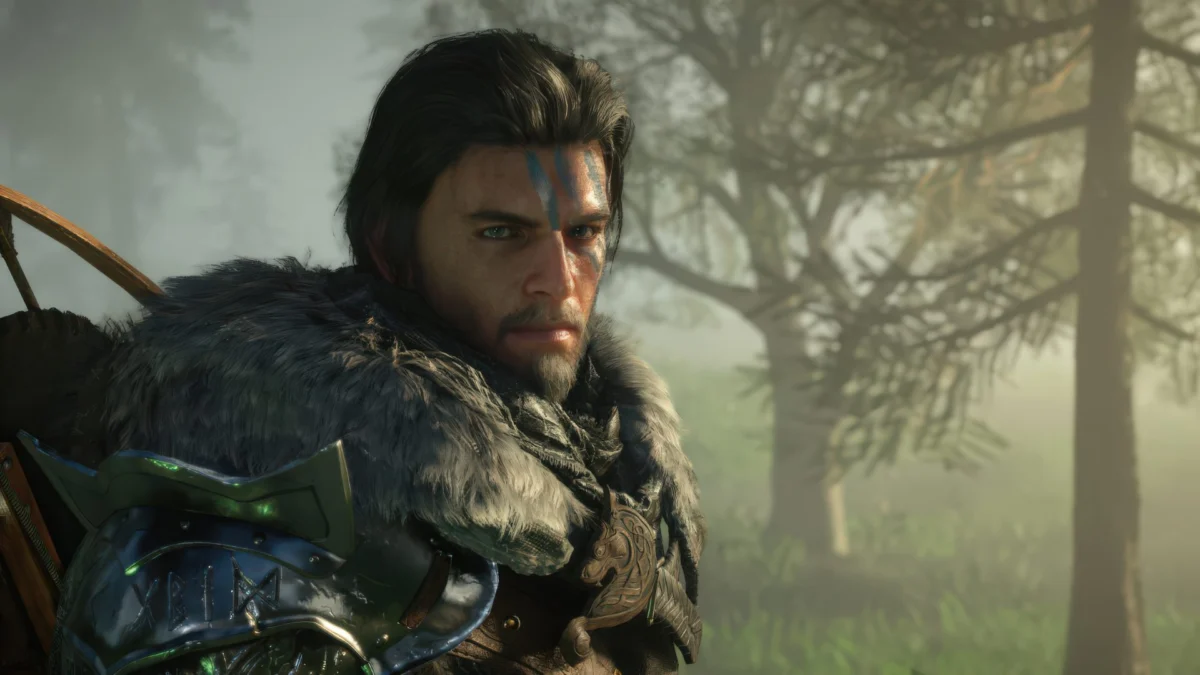
The launch of Crimson Desert, the highly anticipated open-world action-adventure title from South Korean developer Pearl Abyss, has become a case study in the volatile intersection of consumer hype, critical reception, and corporate governance. Despite achieving a significant commercial milestone by selling an estimated two million units within its first 24 hours of availability, the game has failed to meet the lofty expectations of both critics and investors. This disconnect triggered a catastrophic devaluation of Pearl Abyss’s market position, with the company’s stock price plummeting by 30% on Thursday, followed by an additional 10% decline on Friday. As the financial dust settles, emerging reports from anonymous internal sources suggest that the game’s lackluster reception is the result of a fractured development cycle characterized by executive power struggles, radical narrative shifts, and a corporate culture that allegedly prioritized artistic aesthetics over functional game design and employee feedback.
The Financial Shockwaves and Market Reaction
The primary driver behind the 40% cumulative drop in Pearl Abyss stock was not the sales figures—which, at two million units, represent a strong debut for a new IP—but rather the qualitative assessment of the product. In the modern gaming industry, particularly for companies listed on the KOSDAQ, the long-term viability of a live-service or high-budget single-player game is often measured by its "Metacritic" potential and user sentiment. Investors had positioned Crimson Desert as the next major South Korean export to rival the global success of titles like Neowiz’s Lies of P or Shift Up’s Stellar Blade.
When early reviews and user impressions highlighted significant technical flaws, convoluted control schemes, and a disjointed narrative, institutional investors responded with a massive sell-off. The 30% crash on Thursday marked one of the single largest daily losses for a major Korean gaming firm in recent years. Analysts suggest that the market is pricing in not only the immediate disappointment of Crimson Desert but also the potential delays or quality issues regarding Pearl Abyss’s other high-profile project, DokeV.
Anonymous Whistleblowers Reveal Internal Dysfunction
In the wake of the stock market collapse, detailed testimonies from individuals claiming to be Pearl Abyss developers surfaced on Blind, an anonymous professional networking platform that requires work email verification. These posts paint a troubling picture of the "development hell" that occurred behind the scenes during the game’s five-year production cycle.
According to these accounts, the game’s narrative—a point of significant criticism in professional reviews—was in a state of flux until just months before the official release. The whistleblower revealed that the original storyline was far more complex and politically driven than the final version. The initial plot reportedly centered on a young king whose throne had been usurped, seeking refuge with the Greymanes. The narrative was intended to follow a middle-aged prime minister attempting to protect a young princess while navigating a conflict over a unique mineral-based currency found only in the "Crimson Desert" region. This version of the story concluded with the prime minister’s betrayal, forcing the protagonist to intervene to restore the rightful monarchy.
However, this narrative was allegedly scrapped due to internal power dynamics. The original director was reportedly ousted following a corporate struggle, replaced by a General Manager with a background in art. This shift in leadership led to a comprehensive overhaul of the game’s direction, where narrative consistency was sacrificed for visual fidelity. Even the protagonist, Kliff, was a late-stage revision; he was originally named "Macduff," but the name was changed after executives expressed concerns that it carried a "serial killer vibe."
A Culture of "Yes-Men" and Feature Creep
The second major revelation from the internal leaks concerns the management style at Pearl Abyss. Employees described an "inverted pyramid" of leadership where high-ranking officials demanded absolute conformity. One developer recounted a conversation with a leader who stated that to be part of the inner circle, one must "look in the same direction" as the executives. This was interpreted by staff as a mandate to never challenge orders or offer dissenting opinions on game design.
This culture of subordination allegedly led to a phenomenon known as "feature creep," where elements from other successful games were forced into Crimson Desert without proper integration or justification. Both whistleblowers pointed to the inclusion of "Sky Islands"—a mechanic heavily inspired by Nintendo’s The Legend of Zelda: Tears of the Kingdom—as a prime example. These features were reportedly "shoved in" because they looked impressive in trailers, despite the fact that they complicated the control layout and lacked a narrative or mechanical foundation.
"I believe most of my colleagues involved in development were aware that Crimson Desert was going off the rails," one post stated. "However, I don’t think many were in a position to speak up about it. They just praise their own work as ‘amazing’ and whenever they see a reference from here or there that looks good, they just shove it in."
Technical Failures and Ethical Controversies
The internal management issues are compounded by a series of technical controversies that have alienated specific segments of the gaming community. Shortly after launch, players discovered what appeared to be AI-generated art within the game’s environment and interface. This discovery sparked a backlash among artists and players who view the use of generative AI in high-budget AAA titles as a cost-cutting measure that diminishes the work of human creators.
Furthermore, Crimson Desert has faced criticism for its poor optimization on PC. Most notably, the game is currently incompatible with Intel ARC graphics cards. Pearl Abyss confirmed that the title does not run on the Intel hardware, a rare admission for a major release in 2024. While Intel’s market share in the GPU space is smaller than that of NVIDIA or AMD, the lack of support for a modern hardware line suggests a rushed QA process and a failure to address fundamental engine compatibility issues during the development cycle.
Chronology of Crimson Desert’s Development
To understand the current crisis, it is necessary to examine the protracted timeline of the game’s production:
- November 2019: Crimson Desert is officially announced at G-Star as a flagship title, originally envisioned as a prequel to Black Desert Online.
- December 2020: The game is re-introduced at The Game Awards as a single-player action-adventure title, distancing itself from the MMORPG genre.
- July 2021: Pearl Abyss announces that the game is delayed indefinitely to "add more ideas" and ensure a high-quality experience.
- August 2023: After two years of near-total silence, a new gameplay trailer is shown at Gamescom, receiving praise for its visuals but raising questions about its frame rate and complexity.
- 2024 Launch: The game releases to strong initial sales but receives mixed reviews, leading to the current 40% stock decline and the surfacing of internal leaks.
Broader Implications for the Korean Gaming Industry
The situation at Pearl Abyss serves as a cautionary tale for the burgeoning South Korean console market. For years, the region’s industry was dominated by mobile gaming and MMORPGs characterized by aggressive monetization. The recent pivot toward "premium" single-player console experiences was seen as a maturation of the industry. However, the issues plaguing Crimson Desert suggest that the "crunch culture" and top-down management styles prevalent in the mobile sector may not translate effectively to the development of complex, narrative-driven AAA titles.
For Pearl Abyss, the path forward is fraught with difficulty. The company must now decide whether to commit to a long-term patching and optimization cycle to salvage the game’s reputation—similar to the redemption arcs of titles like Cyberpunk 2077 or No Man’s Sky—or to shift focus to their upcoming projects. However, with investor confidence at an all-time low and employees speaking out against a toxic management culture, the structural issues within the studio may require more than just a software update to fix.
As of this report, Pearl Abyss has not issued an official statement regarding the anonymous claims on Blind or the specific criticisms regarding the "Yes-man" culture within its leadership. The company remains focused on its technical roadmap, though the market remains skeptical of whether these updates can reverse the downward trend of its valuation. For now, Crimson Desert stands as a visually stunning but mechanically bloated testament to the dangers of prioritized aesthetics over coherent leadership and creative freedom.