Sisilia Frederika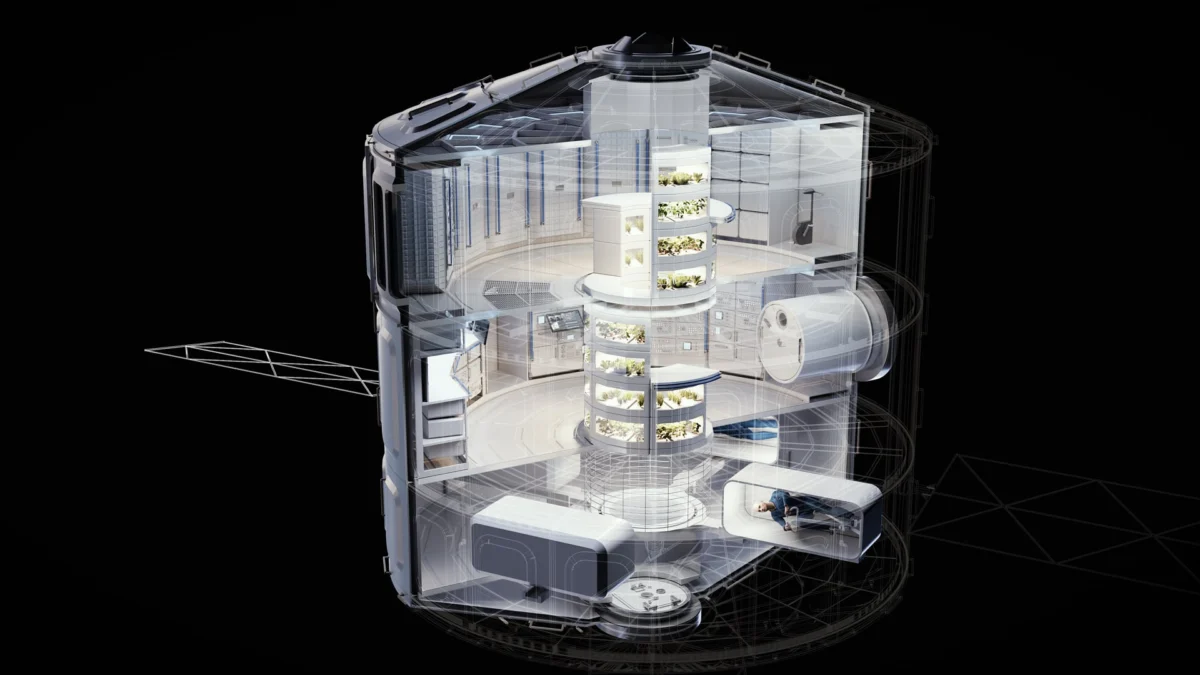
The decommissioning of the International Space Station (ISS) in 2030 will mark the end of an era in human spaceflight, signaling a transition from government-led orbital outposts to a competitive landscape of commercial habitats. For over three decades, the ISS has served as a cornerstone of international cooperation, scientific discovery, and technological demonstration. However, as the station’s structural integrity faces the inevitable fatigue of the space environment, NASA and its international partners are pivoting toward a model where the private sector takes the lead in Low Earth Orbit (LEO). This shift is intended to allow national agencies to focus their resources on deep-space exploration, specifically the Artemis missions to the Moon and eventual crewed expeditions to Mars.
To prevent a "space station gap" similar to the hiatus between the Space Shuttle program and the Commercial Crew Program, NASA has initiated the Commercial LEO Destinations (CLD) program. This initiative provides funding and technical support to private entities capable of developing independent orbital platforms. The transition involves a diverse array of stakeholders, including established aerospace giants like Boeing and Airbus, as well as agile newcomers like Vast and Axiom Space. Beyond the American-led commercial sector, sovereign projects from China, India, and Russia ensure that the orbital environment of the 2030s will be more crowded and diplomatically complex than ever before.
The Strategic Shift: From Public Service to Orbital Commerce
The decision to retire the ISS is rooted in both fiscal and physical realities. NASA currently spends approximately $3 billion annually to maintain the station, a figure that represents a significant portion of its human spaceflight budget. By transitioning to commercial providers, NASA intends to become one of many customers rather than the sole proprietor of orbital infrastructure. This "anchor tenant" model is designed to stimulate a self-sustaining space economy, where research, manufacturing, and tourism provide the revenue necessary to keep stations aloft.
While the United States focuses on commercialization, other nations are fortifying their sovereign presence. China is already operating the Tiangong space station and has announced plans for its expansion. India, through the Indian Space Research Organisation (ISRO), is developing the Bharatiya Antariksh Station (BAS) with a target launch of the first module by 2028 and full operation by 2035. Meanwhile, Russia’s Roscosmos has signaled its intent to withdraw from the ISS project and potentially recycle Russian modules to form the basis of a new Russian Orbital Service Station (ROSS).
Orbital Reef: A Mixed-Use Business Park in the Stars
One of the primary contenders in NASA’s CLD program is Orbital Reef, a joint venture led by Blue Origin and Sierra Space. Described as a "mixed-use business park," the station is designed to accommodate a diverse range of activities, from high-tech research to media production and space tourism. The project features a robust coalition of partners, including Boeing, which will provide the Starliner crew capsule and station operations; Amazon and Amazon Web Services (AWS), which will handle logistics and data processing; and Mitsubishi Heavy Industries.
Orbital Reef utilizes a modular architecture that emphasizes scalability. A critical component of this design is Sierra Space’s Large Integrated Flexible Environment (LIFE) modules. These inflatable structures are made of high-strength fabric (Vectran) that, once pressurized, becomes as rigid as traditional metallic hulls while offering significantly more habitable volume per launch. In the summer of 2024, Sierra Space successfully completed a series of "burst tests" on full-scale prototypes, demonstrating that the modules could withstand pressures far exceeding operational requirements.
At full capacity, Orbital Reef is projected to support a crew of ten within 830 cubic meters of volume. The station’s design includes universal docking ports, making it compatible with a variety of spacecraft, including the SpaceX Dragon 2, the Dream Chaser spaceplane, and the Soyuz. The partnership aims to have the first modules in orbit by 2027, ensuring operational status before the ISS is deorbited.
Axiom Space: The Incremental Approach to Independence
Houston-based Axiom Space has adopted a unique strategy for station construction. Rather than launching a free-flying station from scratch, Axiom will initially attach its modules to the existing ISS. This allows the company to utilize the station’s power and life support systems while building out its own infrastructure. Once the ISS is ready for retirement, the Axiom segment will detach and become an independent, free-flying station.
The Axiom Station will eventually consist of five core modules. The first, the Payload Power Thermal Module (PPTM), is currently under construction in collaboration with Thales Alenia Space in Italy. Scheduled for launch no earlier than 2027, the PPTM will be followed by two habitation modules (HAB-1 and HAB-2), an airlock, and a Research and Manufacturing (RAM) module.
Axiom’s vision extends beyond pure science. The company has partnered with Space Entertainment Enterprise (SEE-1) to include a spherical inflatable module dedicated to film and media production. This module is famously cited as the potential location for a feature film starring Tom Cruise. By integrating entertainment and commercial manufacturing—such as the production of high-purity optical fibers (ZBLAN) and protein crystals—Axiom aims to diversify the revenue streams of its orbital platform.
Haven-1: The Near-Term Solution for Private Research
While Orbital Reef and Axiom represent massive, multi-module complexes, the California-based startup Vast is pursuing a more immediate, streamlined path. Their concept, Haven-1, is a single-module station designed for short-term stays. Scheduled to launch as early as 2027 atop a SpaceX Falcon 9, Haven-1 will initially rely on a docked SpaceX Dragon for its life support and consumables.
Haven-1 provides 45 cubic meters of habitable volume and is designed to host four crew members for missions of up to 30 days. The station is marketed toward sovereign researchers and private individuals who require a microgravity environment without the complexity of a massive permanent outpost. Vast has also expressed long-term ambitions to develop artificial gravity stations, viewing Haven-1 as a foundational step toward larger, rotating structures.
Starlab and the Airbus LOOP: International Commercial Collaboration
The Starlab station, a collaboration between Starlab Space (a joint venture of Voyager Space and Airbus), represents a significant international effort in the commercial sector. Designed to be launched in a single flight—potentially aboard SpaceX’s Starship—Starlab is optimized for high-throughput scientific research. The station features a large, metallic habitation module and a state-of-the-art laboratory suite.
In tandem with the Starlab project, Airbus is developing the LOOP, a multi-purpose orbital module that can be integrated into various station architectures. The LOOP features a three-deck internal structure connected by a central tunnel. One of its most innovative features is a built-in centrifuge on the bottom deck, which can simulate partial gravity for crew members. This addresses one of the primary health challenges of long-duration spaceflight: the degradation of muscle mass and bone density in zero-g environments.
The Visionary Horizon: VERA and Artificial Gravity
Looking further into the future, the Gateway Foundation is proposing the Voluminous Environment Rotating Architecture (VERA). Inspired by the rotating wheel concepts of Wernher von Braun and the "Space Station Five" from 2001: A Space Odyssey, VERA uses centrifugal force to simulate gravity.
The proposed VERA station would consist of two concentric rings. The inner ring would provide a staging area and crew quarters, while the outer ring would rotate to create varying levels of gravity. This design is intended to mitigate the physiological toll of weightlessness, potentially allowing humans to live in orbit for years rather than months. While VERA remains in the conceptual and early design stages, it represents the ultimate ambition of the commercial sector: creating a permanent, city-like presence in space that mirrors the comforts and safety of Earth.
Chronology of the Orbital Transition
The timeline for the next decade of LEO activity is densely packed with milestones that will determine the success of this commercial pivot:
- 2025-2026: Finalization of Critical Design Reviews (CDR) for Starlab and Axiom’s primary modules.
- 2027: Scheduled launch of Vast’s Haven-1 and the first modules of Orbital Reef and Axiom Station.
- 2028: Axiom launches its second habitation module and begins testing independent power and thermal systems. India’s BAS begins its first module launches.
- 2029: Integration of airlocks and advanced manufacturing modules across commercial platforms.
- 2030: The International Space Station is officially decommissioned. A controlled re-entry, likely assisted by a SpaceX-developed deorbit vehicle, will guide the ISS into the South Pacific Ocean.
- 2031 and Beyond: Full operational independence for Axiom, Orbital Reef, and Starlab. The LEO economy shifts toward industrial manufacturing and sovereign research leases.
Economic and Geopolitical Implications
The transition to commercial space stations is not merely a technological challenge but an economic experiment. The success of these platforms depends on the emergence of a robust market for microgravity services. Potential industries include the manufacturing of specialized semiconductors, the development of new pharmaceuticals that can only be crystallized in zero-g, and the expansion of the "sovereign astronaut" market, where nations without their own launch capabilities pay for access to space.
Geopolitically, the end of the ISS marks a shift from a unified, Western-led orbital coalition to a more fragmented landscape. While NASA’s CLD program maintains U.S. leadership through private enterprise, the rise of China’s Tiangong and India’s BAS suggests a future where LEO is a domain of both competition and strategic redundancy.
Critics of the commercialization plan express concern over the potential for a gap in continuous human presence if private companies face financial or technical delays. However, the sheer number of projects currently in development provides a level of redundancy that the government-only era lacked. If one commercial station fails to launch on time, others are positioned to fill the void.
The next decade will determine whether Low Earth Orbit becomes a thriving marketplace or remains a niche frontier. As the ISS enters its final years, the rapid progress of companies like Blue Origin, Axiom, and Vast suggests that the "post-ISS era" will be characterized by a diversity of architecture and a level of accessibility that was previously unimaginable. The transition from a single, massive government outpost to a constellation of private "business parks" represents the most significant shift in space policy since the end of the Apollo era, potentially democratizing the final frontier for science, industry, and humanity.