Evan Lee Salim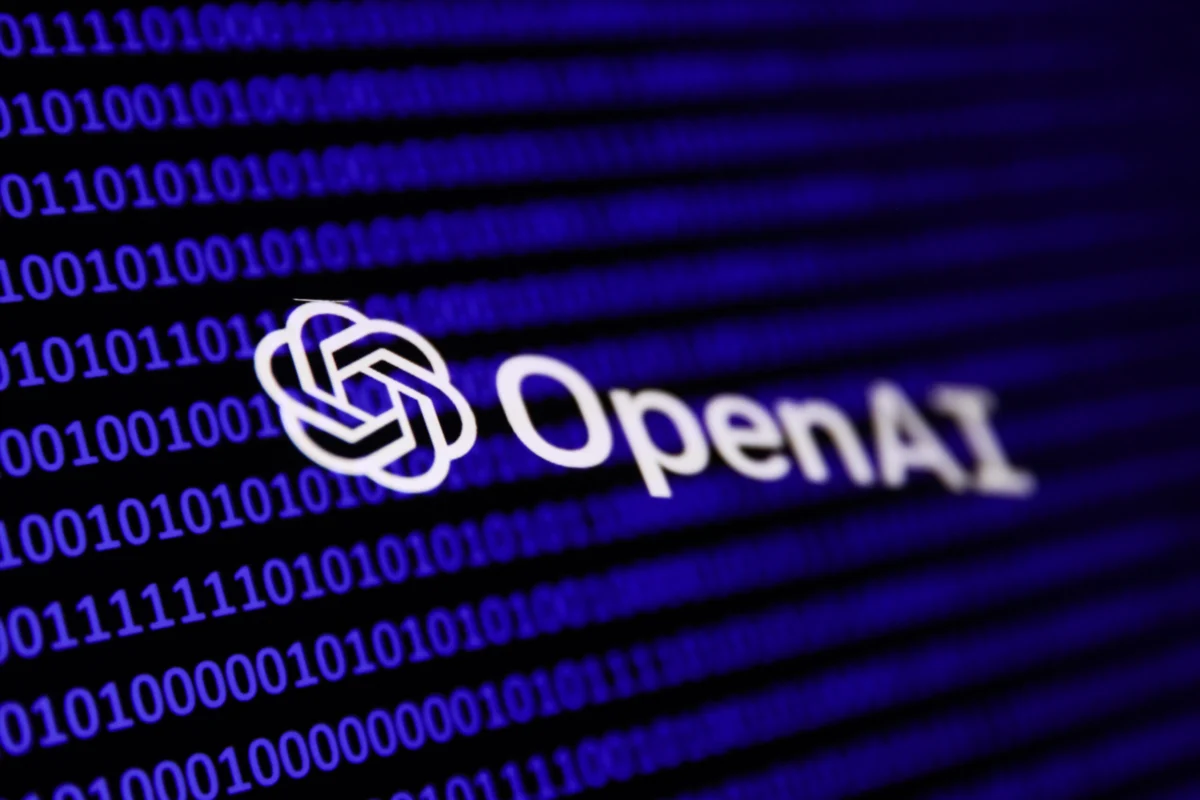
OpenAI, the vanguard of artificial intelligence research and development, has strategically acquired Hiro Finance, a burgeoning personal finance startup, as confirmed by founder Ethan Bloch on Monday via a LinkedIn announcement and subsequently verified by OpenAI to TechCrunch. This acquisition marks a significant move by the AI giant into the specialized domain of financial technology, particularly focusing on leveraging AI for consumer financial planning. While the specific terms of the acquisition remain undisclosed, industry observers are characterizing the deal as an "acquihire," a strategy primarily focused on integrating the acquired company’s talent into the acquiring entity. Hiro Finance, backed by prominent fintech venture capital firm Ribbit, alongside General Catalyst and Restive, is slated to cease its operations on April 20, with all user data slated for deletion from its servers by May 13, signaling a clear intent to absorb the team rather than its existing product infrastructure.
Strategic Rationale: OpenAI’s Expansion into Specialized AI Applications
This acquisition underscores OpenAI’s broader strategic trajectory, moving beyond foundational large language models (LLMs) like GPT-4 into vertical-specific applications where specialized AI expertise can yield substantial competitive advantages. The realm of personal finance, with its intricate calculations, vast data sets, and critical need for accuracy, presents a compelling frontier for AI integration. For OpenAI, acquiring Hiro Finance is less about inheriting a product and more about onboarding a team with demonstrated prowess in applying AI to complex financial scenarios, particularly one led by a seasoned entrepreneur like Ethan Bloch. The financial services sector, globally valued at trillions of dollars, is ripe for disruption through intelligent automation, and OpenAI appears keen to establish a strong foothold.
Industry reports and analyses frequently highlight the burgeoning market for AI in finance, projected to grow at a compound annual growth rate (CAGR) exceeding 20% over the next decade. This growth is driven by the demand for enhanced fraud detection, personalized financial advice, automated trading, and optimized risk management. By integrating Hiro’s team, OpenAI is positioning itself to capture a segment of this rapidly expanding market, potentially developing more robust, financially-aware AI agents or specialized modules for its existing platforms like ChatGPT. The potential for AI to democratize sophisticated financial planning, making it accessible to a broader consumer base, is immense and likely a key motivator for OpenAI.
Hiro Finance: Pioneering AI-Powered Financial Planning
Founded in 2023, Hiro Finance quickly carved a niche in the personal finance landscape by launching its AI tool approximately five months prior to the acquisition announcement. The startup’s core offering revolved around AI-powered financial planning for consumers, allowing users to input sensitive financial information such as salary, outstanding debts, and monthly expenditures. Leveraging this data, the application could model various "what-if" scenarios, providing users with actionable insights to inform their financial decisions. This capability is particularly valuable in an economic climate characterized by fluctuating interest rates, inflation, and market volatility, where personalized and dynamic financial guidance is increasingly sought after.
A distinguishing feature of Hiro’s technology, as highlighted by Bloch in a product demonstration, was its meticulous training to excel at financial mathematics. This included an innovative option that allowed users to verify the accuracy of the AI’s calculations, a crucial feature in a domain where even minor errors can have significant ramifications. This focus on verifiable accuracy addresses a historical limitation of frontier AI models, which, despite their remarkable advancements in natural language understanding and generation, have traditionally struggled with complex numerical reasoning. While state-of-the-art LLMs have significantly improved their mathematical capabilities in recent years, Hiro’s specialized approach demonstrated a focused engineering effort to overcome these challenges, making its team’s expertise highly attractive to a generalist AI powerhouse like OpenAI. The global market for personal finance software alone was estimated at over $1.5 billion in 2023, with projections for substantial growth, indicating a fertile ground for sophisticated AI solutions like Hiro’s.
Ethan Bloch: A Serial Entrepreneur with a Midas Touch in Fintech
The acquisition gains further significance when viewed through the lens of Ethan Bloch’s impressive entrepreneurial journey. Bloch is a serial entrepreneur with a proven track record of building and successfully exiting innovative technology companies. Prior to Hiro Finance, Bloch founded Digit, a pioneering digital-only bank that revolutionized personal savings by employing AI to automatically save money for its users. Digit was acquired by Oportun in 2021 for a reported sum exceeding $200 million, solidifying Bloch’s reputation as a visionary in the fintech space.
Bloch’s entrepreneurial spirit dates back to his teenage years, having launched his first tech venture at the age of 13. He candidly shared with Business Insider that Hiro Finance was his 15th project, a journey punctuated by 13 initial failures. His perseverance eventually led to the successful sale of Flowtown, a social media SaaS tool launched in 2009, for $4.5 million. The successive sales of Flowtown, Digit, and now Hiro Finance to OpenAI underscore Bloch’s acumen in identifying market needs, developing innovative solutions, and successfully navigating the startup ecosystem. His ability to build high-value teams and products across different tech verticals makes him an invaluable asset for OpenAI as it diversifies its capabilities.
Furthermore, Bloch’s interests extend to the competitive landscape of AI agents. He revealed on LinkedIn that he developed his own auto-trading agent for OpenClaw, a popular platform for robo stock trading, which he humorously named "RoboBuffett." This detail hints at Bloch’s deep engagement with advanced AI applications in finance, including algorithmic trading and competitive AI environments. The mention of OpenClaw, often associated with users who prefer Anthropic’s Claude AI model over OpenAI’s offerings, adds an intriguing layer to the acquisition. It suggests that Bloch’s expertise could potentially help OpenAI not only in developing financial tools but also in understanding and perhaps even attracting users from rival AI ecosystems. This strategic insight into competitive user preferences and specialized AI applications could prove invaluable for OpenAI in the ongoing "AI race."
The Acqui-hire Model and Data Deletion Protocol
The characterization of this deal as an "acquihire" is a critical distinction. Unlike traditional acquisitions where the primary goal might be to absorb a product, customer base, or intellectual property, an acquihire prioritizes the talent pool. For a company like OpenAI, which operates at the cutting edge of AI development, securing top-tier engineers, data scientists, and product managers with specialized domain knowledge is paramount. The undisclosed terms, combined with the swift cessation of Hiro’s operations and the explicit plan for data deletion, strongly support this interpretation.
The decision to shut down Hiro’s operations and delete all user data by May 13 is a standard, albeit sensitive, practice in acqui-hires, particularly when the acquiring company has no immediate plans to integrate the existing product. This protocol is crucial for ensuring user privacy and complying with data protection regulations, such as GDPR and CCPA. Users of Hiro Finance are advised to retrieve any necessary financial information before the May 13 deadline. While this means the Hiro product itself will not live on, the intellectual capital, methodologies, and specialized skills of its team will be integrated directly into OpenAI’s expanding capabilities. This approach minimizes potential legal and ethical complications related to data ownership and continuity of service, allowing OpenAI to focus purely on leveraging the human talent.
OpenAI’s Broader Financial Strategy and Market Implications
This is not OpenAI’s first foray into financial applications. The company actively markets ChatGPT as a valuable tool for business finance teams, suggesting an inherent understanding of the sector’s needs and a strategic intent to cater to them. The acquisition of Hiro Finance could signify a more aggressive push into developing specialized, consumer-facing financial AI applications, or perhaps enhancing the financial literacy and analytical capabilities of its core LLMs.
The competitive landscape for AI in finance is intensifying, with tech giants like Google, Meta, and Amazon also exploring various applications. Google, for instance, has invested heavily in AI for financial services, from fraud detection to personalized banking. Anthropic, a direct competitor to OpenAI, is also advancing its Claude model with an eye on enterprise applications, including finance. By acquiring Hiro, OpenAI is not merely expanding its internal talent but also sending a clear signal to the market that it intends to be a significant player in the future of AI-driven financial services.
The potential implications are vast. For consumers, this could mean the eventual availability of highly sophisticated, personalized, and accessible financial planning tools powered by OpenAI’s advanced AI. Such tools could democratize access to financial advice traditionally reserved for affluent clients, empowering individuals to make more informed decisions about savings, investments, and debt management. For financial advisors, it could mean the development of advanced co-pilot tools that augment their capabilities, automate routine tasks, and provide deeper analytical insights, thereby shifting their role towards more complex strategic advice and client relationship management. The financial services industry, often characterized by its conservative nature, is poised for a significant transformation as AI models become more capable and trustworthy in handling sensitive financial data and complex calculations.
The Evolving Role of AI in Financial Services
Historically, the application of AI in financial services faced significant hurdles, primarily concerning accuracy, trustworthiness, and regulatory compliance. Early AI models struggled with the precision required for financial calculations and often lacked the explainability needed for regulatory scrutiny. However, the rapid advancements in LLMs, particularly their improved numerical reasoning capabilities and the emergence of techniques like "chain-of-thought" prompting and specialized training datasets, have largely mitigated these concerns. Hiro Finance’s explicit focus on verifiable mathematical accuracy exemplifies this shift, demonstrating how purpose-built AI can overcome these historical limitations.
The regulatory environment for AI in finance is also rapidly evolving. Governments and financial authorities worldwide are working to establish frameworks that ensure fairness, transparency, and accountability in AI applications. OpenAI, by integrating a team with practical experience in consumer finance AI, gains valuable insights into these regulatory nuances, which will be crucial for the responsible deployment of future financial AI products. The successful navigation of data privacy and security, as demonstrated by Hiro’s data deletion plan, will be paramount for building trust with both consumers and regulators.
Looking Ahead: What This Means for OpenAI and the Fintech Landscape
The acquisition of Hiro Finance is a clear indicator of OpenAI’s intent to diversify its AI applications and penetrate specialized markets. While the immediate focus is on talent integration, it is highly probable that the expertise gained from Bloch and his team will be channeled into developing a more robust, financially intelligent layer within OpenAI’s existing products, or even a standalone specialized financial planning application under the OpenAI umbrella. This move positions OpenAI not just as a foundational AI model provider but as a creator of end-to-end solutions in high-value sectors.
For the broader fintech landscape, this acquisition signals a new phase of consolidation and competition. Smaller, innovative startups like Hiro, which demonstrate specialized AI capabilities, become attractive targets for larger tech companies seeking to accelerate their entry or dominance in specific verticals. It also underscores the intensifying talent war in the AI industry, where human capital with unique domain expertise is a prized commodity. As AI continues to mature, we can expect to see more such strategic moves, as companies race to integrate advanced AI into every facet of our lives, particularly in critical areas like personal finance. The long-term impact could be a paradigm shift in how individuals manage their money, moving towards highly personalized, proactive, and AI-driven financial management.
In conclusion, OpenAI’s acqui-hire of Hiro Finance and its talented team, led by the serial entrepreneur Ethan Bloch, is a calculated and forward-looking strategic maneuver. It not only bolsters OpenAI’s internal capacity for complex financial AI applications but also positions the company to become a formidable player in the burgeoning market for AI-powered personal finance. The integration of Bloch’s proven expertise in fintech, combined with OpenAI’s unparalleled AI research capabilities, promises to unlock new frontiers in democratizing sophisticated financial intelligence for consumers worldwide.