Sisilia Frederika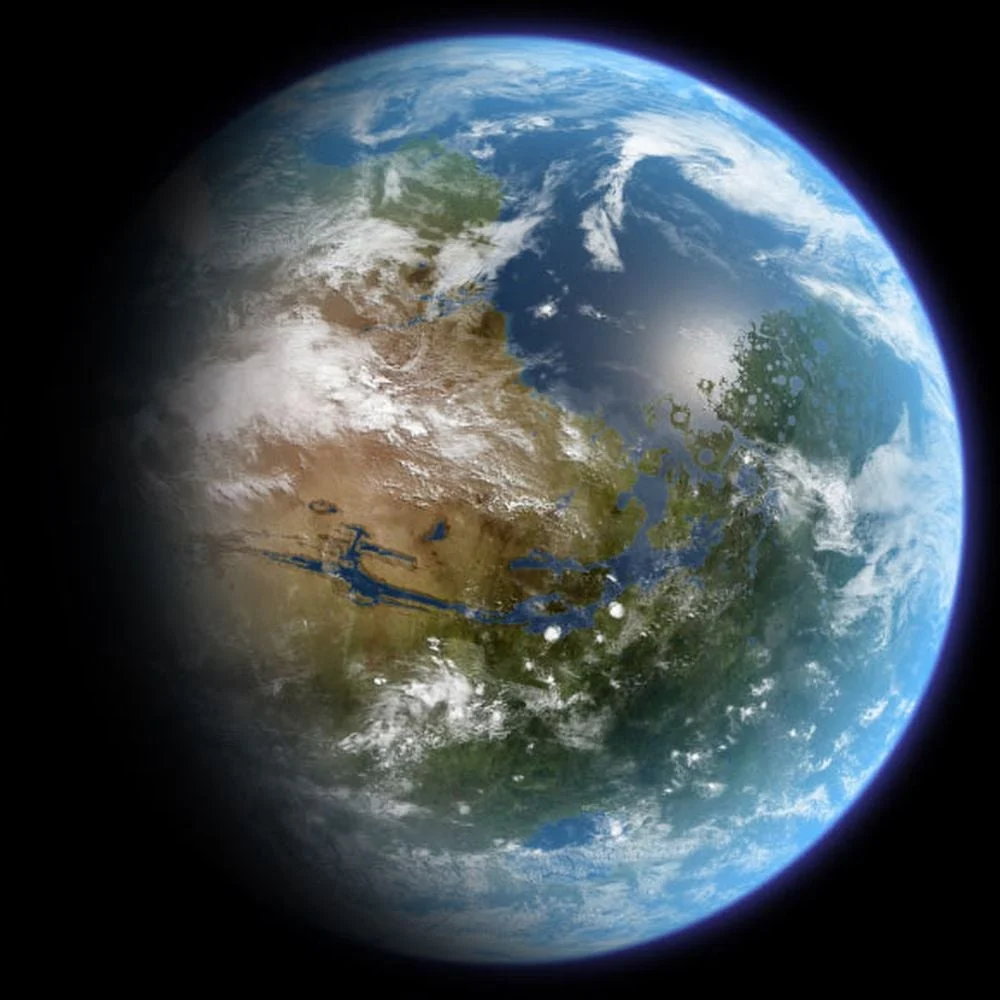
The research, led by Harrison Smith of the Earth-Life Science Institute (ELSI) at the Institute of Science Tokyo and Lana Sinapayen of the National Institute for Basic Biology in Okazaki City, Japan, addresses one of the most persistent hurdles in modern space science: the ambiguity of biosignatures. While the James Webb Space Telescope (JWST) and future observatories are capable of detecting gases like oxygen, methane, or phosphine in distant atmospheres, scientists remain cautious because non-biological geological or atmospheric processes can often produce the same chemical signatures, leading to false positives.
The Challenge of Single-Planet Biosignatures
For decades, the search for life beyond the solar system has been governed by two primary criteria. The first is the identification of liquid water, which is considered the fundamental solvent for life as we understand it. This has led to the "habitable zone" concept—the orbital region around a star where temperatures allow water to remain liquid. The second is the search for biosignatures, or chemical indicators in a planet’s atmosphere that suggest biological activity.
However, as the number of confirmed exoplanets has surpassed 5,500, the limitations of this approach have become apparent. A primary concern is the "false positive" problem. For instance, while oxygen is a byproduct of photosynthesis on Earth, it can also be produced by the photolysis of water vapor in a planet’s upper atmosphere. Similarly, the 2020 detection of phosphine in the clouds of Venus—initially hailed as a potential sign of life—sparked a fierce debate over whether the gas could be produced by volcanic activity or other abiotic mechanisms.
The study by Smith and Sinapayen argues that searching for life on a planet-by-planet basis is inherently limited by our "Earth-centric" definitions. If life elsewhere utilizes a different metabolism or exists in an environment vastly different from our own, we might fail to recognize it. To solve this, the researchers propose an "agnostic" approach—one that does not require a specific definition of life’s chemistry but instead looks for the universal behavior of life: its tendency to spread and modify its environment.
Modeling Panspermia and the Spread of Life
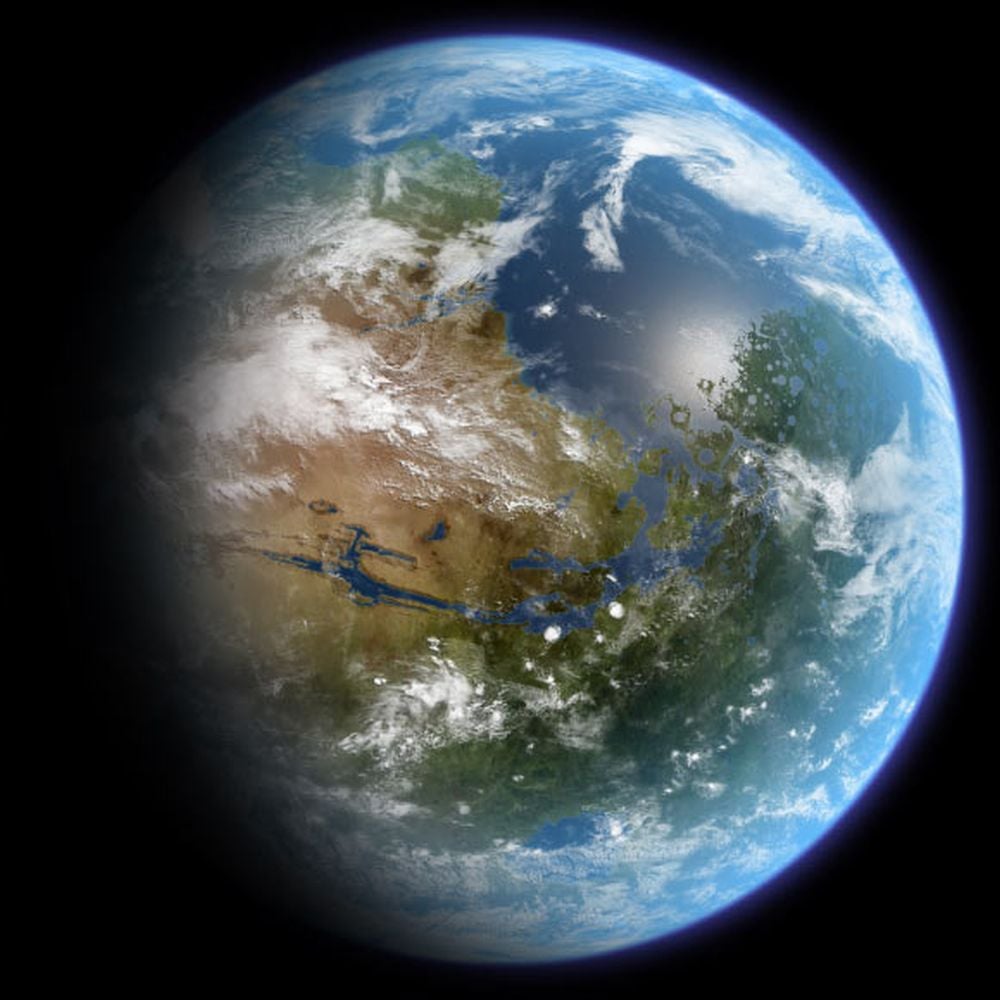
The core of the new research involves the concepts of panspermia and terraforming. Panspermia is the hypothesis that life can travel between planets or even star systems, perhaps carried by meteorites or, in the case of "directed panspermia," by the intentional actions of a technological civilization. Terraforming refers to the process by which life—either naturally or through technology—transforms a planet’s atmosphere and surface to make it more hospitable.
Smith and Sinapayen developed a model to demonstrate that if life spreads from one world to another, it creates a detectable signal at the population level. When life takes hold on a new planet, it begins to modify that planet’s atmosphere in ways that reflect its biological origin. If this happens across multiple planets in a specific region of space, those planets will begin to share similar characteristics that deviate from the expected "background" of uninhabited worlds.
"We have developed an agnostic approach to exoplanet life detection that overcomes these limitations by using properties that emerge on the scale of groups of planets," the researchers stated. By using statistical clustering, the model can identify groups of planets that appear "too similar" to be the result of chance or local geology.
Statistical Correlations and Data Analysis
The researchers utilized sophisticated simulations to test their hypothesis. They found that by observing the atmospheric characteristics of approximately 1,000 exoplanets, they could identify clusters of worlds that shared specific traits. These clusters, when localized in space, serve as a robust indicator that a common factor—life—is influencing those environments.
This approach utilizes pattern recognition rather than chemical analysis. Instead of asking, "Does this planet have oxygen?" the question becomes, "Does this group of planets show a shared atmospheric deviation that correlates with their proximity to one another?"
According to the study, this method significantly reduces the risk of false positives. While a single planet might have an unusual atmosphere due to a rare volcanic event, it is highly improbable that a dozen neighboring planets would exhibit the same unusual traits unless a unifying process, such as biological spreading, was at work. This shift from individual signals to population-scale trends allows scientists to bypass the need for a "perfect" definition of life.
A Chronology of the Search for Life
The development of this agnostic approach represents the latest stage in a decades-long evolution of astrobiology:
- 1960s – 1990s: The Radio Era. Early efforts, such as Project Ozma and the Search for Extraterrestrial Intelligence (SETI), focused on technosignatures—specifically radio signals—assuming that advanced civilizations would use technology similar to ours.
- 1995: The First Exoplanet. The discovery of 51 Pegasi b changed the field, shifting focus toward finding Earth-like worlds.
- 2000s – 2010s: The Kepler Era. NASA’s Kepler mission demonstrated that planets are ubiquitous, leading to the focus on "Habitable Zones."
- 2020s: The JWST Era. With the launch of the James Webb Space Telescope, the focus has shifted to atmospheric spectroscopy, searching for gases like carbon dioxide, methane, and water vapor.
- Present Day: The Agnostic Shift. As individual biosignatures prove difficult to confirm, researchers like Smith and Sinapayen are advocating for a "systems-level" view of the galaxy.
Implications for Future Missions
The findings of this research have profound implications for how future space missions are designed and how telescope time is allocated. Currently, observing the atmosphere of a single exoplanet with JWST requires dozens of hours of "staring" time to collect enough light for a clear spectral reading. Because of this high cost, scientists must be very selective about which planets they target.
The agnostic biosignature model suggests that it may be more valuable to conduct broader, shallower surveys of many planets rather than deep, intensive studies of a few. By identifying clusters of potentially terraformed or "infected" (via panspermia) worlds, astronomers can prioritize specific regions of the galaxy for follow-up observations.
This strategy aligns with the goals of the upcoming Habitable Worlds Observatory (HWO), a NASA flagship mission planned for the late 2030s. The HWO is being designed specifically to image Earth-sized planets and search for signs of life. Incorporating statistical clustering into the HWO’s mission profile could maximize the chances of a definitive discovery.
Expert Reactions and Scientific Analysis
While the research is based on simulations, it has garnered interest from the broader scientific community for its elegance in bypassing the "false positive" trap. Lana Sinapayen emphasized that the strength of the model lies in its flexibility. "Even if life elsewhere is fundamentally different from life on Earth, its large-scale effects, such as spreading and modifying planets, may still leave detectable traces," she noted.
However, some experts caution that the model relies on the assumption that life can and does spread between worlds. If panspermia is an exceedingly rare event, or if life almost never survives the journey between stars, the statistical "clusters" might be too faint to detect. Furthermore, the model requires data from roughly 1,000 planetary atmospheres—a milestone that may take another decade or two of observation to reach.
Despite these hurdles, the research provides a vital new tool for the "Astrobiology Decadal Survey," a roadmap used by agencies like NASA to prioritize scientific goals. By providing a mathematical framework for detecting life without knowing its specific chemistry, Smith and Sinapayen have opened a new door in the quest to answer whether we are alone in the universe.
The Philosophical and Scientific Impact
The shift toward an agnostic viewpoint reflects a growing maturity in the field of astrobiology. It acknowledges the "unknown unknowns" of the cosmos—the possibility that life is a phenomenon far more diverse than the biology found on Earth.
By focusing on the behavior of life—its propensity to expand, adapt, and alter its surroundings—scientists are looking for the "entropy-defying" nature of biology itself. Whether life is a rare fluke or a common cosmic infection, the ability to recognize it through patterns across the stars represents a major leap forward. As Smith concluded, the method allows for life detection "without needing a perfect definition or a single definitive signal," relying instead on the most powerful tool in the human arsenal: the ability to recognize a pattern in the chaos of the universe.