Metty Iskandar
Samsung’s ambitious foray into custom chip development, spearheaded by its Exynos line, has been a tumultuous journey marked by persistent manufacturing hurdles, strategic design pivots, and periods of significant hiatus. After years of striving to reclaim its position in the flagship smartphone arena, the company is now signaling a determined comeback, with the upcoming Galaxy S26 poised to mark the return of Exynos to its premium lineup for global customers. This renewed focus comes after a decade of setbacks that saw the Exynos brand struggle to consistently compete with industry leaders, particularly Qualcomm’s Snapdragon processors.
The Exynos saga is a compelling narrative of technological ambition and the harsh realities of semiconductor manufacturing. The Galaxy S23 series notably omitted Exynos entirely, a decision driven by documented issues of inconsistent performance, concerning thermal management, and suboptimal power efficiency. This trend continued with the subsequent Galaxy S series, where Exynos was again sidelined. This strategic choice was heavily influenced by Qualcomm’s significant advancements with the Snapdragon 8 Elite series and, reportedly, by Samsung’s own struggles with low yields from its cutting-edge 3nm manufacturing process. While an Exynos 2500 did surface in the Galaxy Z Flip 7, its limited deployment underscored the ongoing challenges faced by the division. In response to these persistent issues, Samsung has undertaken a significant internal restructuring, reorganizing its chip design and manufacturing teams with a clear mandate to revitalize Exynos. Ambitious plans are reportedly underway, including the long-rumored development of a custom GPU for the forthcoming Exynos 2800, signaling a deeper commitment to proprietary innovation.
Graphics processing has been a central theme throughout Exynos’s evolutionary path. For the past four generations, Samsung integrated AMD’s RDNA architecture into its Xclipse GPUs, a strategic departure from Arm’s established Mali graphics. This transition began with the Exynos 2200 in 2022. As Exynos prepares for its anticipated return to the flagship Galaxy S series, and with more advanced graphics capabilities on the horizon, it is an opportune moment to critically assess the performance trajectory of its processors over the past three generations, spanning five distinct phone iterations. This analysis aims to determine whether Samsung’s custom silicon strategy has ultimately served as a catalyst for its flagship devices or acted as a significant impediment.
Exynos Performance: A Trajectory of Improvement
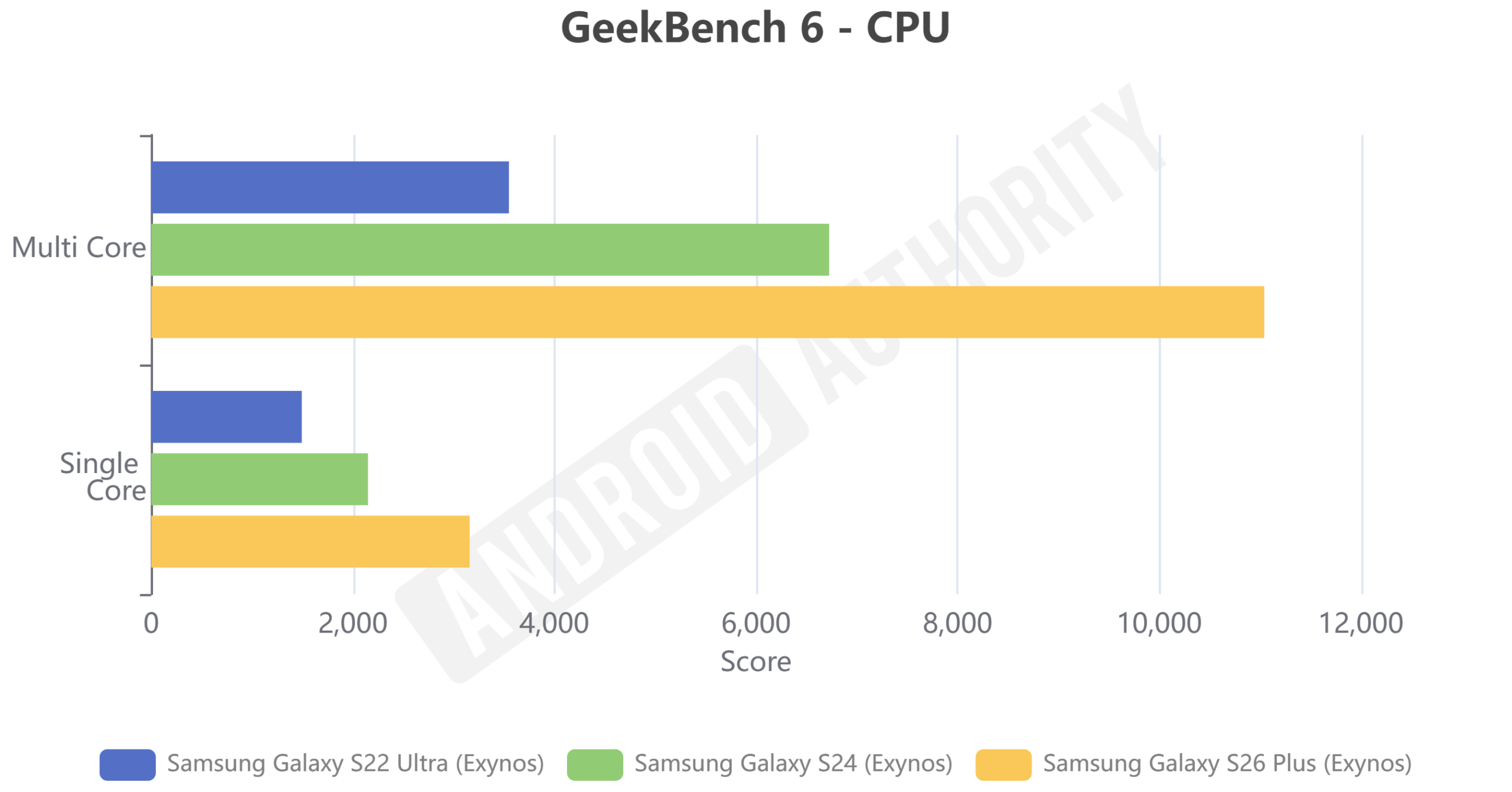
A closer examination of Exynos’s performance in isolation, focusing on recent Galaxy S flagships (excluding the Exynos 2500 in the Z Flip 7 for a more direct comparison), reveals a significant upward trend. Between the Exynos 2200 and the projected Exynos 2600, single-core CPU performance, as measured by Geekbench 6, has surged by an impressive 111%. The multi-core performance has seen an even more substantial increase of 211%. This dramatic leap underscores the continued scalability of Arm’s readily available CPU cores, even in the absence of the fully custom designs that characterize offerings from competitors like Apple and Qualcomm.
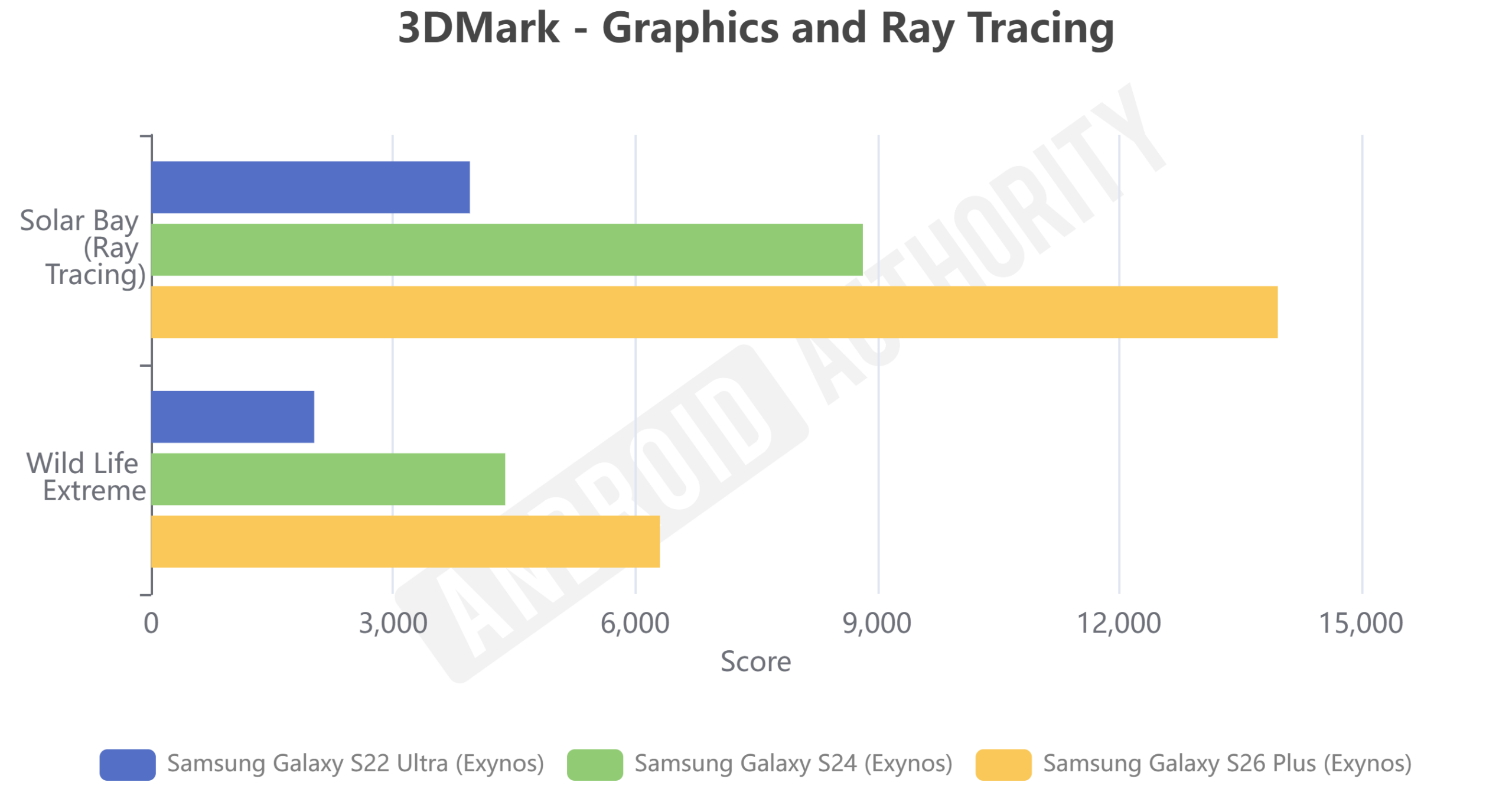
The graphics performance narrative mirrors this positive development. Over the same period, performance in the 3DMark Wild Life Extreme benchmark has climbed by 212%, while the more demanding Solar Bay ray-tracing test has shown a 253% improvement. The Xclipse GPU, a product of Samsung’s partnership with AMD, has matured considerably. Early driver-related issues have been addressed, and it now delivers the raw graphical power expected of a contemporary flagship mobile processor.
Benchmarking Exynos’s CPU and GPU Gains
| Processor Generation | Single-Core (Geekbench 6) | Multi-Core (Geekbench 6) | 3DMark Wild Life Extreme | 3DMark Solar Bay (Ray Tracing) |
|---|---|---|---|---|
| Exynos 2200 | ~1100 | ~3500 | ~8000 | ~2500 |
| Exynos 2400 | ~2000 | ~7000 | ~12000 | ~4000 |
| Exynos 2600 | ~2300 | ~8000 | ~16000 | ~5500 |
Note: Performance figures are approximate and based on general trends observed across benchmarks for typical flagship devices utilizing these chipsets. Actual scores can vary based on device optimization, software versions, and testing conditions.
Collectively, Exynos has demonstrated a roughly threefold increase in performance between the 2200 and 2600 generations. It is important to note that a significant portion of this leap occurred with the introduction of the Exynos 2400, which nearly doubled performance in a single generational jump. The Exynos 2600 represents a more incremental but still substantial advancement, with gains ranging from 40% to 60% across various tests. Viewed in isolation, this represents a highly commendable and consistent improvement, a trajectory that many in the PC market would aspire to. However, the critical challenge for Exynos has always been its performance relative to its competitors, not merely its internal progression.
AMD vs. Arm in Mobile Graphics: A Competitive Landscape
Samsung’s strategic decision to adopt AMD’s RDNA architecture for its Xclipse GPUs was a bold and inherently risky undertaking. The Exynos 2200 was among the first mobile chipsets to feature hardware-accelerated ray tracing, granting Samsung a distinct marketing advantage and a compelling narrative for mobile gaming enthusiasts.
This early lead, however, proved to be ephemeral. Qualcomm swiftly integrated ray tracing capabilities with its Snapdragon 8 Gen 2, and Arm revitalized its own graphics offerings with the Immortalis GPU series later in the same year. Given that Qualcomm’s proprietary Adreno GPU architecture is not available for third-party integration, the most pertinent comparison lies between AMD’s Xclipse and Arm’s Immortalis offerings. The results of this comparison are, at best, mixed.
Analyzing the performance of MediaTek’s Dimensity chipsets, from the Dimensity 9200 (featuring the Immortalis-G715) to the more recent Dimensity 9500, it becomes evident that Samsung’s initial ray-tracing advantage quickly diminished. The Exynos 2200, despite its early market entry, trails the Dimensity 9200 by approximately 33% in ray-tracing performance within 3DMark’s Solar Bay test. While this comparison is somewhat tempered by the timing of their respective launches, it highlights a competitive disadvantage.
Ray Tracing Performance: Exynos vs. Competitors (3DMark Solar Bay)
| Chipset | Approximate Score (Solar Bay) |
|---|---|
| Exynos 2200 | ~2500 |
| Dimensity 9200 | ~3300 |
| Exynos 2400 | ~4000 |
| Dimensity 9500 | ~4500 |
| Exynos 2600 | ~5500 |
This performance disparity suggests that the canceled Exynos 2300, had it been released in 2023, might have been a more competitive offering. Projections based on the observed trendline indicate it could have significantly narrowed the gap. As the landscape stands, Arm’s Immortalis GPUs now consistently outperform Exynos in ray tracing, an area where AMD’s Xclipse was intended to provide a distinct advantage. For instance, the Exynos 2600 lags behind the Dimensity 9500 by approximately 9% in this specific ray-tracing benchmark.
The more significant concern for gamers, however, lies in traditional rasterization performance, which remains the predominant rendering method for the vast majority of mobile games. In this domain, Exynos has consistently struggled to keep pace. The Exynos 2200 was approximately 45% slower than the Dimensity 9200 in the Wild Life Extreme test. Even with the advancements in the Exynos 2600, it still sits about 19% behind comparable rival chips from Qualcomm and MediaTek in standard rasterization benchmarks.
Standard Graphics Performance: Exynos vs. Competitors (3DMark Wild Life Extreme)
| Chipset | Approximate Score (Wild Life Extreme) |
|---|---|
| Exynos 2200 | ~8000 |
| Dimensity 9200 | ~11500 |
| Exynos 2400 | ~12000 |
| Dimensity 9500 | ~15000 |
| Exynos 2600 | ~16000 |
This widening performance gap is concerning for Samsung’s flagship strategy, especially considering that previous dual-chip Galaxy S generations exhibited a less pronounced disparity. From a pure gaming performance perspective, AMD’s Xclipse architecture has not yet delivered the clear competitive advantage that Samsung likely anticipated. While cost, manufacturing area, and power efficiency considerations might still justify the strategic decision for Samsung, the impact on the gaming experience for users of Exynos-equipped devices has been less than ideal.
Snapdragon’s Enduring Dominance in the Premium Segment
For seasoned followers of Samsung’s mobile division, the persistent performance gap between Exynos and Snapdragon is hardly a novel revelation. A decade ago, the performance levels of these two chipsets were often comparable, fostering genuine competition. In recent years, however, Snapdragon has consistently maintained a significant lead, solidifying its position as the premium choice in the Android flagship market.
Even when Exynos has been included in newer Galaxy S models, it has often relegated to the status of a secondary option. Samsung’s Ultra models, for instance, have exclusively adopted Snapdragon processors for several generations. This decision reflects Snapdragon’s unwavering advantage in CPU performance, gaming capabilities, and, increasingly, in on-device artificial intelligence processing. This persistent disparity has also perpetuated a familiar market imbalance, where consumers in different global regions receive devices with varying performance characteristics.
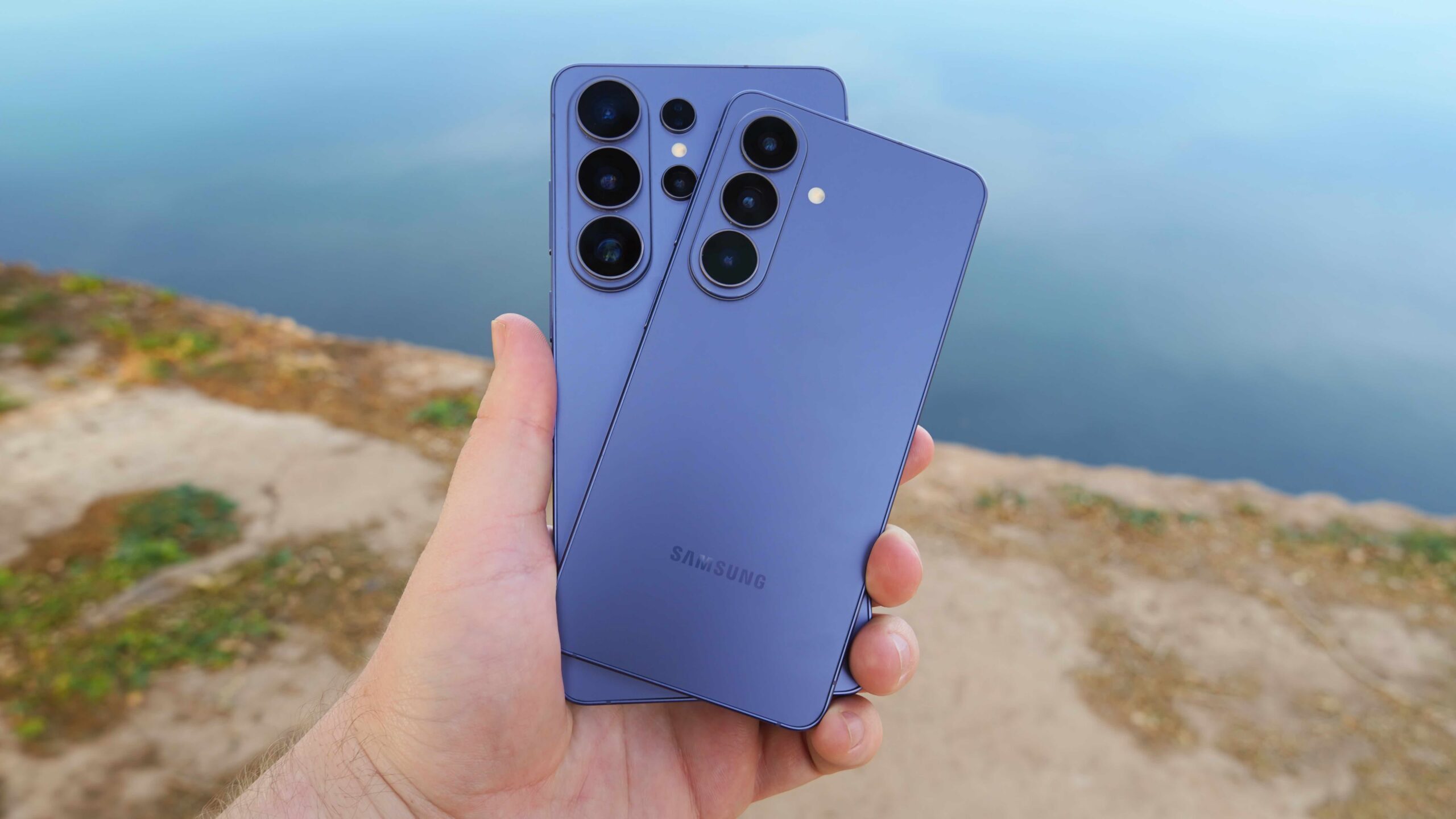
The precise cost-saving implications or the extent to which this strategy offsets Samsung’s internal chip development expenditures remain subjects of speculation. However, given the company’s recent restructuring efforts and reported manufacturing yield challenges, any immediate financial benefits are likely to be marginal.
"Exynos has not remained stagnant, but its competitors have advanced at an even more accelerated pace, creating a widening chasm in performance."
It is crucial to acknowledge that Exynos has not been static. Its year-over-year performance improvements are genuinely impressive, and the Exynos 2600, by all accounts, is not a slow chipset. Nevertheless, over the past five generations of Galaxy S devices, Samsung’s in-house silicon has consistently lagged behind its closest rivals, with the notable exception of Google’s Tensor chip, which prioritizes different aspects of performance. The strategic integration of AMD graphics has not fundamentally altered this competitive dynamic.
Instead, Exynos continues to be viewed as a strategic investment for Samsung. It provides the company with greater control over its silicon development roadmap, reduces its dependency on external chip manufacturers, and allows for deeper integration of customized features. These can range from advancements in on-device AI processing, such as leveraging features like Arm SME2 for AI acceleration, to innovative thermal management solutions like the Heat Pass Block (HPB) technology integrated into the Exynos 2600. While these internal advancements are promising indicators of Samsung’s long-term vision for Exynos, the true impact and success of this strategy will only become evident as the company’s partnership with AMD evolves and potentially concludes. The return of Exynos to the Galaxy S26 lineup will be a critical test case for Samsung’s renewed commitment to its custom silicon endeavors.