Metty Iskandar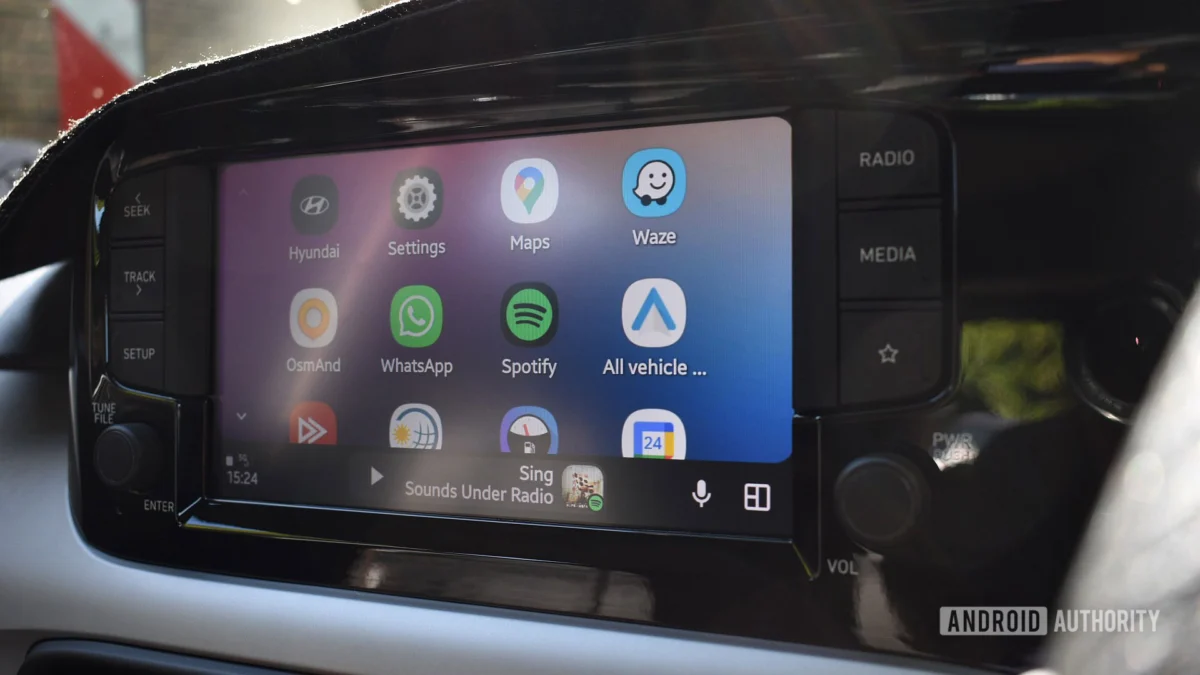
For the past several months, Google has been progressively integrating its advanced AI model, Gemini, into the Android Auto (AA) platform, aiming to enhance the in-car user experience with more sophisticated voice commands and conversational capabilities. However, this ambitious rollout has been met with a decidedly mixed reception from the user base. Now, a new, albeit unintended, development has emerged: a bug that is causing some Android Auto users to spontaneously revert from the Gemini AI interface back to the familiar Google Assistant. This unexpected rollback has sparked discussion and frustration among those who either prefer the older Assistant or are experiencing issues with Gemini’s integration.
The Unexpected Return of Google Assistant
Reports of Gemini’s disappearance from Android Auto and its replacement by the traditional Google Assistant have begun to surface across various online forums and social media platforms. Multiple users on Reddit have detailed their experiences, with some expressing a desire to return to the prior functionality. This sentiment is echoed by at least one of our own writers, who has also encountered this peculiar bug. While some affected users claim the reversion is persistent and they are unable to switch back to Gemini, others have indicated that the issue appears to be temporary, resolving itself after a period of time or a system restart.
The situation has also gained traction on the official Android Auto community forums, where users are meticulously documenting their experiences. One particularly detailed account, highlighted by PiunikaWeb, suggests a direct correlation between the reversion and the update to Android Auto version 16.7. According to this user, Gemini was functioning as expected until this specific update was applied. Following the update, their system reverted to Google Assistant, and despite exhaustive troubleshooting efforts—including clearing the cache for both Android Auto and Google apps, toggling digital assistant settings, and restarting both their smartphone and the vehicle’s head unit—the older Assistant interface remained stubbornly in place.
However, attributing the bug solely to version 16.7 might be premature. Another user in the same forum thread reported experiencing the issue while still operating on an earlier version, specifically 16.6.661414. This discrepancy suggests that the root cause of the reversion might be more complex than a single software version, potentially involving interactions between specific device models, operating system versions, or even network conditions.
A Brief History of Gemini’s Android Auto Integration
Google’s journey to bring Gemini into the automotive sphere has been a gradual one, beginning with initial testing phases and progressing to a global rollout. Gemini, Google’s most capable AI model to date, is designed to understand and respond to a wider range of complex queries, facilitate more natural conversations, and offer proactive assistance. Its integration into Android Auto was envisioned as a significant upgrade, promising to make navigation, communication, and media control more intuitive and efficient for drivers.
The initial rollout of Gemini for Android Auto commenced in late 2023 and early 2024, with gradual expansion across different regions and user groups. Early feedback was a mix of awe at the AI’s capabilities and frustration with its performance and integration. Some users praised Gemini’s ability to handle nuanced requests, such as "find me a petrol station that’s open late and has a car wash," or to manage complex multi-step commands. Others, however, reported slower response times, occasional misunderstandings, and a less seamless integration compared to the established Google Assistant. The ability to revert to the older Assistant was a feature many users hoped for, particularly during the early stages of Gemini’s adoption, to mitigate any disruption to their daily commutes. This current bug, therefore, presents an ironic twist for those who had been actively seeking a way back.
Analyzing the Technical Underpinnings
The reversion from Gemini to Google Assistant within Android Auto is likely a symptom of a deeper integration issue or a conflict in the software architecture. Android Auto operates as an extension of the Android operating system on a vehicle’s infotainment screen, leveraging the smartphone’s processing power and connectivity. The Gemini integration involves not just a new user interface but also a fundamentally different AI processing pipeline.
When a user initiates a voice command, the system typically routes it to the designated digital assistant. If Gemini is the active assistant, the request is processed by its advanced natural language understanding and generation models. If Google Assistant is active, a different, albeit still sophisticated, set of algorithms is employed. The bug suggests that in certain circumstances, the system is failing to maintain the active Gemini configuration, defaulting instead to the older Assistant service.
Potential causes for this reversion could include:
- Service Instability: The Gemini AI service, running either on the device or through cloud-based processing, might be encountering errors or timeouts, prompting the Android Auto system to fall back to a more stable, pre-defined default.
- Configuration Corruption: The settings that define the active digital assistant might become corrupted during an update or due to other system processes, leading to an incorrect default being loaded.
- Compatibility Conflicts: The recent Android Auto version (16.7) might introduce subtle incompatibilities with certain phone models, car head units, or even other Google apps installed on the user’s device, leading to unexpected behavior.
- Server-Side Rollback: In some instances, Google might be performing server-side adjustments or phased rollbacks of specific features. If a user’s device is flagged for such a rollback, it could manifest as the feature disappearing.
The fact that some users experience a temporary reversion suggests that the underlying issue might be related to resource management or intermittent network connectivity, which could resolve itself as system resources become available or network conditions improve.
Official Response and Potential Workarounds
Recognizing the growing number of user complaints, Google has acknowledged the issue and is actively investigating. A Google community specialist has provided a statement on the Android Auto community forums, indicating that the reports have been forwarded to the relevant team for further action. The statement reads: "Thanks for reporting this issue. We’ve forwarded your issue to the rest of the team. We’ve also reached out to you via e-mail for further assistance, please reply back to the same email." This proactive engagement suggests that Google is taking the bug seriously and aims to provide a resolution.
While a definitive fix is pending, some users have reported success with a workaround. This method involves manually switching the digital assistant setting within Android Auto. Users are advised to navigate to their Android Auto settings on their smartphone, locate the "Digital Assistant" or "Voice Assistant" section, and switch the selection from Gemini to Google Assistant. After confirming this change, they are then instructed to toggle the setting back to Gemini. This process effectively forces the system to re-establish the Gemini configuration. While not guaranteed to work for everyone, this manual reset appears to have restored Gemini functionality for a subset of affected users.
It is important for users experiencing this issue to ensure their Android Auto app and Google app are updated to their latest versions, as these updates often contain bug fixes and performance improvements. Additionally, keeping the smartphone’s operating system up-to-date can also play a crucial role in ensuring compatibility and stability with Android Auto.
Broader Implications for AI in Vehicles
The current situation with Gemini in Android Auto highlights the complexities and challenges associated with integrating advanced AI into automotive systems. While the potential benefits are immense, ensuring seamless, reliable, and user-friendly integration is paramount. The mixed reviews and the emergence of bugs like the spontaneous reversion to Google Assistant underscore the need for rigorous testing and a phased rollout strategy that allows for user feedback and iterative improvements.
For Google, this issue presents an opportunity to refine its AI integration process. The ability to offer users a clear choice between different AI models, or to easily switch between them, could be a valuable feature during the transition period. Furthermore, the company needs to ensure that its AI updates are robust enough to handle the diverse range of hardware and software configurations present in the automotive ecosystem.
The long-term implications for AI in vehicles are significant. As AI models like Gemini become more sophisticated, they have the potential to revolutionize the driving experience, offering enhanced safety features, personalized infotainment, and more efficient navigation. However, user trust and satisfaction are critical for widespread adoption. Incidents like the current bug, while potentially temporary, can erode that trust if not addressed promptly and effectively. The industry will be watching closely to see how Google navigates these challenges and ultimately delivers on the promise of AI-powered automotive experiences.