Evan Lee Salim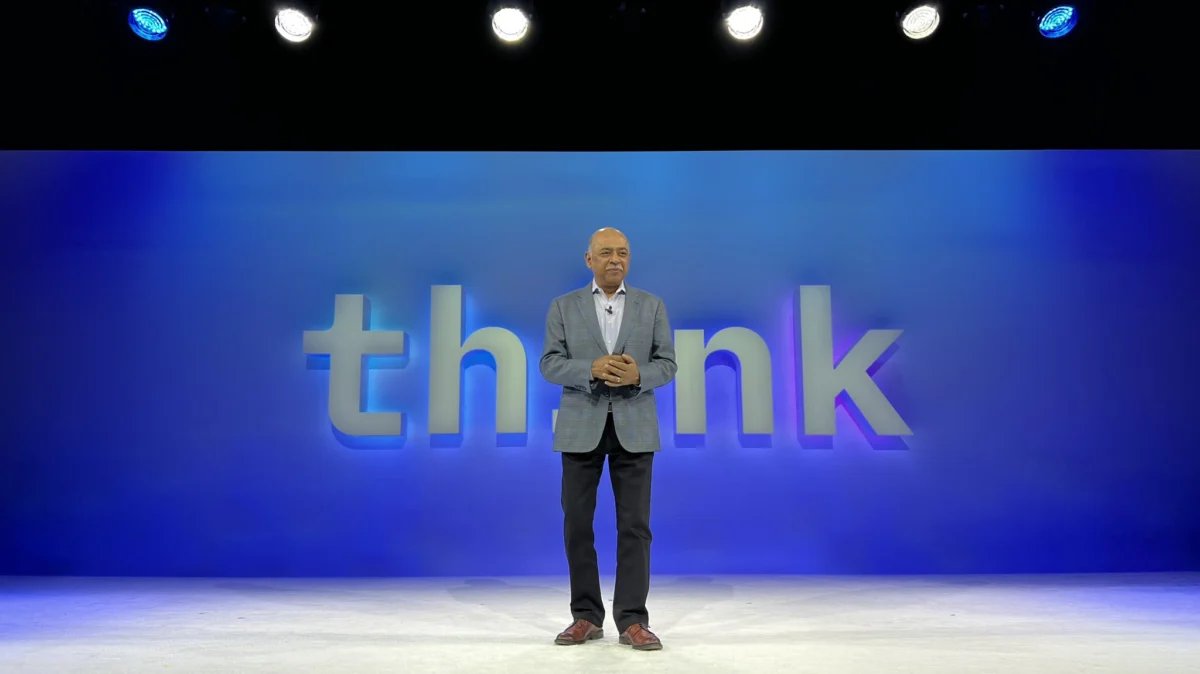
On Wednesday, technology giant IBM officially reported its second-quarter earnings for 2026, confirming what many investors and analysts had already braced for: a performance that fell substantially short of Wall Street’s expectations. Despite the 115-year-old company continuing to generate significant financial volume, the details unveiled a troubling slowdown in a critical segment of its business, prompting renewed scrutiny on its strategic direction and the broader implications of the artificial intelligence boom on enterprise IT budgets.
The Quarter’s Stark Reality: A Disappointing Performance
IBM’s financial disclosures for the quarter, while substantial in absolute terms, painted a picture of missed targets and decelerating growth. The company reported $17.2 billion in revenue, a figure that, while robust for many corporations, did not meet analyst consensus. Gross profit stood at $9.9 billion, translating to a healthy nearly 58% gross margin, and net earnings reached $2.2 billion for the quarter. However, these figures, when measured against the ambitious projections set by financial markets, signified a notable shortfall. Analysts had, on average, anticipated higher revenue figures and a more robust earnings per share, making the official report a clear disappointment that resonated negatively across the investment community. This miss was particularly jarring given IBM’s status as a foundational pillar of the global technology infrastructure, often seen as a bellwether for enterprise spending trends.
An Unprecedented Pre-Warning and Market Reaction
The gravity of the impending results was so significant that IBM’s leadership took an extraordinary and largely unprecedented step. Last week, CEO Arvind Krishna, along with the company’s board, issued a proactive warning to investors, effectively offering a "sneak peek" into the dismal performance. Krishna published a "letter to investors" on the company’s newsroom, candidly admitting that the earnings "was worse than our expectations." This unusual pre-announcement detailed an anticipated abysmal revenue performance within IBM’s "infrastructure" category—a segment crucial to its operations—and signaled an expected hit to profit margins.
The market’s reaction was swift and brutal. Following Krishna’s letter, IBM’s stock instantly plummeted by 25% in a single trading day. This massive sell-off marked the company’s biggest single-day decline ever, wiping out billions in market capitalization and shaking investor confidence. The sharp decline was particularly striking because, until this point, IBM’s stock had performed relatively well under Krishna’s six years of leadership. His tenure had seen the company pivot towards hybrid cloud and artificial intelligence, and its stock had largely been buoyed by the burgeoning AI data center boom, which had seemingly lifted the fortunes of many technology companies. The abrupt reversal underscored the market’s sensitivity to unexpected negative news from a company of IBM’s stature and history.
The Mainframe Meltdown: A Core Business Under Pressure
The primary culprit behind this significant earnings miss and the subsequent market turmoil was identified as a dramatic decline in IBM’s mainframe business. The company’s cash-cow mainframe sales plummeted by an astonishing 42% during the quarter. This decline is not merely a reduction in hardware sales; it represents a cascading problem for IBM’s broader ecosystem. As CFO Jim Kavanaugh elaborated during the quarterly earnings call with investors, IBM’s business model is deeply intertwined with its mainframe offerings: for every $1 of mainframe hardware it sells, the company typically generates an additional $3 in high-margin software revenue. This multiplier effect means that a significant drop in mainframe sales has a disproportionately negative impact on the company’s overall financial health, particularly its lucrative software segment.
Mainframes, despite predictions of their demise over several decades, remain the backbone of mission-critical operations for a vast number of the world’s largest enterprises, including banks, airlines, and government agencies. Their unparalleled reliability, security, and processing power for high-volume transactions have ensured their continued relevance. For IBM, the mainframe isn’t just a product line; it’s a foundational platform that anchors a significant portion of its services, software, and consulting engagements. A substantial decline in this segment, therefore, raises fundamental questions about the stability of IBM’s core enterprise relationships and its ability to predict demand cycles for its most critical hardware.
The AI Paradox: A Boom’s Unintended Consequence
Paradoxically, the very AI boom that had previously bolstered IBM’s stock and driven growth across the tech industry is now being cited as a key factor in its current predicament. Krishna explained that the decline in mainframe sales was not due to customers abandoning the technology but rather deferring purchases. He stated that "tens" of customers, who were due to buy new mainframes during the quarter, opted not to do so. While "tens" may not sound like a large number, it’s crucial to understand the scale of these systems; mainframes cost hundreds of thousands to millions of dollars apiece, and with associated maintenance contracts and software licenses, they generate many millions more in revenue over their lifecycle.
The reason for this deferral, Krishna clarified, was a sudden and significant surge in the cost of other essential data center gear and personal computing hardware. Customers were reportedly faced with "astronomically high cost increases of 15% to 30%" for these components. "When they were faced with that issue, then they decided to move budget to those areas where they were having that extreme price," Krishna elaborated. This reallocation of IT budgets meant that funds earmarked for mainframe upgrades were diverted to cover the escalating costs of other critical infrastructure, driven by an unprecedented demand for high-performance components.
This phenomenon is not unique to IBM. Other major enterprise hardware manufacturers, such as Dell and HP, have previously warned that rising costs for components like memory, directly attributable to the intense demand fueled by the AI build-out boom, have forced them to implement significant price hikes. Even consumer electronics giants like Apple have acknowledged similar pressures, raising prices for their Mac and iPad lines in response to escalating component costs. The insatiable demand for GPUs, high-bandwidth memory (HBM), advanced cooling systems, and specialized power infrastructure needed to train and deploy large language models and other AI applications has created a severe supply-demand imbalance across the semiconductor and hardware industries, pushing prices upward across the board. This intricate web of supply chain dynamics and unprecedented demand has created a complex challenge for enterprise IT departments, forcing difficult budgetary decisions and impacting companies like IBM.
Leadership’s Reassurance: A Temporary Blip?
Despite the stark numbers, both CEO Arvind Krishna and CFO Jim Kavanaugh spent a significant portion of the earnings call insisting that the downturn was merely a "temporary blip" and that the situation would soon normalize. Krishna reiterated his belief that the affected customers would eventually proceed with their mainframe purchases, along with the associated software contracts. He even stated that some of these deferred purchases had already begun to materialize in the current quarter. "We see no evidence of clients moving off the mainframe," he affirmed, attempting to reassure investors that the fundamental demand for their flagship enterprise system remains intact.
This optimistic outlook, however, faces skepticism from some analysts. While it is plausible that some purchases were simply delayed, the magnitude of the 42% drop and the systemic nature of the AI-driven component price increases suggest that this might be more than a fleeting issue. The strategic decision by "tens" of major clients to reallocate budgets away from mainframes, even temporarily, could signal a shift in IT spending priorities that warrants closer monitoring. The question remains whether these customers will fully catch up on their deferred purchases or if the current quarter’s shortfall represents a more permanent recalibration of their infrastructure investments.
Historical Context: The Enduring Mainframe
The debate over the mainframe’s longevity is not new. For many decades, the tech industry has regularly predicted the "death of the mainframe," particularly with the advent of client-server architectures, distributed computing, and, more recently, the widespread adoption of cloud computing. Each technological paradigm shift brought with it pronouncements that the mainframe, a relic of a bygone era, was finally headed for obsolescence. Yet, time and again, the mainframe has proven its resilience, adapting and evolving to remain a critical, albeit specialized, component of the global IT landscape. Its enduring appeal lies in its unmatched capabilities for processing massive transaction volumes, its robust security features, and its legendary uptime for mission-critical applications where even minutes of downtime can translate into catastrophic financial losses.
The current challenge posed by the AI boom is perhaps one of the more unique threats to emerge. Unlike previous disruptions that offered alternative computing paradigms, the AI-driven price hikes affect the broader hardware ecosystem, forcing a re-evaluation of all IT spending. This situation doesn’t necessarily pit AI against the mainframe directly but rather forces enterprises to make difficult choices about budget allocation in a constrained and increasingly expensive hardware environment. As Krishna suggests, "Maybe even AI won’t kill it," but it has certainly created a significant, unexpected hurdle for IBM’s most dependable revenue stream.
Broader Implications and Forward Outlook
The implications of IBM’s Q2 performance extend beyond the immediate financial hit. The company also lowered its full-year growth forecasts, indicating that the impact of this challenging quarter is expected to ripple through the remainder of the year. This adjustment suggests that the leadership’s "temporary blip" assessment, while potentially true in the long run for specific deferred purchases, acknowledges a near-term headwind that will affect overall financial projections.
For investors, the report and the preceding warning have undoubtedly raised new questions about the stability and predictability of IBM’s transformation strategy. While Arvind Krishna has successfully steered the company towards hybrid cloud and AI solutions, the dependence on hardware sales, particularly mainframes, still introduces significant volatility. Analysts will be closely watching for signs of diversification and the ability of IBM’s software and services segments to truly decouple from hardware cycles. The incident also serves as a stark reminder that even companies seemingly poised to benefit from technological megatrends like AI can face unexpected and complex challenges arising from those very same trends. The "wait and see" approach adopted by IBM’s leadership places the onus on future quarters to demonstrate that the deferred mainframe purchases do indeed materialize and that the AI-driven budget reallocations were a short-term anomaly rather than a precursor to a more permanent shift in enterprise spending priorities. The coming quarters will be critical in determining whether IBM can navigate this paradoxical impact of AI and reaffirm the resilience of its century-old business model.