Vera Intan Clara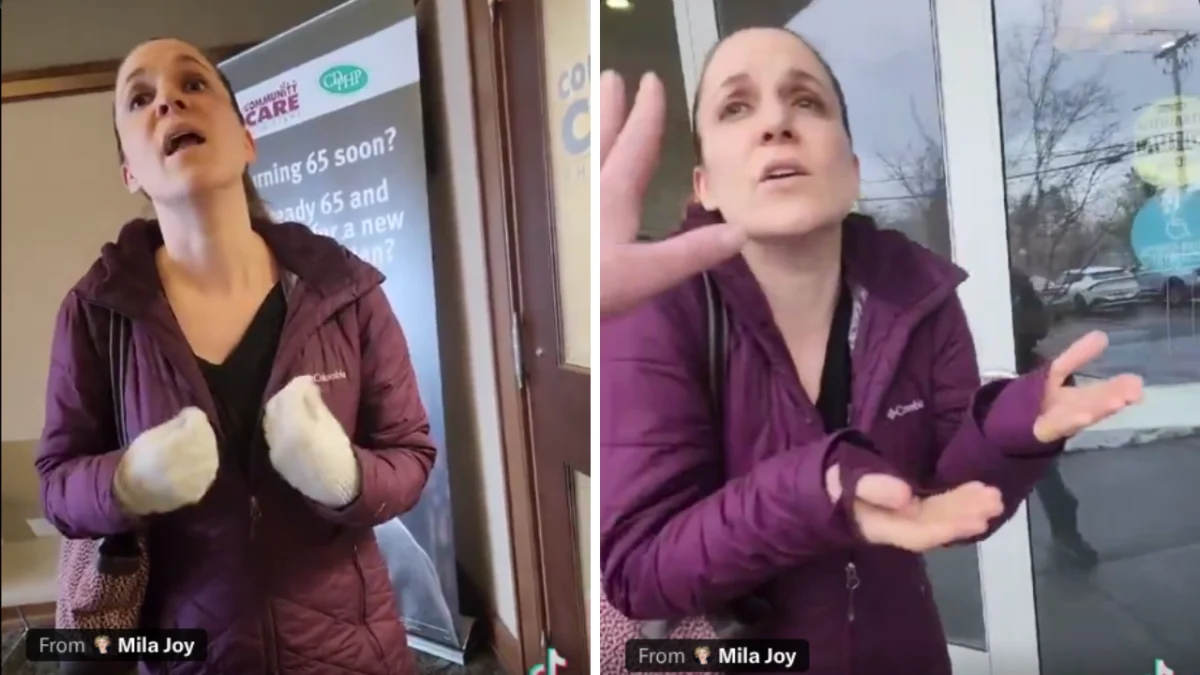
A video widely circulated on the social media platform X, shared by user @Milajoy, has become the focal point of an intense online debate after it purportedly depicted a clinic employee engaging in a persistent confrontation with a patient regarding the "Make America Great Again" (MAGA) hat worn during a doctor’s appointment. The footage suggests the employee repeatedly attempted to engage the patient in a conversation about her political attire as the patient sought to exit the medical facility, leading to allegations of harassment and unprofessional conduct. The incident has rapidly fueled discussions across X, touching upon critical themes of political expression in professional settings, the sanctity of personal boundaries, and the appropriateness of an employee’s actions within a healthcare environment.
The widely viewed video captures a tense exchange, illustrating a significant breach of expected professional decorum within a medical setting. From the outset of the recording, the clinic employee is seen positioning herself in close proximity to the patient, later identified as Mila, in a manner that Mila perceived as confrontational and intrusive. Despite Mila’s repeated attempts to disengage and exit the building, politely saying, "Bye, honey. Bye," the employee persisted in her efforts to initiate a dialogue about the hat. This persistence escalated as the employee followed Mila outside the building, maintaining her attempts to speak with the patient even as Mila clearly expressed her desire to leave.
Chronology of a Confrontation
The unfolding events, as depicted in the viral video, present a clear timeline of the escalating interaction:
Initial Engagement and Patient’s Attempts to Disengage: The video begins with the employee already in close proximity to Mila, attempting to engage her. Mila’s immediate response is to try and leave, using polite but firm dismissal phrases like "Bye, honey. Bye."
Pursuit Outside the Building: Despite Mila’s clear attempts to end the interaction, the employee continued to follow her outside the clinic entrance. This action moved the confrontation from a potentially contained internal incident to a more public and persistent pursuit.
Direct Accusation of Harassment: Realizing the employee was still following her, Mila’s tone shifted from polite dismissal to direct confrontation. She stated emphatically, "NO! You need to stop harassing. . . I am at a doctor’s appointment. I don’t need your harassment." She then reiterated her demand for the employee to disengage, saying, "You need to go away. You need to go away." This marked a critical point where the patient explicitly articulated feeling harassed and demanded the cessation of the employee’s actions.
Physical Obstruction and Ideological Pressure: As Mila attempted to re-enter the building, possibly to seek assistance or to escape the continued pursuit, the employee appeared to physically block the doorway. During this obstruction, the employee continued to speak, notably saying, "I just want you to think about what you’re wearing." This statement directly linked the employee’s persistent engagement to the patient’s political attire, suggesting an intent to critique or influence Mila’s expression.
Continued Pursuit Inside the Clinic: After Mila managed to maneuver past the employee’s apparent barricade and re-enter the building, the employee reportedly followed her back inside. This action further intensified the perceived harassment, demonstrating a continued intent to engage the patient on her political views, potentially to convince her to remove the MAGA hat or to listen to the employee’s "political rhetoric."
Escalation of Patient’s Distress and Demand for Space: Mila’s frustration became increasingly evident as she continued to demand that the employee leave her alone. Her pleas escalated to "Go away. Get off my back! Leave me alone, FREAK!" followed by a direct appeal to the professional setting: "Stop! Stop! We’re at a doctor’s office." This final, desperate plea underscored the inappropriateness of the situation within a healthcare context.
Employee’s Eventual Retreat and Justification Attempt: Following Mila’s explicit statement about being in a doctor’s office, the employee eventually walked out of the entrance door. However, the interaction did not end without the employee attempting to justify her actions to Mila’s mother, who was also present. The employee stated, "You’re making me out to be the bad person. So that’s all I need you to know, is that I’m not the bad person." This indicated a self-perception of being righteous, despite the distress caused to the patient.
Broader Context: Political Expression in Healthcare Settings
The incident brings into sharp focus the complex interplay between individual political expression and the professional standards expected within healthcare environments. Medical facilities are generally understood as neutral spaces, where the primary focus is patient care, well-being, and privacy. Patients visit doctors for health-related concerns, often in vulnerable states, and expect a professional, respectful, and non-discriminatory environment.
The MAGA hat, a prominent symbol of support for former President Donald Trump and his political movement, has become highly polarizing in contemporary American society. While individuals have a constitutional right to freedom of speech and expression, this right is often subject to limitations within specific contexts, particularly in professional workplaces and service-oriented environments. Healthcare institutions typically enforce codes of conduct that mandate neutrality, respect for diverse backgrounds, and a focus on patient needs above personal political views. Employees are generally expected to maintain professional boundaries and refrain from engaging patients in political discussions, especially if such engagement becomes confrontational or unwelcome.
According to guidelines from organizations like the American Hospital Association and the American Medical Association, healthcare professionals are obligated to provide care without discrimination and to maintain a professional demeanor that fosters trust and comfort for all patients. Harassment, whether verbal or otherwise, based on a patient’s political affiliation or any other personal characteristic, would typically be considered a violation of these professional standards and potentially the institution’s internal policies.
Online Reactions and Public Discourse
The video’s immediate virality on X quickly ignited a firestorm of debate, reflecting the deeply entrenched political divisions within the United States. Commenters largely fell into two camps: those condemning the employee’s actions as unprofessional and harassing, and those either defending the employee’s right to express her views or criticizing the patient’s choice to wear the hat.
Many users expressed outrage at the employee’s conduct, arguing that it constituted a severe breach of professional ethics and patient rights. One X commenter articulated this sentiment, writing, "The employee needs to be reprimanded and possibly fired for harassing this patient and her mom. This is just ridiculous." This user further highlighted the perceived power dynamic and the symbolic weight of the MAGA hat by suggesting, "I should buy a few more MAGA hats to have on hand for they seem to have lots of power in them. I could go around triggering silly godless, liberal, anti-Americans that do not understand what freedom of speech is." This comment underscores how such incidents are often viewed through a partisan lens, with symbols becoming tools for provocation or solidarity.
Other commenters framed the incident as symptomatic of broader political tensions, particularly from a conservative perspective. Another user remarked, "The left is every evil thing they accuse conservatives of being. Your wacko, hating leadership wouldn’t even give a moment of silence for Charlie Kirk." This comment introduces an external political reference, linking the clinic incident to the broader narrative of perceived animosity towards conservatives. The reference to Charlie Kirk alludes to a separate political controversy where lawmakers reportedly debated whether to hold a moment of silence following the killing of a conservative activist. While authorities publicly discussed the investigation, the motive for Kirk’s killing remained under investigation, yet the incident was invoked in this context to highlight perceived political bias and a lack of empathy across political lines. This demonstrates how individual incidents like the clinic confrontation become integrated into larger political narratives, serving as evidence for pre-existing grievances.
The online discussion also delved into the specifics of personal boundaries and the right to disengage from unwelcome interactions. Many argued that regardless of political views, the patient’s repeated attempts to leave should have been respected, and the employee’s continued pursuit constituted harassment. This aspect of the debate transcends political affiliation, focusing on universal principles of personal space and autonomy.
Legal and Ethical Implications
The confrontation raises several significant legal and ethical questions regarding patient care, employee conduct, and the responsibilities of healthcare institutions.
Patient Rights: Patients have a right to receive medical care without harassment or discrimination based on their political views, race, religion, gender, or any other protected characteristic. While wearing a MAGA hat is an act of political expression, it should not be a basis for adverse treatment or unwelcome confrontation within a healthcare setting. The incident could be construed as creating a hostile environment for the patient, potentially violating their right to a safe and respectful healthcare experience.
Employee Conduct and Professional Ethics: Healthcare employees are bound by professional ethics that prioritize patient well-being and maintaining a neutral, respectful environment. Engaging in political debates with patients, especially in a persistent and confrontational manner, directly contradicts these principles. Such behavior can undermine patient trust, create discomfort, and detract from the primary purpose of the medical appointment. Depending on the clinic’s internal policies, the employee’s actions could lead to disciplinary measures ranging from a formal reprimand to termination of employment, as such conduct typically violates codes of conduct designed to ensure a professional and non-discriminatory workplace.
Institutional Responsibility: The healthcare facility itself bears responsibility for ensuring that its environment is safe, respectful, and free from harassment for all patients. This includes having clear policies on employee conduct, providing training on patient interaction and professionalism, and promptly investigating and addressing complaints of misconduct. A failure to adequately address such incidents could expose the institution to reputational damage, loss of patient trust, and potentially legal liabilities if a formal complaint of discrimination or harassment were pursued.
Potential Institutional Response (Inferred)
As The Daily Dot noted, it was unable to independently verify the claims made in the video, and no official statement from the clinic or the employee has been publicly released at the time of this report. However, based on standard practices within the healthcare industry, a typical institutional response to an incident of this nature would likely involve:
- Acknowledgment of the Incident: Acknowledging that the incident occurred and is being taken seriously.
- Internal Investigation: Launching a thorough internal investigation to gather all facts, including reviewing the video, interviewing the patient (if willing), the employee, and any witnesses.
- Review of Policies: Reviewing and potentially reinforcing existing employee conduct policies, professionalism guidelines, and anti-harassment protocols.
- Reiteration of Commitment: Reaffirming the clinic’s commitment to patient care, respect, non-discrimination, and creating a safe environment for all individuals, irrespective of their political affiliations or personal beliefs.
- Disciplinary Action (if warranted): Taking appropriate disciplinary action against the employee if the investigation confirms a violation of company policy or professional standards. The nature of such action would depend on the severity of the infraction and the clinic’s internal HR guidelines.
- Communication: Potentially issuing a public statement to address concerns, assure patients of the clinic’s values, and outline steps taken to prevent future occurrences.
The absence of an official statement leaves the public to speculate, but the pressure from online discourse often compels organizations to address such controversies.
Broader Societal Implications and the Path Forward
This incident serves as a stark illustration of the deep political polarization permeating American society, even extending into spaces traditionally considered sacrosanct and neutral, such as healthcare facilities. It highlights the challenges of maintaining civility and respect in public and professional interactions when political identities are increasingly central to individual self-perception and intergroup dynamics.
The confrontation underscores the importance of clear boundaries between personal political expression and professional responsibilities, particularly for individuals in service roles where impartiality and patient well-being are paramount. It also prompts a broader conversation about how institutions can better equip their employees to navigate a politically charged environment while upholding their core mission and values.
Ultimately, the video of the clinic employee and the patient’s MAGA hat has become more than just an isolated incident; it is a microcosm of a larger societal struggle to balance individual rights with collective responsibilities, and to foster environments of respect and understanding in an era of unprecedented division. The ongoing debate online reflects the complex nature of these challenges and the urgent need for dialogue on how to bridge divides and reinforce professional standards in all sectors.