Vera Intan Clara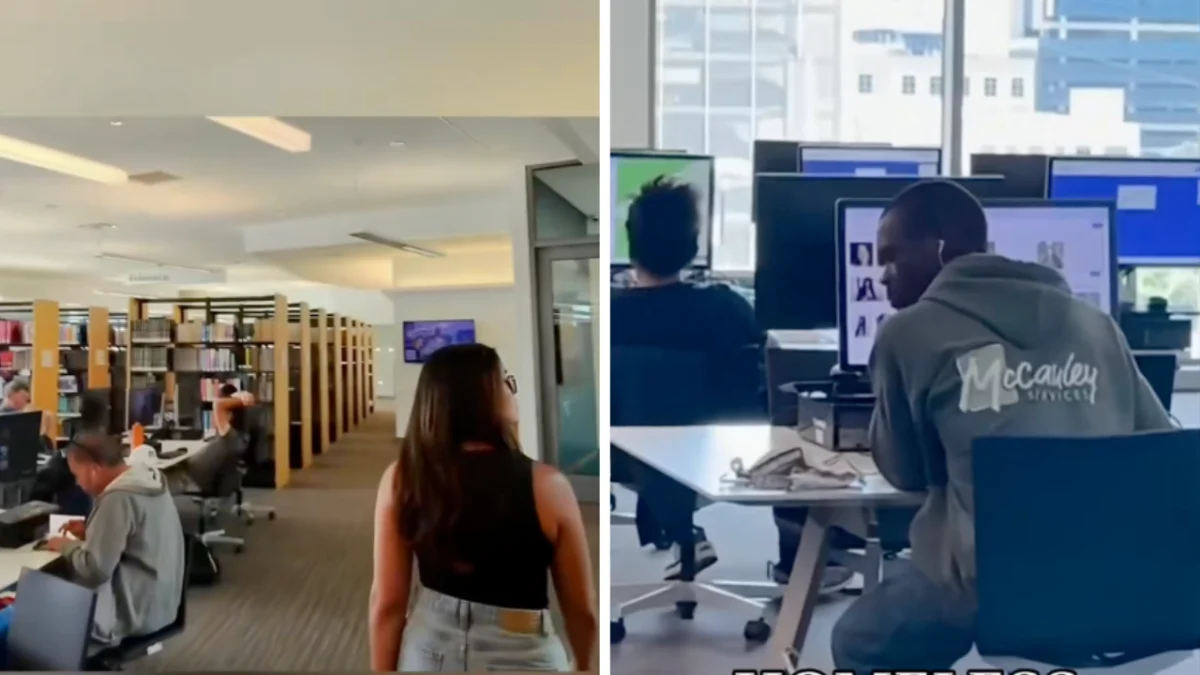
A recent viral video circulated on X (formerly Twitter) has cast a spotlight on a newly constructed library in Seattle, Washington, sparking a fervent public debate about urban public spaces, the integration of social services, and the challenges of homelessness in major cities. The video, shared by a user who claimed to be touring the facility, purported to highlight issues regarding the presence of individuals believed to be experiencing homelessness within the library, their alleged conduct, and the facility’s overall suitability for families. The controversy has prompted widespread discussion online, bringing into question public perceptions of taxpayer-funded institutions and the complex realities faced by urban communities.
The Genesis of the Controversy: A Social Media Snapshot
The viral incident began with a video posted on X by user Savanah Hernandez, which quickly garnered significant attention. The video’s accompanying caption stated that "Taxpayers paid for a new $165.9 million dollar state-of-the-art library in Seattle, Washington. The computers are taken over by the homeless." The user further detailed an alleged encounter within the library, claiming, "Walking into to investigate, a homeless man starts making sexual gestures with his tongue to journalists Savanah Hernandez. She tries to get him to stop and he keeps making the sexual gestures." The caption also described the library’s chairs as "already stained and have very dark spots," attributing this to "homeless people" who are "allowed in the library," linking it to Seattle’s reported 9% increase in its homeless population.
The video footage itself showed a woman, presumably Hernandez, navigating various sections of the library. She verbally reiterated her claims, stating, "Let’s go check out the state-of-the-art computer bays on the 5th floor. To highlight my point about how un-family-friendly this public library is, when I first got off the elevator, this homeless dude started staring at me and making sexual gestures." She continued, "I immediately made it clear that I was disgusted and started recording him in hopes it would deter him. But nope, he kept going." The video depicted individuals using the computer facilities and other areas of the library, though it did not explicitly identify them as experiencing homelessness, nor did it clarify the specific reasons for their computer usage. The claims regarding stained furniture and crumbs on the floor were also presented visually and narratively within the video.
It is crucial to note that, as of this report, independent verification of the specific claims made in the video and its caption—including the precise cost of the library, the identities or housing status of the individuals shown, or the alleged inappropriate conduct—has not been publicly established. The narrative presented in the viral post forms the basis of the ensuing online discussion.
Seattle’s Public Library System: A Cornerstone of Community Access
The Seattle Public Library (SPL) system, like many urban library networks across the United States, operates on a principle of universal access, aiming to provide resources and services to all members of the community, regardless of socioeconomic status. Public libraries have historically served as vital community hubs, offering not just books and educational materials, but also access to technology, job search assistance, literacy programs, and often, a safe, climate-controlled space for individuals who may lack such amenities elsewhere.
The reported cost of the library, $165.9 million, aligns with significant public investment often seen in major urban infrastructure projects. Modern libraries are no longer just repositories for books; they are designed as multi-functional community centers. Such costs typically encompass architectural design, construction, advanced technological infrastructure (including computer networks, digital media labs, and high-speed internet), energy-efficient systems, accessibility features, and extensive interior furnishings. Funding for such projects often comes from a combination of public levies, bond measures approved by voters, and sometimes private donations, reflecting a community’s commitment to public education and civic engagement.
The concept of a "state-of-the-art" library, as mentioned in the viral post, often refers to its technological capabilities, architectural innovation, and comprehensive service offerings rather than solely the brand or age of individual computer units. While some commenters on X questioned the technological sophistication of the computers shown, suggesting they appeared to be "old refurbished Dell desktops," the broader definition of "state-of-the-art" in library design encompasses a holistic approach to service delivery in the digital age.
The Broader Context: Seattle’s Persistent Homelessness Challenge
The controversy surrounding the library cannot be fully understood without acknowledging Seattle’s ongoing and significant homelessness crisis. For years, the city has grappled with a growing unhoused population, driven by factors such as rising housing costs, economic inequality, mental health challenges, and substance abuse. Data from organizations like the Seattle King County Coalition on Homelessness consistently report thousands of individuals experiencing homelessness on any given night, with a notable percentage living unsheltered. While the exact 9% increase cited in the X post’s caption would need specific year-over-year data for verification, general trends in Seattle have shown an upward trajectory in the unhoused population over the past decade.
In this context, public libraries often find themselves on the front lines of social service provision, whether intentionally or by necessity. For individuals experiencing homelessness, libraries can offer a crucial respite from the elements, access to restrooms, a place to charge phones, and a connection to the internet – a lifeline for job searches, communication with family, or accessing social services. This role, while vital for vulnerable populations, can sometimes lead to friction with other library users, particularly concerning issues of personal hygiene, behavior, or the perception of safety.
Navigating Public Spaces: Library Policies and User Conduct
Public libraries typically operate under a set of established rules and codes of conduct designed to ensure a welcoming, safe, and productive environment for all patrons. These policies usually address issues such as noise levels, personal hygiene, food and drink consumption, use of facilities, and appropriate behavior. Libraries aim to strike a delicate balance between providing universal access, fulfilling their mission as public resources, and maintaining an environment conducive to study, learning, and community interaction.
When instances of alleged inappropriate behavior, such as the "sexual gestures" described in the viral video, occur, library staff are generally trained to intervene according to established protocols. These protocols often involve warning the individual, requesting a change in behavior, and, if necessary, asking them to leave the premises. Persistent or severe violations can lead to temporary or permanent bans from the library. However, enforcing these rules can be complex, especially when dealing with individuals who may be struggling with mental health issues or other vulnerabilities.
The perception of "family-friendliness" is often subjective but is a significant concern for public institutions. Libraries strive to be inclusive spaces for children and families, offering dedicated sections, programs, and resources. Any incidents or persistent conditions that deter families from utilizing these services can prompt libraries to review and adjust their operational strategies and security measures.
The Digital Echo Chamber: Social Media’s Amplifying Role
The rapid spread of the Seattle library video on X exemplifies the powerful and often instantaneous impact of social media on public discourse. Platforms like X can quickly amplify individual experiences and perspectives, transforming them into broader societal debates. While this allows for rapid dissemination of information and diverse viewpoints, it also poses challenges regarding verification and contextualization. Viral content, particularly that which touches on sensitive social issues like homelessness and public safety, can quickly polarize opinions and influence public perception before comprehensive facts are established.
Comments on the X post reflected a wide spectrum of reactions. Many users echoed the original poster’s concerns, expressing dismay about the alleged conditions and questioning the efficacy of public spending. One commenter stated, "And this is why I voted against the new library levy in Seattle. I’m not going to give more taxpayer money to a glorified homeless shelter that families won’t feel safe bringing their kids to," tagging local government leaders to demand action. Other users focused on the perceived value for money, disputing the "state-of-the-art" claim by critiquing the appearance of the computers.
Conversely, many users defended the role of public libraries, emphasizing their importance as essential resources for all community members, including those experiencing homelessness. They argued that libraries are often the last remaining public spaces where everyone is welcome, and that stigmatizing vulnerable populations detracts from the core mission of public institutions. Some commenters also highlighted that the conditions described are not universal, noting, "Depends on the neighborhood. I have seen this in a couple of AZ libraries, but not all," suggesting localized challenges rather than systemic library failures.
Implications for Urban Planning and Public Services
The Seattle library controversy underscores a multifaceted challenge facing urban centers: how to manage public spaces and services in the context of persistent social issues like homelessness. It raises critical questions for urban planners, city officials, and library administrators:
- Balancing Access and Safety: How can libraries uphold their mission of universal access while ensuring a safe, comfortable, and welcoming environment for all patrons, including families?
- Resource Allocation: What is the appropriate level of investment in public libraries, and how should these funds be allocated to address both traditional library services and the emergent social service roles libraries often fill?
- Homelessness Solutions: Should libraries be expected to serve as de facto shelters or social service hubs, or should cities invest more heavily in dedicated facilities and programs to address homelessness directly?
- Public Perception and Trust: How do incidents like the viral video impact public trust in taxpayer-funded institutions, and how can cities effectively communicate their strategies for managing complex urban challenges?
- Role of Technology and Design: How can modern library design and technological infrastructure best serve diverse community needs, and how can these investments be protected and maintained?
This incident in Seattle is not isolated. Public libraries in many cities, from Los Angeles to New York, have grappled with similar issues, highlighting a broader societal debate about the function and expectations placed upon these vital community anchors. As cities evolve, so too must the strategies for managing public spaces to reflect the diverse needs and challenges of their populations. The ongoing dialogue spurred by the viral video serves as a reminder of the intricate connections between public infrastructure, social policy, and community well-being in the modern urban landscape.