admin
admin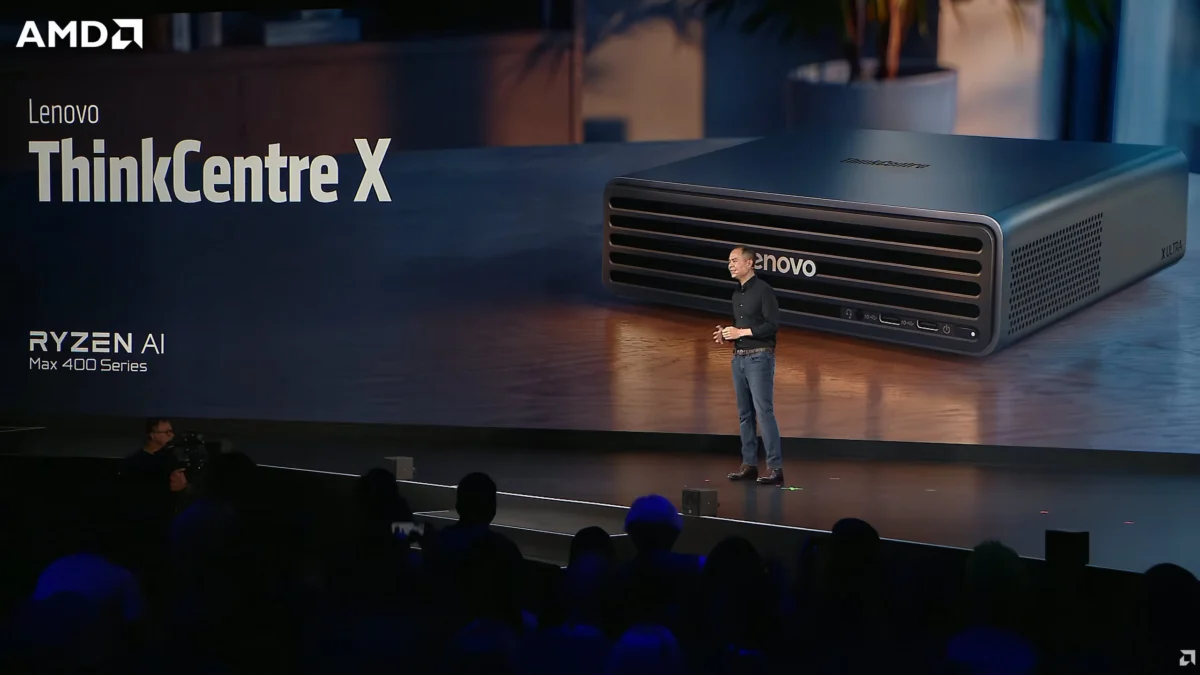
AMD has officially introduced its most formidable artificial intelligence solutions tailored for local developers and professionals, headlined by the Threadripper Halo Station and an expanded lineup of Ryzen AI MAX PCs. Unveiled during a high-profile presentation at the IFA trade show, these systems represent a strategic pivot toward high-performance local inference, aiming to provide an alternative to the increasingly costly cloud-based AI infrastructure. The flagship Threadripper Halo Station is being positioned by the company as the "Ultimate Personal AI Workstation," a desktop-class supercomputer designed to handle the massive computational requirements of next-generation large language models (LLMs) and autonomous agentic workflows.
The announcement comes at a critical juncture in the semiconductor industry, as the demand for local AI processing power grows exponentially. As neural networks transition from simple chatbots to complex multi-step agents, the hardware requirements for memory bandwidth and sheer core counts have moved beyond the capabilities of standard consumer hardware. AMD’s new "Halo" tier aims to fill this vacuum, offering specifications that challenge the current dominance of NVIDIA’s DGX series in the professional workstation segment.
Technical Architecture of the Threadripper Halo Station
At the heart of the Threadripper Halo Station lies the AMD Threadripper PRO 9995WX, a processor built on the advanced "Zen 5" architecture. This CPU features up to 96 physical cores and 192 threads, reaching clock speeds of up to 5.4 GHz. With a massive 384 MB of L3 cache, the 9995WX is engineered to minimize latency in data-intensive tasks. While GPUs typically handle the heavy lifting of AI inference, a high-core-count CPU is vital for Agentic AI, where the processor must orchestrate multiple sub-tasks, manage data pipelines, and handle the logic of complex AI decision-making.

The graphical and AI acceleration capabilities are even more robust. The Halo Station integrates up to four AMD Instinct MI350P GPUs. These cards utilize the CDNA 4 architecture, a departure from the RDNA architecture found in consumer gaming cards, optimized specifically for high-throughput mathematical computations. Each MI350P GPU is equipped with 144 GB of HBM3e (High Bandwidth Memory), totaling a staggering 576 GB of dedicated GPU memory in a fully maxed-out configuration. This memory configuration allows for an aggregate bandwidth of 16 TB/s, a figure that ensures even the largest models can be processed without hitting the bottlenecks common in standard PCIe-based systems.
To complement the high-speed HBM3e, the system supports up to 2 TB of standard DDR5 RDIMM system memory. This hybrid approach allows for a total system memory footprint of 2.6 TB. By utilizing RDIMMs for capacity and HBM for speed, the Threadripper Halo Station can store trillion-parameter models in their entirety, enabling local execution of models that previously required massive cloud clusters.
Competitive Analysis: AMD Threadripper Halo Station vs. NVIDIA DGX Station
The primary competitor for AMD’s new workstation is the NVIDIA DGX Station, specifically the GB300 variant based on the Blackwell architecture. A side-by-side comparison reveals distinct philosophical differences in how the two companies approach desktop-scale AI.
NVIDIA’s DGX Station GB300 utilizes the Grace-Blackwell Superchip, which combines a 72-core ARM-based Grace CPU with a Blackwell GPU via the NVLink-C2C interconnect. This allows for a unified/coherent memory pool of 748 GB with 900 GB/s of interconnect bandwidth. In contrast, AMD relies on the x86-based Zen 5 architecture, which offers 96 cores—significantly more than the Grace CPU—and higher single-core performance. While NVIDIA’s memory is more unified, AMD’s approach provides a much larger total memory pool (up to 2.6 TB versus 748 GB) and higher aggregate GPU memory bandwidth through its quad-MI350P configuration.

On the software side, NVIDIA maintains an advantage with its mature CUDA and TensorRT ecosystems. However, AMD has made significant strides with its ROCm (Radeon Open Compute) platform. By supporting standard frameworks like PyTorch and tools like Llama.cpp, AMD aims to provide a "ready-to-code" Windows and Linux experience that leverages the ubiquity of x86 software.
Pricing for the Threadripper Halo Station, expected to launch in 2027, is estimated to fall between $100,000 and $150,000. This places it in direct competition with the $100,000 DGX Station. AMD’s value proposition rests on the modularity of its platform; unlike the more proprietary NVIDIA systems, the Halo Station uses components that are more easily replicable and replaceable, allowing enterprises to customize their hardware stack more freely.
Ryzen AI MAX 400: Bringing High-End AI to Portable Form Factors
While the Threadripper Halo Station targets the pinnacle of the market, AMD also utilized the IFA event to showcase the Ryzen AI MAX 400 series, aimed at laptops and small-form-factor (SFF) PCs. The flagship of this mobile-professional line is the Ryzen AI MAX+ 495 chip.
In a live demonstration, AMD showcased a system featuring the MAX+ 495 with 192 GB of unified memory. The machine successfully ran GLM-5.3 Flash—a massive 320-billion parameter model—entirely locally. The system achieved a throughput of 58 tokens per second (TPS), a performance level that rivals many mid-tier cloud inference services.

The strategic importance of the Ryzen AI MAX 400 series lies in its ability to democratize high-level AI development. Historically, running a 320B parameter model required a server rack. By enabling this on a portable workstation or a Mini PC, AMD is targeting independent researchers and developers who require privacy and zero latency. AMD’s data suggests that running these models locally could save organizations approximately 500 Euros per ten million output tokens compared to subscription-based models like Claude or GPT-4.
Several hardware partners, including Lenovo, HP, Acer, and boutique manufacturers like Minisforum and ACEMAGIC, have already committed to the platform. Lenovo’s ThinkCentre X and ACEMAGIC’s F9A mini-workstation were among the first devices highlighted as part of this new ecosystem.
Chronology and Market Implications
The roadmap for AMD’s AI hardware has accelerated significantly over the past 24 months. Following the release of the Ryzen 8000 and 9000 series, the move toward the "Halo" and "MAX" branding indicates a shift from general-purpose computing to AI-centric design.
- September 2024: Formal announcement of the Ryzen AI MAX 400 series at IFA.
- Late 2024 / Early 2025: Initial rollout of Ryzen AI MAX laptops and Mini PCs by partners like Lenovo and HP.
- 2026: Anticipated release of refined ROCm software updates specifically for the "Zen 5" and CDNA 4 architectures.
- 2027: Targeted launch of the Threadripper Halo Station.
The broader implications of these releases are centered on the concept of "Sovereign AI." By moving the processing of trillion-parameter models to a local workstation, corporations can ensure that sensitive proprietary data never leaves their internal network. This addresses one of the primary hurdles to AI adoption in the legal, medical, and financial sectors: data privacy and security.

Furthermore, the "Agentic AI" workflow—where AI agents perform autonomous tasks such as coding, data analysis, and scheduling—requires constant, high-speed access to hardware. The latency inherent in cloud computing often breaks the "flow" of these agents. AMD’s focus on massive memory bandwidth (16 TB/s) is specifically designed to enable these agents to operate in real-time.
Official Responses and Industry Outlook
While official statements from AMD executives at IFA emphasized the "democratization of compute," industry analysts suggest that AMD is playing a long game to erode NVIDIA’s market share in the workstation space. Analysts from the semiconductor sector noted that AMD’s decision to use liquid-cooled E-ATX chassis for the Halo Station suggests a thermal design power (TDP) that could exceed 1,500W, signaling a move toward data-center-level power in a desktop form factor.
Ecosystem partners have reacted positively to the announcement. A spokesperson from Minisforum noted that the ability to offer 192 GB of unified memory in a Mini PC format (via the Ryzen AI MAX 400) opens up new markets for "edge AI" in retail and industrial settings.
As the industry moves toward 2027, the battle between AMD’s x86-based high-capacity approach and NVIDIA’s ARM-based unified-memory approach will likely define the next era of professional computing. AMD’s Threadripper Halo Station represents a bold bet that capacity and raw core counts will remain the most critical factors for the next generation of AI development. With the hardware specifications now public, the focus shifts to AMD’s ability to refine its software stack to ensure that developers can fully harness the 16 TB/s of bandwidth promised by the MI350P architecture.