Clarissa Hana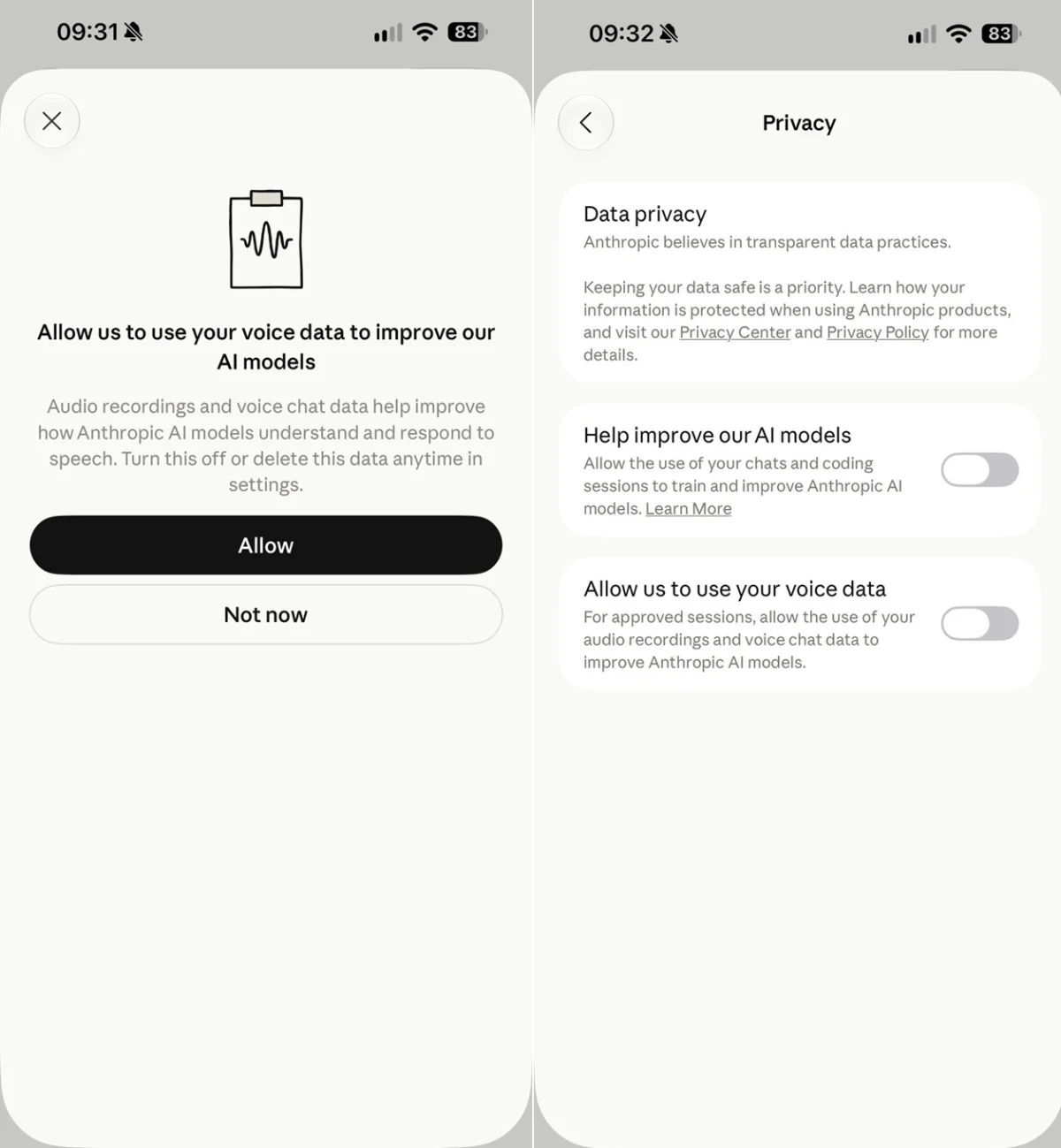
Artificial intelligence research and development company Anthropic has begun requesting voluntary user consent to utilize voice conversations for the ongoing training and refinement of its advanced AI models, specifically focusing on the Claude conversational AI. This initiative represents a significant step in how AI companies are seeking to gather diverse data sets to improve the nuanced capabilities of their systems, particularly in the realm of speech recognition and natural language processing.
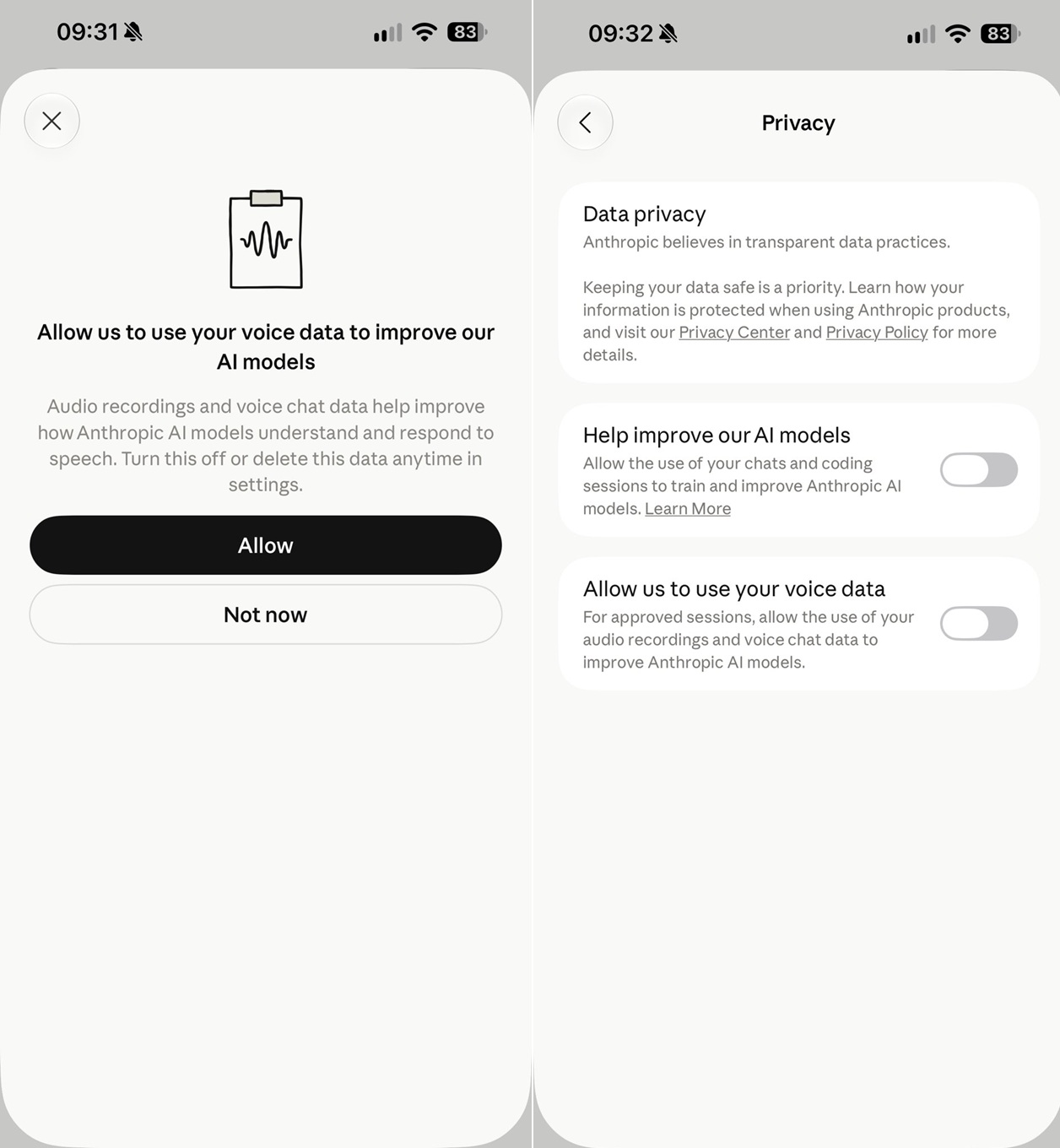
The prompt, which has been observed by users interacting with Claude’s voice features, is presented directly within the application’s interface. It explicitly asks individuals to grant Anthropic permission to use their voice data for AI training purposes. The message conveyed to users states, "Allow us to use your voice data to improve our AI models." It further elaborates on the rationale, explaining that "Audio recordings and voice chat data help improve how Anthropic AI models understand and respond to speech." Crucially, the prompt reassures users that this data usage is entirely optional, with clear choices to "Allow" or decline with a "Not now" option. Furthermore, users have the ability to manage these preferences at any time through Claude’s dedicated privacy settings.
This new voice data collection mechanism is distinct from Anthropic’s pre-existing policies regarding the use of text-based chats and coding sessions for model training. This separation provides users with granular control over what types of data they are comfortable sharing. For instance, a user could opt to allow their voice conversations to be used for training while simultaneously excluding their regular text-based interactions or coding logs. Conversely, they could permit text data usage while opting out of voice data sharing. This layered approach to data consent reflects a growing trend in the AI industry to offer users more transparency and agency over their digital footprint.
Granular Control: The Voice Data Training Toggle
Within the "Settings" menu, under the "Privacy" section, Anthropic has introduced a specific toggle labeled "Allow us to use your voice data." This setting provides a clear and concise explanation: "For approved sessions, allow the use of your audio recordings and voice chat data to improve Anthropic AI models." Initial observations indicate that this setting is disabled by default, meaning Anthropic is not automatically enrolling users into sharing their voice recordings. This default opt-in approach underscores a commitment to user privacy and informed consent.
Users who initially consent to sharing their voice data can also revoke this permission at a later stage. Anthropic has also stated that users have the ability to delete any voice data that has already been collected through the settings interface, offering a further layer of control and reassurance regarding data management. This flexibility is paramount in building user trust within the AI ecosystem, where data privacy concerns remain a significant consideration.
The Evolution of AI Training Data
The development and refinement of sophisticated AI models, such as those powering conversational agents like Claude, are heavily reliant on vast and diverse datasets. Historically, AI training has primarily involved large collections of text and images. However, as AI capabilities expand into more interactive and multimodal domains, the necessity for diverse data types, including audio, becomes increasingly important.
Speech recognition technology, for example, requires extensive audio data from various accents, speaking styles, and environmental conditions to achieve high accuracy and robustness. Similarly, natural language understanding (NLU) models benefit from analyzing how spoken language is used in real-world contexts, including intonation, pauses, and emotional cues. By incorporating voice conversations, Anthropic aims to imbue Claude with a more nuanced understanding of human speech, leading to more natural and effective interactions.
The current push for voice data collection can be seen as a natural progression in the evolution of AI. Early AI models were largely confined to text-based interactions, mirroring the early internet. As the internet evolved and became more multimedia-rich, so too did the data used to train AI. The proliferation of voice assistants and the increasing use of voice commands in various applications have made voice data a critical component for developing advanced AI systems. Companies like Google, Amazon, and Apple have long been collecting voice data from their respective voice assistants, albeit with varying consent models. Anthropic’s approach, emphasizing explicit voluntary consent and granular control, positions it within a framework of more privacy-conscious AI development.
Background and Chronology
The emergence of this new voice data training option for Claude follows a period of significant growth and public interest in conversational AI. Large Language Models (LLMs) have seen rapid advancements, leading to the development of highly capable AI assistants that can engage in complex conversations, generate creative content, and perform various tasks. Anthropic, founded by former OpenAI researchers, has positioned itself as a leader in this field, with a strong emphasis on AI safety and alignment.
The precise timeline for when this feature began rolling out to users is not explicitly detailed in the initial reports. However, the observation of the prompt appearing in the application suggests a recent implementation. The prompt itself, visible via a linked social media post, provides a snapshot of the user-facing request. This proactive communication, directly within the user interface, is a departure from more opaque data collection practices that have sometimes characterized the early days of AI development.
The underlying technology enabling Claude’s voice features has been available for some time, allowing users to interact with the AI through spoken language. The decision to now solicit consent for using this data for training represents a strategic move to leverage existing user interactions for further model improvement. This iterative process of data collection, model training, and deployment is fundamental to the advancement of AI.
Supporting Data and Industry Trends
The global market for AI is experiencing exponential growth. According to Statista, the AI market size was valued at approximately $200 billion in 2023 and is projected to reach over $1.8 trillion by 2030, exhibiting a compound annual growth rate (CAGR) of over 37%. This growth is driven by increasing demand across various sectors, including healthcare, finance, retail, and technology.
Within the AI landscape, conversational AI and natural language processing (NLP) are key areas of innovation. The ability of AI systems to understand, interpret, and generate human language is crucial for a wide range of applications, from customer service chatbots to sophisticated personal assistants. The effectiveness of these systems is directly correlated with the quality and diversity of the data used to train them.
Research has consistently shown that larger and more diverse datasets lead to better-performing AI models. For voice data, this includes variations in:
- Accents and Dialects: Training on a wide range of regional accents and dialects improves a model’s ability to understand users from different geographical locations.
- Speaking Styles: Including data from fast, slow, clear, and even slightly mumbled speech helps models become more robust to different speaking patterns.
- Background Noise: Real-world conversations often occur in noisy environments. Training with data that includes ambient sounds helps AI models filter out distractions and focus on the spoken words.
- Emotional Tone: Understanding the emotional nuances in speech can significantly enhance the user experience, allowing AI to respond more empathetically.
Anthropic’s initiative to collect voice data aligns with these industry trends, aiming to enhance Claude’s ability to process and respond to spoken language with greater accuracy and naturalness.
Broader Impact and Implications
The decision by Anthropic to seek explicit consent for voice data usage has several implications for the broader AI industry and user privacy:
- Setting Precedents for Data Consent: By implementing a clear, optional, and manageable consent process, Anthropic may set a positive precedent for other AI companies. This approach could encourage a more transparent and user-centric model for data collection, fostering greater trust between users and AI developers.
- Enhancing AI Capabilities: The availability of high-quality voice data will directly contribute to the advancement of Claude’s capabilities. This could lead to more seamless and intuitive voice interactions, making AI more accessible and useful for a wider audience. Improved speech recognition and understanding could revolutionize how people interact with technology, from accessibility tools for individuals with disabilities to more natural interfaces for complex software.
- User Empowerment and Control: The granular control offered to users – allowing them to opt in or out of voice data sharing independently of other data types – empowers individuals to make informed decisions about their privacy. This level of transparency is crucial in an era where data is increasingly recognized as a valuable asset.
- Ethical Considerations in AI Development: The debate surrounding data privacy and the ethical use of AI is ongoing. Anthropic’s approach highlights a commitment to addressing these concerns proactively. By prioritizing user consent and offering clear control, the company is navigating these ethical complexities in a responsible manner. This could influence how other AI developers approach similar data collection challenges, potentially leading to industry-wide adoption of more robust privacy practices.
- The Future of Multimodal AI: As AI systems become more sophisticated, they are increasingly expected to process and integrate information from multiple modalities, including text, images, audio, and video. The collection and utilization of voice data are a critical step in developing truly multimodal AI systems that can understand and interact with the world in a more comprehensive way. This could lead to applications that are not only more intelligent but also more contextually aware and adaptable.
In conclusion, Anthropic’s proactive approach to soliciting user consent for voice data collection marks a significant development in the ethical and practical advancement of conversational AI. By prioritizing user control and transparency, the company is not only aiming to enhance the capabilities of its Claude models but also contributing to a more trustworthy and user-empowered AI ecosystem. The success of this initiative could pave the way for broader adoption of similar privacy-focused data collection strategies across the AI industry.