Sisilia Frederika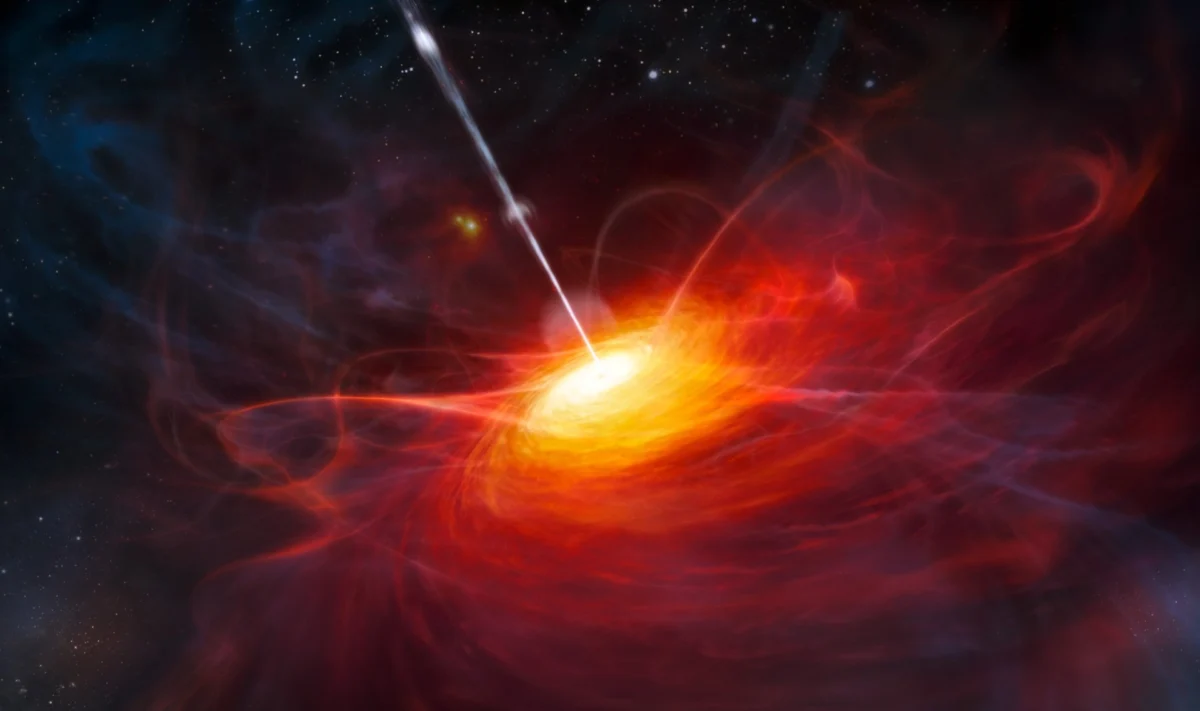
The European Space Agency’s Euclid Space Telescope has successfully identified 31 new high-redshift quasars from its initial wide-angle survey, including two of the most distant and ancient objects ever recorded in the known universe. These findings, recently published in the journal Astronomy & Astrophysics, provide a rare glimpse into the state of the cosmos less than a billion years after the Big Bang. By capturing light that has traveled for over 13 billion years, Euclid is allowing astrophysicists to probe the "Cosmic Dawn," a period when the first stars and galaxies began to illuminate the dark, hydrogen-filled expanse of the early universe. The discovery of these massive, luminous objects so early in cosmic history presents a profound challenge to current models of galactic evolution and black hole growth, suggesting that the mechanisms driving the formation of supermassive black holes may be far more efficient or exotic than previously understood.
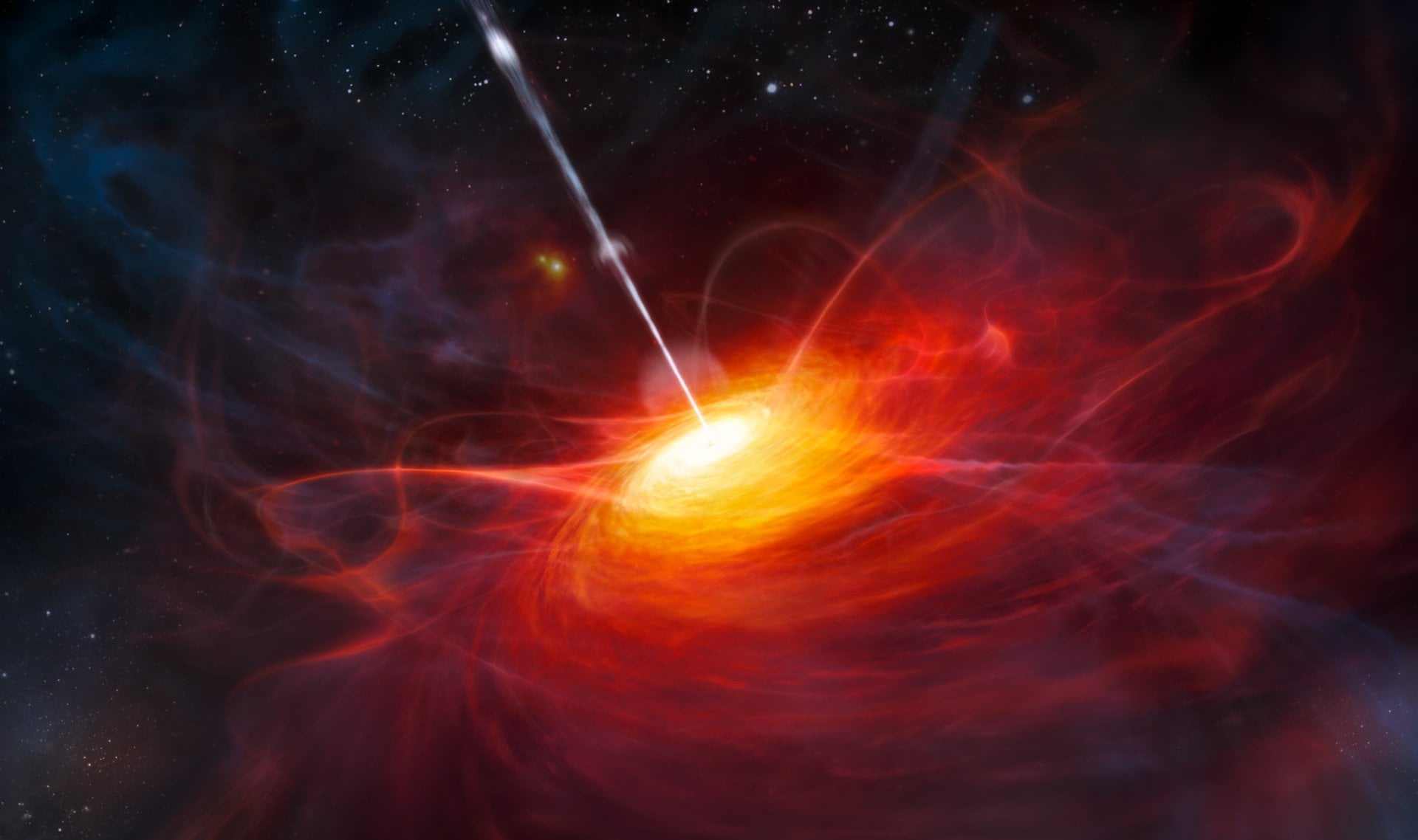
Quasars, or quasi-stellar radio sources, represent the extreme end of what astronomers categorize as Active Galactic Nuclei (AGN). These are not stars, but rather the brilliantly glowing centers of distant galaxies powered by supermassive black holes. As matter—primarily gas and dust—spirals into the gravitational well of a central black hole, it forms an accretion disk. The intense gravitational and frictional forces within this disk heat the material to millions of degrees, causing it to emit radiation across the electromagnetic spectrum, often outshining all the stars in their host galaxy combined. For decades, these objects have served as "cosmic lighthouses," allowing scientists to study the intervening gas and the conditions of the early universe.
The Euclid Survey and the Search for Ancient Light
The recent data stems from the first 1.5 years of Euclid’s mission, specifically focusing on a survey area covering approximately 3,000 square degrees of the sky. Euclid, launched in July 2023, is designed primarily to investigate the "dark universe"—the invisible dark matter and dark energy that dictate the expansion and structure of the cosmos. However, its wide-field imaging capabilities make it an ideal tool for hunting the rarest objects in the sky, such as high-redshift quasars.
Detecting these objects requires immense precision. Because the universe is expanding, light from distant sources is "redshifted"—its wavelength is stretched toward the red and infrared ends of the spectrum. The further away an object is, the faster it recedes and the greater its redshift. For the quasars identified by the Euclid team, the light has been stretched so significantly that it is no longer visible in the ultraviolet or optical ranges where it was originally emitted. Instead, it appears only in the near-infrared.
According to Daniel Mortlock, an astrophysicist at Imperial College London and a key contributor to the study, the primary signature of a high-redshift quasar is its presence in infrared data coupled with its total absence in optical observations. "The expansion of the universe has redshifted the quasars’ light from the ultraviolet all the way through the optical, and so we observe them in the infrared," Mortlock explained. This "dropout" technique allows astronomers to filter through millions of closer stars and galaxies to find the ancient monsters lurking at the edge of the observable universe.
The most significant find in this batch is the quasar designated EUCL J172902.75+641018.1. Spectroscopic analysis confirms that this object existed when the universe was approximately 662 million years old. To confirm these distances, the Euclid team collaborated with several of the world’s most powerful ground-based observatories. Follow-up observations were conducted using the W. M. Keck Observatory in Hawaii, the Magellan Telescopes in Chile, and the Large Binocular Telescope (LBT) in Arizona. These facilities provided the high-resolution spectroscopy needed to measure the precise chemical composition and redshift of the candidates identified by Euclid.
The Mystery of Rapid Black Hole Growth
The existence of quasars like EUCL J172902.75+641018.1 creates a significant "timing" problem for modern cosmology. Current estimates suggest that these early quasars are powered by black holes with masses equivalent to a billion Suns. However, based on standard models of how black holes "feed" and grow, there simply should not have been enough time for a stellar-mass black hole (formed from a collapsing star) to reach such gargantuan proportions in just 650 million years.
"We’re pushing back to earlier times than ever before," Mortlock noted. "But we’re still finding these billion-solar-mass black holes with even less time to grow them than the examples that we had previously."
The physics of black hole growth is governed by the Eddington limit—the point at which the outward pressure of the radiation produced by the accretion disk balances the inward pull of gravity. If a black hole consumes material too quickly, the resulting radiation blows the remaining gas away, effectively cutting off its food supply. To reach a billion solar masses within the timeframe observed by Euclid, these black holes would have needed to either start as very large "seeds" or find a way to bypass the standard limits of accretion.
Several theories have been proposed to explain this rapid growth. One hypothesis involves "direct collapse black holes," where massive clouds of primordial gas collapse directly into a black hole without forming stars first, providing a "seed" that is already tens of thousands of times more massive than the Sun. Another theory suggests that the early universe contained extremely dense star clusters where frequent mergers could lead to the formation of intermediate-mass seeds. The data provided by Euclid is essential for testing these models, as it allows scientists to calculate the "space density" of these objects—how many of them existed per cubic gigaparsec in the early universe.
Historical Context: From Radio Puzzles to Galactic Engines
The study of quasars has undergone a radical transformation since they were first identified in the 1950s. Astronomers at Cambridge University initially detected them as powerful radio sources that appeared as mere points of light in optical telescopes, much like stars. However, unlike stars, they emitted vast amounts of energy in radio frequencies, leading to the name "quasi-stellar radio sources."
The breakthrough in understanding their nature came from the late astrophysicist Donald Lynden-Bell, a former director of Cambridge University’s Institute of Astronomy. In the 1960s, Lynden-Bell proposed that these objects were not stars at all, but the gravitational energy released by material falling into supermassive black holes. He famously asserted that most large galaxies, including our own Milky Way, likely host a "dead" or dormant quasar at their center—a black hole that has simply run out of immediate fuel.
Today, we know that the Milky Way’s central black hole, Sagittarius A*, is a relatively quiet four-million-solar-mass object. In contrast, the quasars detected by Euclid are active, voracious engines of destruction and creation. They represent a phase of "galactic adolescence" where the central black hole is growing rapidly and exerting a massive influence on the host galaxy’s structure.
The Role of Magnetic Fields and Relativistic Jets
Beyond their sheer mass and luminosity, quasars are known for their spectacular jets—beams of plasma ejected at nearly the speed of light perpendicular to the accretion disk. While the accretion disk converts kinetic energy into heat and light, magnetic forces are believed to be the primary drivers behind these jets.
"Magnetic forces are generally accepted as the additional ingredient which produces the jets," Mortlock stated. However, the exact mechanics remain one of the most complex problems in astrophysics. Modeling these systems requires simultaneous calculations of magnetism, hydrodynamics, and turbulence, all occurring within the warped space-time described by Einstein’s general relativity. The computational power required to simulate these environments is at the very limit of current technology, making observational data from Euclid vital for refining these simulations.
The winds and jets produced by these early quasars are thought to play a crucial role in "feedback" mechanisms. By heating and dispersing the gas within their host galaxies, quasars can actually shut down star formation, regulating the size and shape of the galaxy. Understanding this relationship is key to explaining why the mass of a central black hole is almost always proportional to the mass of the galaxy’s central bulge, a correlation observed throughout the local universe.
Broader Implications for Cosmology
The Euclid mission’s discovery of 31 new quasars is just the beginning of what is expected to be a decade of transformative science. By mapping the distribution of these objects across time and space, astronomers can better understand the Epoch of Reionization—the period when the first light sources stripped electrons from the neutral hydrogen that filled the universe.
If high-redshift quasars are more common than previously thought, they may have contributed significantly to this reionization process, alongside the first generations of stars. Furthermore, the statistical distribution of these quasars helps map the "large-scale structure" of the universe. Because quasars form in the densest regions of the dark matter web, they serve as markers for the massive galaxy clusters that will eventually dominate the cosmic landscape.
The findings from Euclid also provide a complementary data set to the James Webb Space Telescope (JWST). While JWST provides incredibly deep, "pencil-beam" views of individual distant galaxies, Euclid’s wide-angle survey provides the "big picture," identifying the rarest, brightest objects that JWST might miss simply because it isn’t looking at a large enough area of the sky.
As the Euclid survey continues, the scientific community anticipates the discovery of even more distant objects, perhaps pushing the boundary back to when the universe was less than 500 million years old. Each new discovery narrows the window for black hole growth and forces a rethink of the physics governing the early universe. The bottom line, as Mortlock suggests, is that the universe was far more active and capable of producing massive structures much earlier than anyone predicted. The hunt for these ancient light sources remains one of the most vital frontiers in our quest to understand the origins of the cosmos and the massive spiral galaxies, like our own, that eventually emerged from the chaos of the early universe.