admin
admin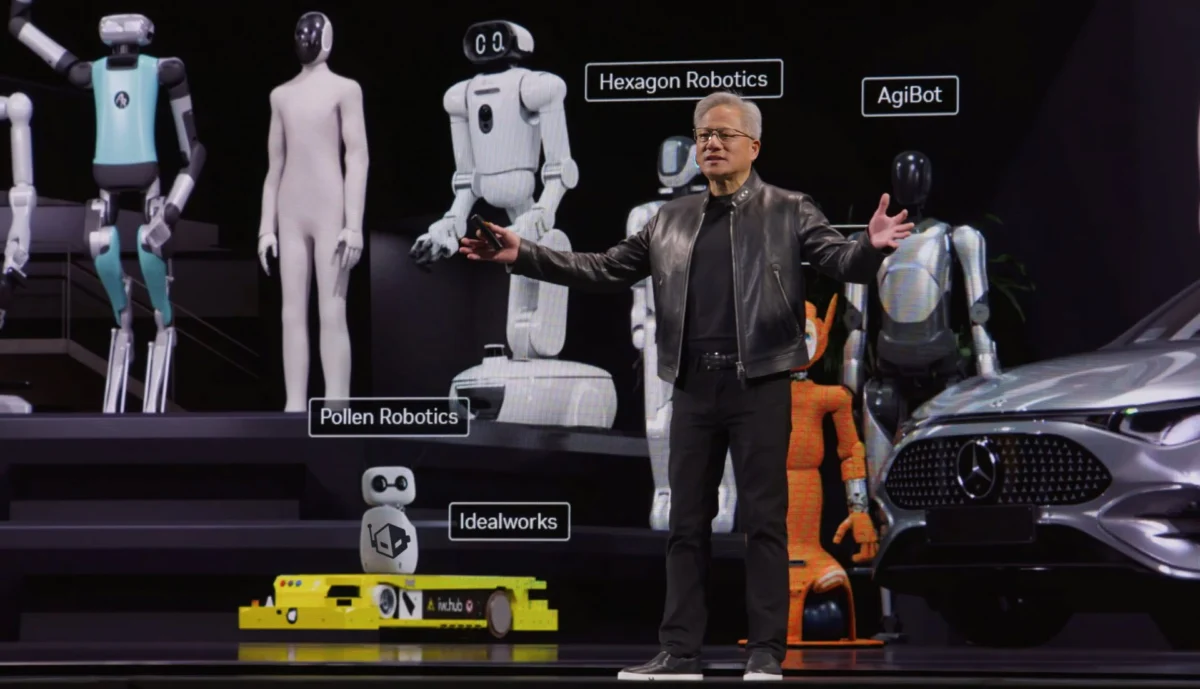
In a sweeping move aimed at fortifying the domestic artificial intelligence ecosystem and securing national critical infrastructure, the United States government has officially prohibited the importation and use of specific foreign-made advanced robotic systems and power equipment. The Federal Communications Commission (FCC) announced the updated restrictions through an expansion of its "Covered List," a regulatory registry originally established to identify and exclude telecommunications equipment deemed a threat to national security. This latest update marks a significant escalation in the ongoing technological friction between Washington and foreign manufacturing hubs, specifically targeting the burgeoning humanoid robotics sector and the power electronics essential for large-scale AI data centers.
The FCC’s determination follows an extensive review by an interagency body convened by the White House, which concluded that "advanced robotic devices" and "connected power inverters" manufactured in certain foreign jurisdictions represent a fundamental vulnerability to the American supply chain. According to the regulatory filings, these devices could be exploited to disrupt economic stability, compromise cybersecurity, and provide a conduit for unauthorized surveillance of American citizens and government operations.
The Expansion of the FCC Covered List
The Covered List was first codified under the Secure and Trusted Communications Networks Act of 2019, gaining international prominence when it was used to effectively ban equipment from Chinese telecommunications giants Huawei and ZTE. The list has since evolved from a focus on 5G networking hardware to a broader definition of technologies that intersect with data sovereignty and infrastructure resilience.
Under the new directive, the FCC defines "advanced robotic devices" to include not only autonomous humanoid robots but also mobile industrial robots and collaborative systems used in logistics and manufacturing. The definition of "connected power inverters" covers the specialized electronics used to convert direct current (DC) into alternating current (AC) within solar arrays, battery storage systems, and, crucially, the power distribution networks that feed high-density AI training clusters.
The Commission’s rationale centers on the "remote connectivity" inherent in modern robotics and energy management. Most contemporary robots rely on persistent cloud connections for software updates, telemetry, and AI processing. Similarly, modern power inverters are often "smart" devices, allowing for remote monitoring and grid-balancing by the manufacturer. The FCC asserts that these pathways could allow foreign actors to remotely commandeer devices, exfiltrate sensitive data, or trigger a "kill switch" that could disable portions of the American power grid.
Impact on Unitree and the NVIDIA Ecosystem
The company most acutely affected by this ban is Unitree, a prominent developer of high-performance robotic systems. Unitree has gained significant traction in the global market for its quadrupedal "robot dogs" and its more recent foray into general-purpose humanoid robots, such as the H1 and G1 models. The impact is compounded by Unitree’s status as a key partner for NVIDIA, the American semiconductor leader that dominates the AI chip market.
NVIDIA has utilized Unitree’s hardware as a primary platform for its Isaac robotics software and specialized GPUs, which serve as the "brains" for humanoid navigation and task execution. By banning Unitree’s latest models, the FCC has effectively disrupted a major hardware-software pipeline used by American researchers and developers to iterate on AI-driven physical automation.

Industry analysts from Counterpoint Research indicate that the ban could force a significant recalibration of the U.S. robotics market. While American firms like Boston Dynamics and Tesla (with its Optimus project) stand to gain from the exclusion of foreign competition, the immediate effect is a narrowing of the hardware options available for the domestic AI buildout. The restriction specifically targets new and upcoming products, meaning that older models already deployed within the U.S. may continue to operate, though they will likely face increased scrutiny and potential phase-out mandates.
A Chronology of Cybersecurity Concerns
The decision to add robotics to the Covered List did not occur in a vacuum; it is the culmination of several high-profile security incidents and technical audits over the past 24 months.
2021-2023: Legislative Groundwork
The passage of the Secure Equipment Act of 2021 empowered the FCC to stop reviewing or issuing new equipment licenses for any company on the Covered List, essentially creating a total market lockout for listed firms. During this period, the Department of Defense and the Department of Commerce began raising alarms about the integration of foreign sensors and LiDAR systems in autonomous vehicles and logistics robots.
2025: The Unitree Vulnerability
In early 2025, independent cybersecurity researchers identified a critical backdoor in Unitree’s quadrupedal robots. The vulnerability, eventually documented as CVE 2025-2894, allowed for unauthorized remote access to the robot’s camera feeds and locomotion controls. While Unitree issued a patch in May 2025, attributing the flaw to a third-party remote control service, the incident solidified the White House’s stance that foreign robotics platforms are inherently "high-risk" due to their opaque software supply chains.
Early 2026: The "Romo" Incident
The most alarming catalyst for the ban occurred in early 2026, involving a DJI Romo vacuum cleaning robot. A user in the United States, attempting to integrate the robot with a PlayStation 5 controller for manual operation, inadvertently discovered that he could access the robot’s cloud server communication protocol. This reverse-engineering effort revealed a massive security flaw that allowed the user to see and control nearly 7,000 similar devices across 24 countries. This incident proved that even consumer-grade "simple" robots possessed the connectivity to serve as a massive, distributed surveillance network.
The Strategic Importance of Power Inverters
While humanoid robots capture public attention, the ban on foreign-made power inverters is arguably more significant for the long-term stability of the U.S. AI infrastructure. AI data centers are massive consumers of energy, often requiring dedicated microgrids or direct connections to renewable energy sources.
The National Security Determination for inverters notes that these devices are the "gatekeepers" of the power supply. The remote connectivity features required for modern grid management represent a significant attack surface. The FCC’s report suggests that foreign firms, under the direction of their respective governments, could potentially use these inverters to collect data on the energy consumption patterns of sensitive U.S. facilities—such as military bases or high-security data centers—or, in a worst-case scenario, execute a coordinated shutdown of the power supply during a period of geopolitical tension.
Industry and Official Responses
While the FCC’s announcement did not explicitly name China, the geographical origin of the affected firms makes the target clear. In response to the Reuters report on the ban, various industry stakeholders have expressed a mix of support and concern.

Proponents of the ban, including several members of the House Select Committee on the Strategic Competition Between the United States and the Chinese Communist Party, have lauded the move. "We cannot allow the literal legs and eyes of our future economy to be built by adversaries," a committee spokesperson stated. "Protecting our AI buildout requires us to be certain that the hardware we use is not a Trojan horse."
Conversely, some tech industry groups have warned of "innovation friction." Small-scale AI startups that rely on affordable foreign robotic platforms for research and development may find themselves priced out of the market as they are forced to pivot to more expensive domestic or "friendly-nation" alternatives.
Broader Implications for the AI Buildout
The FCC’s move is a clear signal that the U.S. government views the "AI buildout" as a matter of total national security, encompassing everything from the chips in the servers to the robots on the warehouse floor and the inverters in the solar farm. This "holistic security" approach suggests that more categories of hardware may soon find themselves on the Covered List.
For NVIDIA and other silicon giants, this creates a complex landscape. While they continue to lead in software and GPU design, they must now ensure that their global partnerships do not run afoul of rapidly evolving U.S. trade and security policies. The ban is expected to accelerate the "onshoring" or "friend-shoring" of robotics manufacturing, with companies looking to Mexico, India, or Southeast Asia to replace supply chains currently rooted in restricted territories.
Future Outlook and Enforcement
The FCC has indicated that it will work closely with U.S. Customs and Border Protection to enforce the ban at the point of entry. Furthermore, the Commission is considering a "rip and replace" program—similar to the one enacted for telecommunications gear—to subsidize the removal of existing high-risk robotic systems from critical infrastructure sites.
As the U.S. continues to invest hundreds of billions of dollars into AI and domestic semiconductor manufacturing through the CHIPS Act and other initiatives, the wall around the American tech ecosystem is growing taller. The ban on humanoid robots and inverters is not merely a trade restriction; it is a foundational shift in how the digital and physical worlds are governed in an era of AI-driven geopolitical rivalry. The message from the FCC is clear: the future of American automation must be built on a foundation of trusted hardware, or it will not be built at all.