Galang Taruna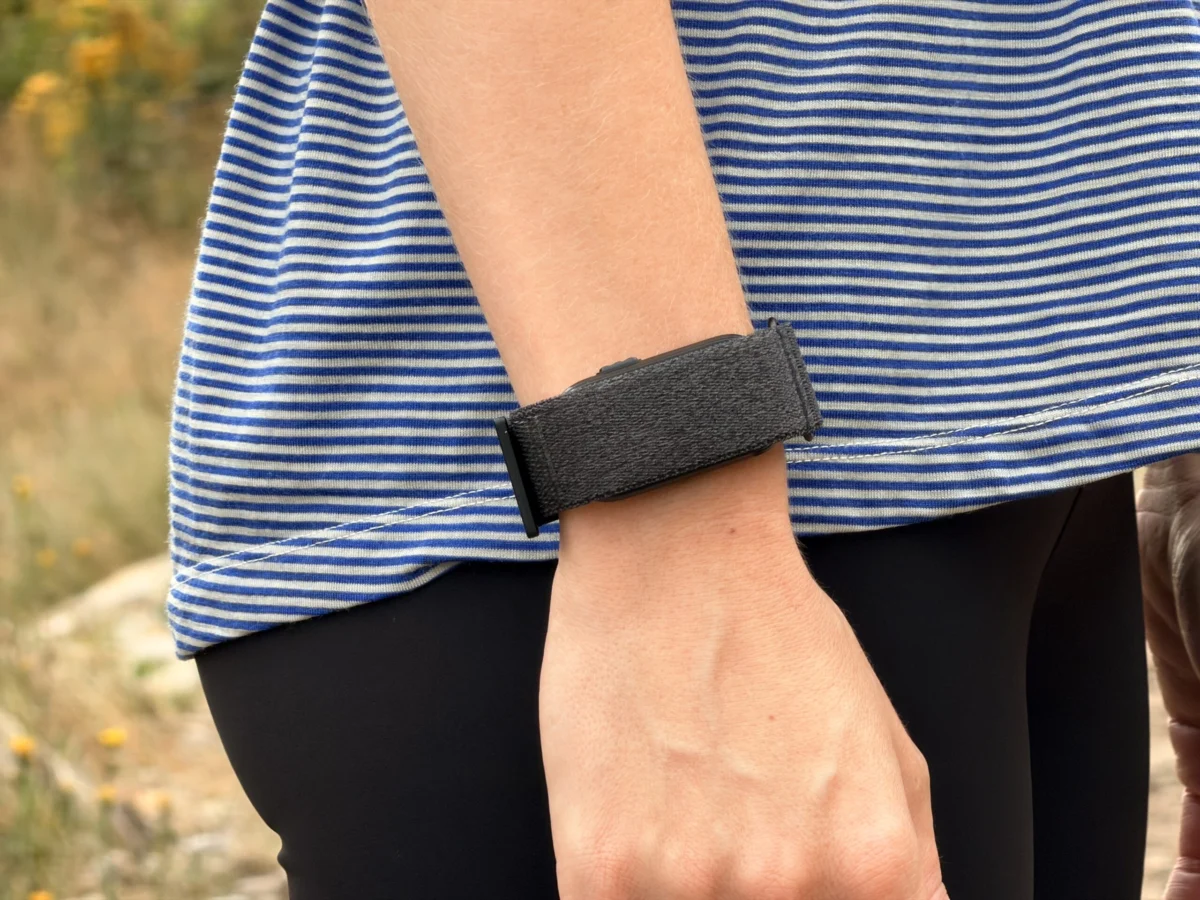
The competitive landscape of screenless fitness trackers, long dominated by innovative players like Whoop, has welcomed a new entrant: the Garmin Cirqa. Launched in late July 2026 at a price point of 199.99 euros, Garmin’s foray into this specialized segment marks a significant, albeit somewhat belated, move for the established sports technology giant. The Cirqa aims to capture a share of the market for continuous health and recovery monitoring, particularly targeting existing Garmin users seeking a more discreet tracking option without the bulk of a traditional smartwatch. However, initial assessments suggest that while Garmin brings its renowned data depth and an appealing no-mandatory-subscription model, the Cirqa faces substantial hurdles in design, user interaction, and software experience when compared to its more agile and specialized rivals.
The Rise of Screenless Trackers: A Market Context
Since Whoop pioneered the screenless wearable concept with its first bracelet in 2015, the market for minimalist, recovery-focused trackers has steadily expanded. These devices distinguish themselves by eschewing traditional screens and interactive displays, instead focusing on continuous, passive data collection to inform users about their sleep, recovery, and overall physiological strain. This philosophy appeals to individuals who desire comprehensive health insights without the constant notifications and visual distractions of a smartwatch, or those who prefer to wear a traditional timepiece while still tracking vital metrics.

Whoop, with its subscription-based model and sophisticated analytics, has largely reigned unchallenged, evolving through several iterations, including the recent Whoop 5.0. However, the market has seen increasing diversification. Competitors such as Amazfit, with its Helio Strap, Polar’s Loop, and most recently Google’s Fitbit Air, have introduced their own interpretations of the screenless tracker, each vying for a share of this niche. Garmin’s entry in 2026, therefore, positions it as a latecomer to a segment that has already matured considerably, necessitating a strong, differentiated offering to stand out.
Garmin Cirqa: Design and Physical Attributes

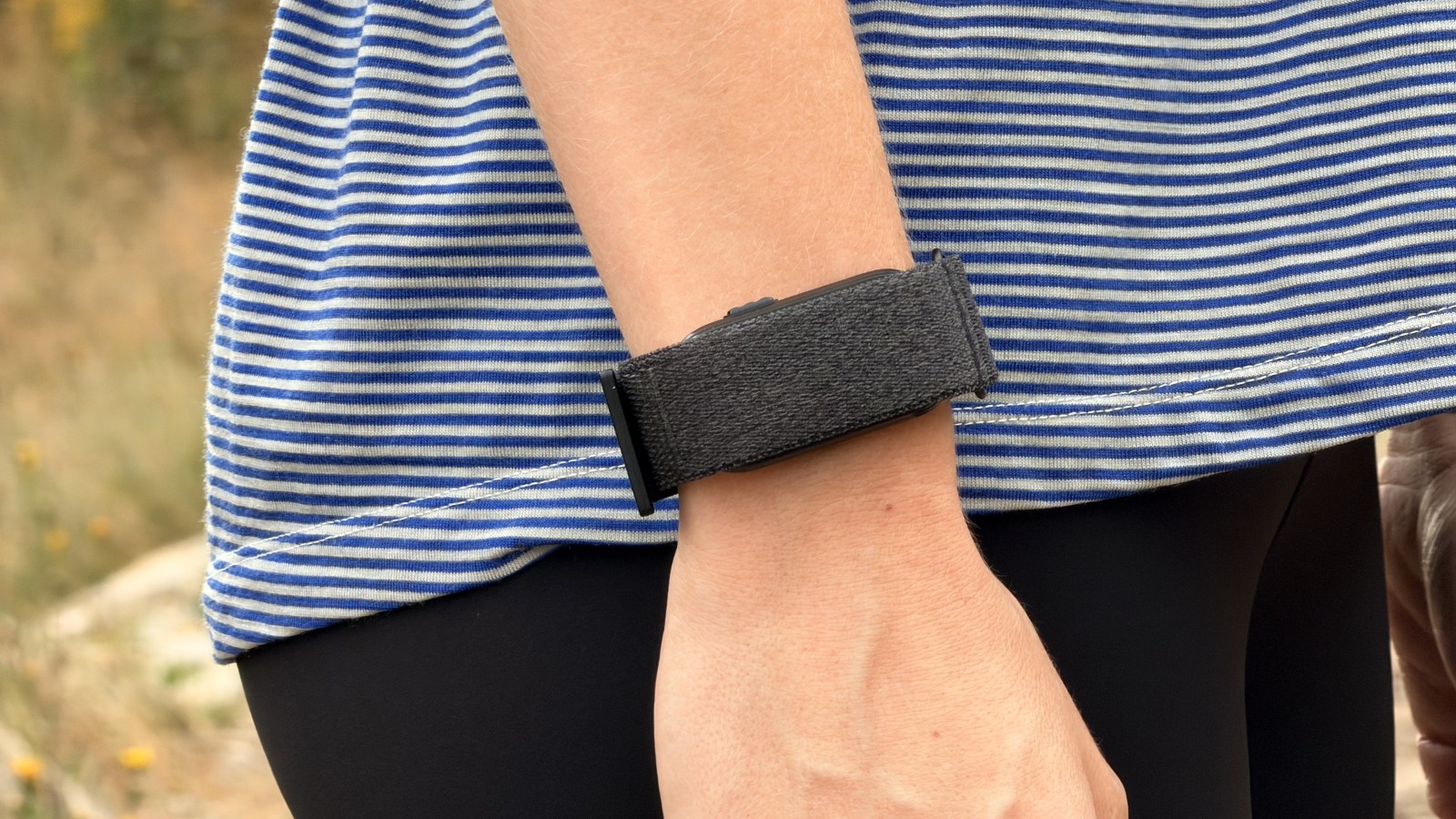
The Garmin Cirqa presents a pragmatic, if somewhat uninspired, design. Measuring 47 mm x 27 mm x 9 mm and weighing 20.7 grams, the device prioritizes functionality over aesthetic sleekness. While it manages to avoid the overtly "medical" appearance of some competitors like the Amazfit Helio Strap, it falls short of the refined elegance seen in devices such as the Polar Loop or the remarkably slim Fitbit Air (34.9 x 17 mm x 8.3 mm, 12 grams). The core electronic module is encased in a plastic housing, which is then concealed by a fabric strap.
The fabric strap itself, available in black, navy blue, linen, and pink, is noted for its comfort and elasticity, allowing it to be easily forgotten on the wrist. Its quick-drying properties after showers or workouts are a practical advantage. The closure mechanism relies on three small velcro strips, which, while offering rapid adjustability, lack the premium feel of Whoop’s buckle system. For users with smaller wrists, the larger dimensions of the Cirqa’s module can be a concern, with the strap needing to be tightened almost to its limit, potentially causing the excess material to protrude.

A significant design choice for the Cirqa is the inclusion of a protruding physical button on the side of the casing. This decision diverges from the fundamental minimalist ethos of screenless trackers, which typically aim for complete unobtrusiveness. The button’s primary functions include initiating and stopping activities, as well as managing the silent vibration alarm – a feature common across screenless trackers that allows for discreet awakenings without disturbing others. However, the button’s prominence has led to instances of accidental activity activation during daily wear, a usability issue that underscores the paradox of its inclusion in a device designed to be forgotten. Garmin did address some alarm interaction ambiguities with a September 2026 software update, clarifying the actions for silencing or snoozing.
For athletes who prefer alternative wearing positions, Garmin offers a dedicated biceps strap, a welcome option that can improve heart rate accuracy during intense exercise and free up the wrist for a traditional watch. This flexibility in wearing is a positive point, mirroring similar options offered by Whoop. Customization options, however, remain limited compared to Whoop’s extensive range of strap materials, colors, and integrated apparel. The Cirqa’s core module remains black regardless of strap color, and additional straps are sold separately at 49.99 euros.

Software Ecosystem: Garmin Connect’s Challenges and Opportunities
The true heart of any screenless tracker lies in its accompanying application, serving as the primary interface for data analysis and user interaction. This is where the Garmin Cirqa faces its most significant challenge. The Garmin Connect application, while comprehensive in its data presentation for Garmin’s broader range of smartwatches, has long been criticized for its aging interface and cluttered design. For the Cirqa, Garmin has made minimal cosmetic updates, primarily adding four summary cards for sleep score, Body Battery, Training Readiness, and HRV Status to the home screen. This approach, however, feels like a superficial patch on a deep-seated UI issue.

The application’s dense structure, replete with numerous sub-menus, contrasts sharply with the streamlined, intuitive interfaces offered by competitors like Whoop, which prioritize clear, actionable insights. The persistence of older UI elements, such as the "running man" loading animation, reinforces an impression of a product ecosystem rooted in an earlier era, rather than one innovating for 2026. This lack of modern design and user-centric navigation detracts from the minimalist promise of the screenless hardware.
A notable deficiency in Garmin Connect’s integration with the Cirqa is its limited embrace of artificial intelligence (AI). While a "Garmin Connect+" subscription (8.99 euros/month or 89.99 euros/year after a 30-day trial) offers some AI-driven analysis of health data and nutrition tracking, its compatibility with the Cirqa’s capabilities is restricted, as the subscription was initially designed for Garmin’s more feature-rich smartwatches. This contrasts sharply with Whoop, Fitbit, and even third-party apps like Bevel, which leverage AI to provide proactive, personalized insights – commenting on sleep quality, stress levels, training performance, and offering guidance based on continuous data. Garmin’s AI integration with the Cirqa is described as timid and gated behind an optional paywall, missing an opportunity to truly enrich the user experience.

Despite these shortcomings, Garmin Connect offers a crucial advantage: the absence of a mandatory monthly subscription for basic functionality. Users can access their core health metrics (sleep, Body Battery, recovery, training status) without any recurring fees. This stands in stark contrast to Whoop, which is entirely subscription-based, or even Amazfit and Fitbit, which offer optional premium tiers for advanced features. This pricing model could appeal to users wary of ongoing costs, positioning the Cirqa as a more budget-friendly long-term investment, provided they can overlook the app’s interface limitations.
Performance Metrics: Health and Activity Tracking

The Garmin Cirqa incorporates a standard suite of sensors for a screenless tracker, including an optical heart rate monitor with pulse oximeter (SpO2), an accelerometer, and a skin temperature sensor. The absence of a GPS module is expected for this device type, though it can leverage a connected smartphone’s GPS for outdoor activity tracking. A more surprising omission is an electrocardiogram (ECG) sensor, a feature found in some of Garmin’s higher-end smartwatches and increasingly common in advanced health trackers.
Sleep and Recovery Tracking: The core value proposition of screenless trackers lies in continuous, unobtrusive monitoring, especially during sleep. The Cirqa aims to fulfill this by tracking heart rate, heart rate variability (HRV), SpO2, respiration rate, and temperature fluctuations throughout the night. Garmin’s algorithms then synthesize this data into a sleep score out of 100. While these metrics provide a wealth of raw data, Garmin’s historical performance in sleep tracking has not always been at the forefront of the market. Experts often advise users to focus on primary indicators like total sleep time, deviations in HRV from personal baselines, and resting heart rate, as these are less prone to algorithmic interpretation inaccuracies and more sensitive to physiological changes (e.g., illness, stress, alcohol consumption).

Upon waking, the Cirqa integrates with Garmin Connect to display key recovery metrics such as Body Battery, an energy reserve score, and Training Readiness, which advises on optimal workout intensity. However, the application lacks the personalized morning and end-of-day reports found in Garmin’s smartwatches and Whoop, which proactively summarize and interpret the day’s data. This omission further highlights the perception that Garmin has delivered a minimum viable product for the Cirqa.
Activity Tracking: The Cirqa utilizes its accelerometer for basic activity tracking, such as step counting. While it can connect to a phone’s GPS for more detailed outdoor activity mapping, its automatic activity detection is described as imperfect. The device supports three methods for recording activities: manual start/stop via the physical button, initiation via the Garmin Connect app, or automatic detection.

Automatic detection, a cornerstone of seamless screenless tracking, is where the Cirqa struggles against industry leaders like Whoop. While it generally detects running sessions reasonably well, it frequently misinterprets the start and end times of activities, often extending recording periods or failing to recognize transitions. More diverse activities like cycling or sauna sessions are often poorly identified. Crucially, if an activity is poorly detected, the Cirqa is unable to retrieve heart rate data from the periods immediately preceding or following the detected window, even if the device was worn continuously. This limitation significantly impacts the accuracy of Garmin’s training load calculations, which rely solely on recorded activities, unlike Whoop’s continuous, all-day strain measurement.
For users within the Garmin ecosystem, the Cirqa offers seamless data integration. Garmin Connect successfully consolidates data from both the Cirqa and a Garmin smartwatch, presenting a continuous timeline of heart rate and other metrics without duplication. This allows users to alternate between wearing their smartwatch and the Cirqa, for instance, sleeping with the Cirqa for comfort while wearing a traditional watch during the day, without disrupting their overall data flow. This ecosystem compatibility is arguably the Cirqa’s strongest selling point for existing Garmin users.

Heart Rate Tracking Accuracy: The Cirqa features Garmin’s Elevate Gen 4 optical heart rate sensor, rather than the newer Gen 5 found in its latest smartwatches. While Garmin’s sensors are generally well-regarded, tests revealed significant inaccuracies during intense workouts when worn on the wrist. During high-intensity intervals or hilly runs, the Cirqa’s readings often deviated substantially from a reference chest strap, underreporting heart rate by 15-30 beats per minute during peak efforts or showing considerable lag during recovery phases. This raises concerns about the reliability of the underlying data for training load and recovery calculations, especially for serious athletes. Wearing the device on the biceps, as with Whoop, is likely to improve accuracy, but the wrist-worn performance is a notable drawback. The ability to broadcast heart rate data to external devices like cycling computers or Zwift is a useful feature, enabling the Cirqa to act as a standalone HR sensor.
Power Management: Battery Life and Charging

Garmin claims up to 10 days of battery life for the Cirqa. Real-world testing showed variability, ranging from 7 to 12 days. Achieving the longer end of this spectrum typically required disabling continuous SpO2 monitoring during sleep and limiting intense daily exercise. Activating SpO2 tracking consistently reduced autonomy to around 7 days. The inconsistency in battery discharge, particularly with longer sports sessions, was noted as unusual compared to other market players.
In comparison, the Whoop 5.0 often exceeds 14 days, the Amazfit Helio Strap maintains around 11 days, and the Fitbit Air and Polar Loop average 9 days. This places the Garmin Cirqa in the lower-middle tier for battery endurance within its category. Recharging the Cirqa from empty to full takes approximately one hour, with 40% charge achieved in 30 minutes. The device uses Garmin’s proprietary two-pin charging cable, necessitating its removal from the wrist for charging. This contrasts with Whoop’s convenient inductive charging method, which allows the device to remain on the user’s arm.

Pricing Strategy and Market Positioning
The Garmin Cirqa is priced at 199.99 euros, a competitive upfront cost compared to some rivals. Its most compelling financial advantage is the inclusion of core Garmin Connect functionality without a mandatory monthly subscription. This distinguishes it from Whoop, which offers the hardware for free but requires a recurring subscription fee (ranging from 14 to 22 euros per month, or 199 to 264 euros annually for the Whoop 5.0, and 28 to 34 euros per month or 399 euros annually for the Whoop MG). Other competitors like the Amazfit Helio Strap (99.90 euros + optional 9.99 euros/month or 29.99 euros/year) and Fitbit Air (99.90 euros + optional 8.99 euros/month or 99.99 euros/year) also offer subscription-free basic use, while the Polar Loop (179.90 euros) is entirely subscription-free. This makes the Cirqa an attractive option for users seeking robust tracking without long-term financial commitments, provided they are content with the standard app experience.

Additional fabric straps for the Cirqa are available in various colors for 49.99 euros, with a dedicated black biceps strap priced at 59.99 euros. This allows for some degree of personalization, though not to the extent offered by Whoop’s diverse accessory range.
Broader Implications and Future Outlook

The Garmin Cirqa represents a cautious, rather than groundbreaking, entry into the screenless fitness tracker market. Its primary appeal lies in its integration within the extensive Garmin ecosystem and its subscription-free model for core features. For existing Garmin smartwatch users, the Cirqa serves as a valuable complementary device, enabling continuous data collection during periods when a smartwatch might be inconvenient, such as during sleep or when wearing a traditional watch. This addresses a genuine need for a segment of Garmin’s loyal customer base.
However, for users new to the Garmin ecosystem or those seeking a best-in-class screenless tracking experience, the Cirqa’s limitations are more pronounced. The bulky design, the controversial physical button, the dated Garmin Connect interface, the limited AI integration, and the less-than-perfect activity detection and heart rate accuracy during intense exercise collectively present a less polished offering than its more specialized competitors. The impression conveyed is that of a "screenless entry-level Garmin watch" rather than a purpose-built, recovery-focused device designed to compete directly with the likes of Whoop.

Rumors of a forthcoming "Cirqa Pro" model, potentially featuring two buttons and a speaker, suggest that Garmin may be experimenting with more interactive, and perhaps even less minimalist, designs. If accurate, such a device would further distance Garmin’s approach from the core philosophy of "forgetting" the tracker.
In conclusion, the Garmin Cirqa, in its current iteration, is best viewed as an ecosystem accessory. It offers a solid foundation of data tracking for casual athletes and a convenient extension for dedicated Garmin users. However, to truly challenge the established leaders in the screenless tracker market, Garmin will need to significantly refine its design, modernize its software interface, and fully embrace proactive AI-driven insights to deliver a more seamless and intuitive user experience. Until then, its primary value remains tethered to its role as a supplementary device within the broader Garmin universe.