George Chandra Eka
The Google Pixel Tablet, a device less than a year old since its official retail launch, has been unceremoniously removed from the Google Store, alongside the complete disappearance of the "Tablet" category from the website’s top navigation menu. This abrupt move, initially highlighted by tech blog Jetstream after the device was first marked "Out of stock," strongly suggests that Google has quietly discontinued its latest foray into the tablet market. While an official statement from Google regarding the tablet’s fate is still pending, the comprehensive removal from its primary sales channel, coupled with its unavailability at major third-party retailers, paints a clear picture of a product being phased out.
The Unofficial Discontinuation: A Closer Look at the Removal
The digital vanishing act of the Pixel Tablet began subtly, with reports emerging days prior that the device had shifted from being available for purchase to an "Out of stock" status on the Google Store. This often serves as a precursor to discontinuation for many tech products. However, the subsequent and complete removal of the product listing itself, along with its dedicated category, is a far more definitive indicator. Users navigating to the Google Store homepage will no longer find any direct link or mention of the Pixel Tablet.
This action extends beyond Google’s direct sales platform. Major retailers that initially carried the Pixel Tablet have also updated their listings to reflect its unavailability. For instance, Amazon’s product page for the Pixel Tablet now indicates it is "currently unavailable." Similarly, Best Buy’s listing states, "this item is no longer available in new condition," directing consumers to consider refurbished options or alternatives. This uniformity across retail channels underscores a broader strategic decision by Google rather than a mere inventory management issue.
Further evidence supporting the discontinuation theory comes from the status of Pixel Tablet accessories. While listings for accessories like the Pixel Tablet Case and the Charging Speaker Dock remain on the Google Store, the vast majority are marked "Out of stock," with users only offered the option to "get notified" if they become available again. This effectively renders them commercially inaccessible for new purchases. Curiously, the Wasserstein Pixel Tablet Speaker Stand, a third-party accessory, was noted as the sole item still available for purchase at the time of reporting. This disparity suggests that Google’s direct inventory for official accessories has been depleted and is unlikely to be replenished, further solidifying the discontinuation narrative.
A Brief History of Google’s Tablet Ambitions: Contextualizing the Pixel Tablet’s Journey
Google’s relationship with the tablet market has been characterized by sporadic attempts and fluctuating commitment. The company has a long history of launching and subsequently retreating from tablet initiatives, often struggling to carve out a significant niche against dominant players like Apple’s iPad and Samsung’s Galaxy Tab series.
Early efforts included the Nexus line, such as the Nexus 7 (manufactured by Asus) and the Nexus 10 (by Samsung), which saw moderate success but ultimately faded. These devices were often praised for their pure Android experience and competitive pricing but faced challenges in software optimization for larger screens and a consistent hardware strategy from Google.
Following the Nexus era, Google launched the Pixel C in 2015, an ambitious, premium tablet designed by Google itself. While lauded for its build quality and innovative keyboard accessory, the Pixel C ran standard Android, which at the time was not fully optimized for productivity on larger screens. This limited its appeal against more mature tablet operating systems. The Pixel C was eventually discontinued in late 2017, marking another retreat for Google in the direct-to-consumer tablet space.
For several years thereafter, Google largely focused on its Pixel smartphone line and Chromebooks, leaving the Android tablet market primarily to third-party manufacturers like Samsung, Lenovo, and Amazon. During this period, the Android tablet ecosystem struggled with app compatibility, inconsistent user experiences, and a general lack of developer interest in optimizing applications for large screens, contributing to Apple’s sustained dominance.
Recognizing these challenges and perhaps spurred by the increasing adoption of larger screens and hybrid work models, Google signaled a renewed interest in tablets around 2021. This renewed focus culminated in the development of Android 12L, a specialized version of Android designed specifically for foldables and large-screen devices, followed by further optimizations in Android 13 and 14. This software investment was seen as a foundational step towards re-entering the hardware market with a compelling tablet offering.
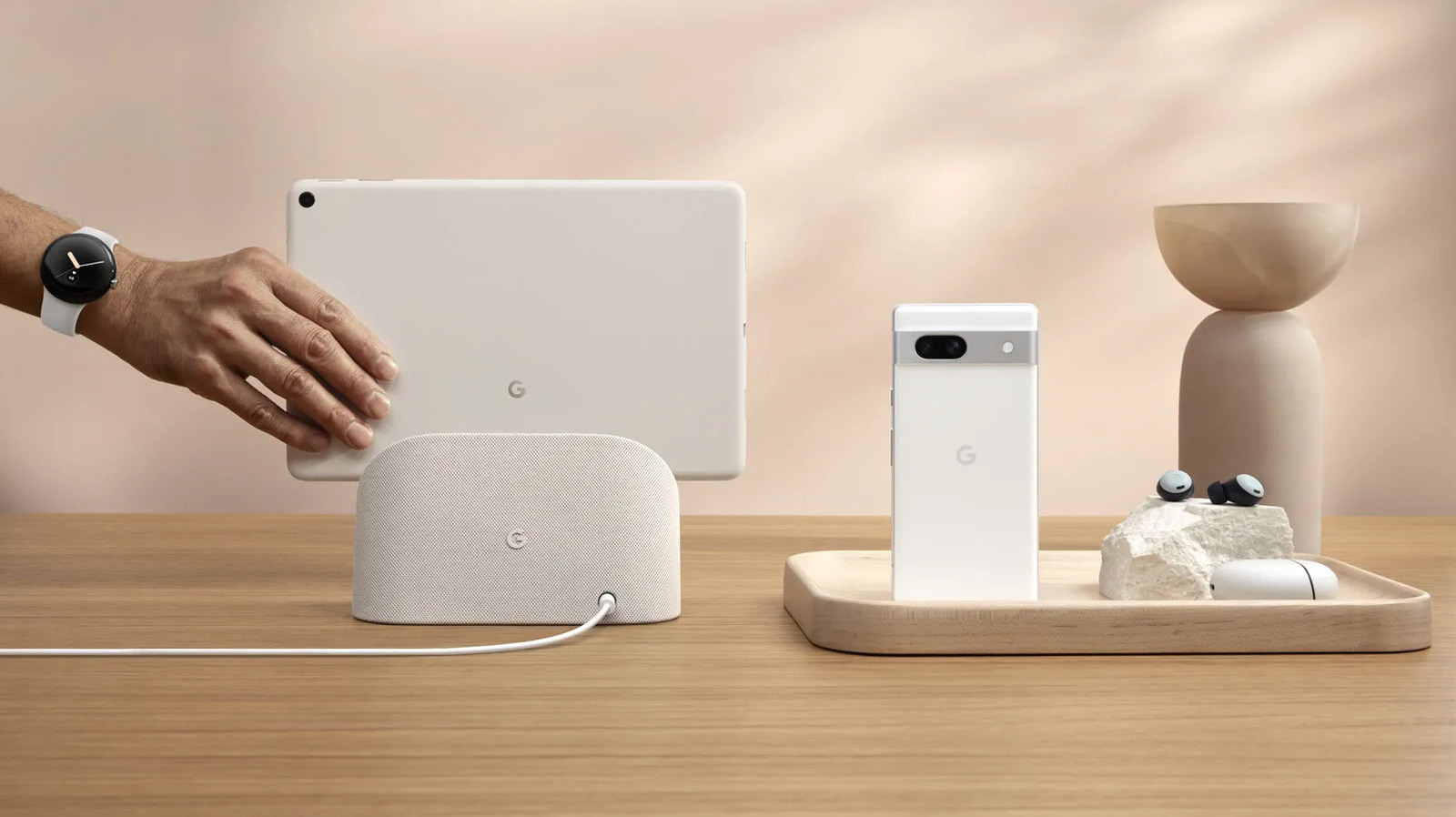
It was within this context of renewed software commitment that the Pixel Tablet was first teased at Google I/O 2022 and then officially launched at I/O 2023. The device was presented not merely as a standalone tablet but as a versatile home hub, leveraging its unique Charging Speaker Dock to transition seamlessly between a portable entertainment device and a smart display, a niche Google hoped to successfully occupy.
The Pixel Tablet’s Unique Proposition and Market Introduction
The Google Pixel Tablet made its debut with a distinct strategy: to merge the functionality of a premium Android tablet with the utility of a smart home display. Priced at $499 for the 128GB model at launch, it notably included the Charging Speaker Dock, an accessory that transformed the tablet into a stationary hub akin to a Nest Hub Max when docked. This "twofer" offering was central to its appeal, aiming to differentiate it from other tablets on the market which typically require separate purchases for such accessories.
Powered by Google’s Tensor G2 chip, the same silicon found in the Pixel 7 series smartphones, the tablet promised robust performance, advanced AI capabilities, and tight integration with Google’s ecosystem. Its 10.95-inch LCD display, sleek design, and Material You software interface provided a cohesive Pixel experience. Key features included its "Hub Mode," which activated when docked, allowing it to function as a digital photo frame, a smart home control panel, and a speaker for music and video, all while keeping the tablet charged.
Despite its innovative approach, the Pixel Tablet faced an uphill battle in a mature and competitive market. Reviewers generally praised its build quality, the utility of the charging dock, and the improved Android experience for large screens. However, common criticisms emerged, primarily centered on its display technology (LCD instead of OLED), the absence of a headphone jack, the relatively limited app ecosystem optimized for tablets compared to iPadOS, and the perception of its price point being high for a device that some viewed as primarily a home hub. The included dock, while innovative, also meant that users who primarily desired a portable tablet without the home hub functionality were effectively paying for an accessory they might not fully utilize.
Market Reception and the Broader Android Tablet Ecosystem
The initial market reception for the Pixel Tablet was lukewarm, reflecting the challenges faced by most Android tablets not named "Galaxy Tab" in competing with Apple’s dominant iPad. While specific sales figures for the Pixel Tablet have not been publicly disclosed by Google, industry analysts and market intelligence firms consistently report Apple’s commanding lead in the global tablet market. For instance, IDC’s Q1 2024 report showed Apple holding a significant share of the tablet market, followed by Samsung, with other Android OEMs trailing. Google, as a relatively new entrant in this segment with the Pixel Tablet, faced an uphill struggle to capture substantial market share.
The broader Android tablet ecosystem itself has been a point of contention for years. Despite Google’s efforts with Android 12L and subsequent versions to improve the user experience on large screens, issues persist. Many popular Android apps are still not fully optimized for tablet layouts, often appearing as stretched-out phone apps rather than truly leveraging the larger display real estate. This contrasts sharply with Apple’s iPadOS, which benefits from a rich and highly optimized app ecosystem, offering a more productive and versatile experience for many users.
Furthermore, the competition is fierce. Apple offers a wide range of iPads at various price points, from the entry-level iPad to the high-end iPad Pro, each with a mature ecosystem of accessories and software. Samsung, as the leading Android tablet manufacturer, also provides a comprehensive lineup, often bundling features like the S Pen and offering robust multitasking capabilities. Against these established giants, the Pixel Tablet’s unique "home hub" angle, while clever, might not have been compelling enough to drive significant adoption, especially for users primarily seeking a traditional tablet experience.
The Lingering Questions for the Accessory Ecosystem
The discontinuation of the Pixel Tablet also casts a shadow over its accessory ecosystem. While the Wasserstein Pixel Tablet Speaker Stand, a third-party accessory, remains available, the future of Google’s official accessories, particularly the Charging Speaker Dock, is uncertain. If Google ceases production of the tablet, it is highly probable that production of its dedicated accessories will also halt. This could lead to a scarcity of official replacement parts or additional docks for existing owners, potentially driving up prices on secondary markets.
Third-party manufacturers who had invested in creating cases, screen protectors, and other peripherals for the Pixel Tablet will also face implications. Without a continuing market for the device, their sales will dwindle, and future development for similar Google tablet accessories may be curtailed, should Google decide to attempt another tablet in the future.
Google’s Hardware Strategy Under Scrutiny: Implications for the Pixel Lineup
The apparent discontinuation of the Pixel Tablet less than a year after its retail launch raises significant questions about Google’s overarching hardware strategy and its commitment to specific product categories. Google has positioned its Pixel line as a showcase for the best of Android, integrated with Google’s AI and services. The Pixel Tablet was meant to extend this vision into the home. Its swift removal suggests either a miscalculation in market demand, a strategic pivot, or an acknowledgment that the product failed to meet internal performance metrics.
This event follows a pattern of Google’s hardware endeavors being somewhat volatile, with products entering and exiting the market with varying degrees of success and longevity. While Pixel phones have gained traction, other categories have struggled. The discontinuation of the Pixel Tablet might indicate a strategic consolidation, with Google perhaps opting to focus its resources on more successful or strategically critical hardware lines, such as its Pixel phones, wearables, and potentially the future of AI-centric devices like its rumored smart glasses or more advanced smart home hubs.
It also suggests that the "smart display" hybrid concept, which was the Pixel Tablet’s key differentiator, may not have resonated as strongly with consumers as Google had hoped. This could lead Google to re-evaluate how it approaches integrating ambient computing and smart home functionalities into its future hardware offerings, perhaps favoring dedicated smart displays or more seamlessly integrated software experiences on existing devices.
Implications for Current Owners: Software Updates and Long-Term Support
For existing owners of the Google Pixel Tablet, the news of its potential discontinuation will naturally raise concerns regarding long-term software support, security updates, and warranty service. While Google typically provides several years of software updates for its Pixel devices (historically three years of OS updates and five years of security updates for phones), the timeline for discontinued products can sometimes be less clear or subject to change.
It is reasonable to expect that Google will honor its commitment to provide security and Android version updates for the Pixel Tablet for a predetermined period, likely aligning with the support cycle promised at launch. However, the absence of future hardware iterations could mean a reduction in new feature development specific to the tablet’s form factor. Warranty claims and repair services should also continue to be available for the duration of the standard warranty period. Nonetheless, the long-term availability of replacement parts could become a challenge further down the line. Owners will likely monitor Google’s official communication closely for clarity on these critical aspects.
The Path Forward for Android Tablets: What’s Next for Google?
The apparent demise of the Pixel Tablet leaves a void in Google’s direct hardware lineup for tablets. However, it does not necessarily signal Google’s complete abandonment of the Android tablet ecosystem. Google has invested significant resources into optimizing Android for large screens through initiatives like Android 12L and ongoing UI improvements. These software advancements benefit all Android tablet manufacturers, not just Google’s own hardware.
It is possible that Google might shift its strategy from producing its own first-party tablet hardware to focusing solely on enabling a robust Android tablet experience for its OEM partners. This would allow companies like Samsung, Lenovo, and OnePlus to continue innovating with their own hardware designs, while Google provides the foundational software and services. This approach could be more sustainable for Google, allowing it to exert influence over the software experience without bearing the full financial risk and operational burden of hardware manufacturing and sales in a highly competitive niche.
Alternatively, Google might be planning a different kind of tablet or a successor device that addresses the shortcomings of the Pixel Tablet. Perhaps a more premium device, or one that leans even more heavily into AI capabilities, could be on the horizon, but such speculation remains unfounded without official announcements. For now, the focus appears to be on other Pixel categories.
Official Stance Awaited
As of the time of this report, Google has not issued an official statement regarding the discontinuation of the Pixel Tablet. Queries sent to Google for confirmation of the device’s status and its future have yet to receive a response. The tech community and current Pixel Tablet owners await an official communication to provide definitive answers regarding the product’s fate and the implications for its users and the broader Android ecosystem. Until then, the silent removal from its online store serves as a strong, albeit unofficial, confirmation of the Pixel Tablet’s short tenure in Google’s hardware portfolio.