Evan Lee Salim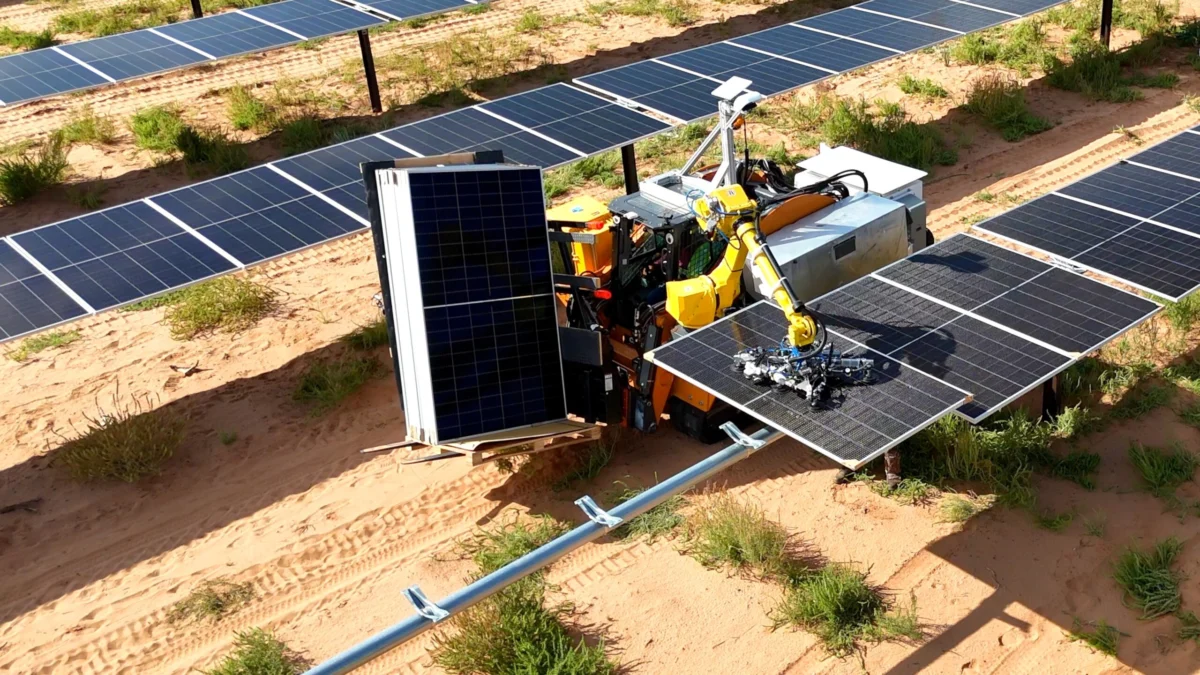
The global push for clean energy, driven by the urgent need to combat climate change and achieve energy independence, has positioned solar power as a cornerstone of the future energy landscape. This monumental build-out, however, faces a significant bottleneck: a persistent labor shortage coupled with the demanding, often hazardous nature of installation work. Into this critical juncture steps Gritt, a robotics startup that has just exited stealth mode, announcing a substantial $26 million Series A funding round. The company aims to address this challenge head-on by deploying intelligent, AI-driven robotic systems to accelerate the deployment of solar infrastructure, promising to transform construction efficiency and safety.
The Imperative of Solar Expansion and Its Labor Challenge
The transition to renewable energy sources, particularly solar, is one of the most significant global undertakings of our time. Nations worldwide are setting ambitious targets to decarbonize their economies, with solar energy often leading the charge due to its decreasing costs and increasing efficiency. According to the International Energy Agency (IEA), solar PV is projected to account for more than half of all new renewable capacity additions by 2028, with global solar capacity expected to more than double by that year. The U.S. alone aims for 80% clean electricity by 2030, a goal heavily reliant on rapid solar deployment.
However, this unprecedented growth rate strains the existing labor market. The installation of solar panels, especially on large utility-scale farms, is physically intensive, repetitive, and often occurs in remote locations. Workers must lift heavy, delicate glass panels—which can weigh over 100 pounds—and position them with precision, often at height or under challenging weather conditions. This work is not only arduous but also carries a high risk of injury, from strains and sprains to more severe accidents. Attracting and retaining a skilled workforce for these "dirty, dull, and dangerous" jobs has proven increasingly difficult, leading to project delays and increased costs.
Historically, industrial robots, while adept in controlled factory environments, have struggled in the unstructured, dynamic, and unpredictable conditions of outdoor construction sites. Their rigid programming and lack of adaptive intelligence made them unsuitable for tasks requiring real-time perception, decision-making, and manipulation of varied objects in varying light and terrain. This limitation has long been a barrier to automating many construction processes.
Gritt’s AI-Powered Solution: A New Paradigm for Construction Robotics
Gritt’s emergence signifies a potential paradigm shift, leveraging the latest advancements in artificial intelligence to overcome these traditional robotic limitations. The company was founded by two Carnegie Mellon-trained roboticists, CEO Puneet Puri and CTO Vishal Dugar, who recognized that the new generation of AI models could fundamentally change the equation for robotics in unstructured environments. Their core thesis, as Puri explains, is that "if we truly want to speed up construction, you need an intelligence which can work in the outdoor, chaotic environments of these construction sites, and it has to be generalizable enough that it can work in these varied environments."
Rather than developing bespoke hardware from scratch, Gritt has adopted a highly strategic and cost-effective approach: it builds intelligent software systems that control off-the-shelf industrial hardware. This includes rented heavy machinery like skidders and robotic arms from manufacturers such as Kawasaki. This hardware-agnostic strategy allows Gritt to rapidly deploy, scale, and adapt its solutions without the immense capital expenditure and development cycles associated with building proprietary robotic platforms. It’s a testament to the power of advanced AI that generic hardware can be transformed into highly specialized, intelligent construction tools through sophisticated software.
The initial application of Gritt’s systems targets a crucial bottleneck in solar farm construction: the handling and precise positioning of large solar panels. Gritt’s robots are designed to unload these panels, transport them across the construction site, and accurately position them onto metal frames with sub-millimeter precision. This allows human workers to then efficiently fasten the panels, shifting their role from strenuous lifting to more supervisory and finishing tasks, significantly reducing physical strain and risk of injury.
Significant Funding and Industry Backing
Gritt’s vision has resonated strongly with investors, culminating in a $26 million Series A funding round led by Obvious Ventures, with participation from Union Square Ventures and Active Impact Investment. This latest injection of capital brings Gritt’s total funding to $34 million, following an earlier seed round supported by First Round Capital, Climactic, Congruent Ventures, and VSC Ventures. The caliber of these investors, many of whom focus on impact and technology that addresses global challenges, underscores the perceived potential of Gritt’s solution.
Andrew Beebe, a partner at Obvious Ventures who led the Series A round, highlighted the entrepreneurial spirit and technical prowess of Gritt’s founders. "There are people who used to build rockets that went into space and had infinite budget for the smallest little part, and then there are people who know what it means to get into dirty, dull, and dangerous jobs and scale them like mad," Beebe remarked. "These guys are in the second camp, and that’s a special kind of entrepreneur that has the technical chops, the AI, and the machine vision skills to make it work." This statement emphasizes the pragmatic, problem-solving approach Gritt brings to a sector hungry for innovation.
Accelerated Deployment and Tangible Impact
Gritt is not merely a concept; its systems are already operational in the field, collecting invaluable data that continuously refines their AI models and improves performance. The company reports staggering gains in efficiency. A typical eight-person crew, without Gritt’s assistance, can install approximately 800 solar panels per day. With Gritt’s systems integrated into their workflow, the same crew can install between 3,000 and 4,000 panels daily—a four to five-fold increase in productivity.
This dramatic improvement is attracting significant commercial interest. Gritt is currently contracted to facilitate the installation of an impressive 2.8 gigawatts of solar panels over the next 18 months. Its client roster includes three of the top ten power construction companies in the United States, indicating strong validation from major industry players. The company aims to have 48 of its intelligent systems operating within the next six months, a testament to its rapid scaling capabilities and market demand.
A Gritt customer, who chose to remain anonymous for competitive reasons, expressed enthusiastic support for the system’s capabilities. This customer anticipates several key benefits, including easier operations at remote sites where labor recruitment is particularly challenging, and a significant reduction in worker injuries. The latter point is critical, as preventing workers from repeatedly lifting 100-pound panels overhead addresses a major occupational health concern in the solar installation industry. This anecdotal evidence from an active user provides crucial validation of Gritt’s value proposition.
Competitive Landscape and Strategic Differentiation
The nascent field of solar installation robotics is drawing attention from several innovators. Gritt faces competition from companies such as Luminous Robotics, Cosmic, and China’s Trinabot. A key differentiator lies in Gritt’s strategic choice to prioritize software intelligence and utilize off-the-shelf hardware, contrasting with competitors who are building their own specialized robotic hardware platforms.
This strategic choice by Gritt could have profound implications for its growth trajectory and cost structure. Developing proprietary robotic hardware is a capital-intensive and time-consuming endeavor, requiring extensive R&D, manufacturing facilities, and supply chain management. By focusing on advanced AI software that can operate existing machinery, Gritt potentially gains a significant advantage in terms of agility, scalability, and leaner operational costs. This approach allows Gritt to leverage the economies of scale and reliability of established industrial hardware manufacturers, while innovating at the software layer, which can be updated and improved much more rapidly. The ability to deploy solutions using readily available, rented equipment also lowers the barrier to adoption for construction companies, reducing their upfront capital expenditure.
The Future Vision: Expanding Beyond Panel Installation
Gritt’s ambitions extend far beyond solar panel installation. The company envisions its intelligent systems performing a wider array of manipulation tasks on construction sites. Near-term goals include enabling its robots to fasten solar panels, drill posts, and even construct the racks upon which the panels sit. The underlying AI models are designed for generalizability, allowing Gritt to rapidly train its systems for new tasks. Puri highlighted this capability by noting that training the system to stack cinder blocks took weeks, whereas a similar demonstration for rebar tying, utilizing the same core software, required only a single day. This illustrates the exponential learning and adaptability inherent in their AI architecture.
Longer term, Gritt aims to expand into other common, labor-intensive construction tasks, such as tying rebar before concrete is poured. This move would position Gritt as a broader construction robotics platform, capable of addressing multiple pain points across the industry. The founders believe that the suite of sensors and the sophisticated intelligence embedded within their systems can offer more than just physical labor; they can significantly enhance site management and decision-making.
Puri envisions Gritt’s systems acting as a "layer of physical AI" that not only executes dextrous, labor-intensive tasks but also provides real-time insights for site managers. For instance, a Gritt system could detect an open trench as a storm approaches and alert workers to cover it, preventing potential damage to components or safety hazards. It could also flag missing inventory, optimizing logistics and preventing costly delays. This evolution positions Gritt’s technology not just as a labor augmentation tool, but as an intelligent, autonomous site management assistant, capable of improving overall project efficiency, safety, and material management.
The Transformative Power of Modern AI
The underlying enabler of Gritt’s ambitious vision is the recent explosion in advanced AI models. Five years ago, creating a highly specialized robotic system for a single, narrow solution was feasible, but scaling that intelligence across varied, unstructured environments was a monumental challenge. The latest generation of AI, particularly in areas like computer vision, reinforcement learning, and large language models, has revolutionized the ability of machines to perceive, understand, and interact with complex real-world environments. These models are capable of generalized learning, allowing the same underlying AI pipeline to be reused and improved across diverse tasks and unpredictable conditions.
Gritt’s success is a testament to how these AI advancements are bridging the gap between controlled industrial robotics and the chaotic reality of outdoor construction. By focusing on generalized intelligence and adaptive control, Gritt is demonstrating that robots can now operate effectively outside the factory floor, unlocking massive potential for productivity gains and safety improvements in industries previously considered too complex for automation.
Broader Implications for the Future of Construction and Energy
Gritt’s emergence carries significant implications across several sectors:
- For the Solar Industry: It promises to dramatically accelerate solar deployment, helping countries meet ambitious renewable energy targets faster and more cost-effectively. By alleviating labor shortages and increasing efficiency, Gritt’s technology can drive down the levelized cost of solar energy, making it even more competitive.
- For the Labor Market: While automation often raises concerns about job displacement, Gritt’s solution focuses on augmenting human capabilities and addressing dangerous, repetitive tasks. It shifts human roles towards supervision, maintenance, and more skilled activities, potentially creating new job categories in robotics operation and data analysis. It also makes remote and challenging construction sites more viable.
- For the Robotics Sector: Gritt’s success validates the application of advanced AI and a software-first approach in highly unstructured environments, proving that modern AI can empower traditional industrial hardware to perform complex tasks previously thought impossible for robots. This could pave the way for similar solutions in other heavy industries like mining, infrastructure development, and logistics.
- For Climate Change Mitigation: By accelerating the transition to renewable energy, Gritt contributes directly to global efforts to reduce carbon emissions and mitigate the impacts of climate change, reinforcing the critical role of technological innovation in achieving environmental sustainability.
While the promise is immense, industry observers note that widespread adoption will depend on several factors, including the long-term reliability and robustness of these AI systems in diverse conditions, regulatory frameworks for autonomous construction equipment, and continued acceptance and collaboration with the existing human workforce. However, Gritt’s successful funding rounds, current deployments, and ambitious future plans position it as a key player in redefining how critical infrastructure is built, leveraging the power of AI to forge a faster, safer, and more sustainable path forward for the global energy transition.