Garick Elordi
Guns of Eschaton represents a significant shift in the first-person shooter (FPS) landscape, merging the high-stakes, methodical progression of the Soulslike genre with a "Weird West" aesthetic defined by occult horror and supernatural grit. Developed by Eschatology Entertainment, a studio comprised of industry veterans from Wargaming—the creators of World of Tanks—and published by 4Divinity, the title has garnered substantial attention for its unique mechanical complexity and its visual pedigree. Central to the game’s identity is the creative legacy of the late Viktor Antonov, the visionary art director responsible for the iconic aesthetics of Half-Life 2’s City 17 and Dishonored’s Dunwall. As Antonov’s final project before his passing, Guns of Eschaton serves as a somber yet striking culmination of his work, presenting a world where the dusty vistas of the American Old West collide with cosmic horror and "broken history."
The Aesthetic and Narrative Foundation of the Old South
The setting of Guns of Eschaton, referred to as the "Old South," is a desolate landscape characterized by developer Eschatology Entertainment as a realm of "dust, blood, false saints, and occult horror." The narrative begins with a nameless protagonist awakening at the base of a ravine, a location that serves as both a literal and metaphorical starting point for a journey through a fracturing reality.
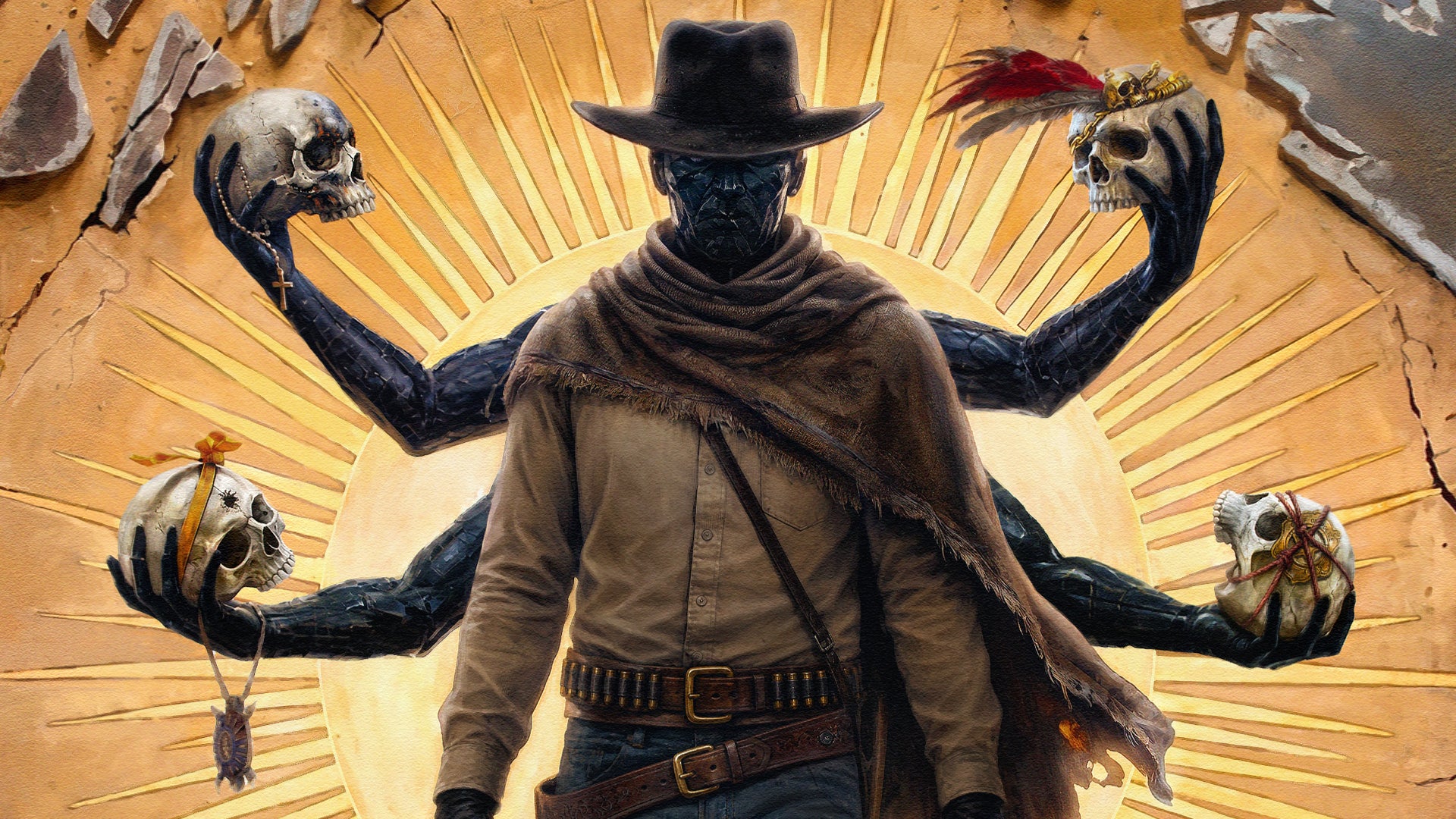
Initial previews of the game highlight a stark transition from claustrophobic pits to expansive, surreal environments. The game’s visual language is defined by vast deserts of sand and flame, where celestial bodies loom unnaturally close and gargantuan entities, such as a massive worm winding through mesa formations, underscore the supernatural nature of the world. This environmental storytelling is a hallmark of Antonov’s influence, creating a sense of "history that has gone wrong."
Mechanical Innovation: Tactical Gunplay and Sequence Shooting
While many modern shooters prioritize speed and twitch reflexes, Guns of Eschaton adopts a "smart shooter" philosophy. The combat is deliberately paced, emphasizing resource management and tactical foresight over rapid-fire engagement. This is most evident in the game’s approach to firearm mechanics, specifically regarding the standard-issue six-shooter.
Cylinder Management and Pseudo-Realism
In a departure from arcade-style shooters, Guns of Eschaton requires players to manually manage their weapon’s internal mechanisms. After each shot, the player must cock the hammer to rotate the cylinder. This adds a rhythmic, mechanical step to combat that demands focus; failure to cock the hammer results in a hollow "click" during high-pressure encounters, often leaving the player vulnerable to the game’s aggressive undead antagonists. This manual operation, combined with a slow reload process, forces players to treat every bullet as a strategic asset rather than a disposable commodity.

The "Sequence Shooting" System
The game introduces a proprietary "sequence shooting" mechanic, which serves as a primary hurdle for those accustomed to traditional headshot-centric combat. Supernatural enemies in Guns of Eschaton possess specific vulnerabilities that must be exploited in a particular order to achieve a kill. For instance, while basic enemies may fall to a single headshot, more advanced adversaries require a specific chain of attacks—such as targeting the right leg, then the left arm, and finally the head.
Fuad Kuliev, CEO and Creative Director of Eschatology Entertainment, emphasized that this system is designed to discourage "spraying and praying." According to Kuliev, "In our game, not shooting is far often better than shooting until you understand what actually you need to shoot at." This information is stored in a lavishly illustrated in-game Codex, which players must consult to master the specific weaknesses of the diverse enemy types they encounter.
The Soulslike Framework: Risk, Reward, and Progression
Guns of Eschaton adheres strictly to the structural tenets of the Soulslike subgenre, adapting them for a first-person perspective. The game utilizes a hub-and-spoke world design, centered around a location known as "Hounds Camp." From this central hub, players venture into discrete, high-risk areas.

Progression and Currency
The primary currency of the game is "Memories," which are accumulated by defeating enemies. These Memories are used at Hounds Camp to purchase ability upgrades, equipment, and permanent buffs. However, following the Soulslike tradition, death results in the loss of all unspent Memories. Players are given a single opportunity to return to the site of their demise to recover their "shame-puddle" of lost currency. If they die again before reaching it, the Memories are lost forever.
Rest and Respawn Mechanics
Throughout the world, players discover campfires with evocative names like "Muttering Path." These serve as checkpoints where players can rest, replenish their gunpowder, and heal. However, resting at a campfire triggers a global reset, causing all defeated non-boss enemies to respawn. This creates a constant tension between the need for recovery and the desire to maintain forward momentum through a cleared area.
Social and Environmental Interaction
The game also incorporates a messaging system similar to those found in FromSoftware titles. This allows players to leave cryptic warnings or advice scrawled on the environment, fostering a sense of asynchronous community in an otherwise lonely and hostile world.

Customization and Dynamic Difficulty
Eschatology Entertainment has eschewed traditional difficulty sliders in favor of what they term "dynamic difficulty." This approach allows players to modulate the challenge through their choice of equipment, perks, and playstyles.
- Versatile Toolkits: Players can access various inventory belts, ammunition types, and "prayers"—a form of magic that provides temporary buffs, such as damage reduction.
- Stealth vs. Aggression: For players struggling with direct combat, stealth is a viable alternative. Specific perks allow players to track enemies through walls or deploy "darkness curses" to blind foes with supernatural smoke.
- Weapon Modification: The game features a deep modification system. For example, a Buffalo Rifle can be stripped of its scope to "invoke the spirit inside," transforming it into a high-powered, one-shot revolver.
- Consumables and Debuffs: The game includes items like chewing tobacco, which can clear supernatural afflictions but carries the penalty of temporarily reducing maximum stamina.
The Nightmare World and Co-op
To further assist players who encounter significant roadblocks, Guns of Eschaton features a "Nightmare World." This is a mirror version of the primary map that is reportedly easier to traverse, though it serves a specific narrative and mechanical purpose that is introduced if the game detects a player is struggling excessively. Additionally, the game supports optional two-player co-op. While enemy health and damage scale to compensate for a second player, the synergy between two characters is intended to provide a more manageable experience than the solo campaign.
Industry Context and Broader Implications
The development of Guns of Eschaton comes at a time when the "Weird West" subgenre is seeing a resurgence, following titles like Evil West, Hard West, and Weird West. However, by combining this aesthetic with the hardcore mechanics of a Soulslike and the legacy of Viktor Antonov, Eschatology Entertainment is positioning the game as a more cerebral and atmospheric entry in the field.

The project also highlights a growing trend of "AA" developers—studios with significant experience and mid-to-high budgets—taking creative risks that larger "AAA" publishers might avoid. The pedigree of the team, particularly their experience with the highly technical and balance-focused World of Tanks, suggests that the complex interplay of gunpowder management and sequence shooting will be finely tuned for competitive and solo play alike.
Chronology of Development
- Studio Formation: Eschatology Entertainment was founded by former Wargaming leads with the goal of creating narrative-driven, mechanically deep shooters.
- Visual Conceptualization: Viktor Antonov joined the project to lead the art direction, establishing the "Old South" aesthetic.
- Announcement: The game was officially revealed with a trailer showcasing the "Hounds Camp" and the sequence shooting mechanics.
- Hands-On Previews: Recent industry events provided the first playable builds to the press, highlighting the game’s high difficulty and unique reload rhythms.
- Antonov’s Legacy: Following Antonov’s death in 2023, the studio reaffirmed its commitment to realizing his final creative vision, ensuring the world-building remains a central pillar of the experience.
As Guns of Eschaton moves toward its eventual release, it stands as a testament to the evolution of the FPS genre. By requiring players to think as much as they aim, and by honoring the architectural and atmospheric genius of one of gaming’s most celebrated artists, it promises to be a challenging, albeit rewarding, addition to the Soulslike pantheon.