admin
admin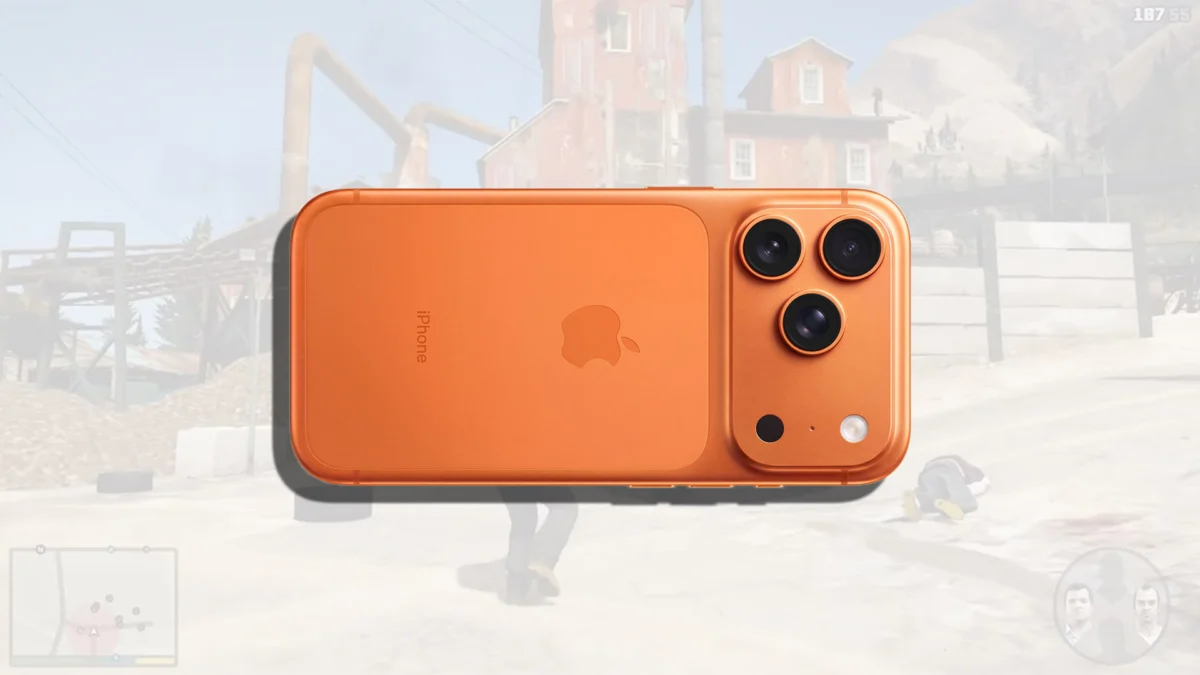
The pursuit of console-quality gaming on mobile devices reached a new milestone recently as enthusiasts pushed Apple’s latest flagship hardware to its absolute limits. Despite Apple doubling down on the gaming performance of the iPhone 17 Pro and iPhone 17 Pro Max through the introduction of the A19 Pro silicon, a recent experimental attempt to run Grand Theft Auto V (GTA 5) has highlighted the significant hurdles that remain in the realm of high-end software emulation. Utilizing the XeniOS Xbox 360 emulator, a Redditor identified as "mertbaris01" successfully launched the 2013 Rockstar Games masterpiece on an iPhone 17 Pro Max, though the resulting performance metrics suggest that the marriage of mobile hardware and non-native AAA titles is still far from a seamless experience.
While the technical feat of getting a complex Seventh Generation console title to boot on a handheld device is noteworthy, the practical results were described as an "exercise in futility." The device struggled to maintain a consistent framerate, often dipping into unplayable territory, even as it leveraged the most powerful mobile chipset Apple has produced to date.
The Technical Breakdown: Emulation vs. Native Performance
The experiment conducted by "mertbaris01" utilized the XeniOS Xbox 360 Emulator, a project designed to translate the PowerPC architecture of the original Xbox 360 hardware into instructions compatible with Apple’s ARM-based silicon. This translation process, known as an emulation layer, is notoriously resource-intensive. Unlike native ports—such as the iOS versions of Resident Evil Village or Death Stranding—emulation requires the host processor to work overtime, simultaneously simulating the original hardware’s environment while executing the game’s code.
In this specific test, the iPhone 17 Pro Max was tasked with running GTA 5 at a resolution of 1280 x 720 pixels (720p). Under these conditions, the A19 Pro chipset managed to produce between 19 and 20 frames per second (FPS) during less demanding sequences. However, the performance was highly volatile. When the player engaged in more complex activities, such as piloting a helicopter over the densely populated urban environments of Los Santos, the framerate plummeted to as low as 12 FPS. For context, most modern gamers consider 30 FPS to be the minimum threshold for a playable experience, with 60 FPS being the standard for smooth interaction.
The disparity between these results and the A19 Pro’s theoretical power is stark. Previous benchmarks and industry reports indicate that the A19 Pro offers up to a 69 percent performance improvement over its predecessors, the A18 Pro and A17 Pro. This massive jump in raw compute and graphical power is intended to support the next generation of mobile gaming, yet the overhead required for Xbox 360 emulation appears to consume nearly all available overhead, leaving little room for fluid gameplay.
A Chronology of Apple’s Gaming Ambitions
To understand why this experiment is significant, one must look at the timeline of Apple’s aggressive pivot toward the gaming market. For years, the iPhone was primarily a platform for "casual" gaming, dominated by titles designed for touch interfaces and short play sessions. This began to change with the introduction of the A17 Pro in the iPhone 15 Pro series, which featured hardware-accelerated ray tracing and a dedicated "Pro-class" GPU.
- September 2023: Apple launches the A17 Pro, bringing hardware ray tracing to the iPhone for the first time and announcing partnerships with Capcom and Ubisoft to bring AAA titles like Resident Evil 4 Remake and Assassin’s Creed Mirage to iOS.
- June 2024: Apple announces Game Porting Toolkit 2, making it easier for developers to bring Windows and console games to Mac and iPhone, signaling a long-term commitment to high-end gaming.
- September 2024: The A18 Pro debuts, further refining thermal management and neural engine capabilities to support more sustained gaming loads.
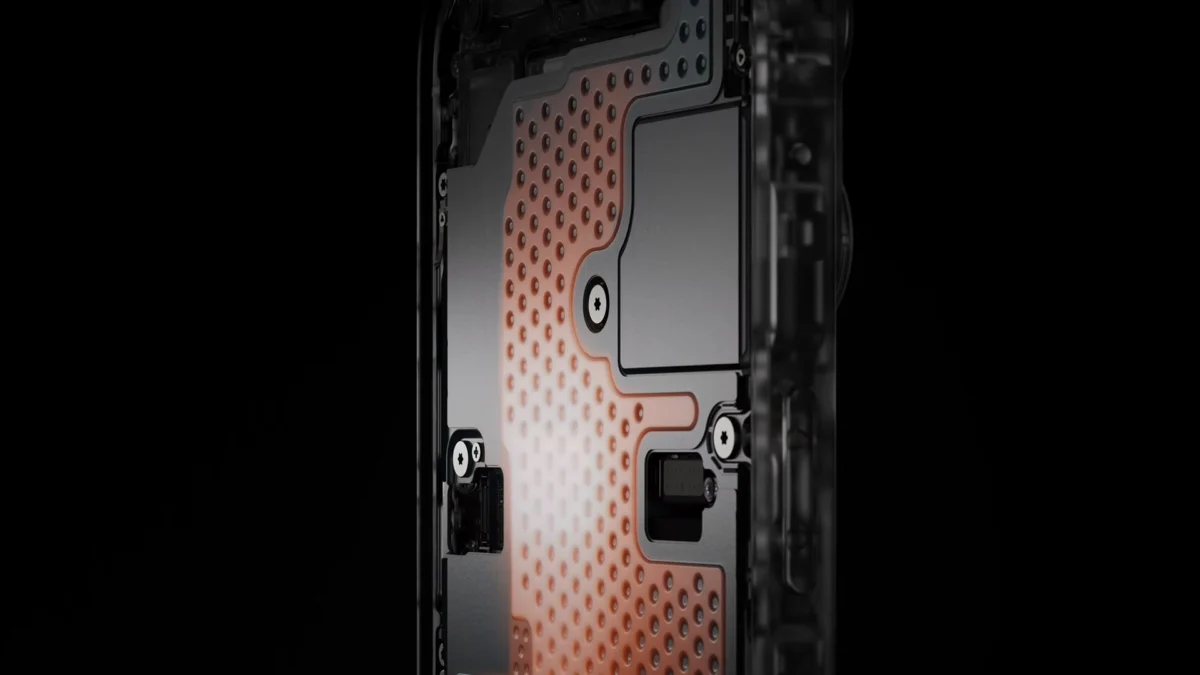
- Late 2025 (Projected): The iPhone 17 Pro series arrives with the A19 Pro. Apple introduces a vapor chamber cooling system to address the thermal throttling issues that plagued previous generations during intensive gaming.
- August 2026: The current experiment surfaces, showing that while hardware is evolving, the software bridge for legacy console emulation remains a bottleneck.
This timeline illustrates a steady progression in hardware capability, but the GTA 5 experiment serves as a reality check regarding the limitations of unofficial software layers.
Thermal Constraints and the Vapor Chamber Solution
One of the most discussed features of the iPhone 17 Pro Max is its integrated vapor chamber cooling system. Historically, iPhones have relied on graphite sheets and the device’s frame to dissipate heat. However, as chips like the A19 Pro push higher clock speeds and more GPU cores, the heat generated during sustained loads—such as AAA gaming—can lead to thermal throttling. Throttling occurs when the system automatically reduces clock speeds to prevent hardware damage, resulting in a sudden drop in framerates.
In the case of the GTA 5 emulation test, the vapor chamber was reportedly pushed to its limits. Despite the advanced cooling hardware, the iPhone 17 Pro Max experienced significant overheating during the test. This suggests that the continuous, high-intensity calculations required for real-time emulation generate heat at a rate that current passive mobile cooling solutions cannot fully mitigate. Industry analysts have noted that even if the device were subjected to external active cooling (such as a clip-on fan), the performance gain would likely be marginal because the primary bottleneck is the efficiency of the XeniOS emulator itself, not just the thermal ceiling of the A19 Pro.

Supporting Data: The Efficiency Gap
Data from various benchmarking suites, including Geekbench and GFXBench, show that the A19 Pro is a powerhouse in synthetic environments. Its Metal scores—Apple’s proprietary graphics API—consistently outperform rival mobile chipsets and even some entry-level laptop GPUs.
- A19 Pro Performance Increase: ~69% higher framerates in optimized AAA titles compared to the A17 Pro.
- Resolution Scaling: While native iOS games often use MetalFX Upscaling (similar to NVIDIA’s DLSS) to achieve 4K-like visuals from lower internal resolutions, the GTA 5 emulation was running at a raw 720p without the benefit of these modern optimization tools.
- Power Draw: During the emulation, power consumption was reportedly at peak levels, leading to rapid battery depletion, a common side effect when a mobile SoC is forced to run at maximum frequency for extended periods.
These data points underscore the "efficiency gap" between native code and emulated code. A native port of GTA 5, optimized specifically for Apple’s Metal API and the A19 Pro’s architecture, would likely run at 60 FPS at much higher resolutions. However, without official support from Rockstar Games, users are forced to rely on inefficient translation layers.
Broader Implications for the Mobile Gaming Industry
The attempt to run GTA 5 on an iPhone 17 Pro Max is more than just a hobbyist experiment; it is a litmus test for the future of the "pocket console" concept. As mobile processors begin to rival the raw TFLOPS (teraflops) of previous-generation consoles like the PlayStation 4 and Xbox One, the industry is watching to see if the iPhone can truly become a primary gaming device.
There are several implications to consider:
1. The Necessity of Native Ports
The subpar performance of GTA 5 via XeniOS reinforces the idea that for the iPhone to succeed as a gaming platform, it needs "bespoke" software. Emulation will likely remain a niche interest for enthusiasts due to the inherent performance penalties. Apple’s challenge lies in convincing major publishers that the install base of iPhone 17 Pro users is large enough to justify the cost of native porting.
2. The Role of Software Optimization
The A19 Pro is clearly a capable piece of silicon, but hardware is only half of the equation. The experiment shows that even a 69 percent increase in performance can be swallowed up by unoptimized software. This puts the spotlight on emulator developers to improve JIT (Just-In-Time) compilation and GPU instruction mapping for Apple Silicon.
3. Future Hardware Expectations
With the iPhone 18 Pro and the rumored A20 Pro chip on the horizon—expected to be built on a 2nm process—the industry expects even greater efficiency. A 2nm process would allow for more transistors in the same space, potentially reducing heat output and providing the extra "grunt" needed to brute-force emulation more effectively.
Official Responses and Market Outlook
While Apple rarely comments on third-party emulation experiments—especially those involving sideloaded software or unauthorized emulators—the company’s recent policy changes regarding the App Store suggest a softening stance. In early 2024, Apple updated its guidelines to allow retro game emulators on the App Store, though this was largely limited to older systems like the NES, SNES, and Game Boy. Higher-end emulators like XeniOS often operate in a legal and technical gray area, frequently requiring users to provide their own game BIOS and ROM files.
Market analysts suggest that Apple’s focus remains on the "Apple Vision Pro" ecosystem and the "Pro" iPhone lineup as a unified gaming platform. By ensuring that the A19 Pro can handle demanding tasks, Apple is positioning itself to compete not just with other smartphones, but with dedicated handhelds like the Steam Deck and the ASUS ROG Ally. However, as the GTA 5 test demonstrates, the iPhone still has a long way to go before it can match the versatility and performance of those dedicated x86-based gaming machines.
In conclusion, while the iPhone 17 Pro Max is a marvel of mobile engineering, the dream of playing Grand Theft Auto V at high settings on the go via emulation remains out of reach for the average user. The experiment serves as a testament to the incredible progress of Apple Silicon, but also as a reminder of the physical and architectural limits of mobile computing in its current form. As software like XeniOS matures and the A20 Pro approaches, the gap between "possible" and "playable" may finally begin to close.