admin
admin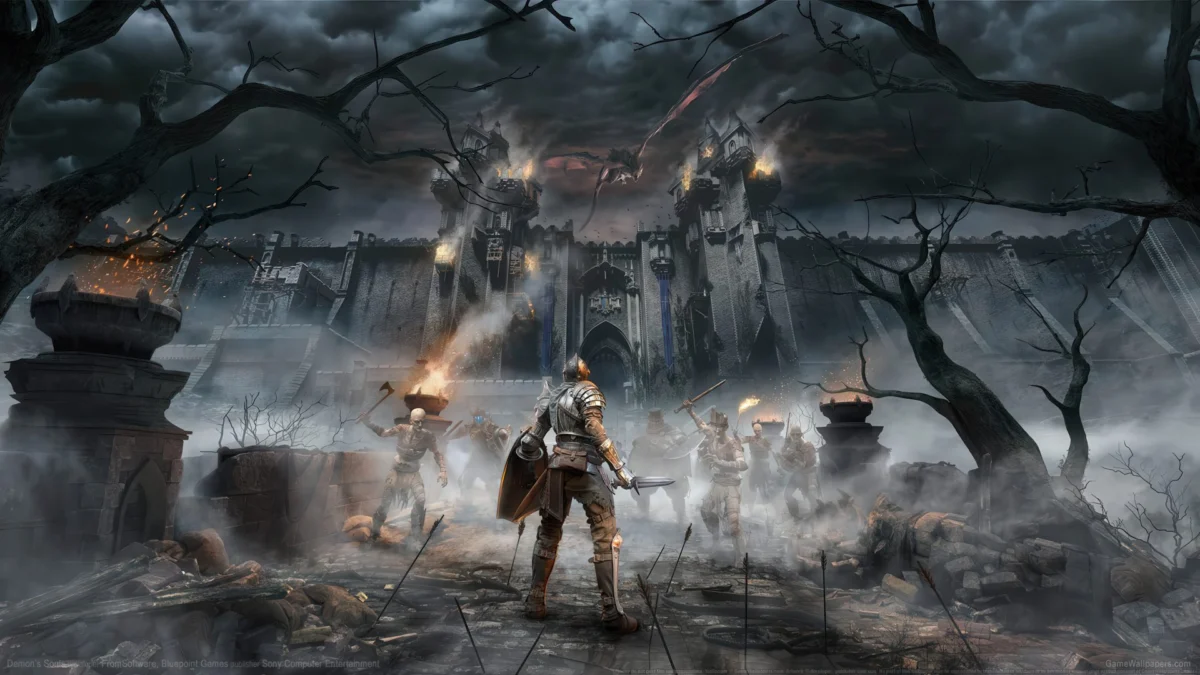
The landscape of console emulation has undergone a seismic shift this week as the PlayStation 5 emulator KyTyPS5 demonstrated a monumental leap in performance, signaling a potential acceleration in the timeline for playing current-generation exclusives on PC hardware. In a development that has captured the attention of both the enthusiast community and industry analysts, the emulator has transitioned from a proof-of-concept state to running high-profile titles like the Demon’s Souls Remake and Astro Bot at increasingly viable frame rates. This breakthrough comes just days after the project successfully booted Grand Theft Auto V, sparking renewed discussions regarding the viability of emulating future blockbusters, including the highly anticipated Grand Theft Auto VI, before their official PC debuts.
Technical Milestones and Performance Benchmarks
The most striking data point from the latest KyTyPS5 update involves the performance of Bluepoint Games’ Demon’s Souls Remake. In the span of a single software iteration, the emulator’s output for the title jumped from a virtually unplayable 2 frames per second (FPS) to a range between 10 and 18 FPS. This represents an 800% improvement in rendering efficiency. While 18 FPS remains below the standard 30 or 60 FPS targets expected by modern gamers, the rate of progress suggests that the fundamental bottlenecks in the emulator’s translation layer are being systematically dismantled.
Further diversifying its portfolio of compatible software, KyTyPS5 has also successfully booted Team Asobi’s Astro Bot. This title, widely considered a benchmark for PlayStation 5 hardware features, is now reaching gameplay for the first time on the emulator, maintaining approximately 11 FPS. These results were achieved on a hardware configuration that would be considered modest by modern standards: an Intel Core i3-10105F processor paired with an NVIDIA GeForce RTX 5060 graphics card. The fact that entry-to-mid-range PC hardware can achieve these results at this stage of development implies that high-end rigs may already be capable of even greater stability, provided the software optimization continues at this pace.
Visually, the emulation remains in a transitional phase. While Demon’s Souls Remake shows significant clarity, Astro Bot currently suffers from substantial rendering artifacts and graphical glitches. However, in the realm of emulation development, achieving a "bootable to gameplay" status is often the most difficult hurdle; once the logic for memory management and GPU calls is established, graphical refinement typically follows.
The Role of Artificial Intelligence in Emulation Development
A significant point of discussion within the developer community involves the methodology behind these sudden performance gains. Unconfirmed reports and speculation within emulation circles suggest that the KyTyPS5 developers may be utilizing AI-generated code or AI-assisted debugging to solve complex architectural hurdles. While the developers have not officially confirmed the use of Large Language Models (LLMs) or specialized AI coding tools, the sheer speed of the optimization suggests a departure from traditional manual "trial and error" reverse engineering.
The integration of AI in software development has become a standard industry practice, and its application in emulation—a field defined by the need to translate proprietary console instructions into PC-readable code—could represent a paradigm shift. If AI is indeed being used to bridge the gap between the PS5’s customized x86-64 architecture and Windows-based environments, it could drastically shorten the multi-year development cycles traditionally associated with console emulators. Currently, the latest build of KyTyPS5 has not yet been uploaded to its public GitHub repository, though an update is expected imminently.
Comparative Context: KyTyPS5 vs. SharpEmu
Until recently, SharpEmu was widely regarded as the frontrunner in the nascent PS5 emulation scene, having reached significant milestones with Demon’s Souls Remake earlier in the year. However, the rapid strides made by KyTyPS5 over the last several weeks have arguably repositioned it as the most capable project in the space. The competition between these two projects mirrors the historical rivalry between emulators like PCSX2 and RPCS3, where differing approaches to hardware abstraction eventually lead to a more robust understanding of the target console’s inner workings.
The PlayStation 5 presents a unique challenge and opportunity for developers. Unlike the PlayStation 3, which utilized the notoriously complex Cell Broadband Engine, the PS5 is built on an x86-64 architecture similar to modern PCs. While this theoretically makes emulation easier than in previous generations, the hurdle lies in the PS5’s sophisticated custom APIs, proprietary shader languages, and the high-speed I/O throughput of its specialized SSD controller.

Sony’s Shifting Strategy and the PC Release Gap
The acceleration of PS5 emulation occurs at a sensitive time for Sony Interactive Entertainment (SIE). Under its current leadership, Sony has modified its approach to PC ports. While the company initially brought titles like God of War and Horizon Zero Dawn to PC relatively quickly, it has recently reaffirmed a strategy of maintaining console exclusivity for single-player titles for a significant window. This strategy aims to drive hardware sales, particularly for the newly released PlayStation 5 Pro.
This "delay-to-PC" model creates a vacuum that emulation projects are eager to fill. For consumers who have invested in high-end PC hardware, the prospect of waiting two to three years for an official port of a game like Marvel’s Wolverine or the next Astro Bot title is increasingly unappealing. If KyTyPS5 or SharpEmu can reach a "playable" state (consistent 30 FPS with minimal glitches) within the next 18 months, they may offer an alternative for the PC audience before Sony officially enters the market for those specific games.
The recent Wccftech commentary regarding Grand Theft Auto VI highlights this tension. Rockstar Games historically releases its titles on consoles first, with PC versions arriving a year or more later. If PS5 emulation reaches maturity by the time GTA VI launches in late 2025, the industry could face an unprecedented situation where a flagship title is playable on PC via unauthorized emulation before an official retail version exists.
Corporate Headwinds and Industry Impact
The surge in emulation interest is also bolstered by a series of controversial decisions and perceived blunders by Sony over the past year. These include:
- The Phase-Out of Physical Media: Reports suggesting Sony may transition away from disc-based games as early as 2028 have alienated a segment of the user base that prioritizes ownership and preservation—values often championed by the emulation community.
- Studio Closures: The closure of Bluepoint Games, the very studio responsible for the Demon’s Souls Remake currently being emulated, has raised questions about Sony’s commitment to its specialized talent pool.
- Project Divestment: Sony’s apparent divestment from Hideo Kojima’s "Physint" project, which was subsequently picked up by Microsoft’s Xbox division, has signaled a shift in how the company manages high-concept, risky intellectual properties.
These factors contribute to a narrative where enthusiasts feel the need to "rescue" or "preserve" the PlayStation library independently of the platform holder’s business interests.
Technical Hurdles and the Road Ahead
Despite the 800% improvement, the path to perfect PS5 emulation remains fraught with difficulty. The primary challenge moving forward is shader compilation and the emulation of the PS5’s GPU features, which utilize a customized version of the AMD RDNA 2 architecture. PC GPUs, while powerful, often handle memory and cache differently than the unified memory architecture of a console.
Furthermore, the legal landscape surrounding emulation remains a significant variable. Following the high-profile legal action taken by Nintendo against the Yuzu (Switch) emulator, developers in the PS5 space are likely operating with heightened caution. While emulation itself is generally legal under US law as a form of reverse engineering, the distribution of proprietary BIOS files or the circumvention of digital rights management (DRM) remains a legal gray area that Sony could exploit to protect its ecosystem.
Conclusion: A New Era for PC Gaming
The progress of KyTyPS5 marks a definitive end to the era where current-gen console architecture was considered an impenetrable "black box" for several years after launch. By achieving playable frame rates in AAA titles using mid-range PC components, the project has demonstrated that the hardware gap is narrower than ever.
As the emulation community awaits the next public release of the KyTyPS5 source code, the focus shifts to how Sony and other major publishers will react. Whether through faster official PC releases or increased legal scrutiny, the rapid evolution of PS5 emulation is forcing a recalibration of how console exclusives are managed in an increasingly platform-agnostic gaming world. For now, the prospect of "Demon’s Souls at 60 FPS on PC" remains a distant goal, but it is a goal that has moved significantly closer in the span of a single week.