admin
admin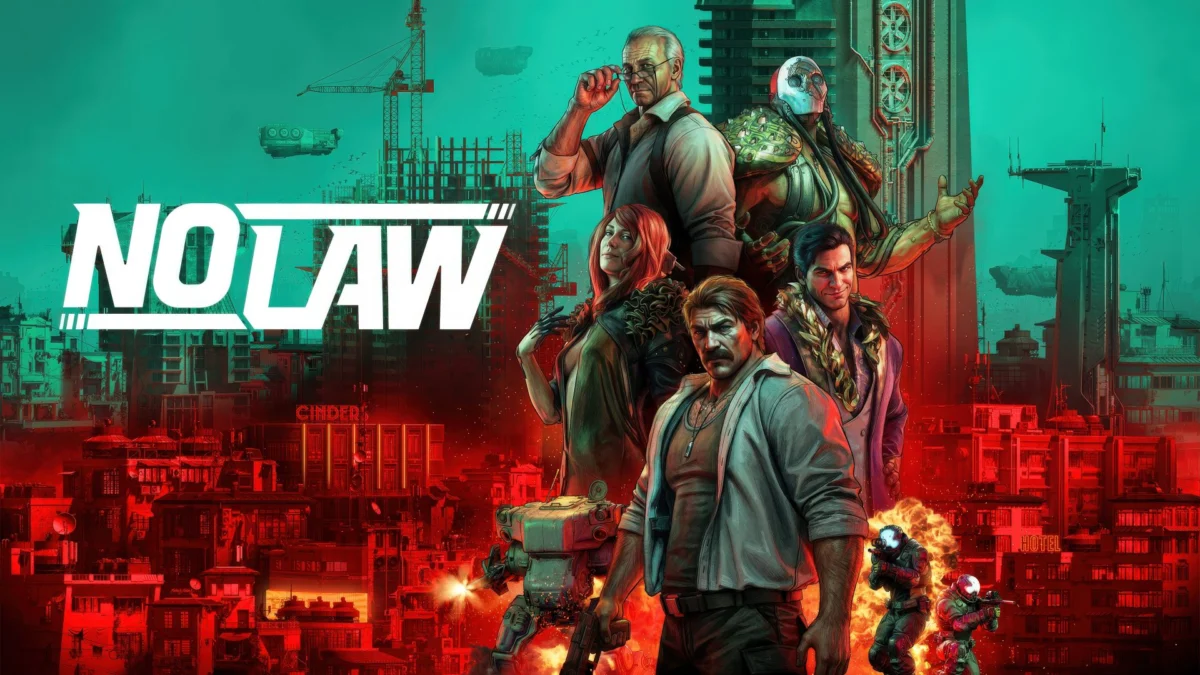
Neon Giant, the Swedish development studio previously recognized for the 2021 isometric action-shooter The Ascent, has officially debuted its next project, NO LAW, during a series of closed-door presentations at Gamescom 2026. The title represents a significant pivot for the Uppsala-based team, moving from a top-down perspective to a first-person open-world role-playing game (RPG) that emphasizes the "immersive sim" design philosophy. Set in the sovereign city-state of Fort Desire, NO LAW aims to deliver a seamless, high-fidelity experience that challenges the traditional boundaries between independent production and "Triple-A" scale.

The Evolution of Neon Giant and the Road to NO LAW
The announcement of NO LAW marks a major milestone in the chronology of Neon Giant. Founded by industry veterans Tor Frick and Arcade Berg, the studio initially gained prominence with The Ascent, which was developed by a lean team of 12 people. Following the commercial and critical success of their debut title, the studio has expanded to 24 employees. This modest growth has allowed the team to tackle a project of significantly greater complexity while maintaining the agile decision-making process characteristic of smaller outfits.

The development of NO LAW leverages the founders’ extensive backgrounds in first-person shooter (FPS) design. Before founding Neon Giant, members of the core team contributed to high-profile franchises including Wolfenstein, Doom, Far Cry, and Bulletstorm. Studio leadership noted that while The Ascent required them to learn the nuances of isometric game design, NO LAW represents a return to their professional roots in the first-person genre. The project has been in active development for several years and is currently targeting a 2027 release window for PC, PlayStation 5, and Xbox Series X|S.

Fort Desire: A Lawless Mediterranean Dystopia
The setting of NO LAW is the city-state of Fort Desire, a metropolis situated in a geopolitical "no man’s land" between three competing nations. Because any attempt at annexation by one power would trigger immediate retaliation from the other two, the city has evolved into a sanctuary for unregulated research and corporate activity. The title of the game refers to the lack of a formal legal framework within the city, making "illegal" activities technically permissible, provided they do not disrupt the fragile social order maintained by a private security force known as the Peacekeepers.

Architecturally and tonally, Fort Desire departs from the traditional "neon and rain" aesthetic of the cyberpunk genre. The developers have opted for a Mediterranean-inspired climate characterized by warmth, sunlight, and aggressive vegetation. In the lore of the game, nature is a constant threat to the urban infrastructure; plants frequently erupt through concrete and asphalt, requiring daily chemical suppression by city authorities. This environmental storytelling highlights the contrast between the high-tech downtown districts and the decaying outskirts where greenery has begun to reclaim the landscape.

Despite this focus on a sun-drenched atmosphere, the game features a dynamic day-night cycle and weather system. Nighttime sequences reintroduce the classic cyberpunk staples of neon illumination and rain, providing a broad tonal range within a single, seamless open world that features no loading screens between interior and exterior environments.

Core Mechanics: The Immersive Sim Philosophy
At the heart of NO LAW is a commitment to player agency and environmental reactivity. The developers emphasized that the game is designed to be played in multiple ways, ranging from a UI-heavy linear shooter to a fully immersive experience with no on-screen guidance. In its most immersive mode, the game removes mission markers, forcing players to navigate using physical street signs and building numbers. Every street in Fort Desire is uniquely named, and every building is numbered, allowing for navigation based on literal addresses found in dialogue or in-game documents.

The physicality of the world extends to its economic systems. Shopping in Fort Desire does not occur through static menus; instead, players must physically browse shelves, pick up items, and place them in a basket. The developers have invested heavily in graphic design, ensuring that every product features unique logos, slogans, ingredients, and fictional nutritional information. Furthermore, players have the option to commit theft by walking out of a store without paying, a decision that triggers immediate consequences based on the store’s security level.

NPC Persistence and Narrative Non-Linearity
One of the most ambitious features of NO LAW is its approach to non-player character (NPC) persistence. Every significant NPC in the game follows a permanent daily routine and possesses a unique home address and workplace. If a player kills an NPC, that character is removed from the world permanently. This creates a "narrative hole" that the game’s story must adapt to. For example, if a shopkeeper is killed at home, their shop will remain closed; if they are killed at work, they will never return to their residence.

The narrative structure is described as entirely non-linear. Players are encouraged to act as detectives, gathering intelligence through various means such as hacking computers, reading physical mail, or eavesdropping on conversations. Information gathered in the world generates "leads" rather than traditional quest markers. Multiple leads can be pursued simultaneously, and the story progresses based on the player’s discoveries rather than a scripted sequence of events.

Combat, Stealth, and the "What, Not How" Reward System
During the Gamescom demonstration, Neon Giant showcased two distinct approaches to a single mission. The first approach focused on near-pacifist stealth, utilizing social engineering to obtain a password for a residential building and employing non-lethal takedowns. The second approach utilized heavy weaponry and explosive devices to breach the same objective.

A key differentiator in NO LAW’s RPG system is its approach to experience points (XP). The game rewards players for achieving objectives rather than the specific method used to reach them. Whether a player sneaks through a vent, picks a lock, or destroys a door with explosives, the XP reward remains the same. This design choice is intended to prevent players from feeling "punished" for choosing a particular playstyle.

XP is invested into skill trees covering various categories, including weapon proficiency and technical tools like lockpicking. Additionally, players can acquire "ability canisters" that grant cybernetic enhancements, such as double-jumping. These abilities are tied to specific body slots, and players must often choose between two mutually exclusive upgrades, ensuring that no single character can become a "master of all" in a single playthrough.

Technical Specifications and Production Standards
NO LAW is being developed using modern rendering techniques to achieve high levels of visual fidelity. The game features hardware-accelerated ray tracing and utilizes "MegaLights" technology to manage high object density and complex lighting scenarios. Despite the studio’s small size, Neon Giant has rejected the use of generative AI, opting instead for a completely handcrafted environment to ensure artistic consistency and detail.

The protagonist, Gray Harker, is a military veteran described as "older and tired," a departure from the "street punk" archetypes common in the genre. Harker is voiced by Luke Roberts, known for his work in Black Sails and the Silent Hill 2 remake. The character design emphasizes physicality, incorporating mechanics such as a melee kick and a limited inventory system that forces players to make tactical decisions about what gear to carry.

Industry Context and Broader Implications
The reveal of NO LAW comes at a time when the "Triple-I" (independent-AAA) sector of the gaming industry is seeing increased scrutiny. By attempting a seamless open-world immersive sim with a team of only 24 people, Neon Giant is positioning itself as a leader in high-efficiency development. Comparisons to CD Projekt RED’s Cyberpunk 2077 are inevitable, but the developers have been quick to distinguish their project. Unlike Cyberpunk 2077, NO LAW focuses on verticality and on-foot traversal rather than vehicular combat, and its "lawless city-state" premise allows for a different set of social and systemic interactions.

The partnership with publisher Krafton has provided Neon Giant with access to extensive quality assurance (QA) and playtesting resources that were unavailable during the development of The Ascent. This support is critical as the studio enters the final stages of production, focusing on polish and fine-tuning the complex systemic interactions that define the immersive sim genre.

As the industry moves toward 2027, NO LAW stands as a testament to the potential of small, specialized teams to deliver experiences that rival the scope of much larger organizations. Its success will likely depend on how well its ambitious systems—NPC persistence, physicalized economy, and non-linear narrative—coalesce into a stable and engaging consumer product. With the game now playable from start to finish internally, the coming year will be dedicated to ensuring that the reality of Fort Desire matches the high-altitude ambition of its creators.