Metty Iskandar
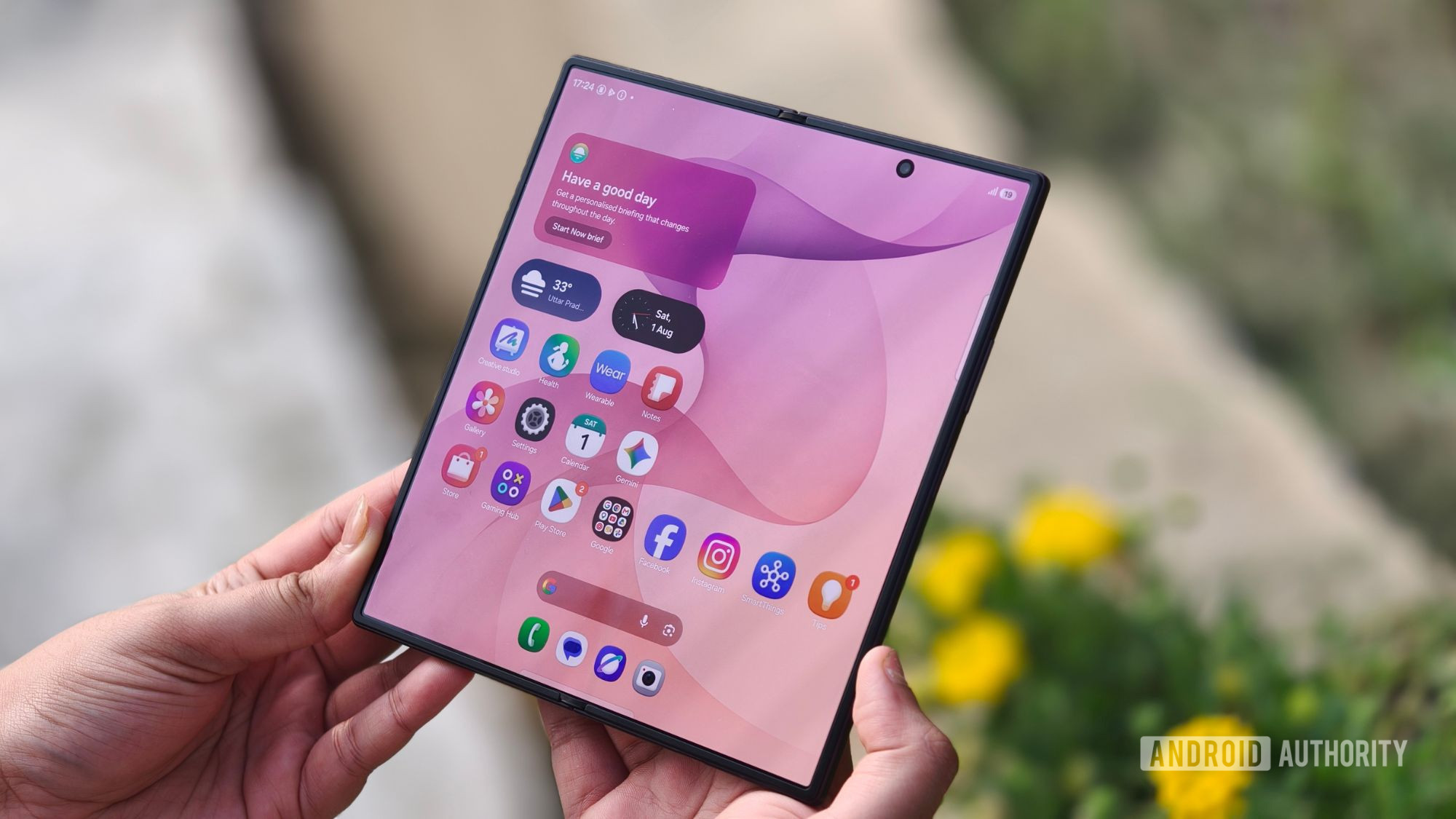
The highly anticipated Samsung Galaxy Z Fold 8 Ultra, a device already experiencing significant demand leading to some shipping delays for certain configurations, has undergone a series of rigorous durability tests. The latest installment comes from renowned tech YouTuber Zack Nelson, best known by his channel name JerryRigEverything, whose comprehensive examination has revealed a particularly sensitive point in the device’s engineering: its foldable inner display. While the outer screen exhibits resilience comparable to many contemporary smartphones, the internal display has demonstrated a notable vulnerability, particularly under stress-induced bending.
Inner Display’s Susceptibility to Scratches and Bending
Nelson’s durability tests, a benchmark in the tech community for assessing the resilience of new devices, began with a standard scratch test. The 8 Ultra’s cover display performed as expected, accumulating minor abrasions at a level 6 on the Mohs scale of mineral hardness, with more pronounced scratching occurring at level 7. This aligns with the typical performance of premium smartphone displays, which are engineered to withstand everyday wear and tear.
However, the narrative shifts dramatically when examining the inner, foldable display. Scratches were observed starting at a mere level 2 on the Mohs scale. Nelson explicitly noted that even a fingernail could potentially mar this flexible surface, a characteristic that, while not entirely unexpected for foldable technology, highlights the inherent fragility compared to rigid glass displays. This observation is consistent with the performance of its predecessor, the Galaxy Z Fold 7, suggesting that this delicate nature remains a core characteristic of Samsung’s foldable screen technology.
The most critical phase of the test, the bend test, exposed a significant weakness. Unlike previous iterations, the Galaxy Z Fold 8 Ultra’s inner display did not withstand outward bending with moderate force. Nelson reported that after a couple of deliberate bends, the screen became unresponsive, flickering intermittently before rendering itself unusable. This outcome is a stark contrast to the durability observed in earlier models, where the bend test, while stressful, did not result in complete screen failure. The cover display, conversely, remained functional throughout the bending process, indicating that the structural compromise was specific to the foldable panel.
Potential Contributing Factors to Display Failure
The precise reasons behind the inner display’s increased vulnerability are subject to analysis. Nelson posited two primary hypotheses. One is the device’s reduced thickness, a 0.1mm decrease compared to the Z Fold 7, which might have necessitated compromises in structural reinforcement. Thinner components can sometimes translate to reduced inherent rigidity. The second possibility lies in internal hardware modifications, which could have inadvertently made the foldable display more susceptible to pressure or stress.
The financial implications of such a failure are also substantial. Nelson highlighted the estimated replacement cost for the inner display at $639. This figure represents a significant portion of the Z Fold 8 Ultra’s overall purchase price, underscoring the economic risk associated with damaging the device’s most advanced and expensive component. In comparison, the outer cover display’s replacement cost was estimated at a more manageable $149. This disparity further emphasizes the premium placed on the foldable screen technology.
Dust Resistance Remains a Positive Note
On a more encouraging note, the Z Fold 8 Ultra’s inner screen successfully passed Nelson’s dust and dirt ingress test. This suggests that Samsung has maintained or even improved the dust resistance capabilities introduced with the Z Fold 7. Enhanced dust resistance is a crucial aspect of foldable phone durability, as the hinge mechanism is a common point of ingress for particulate matter, which can lead to long-term performance issues and aesthetic degradation. The continued focus on this area indicates Samsung’s commitment to addressing one of the persistent challenges in foldable phone design.
Context and Historical Perspective of Foldable Durability
The introduction of foldable smartphones has been a significant technological leap, offering users the versatility of a tablet in a pocketable form factor. However, this innovation has come with inherent engineering challenges, particularly concerning the durability of the flexible displays and the complex hinge mechanisms. Early generations of foldable devices were often criticized for their fragility, with screens prone to creasing, scratching, and pixel degradation.
Samsung, as a pioneer in this space, has consistently worked to refine its foldable technology. The Galaxy Z Fold series, since its inception, has seen incremental improvements in screen durability, hinge design, and overall build quality. The Galaxy Z Fold 8 Ultra, representing the latest iteration, builds upon years of research and development. The annual release cycle sees manufacturers iteratively address user feedback and technological advancements. For instance, the reduction in screen creasing and the improvement in hinge longevity have been focal points for Samsung over successive models.
The JerryRigEverything durability tests have, over the years, become a widely referenced metric for consumers evaluating the robustness of new smartphone models. Nelson’s methodology, which includes scratch tests using varying levels of abrasive materials, exposure to flames, and a demanding bend test, provides a standardized and often dramatic demonstration of a device’s breaking points. These tests, while extreme and not indicative of typical daily usage, serve a valuable purpose in highlighting potential design flaws or areas where a device might be more susceptible to damage under unforeseen circumstances.
Analysis of Implications and Future Trends
The findings from the Z Fold 8 Ultra’s bend test carry several implications for both consumers and the broader foldable smartphone market. For consumers considering a purchase, the test underscores the need for careful handling of the device, particularly the inner screen. While Samsung offers extensive warranties, accidental damage that results in screen breakage is typically not covered, leading to significant repair costs. This reinforces the notion that foldable phones, despite advancements, still require a degree of user caution that might not be as pronounced with traditional slab smartphones.
From an industry perspective, the results highlight the ongoing engineering challenges associated with producing durable and reliable foldable displays. While the technology has matured considerably, achieving parity with the scratch and impact resistance of traditional glass remains an ambitious goal. The trade-offs between thinness, flexibility, and structural integrity are a constant balancing act for manufacturers.
The Z Fold 8 Ultra’s performance in this specific test might spur further innovation in display protection technologies, such as more resilient ultra-thin glass (UTG) or advanced polymer coatings. It could also encourage manufacturers to explore alternative hinge designs or internal support structures that better shield the foldable display from external forces.
Furthermore, the cost of repair for foldable devices continues to be a significant consideration. As devices become more complex and integrated, the cost of replacing key components like foldable screens can deter consumers from repairing rather than replacing a damaged unit. This economic factor could influence long-term product lifecycle considerations and the development of more modular repair strategies.
The consistent performance of the outer display and the retained dust resistance suggest that Samsung is making steady progress in key areas of durability. The challenge now lies in reconciling these advancements with the inherent complexities of a flexible internal display. As foldable technology continues to evolve, the industry will be watching closely to see how manufacturers address these remaining durability hurdles, balancing innovation with the practical demands of everyday use. The Z Fold 8 Ultra’s experience serves as a valuable data point in this ongoing evolution, offering insights that will undoubtedly shape the development of future foldable devices.