Garick Elordi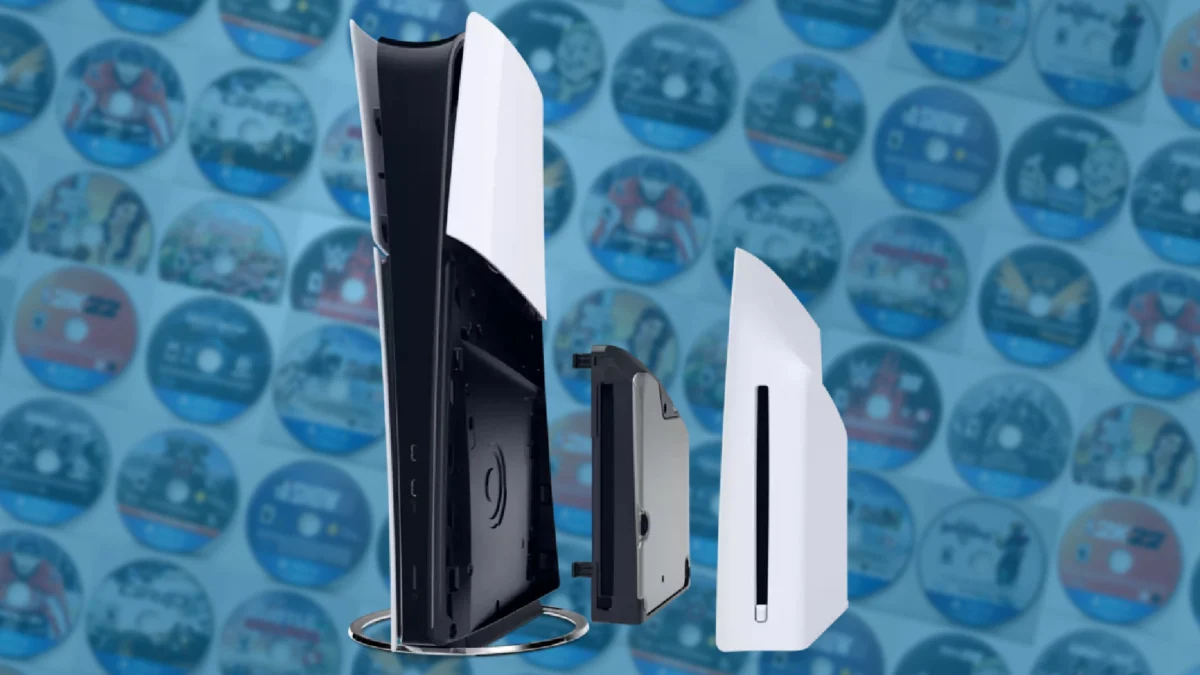
Sony has officially addressed a surge of industry reports regarding the future of its physical disc manufacturing, clarifying that the projected decline in output is significantly less severe than recent interpretations suggested. Following comments made by a high-ranking executive at Sony Digital Audio Disc Corporation (DADC), rumors circulated that the company intended to gut its disc production by as much as 90 percent. However, a Sony DADC spokesperson has since clarified that the company anticipates a volume decline of 10 percent by the year 2028, rather than a reduction of output to only 10 percent of current levels.
The confusion originated from a statement made by Dietmar Tanzer, the head of Sony DADC, during an interview with an Austrian broadcaster in July. The initial reporting led many to believe that the physical media arm of the PlayStation ecosystem was facing an immediate and catastrophic downsizing. In a follow-up statement provided to the publication Game, Sony DADC sought to rectify the narrative. "To clarify and avoid any misleading information: in that statement Dietmar anticipated an overall product volume decline by 10 percent, not a decline down to 10 percent," the spokesperson stated. While this clarification offers some reprieve for proponents of physical media, it does not alter the broader strategic pivot Sony has already signaled for the end of the decade.
The 2028 Mandate and the Transition to Digital-First
The backdrop to this manufacturing clarification is Sony’s previously disclosed plan to cease the production of physical discs for new software releases starting in January 2028. Under this roadmap, games released after the cutoff date will be distributed exclusively through digital channels, such as the PlayStation Store. Sony has confirmed that titles released prior to January 2028 will remain eligible for reorders and physical reprints, ensuring that the existing catalog does not disappear from retail shelves overnight.
This move marks a definitive end to an era for the PlayStation brand, which has utilized physical optical media since the launch of the original console in 1994. Unlike its primary competitor, Microsoft, which utilizes a network of "Authorised Replicators" to produce Xbox discs under third-party agreements, Sony has maintained a vertically integrated approach. By keeping manufacturing in-house through DADC, Sony has exercised total control over the production lifecycle of its software. The decision to wind down this infrastructure suggests a long-term shift in how the company views its hardware ecosystem and revenue streams.
Economic Incentives and Market Dynamics
Industry analysts suggest that the move away from physical media is driven by the significant margin improvements found in digital distribution. Daniel Ahmad, a director of research and insights at Niko Partners, noted that a digital-only ecosystem effectively eliminates the secondary market. In a physical-only or hybrid market, gamers frequently trade in used titles at retailers like GameStop or sell them via peer-to-peer platforms like eBay. Sony receives no revenue from these second-hand transactions.
Furthermore, digital sales allow Sony to capture a larger share of the initial purchase price. In a traditional retail sale, the revenue is split between the platform holder, the publisher, the retailer, and the logistics providers involved in shipping and warehousing physical goods. By funneling consumers toward the PlayStation Store, Sony removes the retail and logistics middlemen, while also gaining 100 percent control over pricing, sales events, and regional distribution.
Data from recent financial reports across the gaming industry support this transition. Major publishers, including Electronic Arts, Ubisoft, and Take-Two Interactive, have reported that digital downloads now account for upwards of 70 to 80 percent of their total software sales. High-profile releases such as Alan Wake 2 and Senua’s Saga: Hellblade II have already experimented with digital-only launches, citing the ability to keep the retail price lower and the agility of digital patching as primary benefits.
Leadership Perspectives: Brand Value vs. Financial Calculations
The shift has drawn criticism from former industry leaders, most notably Shawn Layden, the former chairman of SIE Worldwide Studios. Speaking on the matter, Layden described a potential disc-free future as "depressing," though he acknowledged the financial logic behind the decision. Layden argued that gaming companies often overlook the "brand impact" of such moves in favor of short-term ledger gains.
"Someone also has to have a ledger there saying, ‘OK, what is the brand impact from that move?’" Layden remarked. He emphasized that for many "hardcore" gamers, the act of collecting is a fundamental part of the hobby. He pointed to the enduring popularity of vinyl records and the resurgence of cassette tapes as evidence that physical media offers a tactile connection to art that digital files cannot replicate.
Layden also raised concerns regarding the definition of ownership in a digital-first world. "You’ve never been able to sell your iTunes library. And you can’t sell your PlayStation download library. So if you can’t resell it, do you really own it?" he asked. This shift from an ownership model to an "accessibility" model remains a point of contention for consumer rights advocates and digital preservationists who worry about the long-term availability of software once servers are inevitably taken offline.
Community Backlash and the Convergence of Controversies
The news of Sony’s physical media withdrawal has coincided with a period of significant unrest within the PlayStation community. During a recent "State of Play" broadcast, Sony’s official YouTube and Twitch chats were inundated with protests. Users spammed messages such as "NO DISC NO BUY" alongside demands for "DESTINY 3."
The outcry represents a collision of two distinct PR challenges for Sony. While the physical media debate centers on consumer choice and ownership, a second controversy is brewing regarding the management of Bungie, the Sony-owned studio behind Destiny 2. Following major layoffs at Bungie and the announcement that Destiny 2 would see a reduction in major content support, fans have utilized every available platform to voice their displeasure. The intersection of these issues has created a volatile environment for Sony’s public relations teams, as "core" gamers—the demographic most likely to value physical discs—are also the ones most affected by the changes at Bungie.
The Role of Boutique Publishers and the Future of the Market
Despite the impending 2028 cutoff for mainstream releases, a niche market for physical games is expected to persist. Boutique publishers like iam8bit and Limited Run Games have built successful business models around high-quality physical editions and "collector’s sets" for both indie and AAA titles.
A representative from iam8bit stated that the company would "absolutely love to find a way forward to continue making physical PlayStation games," even if Sony’s internal manufacturing pivots. There is speculation that third-party manufacturers could step into the void. One potential candidate is Conectiv Supply Chain Solutions, a Memphis-based firm formed in 2025 that recently acquired the home entertainment distribution assets of Universal and Warner Bros. If Sony were to license its disc-pressing technology to such entities, physical media could survive as a premium "boutique" product, much like vinyl records in the music industry.
Strategic Implications and Hardware Evolution
The move toward a 2028 digital transition aligns with the projected lifecycle of current and future hardware. The PlayStation 5 was launched with two SKUs: a standard model with a disc drive and a "Digital Edition" at a lower price point. More recently, the "Slim" revision of the PS5 introduced a modular design where the disc drive is a detachable accessory.
Analysts believe the upcoming PlayStation 6, which rumors suggest could arrive around 2027 or 2028, may be designed as a primarily digital console, with disc support offered only as an external, optional peripheral. By phasing out disc manufacturing for new games in January 2028, Sony is effectively preparing its audience for a hardware generation where the disc drive is no longer a standard component.
While the 10 percent projected decline in manufacturing volume by 2028 is less than the 90 percent initially feared, the trajectory remains clear. Sony is positioning itself for a future where the PlayStation Store is the sole gatekeeper of the ecosystem. For the company, this represents a streamlined, more profitable business model. For the consumer, it represents a fundamental change in the relationship between the player and the game, moving away from the "game shelf" and toward a library of licenses held in the cloud. As the 2028 deadline approaches, the industry will be watching closely to see if other platform holders, namely Nintendo and Microsoft, follow suit, or if they will continue to support the physical format to cater to the traditionalist segment of the market.