Vera Intan Clara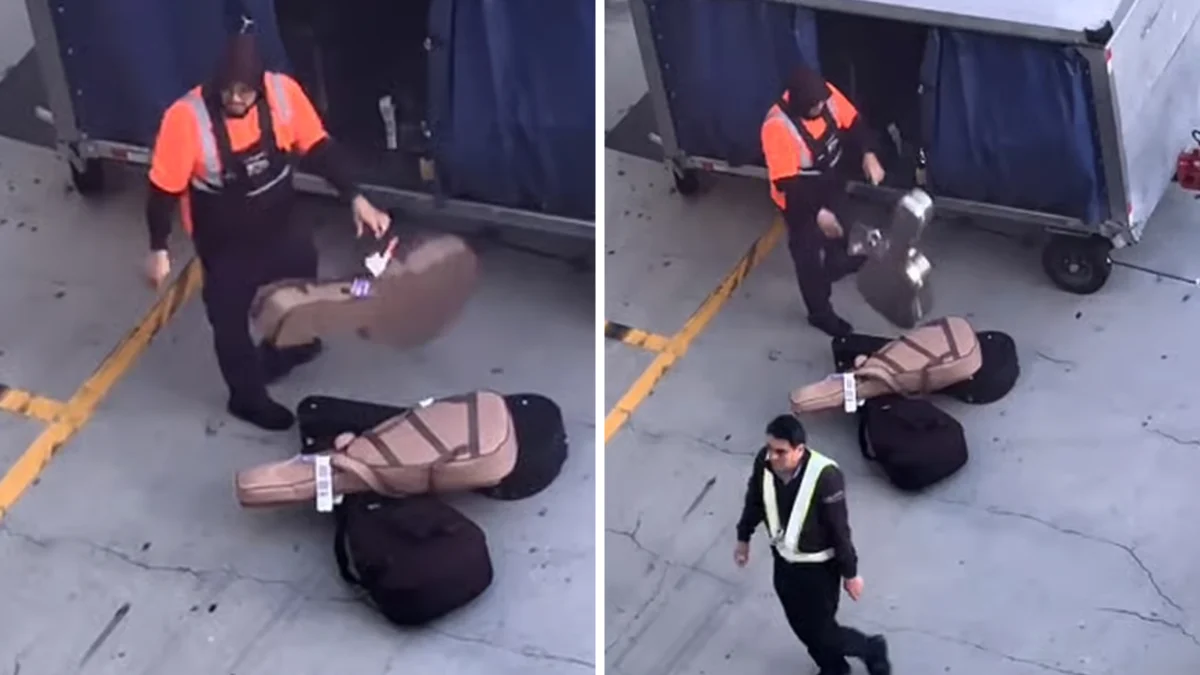
A shocking video captured on the tarmac of Los Angeles International Airport (LAX) depicting a baggage handler appearing to toss guitars with blatant disregard for their safety has rapidly gone viral, sparking widespread online discussion and reigniting long-standing concerns among musicians and air travelers about the care of valuable and fragile luggage. The incident, filmed by a passenger and subsequently shared on TikTok, has thrust the often-unseen realities of airline baggage handling into the harsh spotlight of public scrutiny, prompting calls for greater accountability, improved training, and more robust protections for passengers’ belongings.
The Incident Unfolds: A Student’s Lens on the Tarmac
The now-infamous footage was recorded on March 16 by Nick Ruiz, a 21-year-old college student returning home to New York from LAX. Ruiz, observing from his seat on a nearby flight, witnessed the scene unfold outside Terminal 4. He noted that the handler was working with luggage from a recently arrived JFK-to-LAX flight, which was the same Boeing 777 aircraft Ruiz was preparing to board for his return journey. "The whole situation felt wrong," Ruiz recounted to Jam Press, explaining his "instinct was to start filming" as he observed the handler’s actions. The video, posted to TikTok under the username @goyamariacookie with the caption, "I hope your guitars are okay," quickly amassed a staggering reach, accumulating more than 4.3 million views and attracting over 15.9K comments within days of its upload. The visual evidence, clear and unambiguous, showed hard-shell instrument cases being thrown onto a baggage cart with considerable force, bouncing off other luggage before coming to rest. For many, it was a visceral demonstration of carelessness that confirmed their worst fears about the treatment of checked baggage.
Chronology of a Digital Firestorm
The timeline of the incident’s journey from a passenger’s phone to a global viral phenomenon highlights the immediate and far-reaching impact of citizen journalism in the digital age.
- March 16: Nick Ruiz, a college student, films the baggage handler at LAX’s Terminal 4.
- Shortly After March 16: Ruiz uploads the video to TikTok under the handle @goyamariacookie.
- Days Following Upload: The video begins to gain traction, rapidly accumulating views and comments.
- Late March/Early April: The video achieves widespread viral status, surpassing 4 million views and generating thousands of comments across various social media platforms. News outlets begin to pick up the story, further amplifying its reach and igniting broader public discourse on airline baggage handling practices. The incident’s rapid ascent underscores the power of social media to quickly disseminate information and mobilize public opinion, turning a single observation into a global talking point.
A Lingering Concern: Musicians and Their Valued Instruments
This LAX incident is far from an isolated event; it taps into a deeply rooted and persistent anxiety for musicians who rely on air travel to transport their instruments. For artists, musical instruments are not merely tools; they are often extensions of their identity, repositories of sentimental value, and, critically, essential components of their livelihood. The financial investment in professional-grade instruments can range from thousands to tens of thousands, or even hundreds of thousands of dollars for rare or custom pieces. Beyond the monetary cost, the emotional attachment to an instrument honed over years, sometimes generations, makes its potential damage or loss particularly devastating.
The most famous precedent for such public outcry is the "United Breaks Guitars" saga from 2009. Canadian musician Dave Carroll’s guitar was damaged while traveling on United Airlines, and his subsequent year-long battle for compensation, met with corporate stonewalling, led him to compose and release a viral music video detailing his experience. The video became an overnight sensation, garnering millions of views and inflicting significant reputational damage on the airline. Carroll’s story became a rallying cry for musicians, illustrating the frustrating reality of navigating airline bureaucracy when valuable instruments are mishandled. The LAX video, while distinct in its specifics, immediately drew comparisons to Carroll’s experience, demonstrating that despite over a decade passing, the core issues of baggage handler accountability and airline responsibility remain largely unresolved.
The Complexities of Airport Operations: A Broader Perspective
To understand the context of such incidents, it’s crucial to acknowledge the immense operational complexities of airport baggage handling. Globally, billions of bags are processed annually. In 2022, despite significant improvements over previous decades, SITA’s Baggage IT Insights report indicated that mishandled baggage rates increased by 74.7% to 7.6 bags per thousand passengers globally, primarily due to staff shortages and increased flight volumes. While "mishandled" encompasses lost, delayed, or damaged bags, the sheer volume and rapid turnaround times place immense pressure on ground staff.
Ground handling operations involve a multitude of tasks performed under tight schedules, often in challenging weather conditions, and requiring coordination between numerous teams. Baggage handlers are tasked with sorting, loading, and unloading hundreds of bags per flight, frequently under significant time constraints to ensure on-time departures. The physical demands of the job are high, and the remuneration can often be relatively low, potentially contributing to high staff turnover and, in some cases, a lack of consistent training or motivation. However, industry standards, often guided by organizations like the International Air Transport Association (IATA), emphasize careful handling, particularly for fragile or special items. Airlines typically have specific protocols for oversized or delicate luggage, though the implementation and adherence to these protocols by individual ground staff can vary.
Navigating Airline Policies: Rules, Risks, and Recourse
For travelers, especially musicians, understanding airline policies regarding musical instruments is paramount. Policies typically differentiate between instruments that can be carried on board, those that require a purchased seat, and those that must be checked as baggage.
- Carry-On: Smaller instruments (e.g., violins, flutes, some guitars if within size limits) can often be carried into the cabin, provided they fit in the overhead bin or under the seat. This is almost universally recommended by musicians as the safest option.
- Purchased Seat: Larger instruments that do not fit in the overhead bin but are too fragile or valuable to check can sometimes be transported by purchasing an additional seat for them, often at full fare. This ensures the instrument remains in the cabin and is handled personally by the owner.
- Checked Baggage: Instruments that exceed carry-on dimensions or for which an additional seat is not purchased must be checked. This is where the risk significantly increases. Airlines typically require instruments to be in hard-shell cases designed for air travel, often referred to as "flight cases" or "airplane cases." As one commenter on Ruiz’s video rightly pointed out, airlines may refuse claims if the instrument was not housed in what they deem an appropriate protective case.
Airline liability for damaged checked baggage is also a critical consideration. Under the Montreal Convention, which governs international air travel, airlines’ liability for checked baggage is limited, typically to around $1,750 USD per passenger (though this can vary by currency exchange rates and specific national regulations). This amount often falls far short of the value of professional-grade musical instruments. Consequently, musicians are frequently advised to:
- Use robust flight cases: Specifically designed to withstand the rigors of baggage handling.
- Loosen string tension: To reduce stress on the instrument’s neck and bridge from temperature and pressure changes.
- Insure instruments: Purchase dedicated travel insurance or rider insurance for valuable items, as standard airline liability is often insufficient.
- Document condition: Take photos or videos of the instrument and its case before checking it in.
Public Outcry and Calls for Accountability
The online reaction to the LAX video was immediate and overwhelmingly negative, reflecting a collective frustration with perceived airline negligence. Comments poured in, expressing disbelief, anger, and empathy for potential instrument owners. "JUST DON’T WORK THERE IF YOU HATE THE JOB THAT MUCH!!! As a musician, this hurts my heart. Dreams and love are in those cases!" pleaded one user, encapsulating the emotional toll such incidents take. Another user highlighted the practical advice: "This is why you never use a soft case, and you always release string tension," underscoring the proactive measures musicians must take to mitigate risks. Many emphasized the importance of carrying instruments onboard whenever possible, with one commenter noting, "This is why I always bring my guitar on the plane. ykw I’m going to save this video too just to make sure if I’m ever questioned I’ll have some evidence." The sentiment that the video served as crucial evidence for potential victims was widely shared, with one remarking, "I’m so happy you got this footage because whoever those guitars are need this footage." The incident also brought to light tragic personal stories, like one user sharing, "Travel from the Philippines to the U.S. my dad had passed away so I took his guitar with me. Never saw it again after that," illustrating the profound and irreplaceable losses that can occur.
Inferred Industry Response and Standards
While the specific airline and employer of the baggage handler were not identified in the initial reports, the typical response to such a high-profile viral incident would likely involve an immediate internal investigation. An airline spokesperson, if pressed, might issue a statement along these lines: "We are aware of the video circulating online and are taking this matter very seriously. We are conducting a thorough internal investigation to identify the individuals involved and understand the full circumstances of the situation. Our ground handling partners are expected to adhere to the highest standards of professionalism and care for all passenger baggage, particularly fragile and valuable items. We are committed to ensuring that all our staff and contracted personnel receive appropriate training and uphold these standards. We sincerely regret any distress this video may have caused our passengers."
Beyond individual airline responses, the incident could prompt broader discussions within the aviation industry. Industry associations like IATA consistently advocate for best practices in baggage handling, including specific guidelines for special items. However, the consistent application of these standards across diverse airport environments and among various ground handling companies remains a challenge. The viral nature of such videos serves as a powerful, albeit reactive, mechanism for external oversight, forcing airlines and their contractors to re-evaluate their training protocols, supervision, and disciplinary actions for staff found to be in violation of established procedures.
Beyond the Screen: Implications for Airlines and Travelers
The implications of the LAX guitar tossing video extend far beyond the immediate incident. For airlines, such viral content poses a significant reputational risk. In an increasingly competitive industry, passenger trust is paramount. Videos depicting careless handling can erode confidence, deter future bookings, and lead to negative public perception that is difficult to reverse. The financial implications can include increased claims for damaged goods, potential legal challenges, and the broader cost of brand rehabilitation.
For travelers, particularly those with valuable or sentimental items, the video serves as a stark reminder of the inherent risks associated with checking baggage. It reinforces the need for proactive measures: meticulous packing, comprehensive insurance, and a thorough understanding of airline policies. It also underscores the importance of exercising the option to carry on instruments or purchase an extra seat whenever feasible, even if it entails additional cost. The incident could also fuel further advocacy from musicians’ organizations and consumer rights groups, pushing for clearer airline policies, more transparent handling procedures, and stronger liability protections for passengers.
Empowering Travelers: Strategies for Protecting Valuables
In light of recurring incidents like the LAX guitar tossing, travelers, especially musicians, can adopt several strategies to safeguard their valuable possessions:
- Research Airline Policies Thoroughly: Before booking, understand each airline’s specific rules for musical instruments, including size and weight restrictions for carry-on and checked baggage, and requirements for protective cases.
- Invest in Professional Flight Cases: These are designed to absorb impact and protect contents, often featuring robust latches, padding, and sometimes even climate control.
- Document Everything: Take clear photos and videos of your instrument and its case from multiple angles, both inside and out, immediately before checking it. This provides crucial evidence in case of damage.
- Consider Specialty Insurance: Standard airline liability is often insufficient. Invest in a dedicated musical instrument insurance policy or a travel insurance rider that covers high-value items specifically for damage or loss during transit.
- Loosen Strings: For stringed instruments, slightly detuning the strings can reduce tension on the neck and bridge, minimizing the risk of stress fractures due due to changes in temperature and air pressure in the cargo hold.
- Label Clearly: Affix "Fragile" and "Handle With Care" labels, though their effectiveness can vary. Ensure your contact information is clearly visible both inside and outside the case.
- Arrive Early: Allow ample time for check-in, especially for oversized or special items, to avoid rushed handling.
- Be Assertive, But Polite: If you observe mishandling or have concerns, politely but firmly address them with airline staff.
The New Era of Transparency: Citizen Journalism’s Role
The LAX guitar incident also highlights the transformative role of citizen journalism in today’s digital landscape. With virtually everyone carrying a camera-equipped smartphone, ordinary passengers have become inadvertent watchdogs, capable of documenting and instantly sharing incidents that might otherwise remain unseen or unaddressed. This unprecedented level of transparency places industries, particularly those with significant public interaction like aviation, under constant scrutiny. While it can lead to public shaming, it also serves as a powerful catalyst for change, compelling organizations to review practices, reinforce training, and enhance accountability. Nick Ruiz’s decision to film, driven by an instinct that "the whole situation felt wrong," exemplifies how individual action can contribute to broader public awareness and demand for improved standards.
Conclusion: A Catalyst for Change?
The viral video from LAX is more than just a fleeting moment of internet outrage; it is a potent symbol of the ongoing tension between the logistical demands of modern air travel and the fundamental expectation of care for passengers’ belongings. It serves as a stark reminder of the vulnerabilities faced by musicians and other travelers with fragile or valuable items, compelling them to adopt increasingly diligent measures to protect their possessions. While the immediate consequences for the baggage handler remain to be seen, the incident undoubtedly adds pressure on airlines and their ground handling partners to re-evaluate their training, supervision, and commitment to careful baggage handling. Ultimately, this episode, echoing previous viral moments, underscores that in an era of ubiquitous cameras and instant global communication, transparency and accountability are no longer optional but essential for maintaining public trust in the skies.