Galang Taruna
In an unprecedented move for the mobile chip giant, Qualcomm has officially introduced two distinct flagship System-on-Chips (SoCs) designed to power the most advanced smartphones of 2027. Succeeding last year’s Snapdragon 8 Elite Gen 5, the new lineup features the Snapdragon 8 Elite Gen 6, which can be considered the "classic" high-end offering, and the more powerful Snapdragon 8 Elite Extreme Gen 6. This strategic bifurcation marks a significant shift in Qualcomm’s approach to the ultra-premium mobile segment, aiming to provide device manufacturers with greater flexibility for product differentiation. However, the initial presentation of these two chips has been met with some confusion, owing to strikingly similar branding and intertwined technical documentation, necessitating a detailed breakdown of their subtle yet crucial differences.
A New Era for Qualcomm’s Mobile Strategy
Historically, Qualcomm has adhered to a relatively straightforward annual release cycle, introducing a single flagship Snapdragon 8-series chip that would define the pinnacle of Android smartphone performance for the coming year. This long-standing tradition positioned the company as the undisputed leader in high-end Android silicon, with each generation pushing the boundaries of mobile computing, graphics, and connectivity. The decision to launch two distinct flagship chips—the Snapdragon 8 Elite Gen 6 (code SM8950) and the Snapdragon 8 Elite Extreme Gen 6 (code SM8975)—represents a calculated evolution of this strategy. This move is likely influenced by an increasingly competitive landscape, where rivals like Apple consistently differentiate their "Pro" models with more powerful chip variants, and MediaTek continues to make inroads into the premium segment. By offering an "Extreme" tier, Qualcomm can cater to the burgeoning demand for ultra-premium devices that push performance envelopes even further, allowing Android OEMs to create clearer hierarchical distinctions within their top-tier offerings.
The unveiling took place at Qualcomm’s annual Snapdragon Summit in Hawaii, a key industry event where the company traditionally showcases its latest innovations. Despite the excitement surrounding the new chips, Qualcomm’s communication around the dual launch proved somewhat convoluted. Technical slides and documentation occasionally blurred the lines between the capabilities of the two variants, listing features as common when they were, in fact, exclusive to the Extreme version, or obscuring critical differentiators until deep within the presentation materials. This lack of immediate clarity underscores the importance for consumers and manufacturers alike to delve into the precise specifications of each chip.
Branding and Physical Distinction: More Than Just a Logo
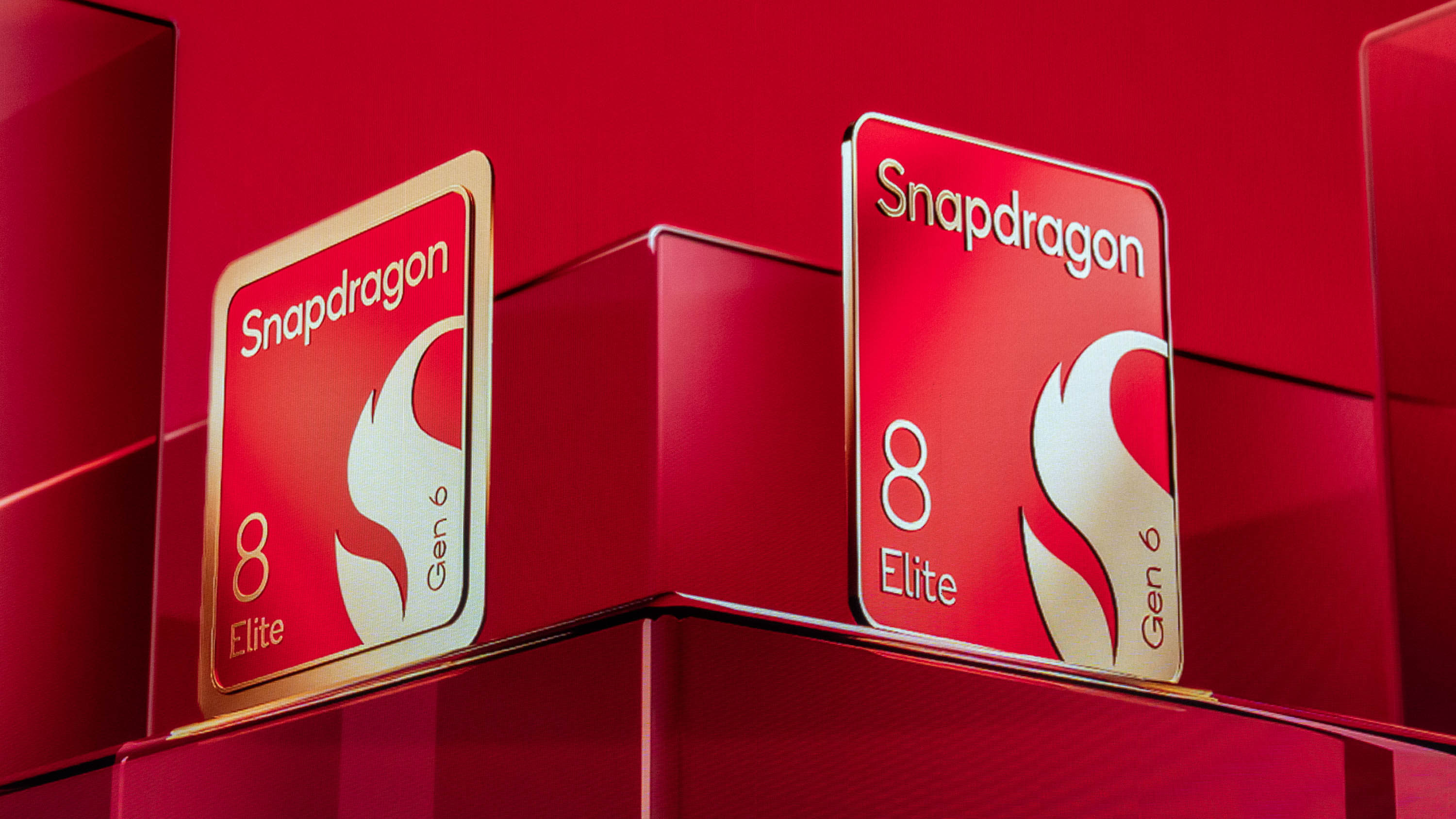
The initial confusion begins at the most superficial level: the logos. For its first dual flagship launch, Qualcomm opted for an almost identical visual identity for both chips. The sole discernible difference lies in the outer golden frame of the logo: the Extreme version features a noticeably thicker border. This minimalist approach to visual differentiation stands in stark contrast to the significant performance disparities between the two chips, making it challenging for quick identification, especially when scaled down to the size typically found on smartphone packaging. This design choice has been met with some critique, with industry observers suggesting it was either an overly cautious design decision or a missed opportunity for clearer branding.
Beyond the branding, a common misconception might be that the "Extreme" version is merely a binned, higher-performing variant of the "classic" Gen 6, derived from the same silicon wafer. Qualcomm has explicitly clarified that this is not the case. Both the Snapdragon 8 Elite Gen 6 and the Snapdragon 8 Elite Extreme Gen 6 are built from entirely different dies. "It’s indeed two different chips, both from the silicon perspective and the package integration perspective," explained Qualcomm representatives at the Snapdragon Summit. This means two distinct development pathways were pursued, even if they leverage common intellectual property (IP) blocks. While this dual-development approach is inherently more expensive during the R&D phase, it allows Qualcomm to tailor each chip precisely to its target performance profile, potentially leading to optimized manufacturing yields for each specific design.

CPU Architecture: Power Through Intelligent Packaging
At their core, both Snapdragon 8 Elite Gen 6 chips share an identical CPU architecture. They feature two high-performance Oryon Prime cores, designed by the acclaimed Gerard Williams (known for his work at Apple and subsequently Nuvia, which Qualcomm acquired), capable of reaching an impressive 5 GHz. These are complemented by six Performance cores, clocking in at up to 4 GHz. The entire CPU complex is supported by a substantial 16 MB of "Oryon Flex Cache." Both chips also promise an identical 37% improvement in energy efficiency compared to the Snapdragon 8 Elite Gen 5.
However, the performance gains differ. The Extreme variant boasts a 13% increase in raw CPU performance over the Gen 5, while the classic Gen 6 offers a still respectable 10% uplift. This disparity, despite identical core counts and frequencies, stems from a critical innovation exclusive to the Extreme version: the "Offset Package-on-Package" (Offset PoP) construction. In traditional mobile SoCs, the RAM modules are typically stacked directly on top of the processor die. The Offset PoP technique physically displaces the RAM slightly to the side of the main chip. This ingenious re-arrangement significantly improves heat dissipation from the processor, allowing the CPU to sustain its peak frequencies for twice as long as a conventional design. Qualcomm further states that this enhanced thermal management not only prevents throttling but also contributes to up to 10% energy savings by operating the chip more efficiently.
Exclusive Extreme: Offset PoP for sustained performance and 10% energy savings.

GPU Prowess: Gaming and Visuals Redefined with AI
The graphical processing units (GPUs) within both chips are built upon Qualcomm’s latest Adreno architecture, sharing the same operating frequency of 1.45 GHz, the same three-slice compute organization, and an integrated 18 MB of on-die memory. Yet, here again, the performance metrics diverge significantly from the previous generation. The Extreme variant delivers a remarkable 44% increase in GPU performance compared to the Snapdragon 8 Elite Gen 5, whereas the classic Gen 6 achieves a 35% improvement. Both versions share an identical 40% gain in energy efficiency.
The Extreme’s superior graphical capabilities are attributed to two key factors. Firstly, its 18 MB integrated memory block is comprised of High Performance Memory (HPM), the same advanced memory type found in Qualcomm’s desktop-class Snapdragon X2 Elite PC chip (which features 21 MB of HPM). This high-bandwidth, low-latency memory significantly boosts the GPU’s access speeds. Secondly, the Extreme GPU incorporates additional matrix cores, which are absent in the classic Gen 6. These dedicated hardware accelerators are crucial for artificial intelligence (AI) and machine learning workloads.
The synergy of HPM and matrix cores enables a groundbreaking feature exclusive to the Extreme: "Adreno Neural Fusion." This technology operates on principles similar to Nvidia’s DLSS (Deep Learning Super Sampling) in PC gaming. It allows games to be rendered at a lower internal resolution, with the matrix cores then intelligently upscaling the image and generating additional frames to significantly boost the frames per second (FPS). Crucially, this process also reduces power consumption, with Qualcomm demonstrating up to a 40% reduction during internal benchmarks. This innovation promises not only smoother, more immersive gaming experiences but also extended battery life for graphically intensive applications.

Exclusive Extreme: HPM, additional matrix cores, and Adreno Neural Fusion.
NPU Capabilities: Advancing On-Device AI
Both Neural Processing Units (NPUs) share the same core IP and organizational structure, featuring 12 scalar units, 8 vectorial units, and a single tensor unit. They also integrate a new accelerator, poetically named "Hexagon Element," specifically designed to accelerate AI agents and handle complex contextual understanding up to 32,000 tokens.
However, the performance gap in AI processing is substantial. The Extreme NPU boasts a 35% increase in raw performance and 33% better performance per watt compared to the previous generation. In contrast, the classic Gen 6 offers a 14% raw performance boost and a 20% improvement in performance per watt. This significant divergence is primarily due to the Extreme’s enhanced memory access. The Snapdragon 8 Elite Extreme Gen 6 benefits from a 50% wider window for accessing the shared memory of the SoC. This expanded bandwidth is critical for handling larger and more complex AI models. As a result, the Extreme is the only one of the two chips capable of locally executing advanced "Mixture of Experts" (MoE) AI models, supporting up to 30 billion parameters. This capability is vital for next-generation on-device AI applications, enabling more sophisticated and responsive AI functionalities without relying on cloud processing.

Exclusive Extreme: Wider memory access for Mixture of Experts (MoE) AI models up to 30 billion parameters.
ISP and Imaging: Professional-Grade Video and Future-Proofing
The Spectra imaging signal processors (ISPs) in both chips share the same fundamental structure: three independent ISPs capable of simultaneously managing three camera modules. In terms of pure image quality for both photos and videos, the two Spectra units are functionally equivalent. The key differences emerge in raw processing power and advanced functionalities.
The Extreme version’s ISP has been significantly boosted in frequency, effectively doubling its video processing capabilities. This translates into a substantial leap in video recording formats: the classic Snapdragon 8 Elite Gen 6 supports 8K30p/4K120p, while the Extreme version pushes this to 8K60p/4K240p. The 4K240p capability is particularly impressive, allowing for stunning 8x slow-motion video at 4K30p. Judd Heape, Qualcomm’s Vice President of Product Management for Camera, Computer Vision, Video, and Audio, and a key architect of the Spectra ISPs, explained the rationale: "The progress sought by manufacturers was primarily 4K240p for slow-motion. But since this corresponds to 8K60p in terms of pixels to calculate (2 billion per second), we also activated the 8K60p function."

Adding to its advanced video capabilities, the Extreme variant exclusively integrates the APV codec. Developed by Samsung as a competitor to Apple’s ProRes, the APV codec offers professional-grade video recording, providing greater flexibility for post-production. Notably, this represents a regression for the classic Gen 6, as the previous Snapdragon 8 Elite Gen 5 already supported this codec. Heape justified this decision by stating that "this kind of functionality is primarily sought after by video professionals."
Furthermore, the Extreme version is the sole chip capable of decoding the new VVC (Versatile Video Coding), also known as H.266, codec via its multimedia engine (which is implemented within the GPU, not the ISP). While H.266/VVC is not yet widely adopted, it aims to replace the current H.265/HEVC codec used by streaming services like Netflix and Disney+. This inclusion ensures the Extreme variant is future-proofed for next-generation video content.
Exclusive Extreme: 8K60p, 4K240p video capture, APV codec support, and VVC (H.266) decoding.
Market Impact and OEM Adoption

The immediate impact of Qualcomm’s dual-chip strategy was demonstrated by Xiaomi, which unveiled its 18 Pro and 18 Pro Max smartphones in China shortly after Qualcomm’s announcement. The Xiaomi 18 Pro features the classic Snapdragon 8 Elite Gen 6, while the 18 Pro Max incorporates the more powerful Extreme version. Priced at 5,999 yuan (approximately €720) and 6,999 yuan (approximately €840) respectively for the 12GB RAM + 256GB storage configurations, these devices exemplify how OEMs can now create distinct performance tiers within their ultra-premium lineups. Xiaomi has indicated plans for an international launch by the end of the year, bringing these advanced capabilities to a global audience.
Beyond Xiaomi, Qualcomm has confirmed that a host of other prominent Android manufacturers are poised to adopt one or both of these new chips. This extensive list includes Honor, iQOO, Motorola, OnePlus, Oppo, Redmi, RedMagic, and Vivo. This broad adoption signals a strong industry endorsement of Qualcomm’s bifurcated strategy, enabling a wider array of premium devices tailored to different market segments and consumer demands. For consumers, this means a more nuanced choice within the high-end smartphone market. It will be crucial to look beyond the generic "Snapdragon 8 Elite Gen 6" branding and scrutinize the detailed technical specifications of each smartphone to ascertain whether it houses the classic or the Extreme variant, as the subtle logo difference will certainly not suffice.
The introduction of the Snapdragon 8 Elite Extreme Gen 6 marks a significant evolution in Qualcomm’s mobile platform offerings. By providing a truly differentiated "Extreme" tier, Qualcomm is not only pushing the boundaries of mobile performance but also empowering its OEM partners with unprecedented flexibility in product segmentation. This strategic shift could redefine the competitive landscape of the ultra-premium smartphone market for years to come, making detailed specification analysis more important than ever for discerning consumers.