Lina Irawan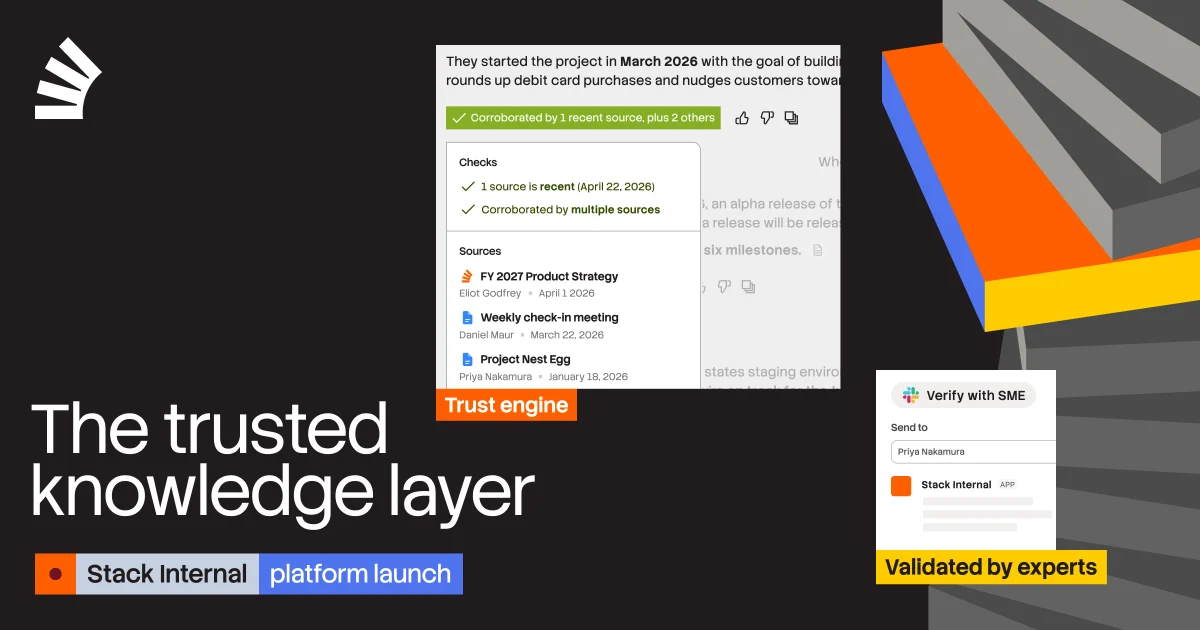
The landscape of enterprise knowledge management is undergoing a fundamental shift as Stack Overflow officially announces the launch of Stack Internal, a platform designed to transform fragmented organizational data into what the company terms "decision-grade knowledge." This move comes at a critical juncture for the technology sector, where the rapid adoption of generative artificial intelligence (AI) has highlighted a persistent gap between the ability to retrieve information and the ability to verify its accuracy for high-stakes business decisions. As organizations increasingly rely on Large Language Models (LLMs) to navigate internal documentation, the challenge has shifted from finding information to resolving contradictions between legacy documents, real-time support threads, and the tacit knowledge held by subject matter experts.
The Problem of Fragmented Enterprise Intelligence
In a typical modern organization, knowledge is rarely centralized in a single, authoritative source. Instead, it exists in a state of constant flux across multiple silos. When a customer poses a complex technical question regarding product functionality or data handling, a support representative might encounter three distinct versions of the truth: an official enablement page that describes original functionality, a recent Slack thread mentioning a temporary limitation, and an engineer’s internal notes regarding specific configuration requirements.
While traditional enterprise search tools and modern AI-driven Retrieval-Augmented Generation (RAG) systems can identify these three sources within seconds, they frequently fail to provide a definitive answer. The resulting "knowledge fatigue" forces employees to manually cross-reference sources, schedule meetings for clarification, and seek out colleagues for confirmation—a process that negates the efficiency gains promised by AI. According to industry data from McKinsey & Company, knowledge workers still spend approximately 20% of their work week searching for and gathering information. Stack Internal aims to reduce this overhead by creating a shared layer where human expertise and AI retrieval intersect to produce verified, actionable intelligence.
Chronology of the Knowledge Management Evolution
The launch of Stack Internal represents the latest chapter in a multi-decade evolution of how technical communities and corporations manage information.
- 2008–2017: The Era of Public Crowdsourcing. Stack Overflow established a global standard for community-vetted technical knowledge, utilizing voting, reputation systems, and iterative editing to ensure the best answers rose to the top.
- 2017–2023: The Rise of Stack Overflow for Teams. Recognizing that 80% of a developer’s knowledge needs are internal to their company, Stack Overflow launched a private version of its platform. This allowed organizations to apply the same "Q&A" mechanics to proprietary codebases and internal policies.
- 2023–Early 2024: The AI Disruption. The explosion of generative AI led to the development of OverflowAPI and integrations with AI models. However, organizations quickly discovered that AI models trained on stale or conflicting internal data produced "hallucinations" or unreliable guidance.
- September 2024: The Transition to Stack Internal. Stack Overflow rebrands and expands its internal platform. The focus shifts from a simple Q&A repository to a "knowledge engine" that connects to various data sources (GitHub, Confluence, Slack) and uses the Model Context Protocol (MCP) to serve as a verified knowledge layer for AI agents and human users alike.
Defining Decision-Grade Knowledge
The core philosophy behind Stack Internal is the pursuit of "decision-grade knowledge." Stack Overflow defines this as information that meets five specific criteria necessary for business-critical reliance:
- Evidence: The answer must be backed by traceable citations from primary sources.
- Context: The information must specify the conditions under which it applies (e.g., specific software versions or customer configurations).
- Ownership: There must be a clear record of which subject matter expert or department validated the information.
- Correctability: A mechanism must exist for users to update or flag information as it becomes stale.
- Persistence: The resolution of a conflict must be recorded so that future inquiries do not require a repeat of the investigation.
By prioritizing these elements, Stack Internal seeks to move beyond "trust scores," which provide a mathematical probability of accuracy, and toward a system of "accountable knowledge," where the judgment of people who understand the work remains the final authority.
Technical Infrastructure and the Model Context Protocol (MCP)
Stack Internal is built to be "interface agnostic," meaning the verified knowledge it contains can be accessed through multiple channels. A key technical highlight of this launch is the integration of the Model Context Protocol (MCP). MCP is an open standard that allows AI models to more easily connect to external data sources and tools. By adopting this protocol, Stack Internal ensures that when an AI agent (such as an internal chatbot or a coding assistant) retrieves information, it isn’t just pulling raw text; it is pulling "validated context."
The platform also offers a robust API, allowing enterprises to bake Stack Internal’s verified knowledge into their own custom applications. This ensures consistency: whether a customer asks a question via a public-facing chatbot or an internal sales representative uses a specialized dashboard, the underlying answer remains the same. This consistency is vital for maintaining brand trust and operational compliance, particularly in regulated industries like finance and healthcare.
The Role of the Subject Matter Expert (SME)
One of the primary challenges in knowledge management is "expert burnout." If engineers and product managers are required to review every response generated by an AI, the system creates a new bottleneck. Stack Internal addresses this by implementing an "intentional" validation workflow.
Instead of constant manual oversight, the system uses AI to identify gaps and conflicts. When the AI detects that two sources disagree or that a previously verified answer is being challenged by new data in a chat thread, it triggers a request for human intervention. This ensures that experts only spend time on consequential questions where their judgment is strictly necessary. Furthermore, once an expert resolves a conflict, that resolution is stored as a new "gold standard" answer, preventing the same question from being escalated again in the future.
Supporting Data on Knowledge Management Trends
The launch of Stack Internal aligns with broader market trends indicating a shift toward "Human-in-the-loop" (HITL) AI systems. A 2024 report by Gartner suggests that by 2026, 75% of organizations will prioritize "AI Transparency and Trust" as a core procurement requirement. Furthermore, data from International Data Corporation (IDC) indicates that "knowledge silos" cost large enterprises an average of $31.5 billion per year in lost productivity and duplicated efforts.
Stack Overflow’s internal research mirrors these findings. In surveys of their developer community, a significant majority of respondents indicated that while they use AI tools daily, they remain skeptical of AI-generated documentation that lacks a clear "path to source" or human verification. Stack Internal is positioned as the bridge that provides this missing link.
Broader Impact and Industry Implications
The implications of Stack Internal extend beyond simple productivity gains. By creating a system where "hard-won answers" do not disappear into ephemeral chat threads or forgotten meetings, organizations can build a more resilient corporate memory. This is particularly valuable during periods of high employee turnover or organizational restructuring, where the loss of "institutional knowledge" often results in costly operational setbacks.
Moreover, the shift toward "correctable knowledge" represents a departure from the static nature of traditional wikis. In a static system, documentation is often out of date the moment it is published. In the Stack Internal model, knowledge is treated as a living asset that is refined through use. Every time a user corrects an AI-generated summary or adds a specific configuration detail to an existing answer, the entire organization’s "IQ" increases.
Future Outlook: Proactive Knowledge Surfacing
Looking ahead, the roadmap for Stack Internal suggests a move toward proactive intelligence. Rather than waiting for a user to ask a question, the system aims to surface relevant decisions or unresolved conflicts before they impact a project. For instance, if an engineer begins working on a module that has recently undergone a major configuration change, Stack Internal could potentially surface the relevant "decision-grade" documentation automatically.
As organizations continue to integrate AI into their core workflows, the demand for platforms that can manage the "human side" of the data equation is expected to grow. Stack Overflow’s transition from a community website to an enterprise knowledge infrastructure provider marks a significant evolution in the company’s 16-year history, positioning it as a foundational player in the next generation of AI-enabled business operations.
By focusing on the point where an organization must decide what it knows and who can use that information, Stack Internal provides a framework for responsible, scalable, and authoritative knowledge management in the age of artificial intelligence.