Sisilia Frederika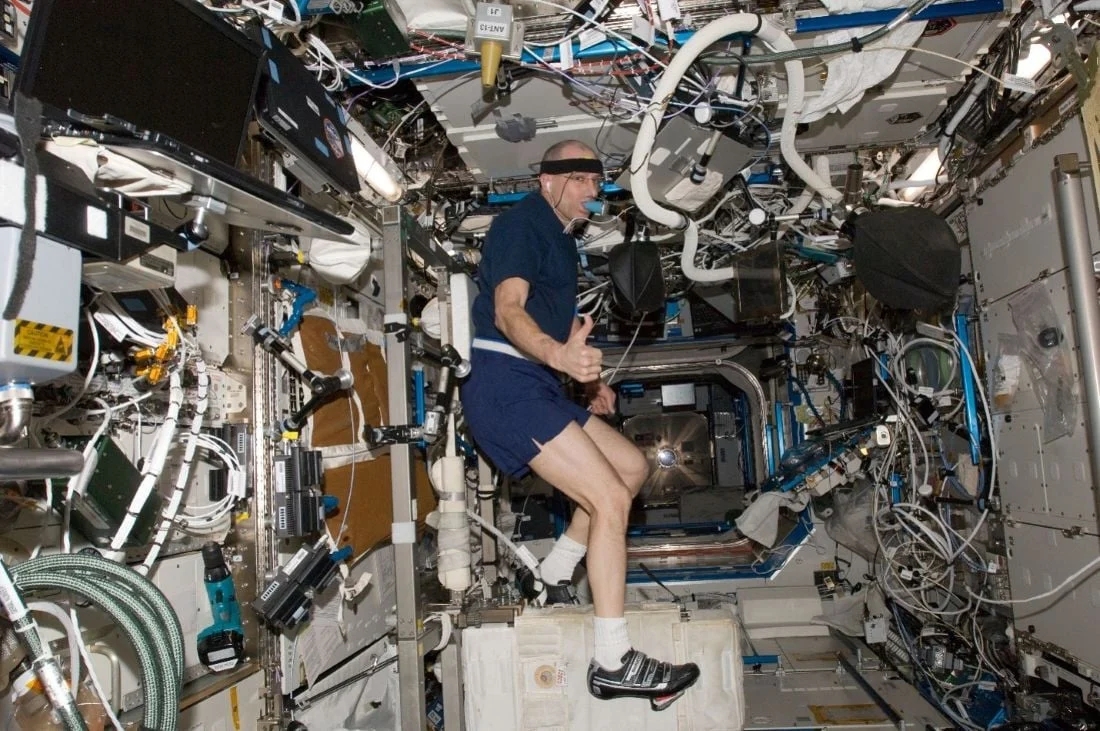
A seminal study published in the journal Circulation has provided a significant boost to the feasibility of crewed missions to Mars, revealing that rigorous exercise protocols can effectively mitigate the cardiovascular degradation typically associated with long-duration spaceflight. The research, co-led by Dr. Benjamin Levine, a professor of internal medicine at UT Southwestern Medical Center and Director of the Institute for Exercise and Environmental Medicine at Texas Health Presbyterian Hospital Dallas, suggests that the human heart is resilient enough to withstand the six-to-nine-month journey to the Red Planet. This finding addresses one of the primary medical hurdles cited by NASA and other international space agencies regarding the health and operational readiness of astronauts upon arrival in a foreign gravity environment.
For decades, the aerospace medical community has expressed concern that the prolonged absence of gravity would lead to irreversible cardiac atrophy, potentially leaving astronauts unable to stand or perform basic tasks once they land on Mars. However, the new data, derived from a longitudinal study of astronauts aboard the International Space Station (ISS), indicates that while the heart does undergo structural changes in microgravity, these changes are manageable and reversible through a dedicated physical training regimen.
The Physiological Challenge of Weightlessness
On Earth, the cardiovascular system is constantly working against gravity to pump blood from the lower extremities back to the heart and upward to the brain. In the microgravity environment of space, this gravitational "load" is removed. Consequently, bodily fluids undergo a cephalad shift, migrating from the legs toward the torso and head. This phenomenon, often referred to as "puffy face-bird legs" syndrome, creates a perception within the body of fluid overload.
In response to this perceived excess, the body reduces its overall blood volume. With less blood to pump and no gravitational resistance to overcome, the heart muscle begins to adapt to this lower-demand environment. Over months of inactivity or insufficient exercise, the heart undergoes "remodeling"—a process where the muscle mass decreases and the chambers, particularly the left ventricle, shrink in size.
The primary risk associated with this atrophy is orthostatic intolerance. This condition occurs when an individual returns to a gravitational field; the heart is no longer strong enough to pump blood effectively against gravity, leading to a sudden drop in blood pressure, reduced oxygen delivery to the brain, and fainting. For an astronaut landing on Mars, where gravity is approximately 38% of Earth’s, the fear was that even this partial gravity would be enough to cause collapse, rendering the crew unable to execute mission-critical maneuvers or emergency egress.
Methodology: Monitoring the Heart in Real-Time
To investigate the extent of these changes, Dr. Levine and his team conducted an exploratory longitudinal observational study involving 13 astronauts—nine men and four women—who spent at least six months aboard the ISS. Unlike previous studies that relied heavily on pre-flight and post-flight data, this research utilized in-flight monitoring to capture the heart’s adaptation as it happened.
The astronauts were trained to perform specialized echocardiography ultrasound examinations on themselves while in orbit. These scans allowed researchers to track cardiac volume, stroke volume (the amount of blood pumped with each beat), and the strain on the heart muscle at specific intervals: 14 days, 30 days, 75 days, 135 days, and approximately 15 days prior to their return to Earth.
Throughout their missions, the participants adhered to a rigorous daily exercise schedule. This protocol typically involved two hours of high-intensity training, utilizing the Advanced Resistive Exercise Device (ARED) for strength training and the T2 Treadmill or the Cycle Ergometer with Vibration Isolation and Stabilization System (CEVIS) for cardiovascular health. This regimen was designed to simulate the mechanical load the heart and musculoskeletal system experience under Earth’s gravity.
Findings: Adaptation, Recovery, and Resilience
The study’s findings revealed a distinct chronological pattern of cardiac adaptation. During the initial 14 to 30 days of spaceflight, researchers observed a notable decrease in the volume of the heart’s chambers and a reduction in the mass of the left ventricle. This initial "shrinking" was attributed to the rapid loss of blood volume as the body adjusted to microgravity and a period of relative "deconditioning" as astronauts acclimated to their new environment and mission responsibilities.
However, as the astronauts settled into their consistent, high-intensity exercise routines, the rate of atrophy plateaued and, in many cases, began to reverse. By the end of the six-month missions, the cardiac function of the participants had largely stabilized.
To determine if these hearts could handle Martian gravity, the researchers employed a "tilt-table" simulation on Earth. By placing subjects at a 22-degree head-up tilt, they could simulate the hydrostatic pressure gradients experienced in 0.38g (Martian gravity). The results were conclusive: the hearts of the astronauts, maintained by the ISS exercise protocol, were more than capable of sustaining adequate blood pressure and circulation in a Martian gravitational field. In fact, most were capable of maintaining stability in Earth’s full gravity (1g) shortly after their return, which is a much more strenuous requirement.
Historical Context and the Evolution of Space Medicine
The concern over heart health in space is as old as the space program itself. During the Apollo era, missions were relatively short, but by the time of the Skylab missions in the 1970s and the Soviet Union’s Salyut and Mir stations, the effects of long-duration flight became apparent. Early cosmonauts often returned to Earth in a state of extreme physical frailty, requiring weeks of rehabilitation to stand unaided.
In the 1990s and early 2000s, research focused heavily on bone density loss and muscle wasting. It was only with the advent of more sophisticated imaging and the permanent occupation of the ISS that the nuances of cardiac remodeling became a focal point. Dr. Levine’s previous research had even compared the heart of an elite endurance swimmer to that of an astronaut, finding that both underwent remodeling due to the removal of gravity’s constant pull (though in the swimmer’s case, it was due to horizontal positioning in water).
This latest study represents a shift from identifying the problem to validating the solution. It confirms that the current "countermeasure" philosophy—using exercise as a primary medical intervention—is sufficient to protect the heart for the duration of a Mars transit.
Broader Implications for the "Journey to Mars"
NASA’s "Moon to Mars" architecture relies on the successful management of five primary hazards of human spaceflight: radiation, isolation and confinement, distance from Earth, gravity fields, and hostile/closed environments. While the Circulation study provides a "green light" for the cardiac aspect of gravity fields, it does not minimize the other risks.
- Radiation Exposure: Beyond the Earth’s protective magnetosphere, astronauts will be exposed to galactic cosmic rays and solar particle events. This radiation can damage vascular endothelium and potentially accelerate coronary artery disease, a factor that exercise alone may not mitigate.
- Spaceflight-Associated Neuro-ocular Syndrome (SANS): Many astronauts experience changes in vision and eye structure due to fluid pressure in the skull. While cardiac exercise helps regulate overall fluid balance, it has not yet been proven to eliminate the risk of SANS.
- Bone and Muscle Health: While the heart is a muscle that responds to the "load" of exercise, bone mineral density loss remains a concern for missions exceeding a year, as the rate of loss in space is significantly higher than on Earth.
The success of the exercise regimen also raises logistical questions for mission planners. The current ARED and treadmill systems on the ISS are bulky and heavy. For a Mars-bound spacecraft like the Orion or a future Deep Space Transport, engineers must design smaller, more efficient exercise equipment that provides the same level of resistance without adding excessive mass to the vehicle.
Expert Reactions and Future Research
The medical community has greeted the study with cautious optimism. Dr. Levine noted in a statement that the heart is "remarkably plastic" and responds well to the demands placed upon it. The study reinforces the idea that the "human machine" can be maintained through engineering and discipline.
NASA’s Human Research Program (HRP) is expected to use this data to refine the Exercise Countermeasures Project. Future research will likely look at whether pharmacological interventions could supplement exercise, or if "artificial gravity" (via short-radius centrifuges) might be a more efficient way to maintain whole-body health during the long transit to Mars.
Furthermore, the study highlights the importance of individualized medicine. While the 13 astronauts in this study responded well, the variance between male and female physiological responses—and individual genetic predispositions—remains an area for further investigation. As NASA prepares for the Artemis missions, which will see the first woman and first person of color land on the Moon, understanding these demographic nuances will be critical.
Conclusion
The path to Mars is fraught with technical and biological obstacles, but the "fainting astronaut" may no longer be the primary concern for mission architects. By proving that the heart can remain robust through the use of existing exercise science, Dr. Levine and his colleagues have removed a significant "redline" from the flight manifest.
As long as future explorers are willing to commit to the grueling two-hour daily workouts required in the silence of deep space, their hearts should be ready to pump the first breaths of Martian air—or rather, the recycled oxygen of their suits—as they step onto the dusty surface of the fourth planet. The focus now shifts to the remaining hurdles of radiation and long-term sensory-motor adaptation, but for the cardiovascular system, the prognosis for a Mars landing is healthier than ever before.