Evan Lee Salim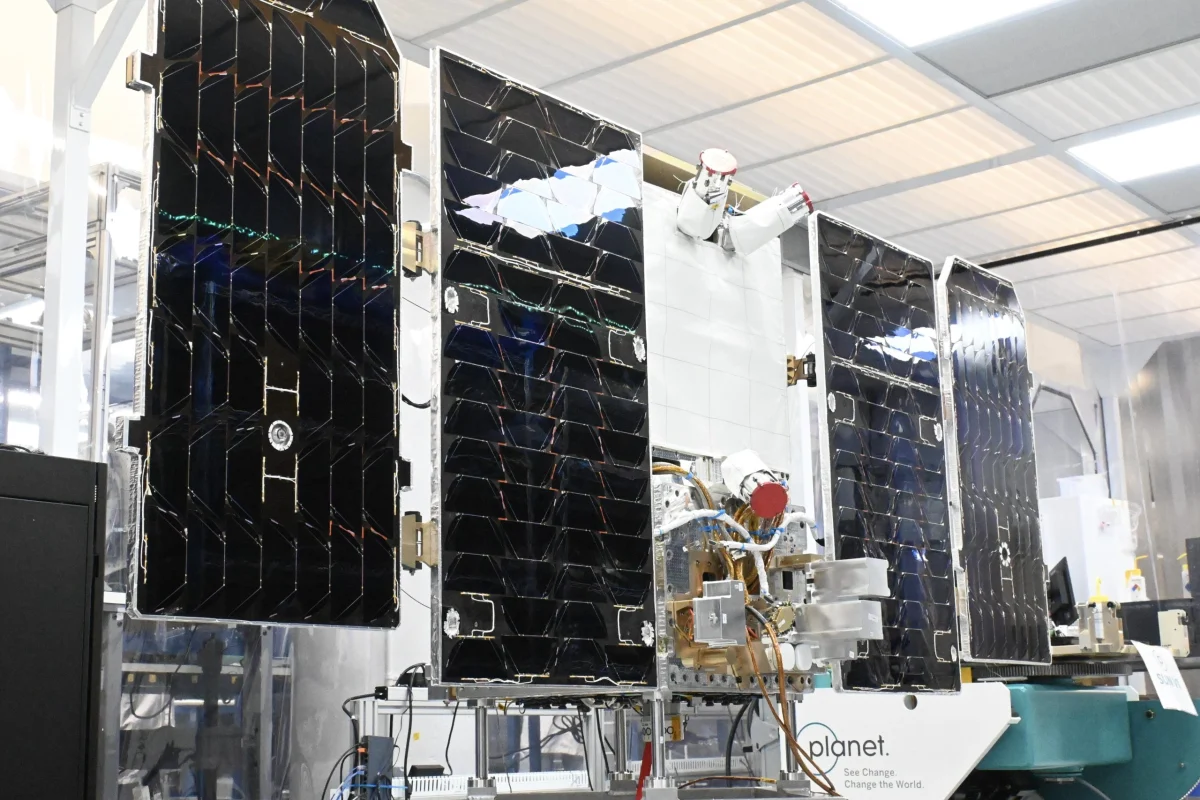
In a significant stride toward realizing a future of distributed artificial intelligence, Google recently launched the prototype of its orbital compute satellite, Project Suncatcher, onboard a SpaceX rocket from California. This historic mission marks the first time the tech giant has deployed one of its advanced Tensor Processing Units (TPUs) into the challenging environment of space, signaling a profound commitment to developing large-scale compute clusters in orbit around Earth. The launch, part of a larger SpaceX mission carrying over 100 diverse payloads, underscores a burgeoning interest in leveraging space for advanced computational capabilities, yet Google’s long-term vision sets it apart from many emerging ventures in the sector.
The Mission: Project Suncatcher’s Maiden Voyage
The core objective of this inaugural Suncatcher satellite, meticulously built by satellite imaging and data company Planet Labs, is to rigorously test the functionality and resilience of a Google Tensor Processing Unit in space. TPUs, custom-designed Application-Specific Integrated Circuits (ASICs) developed by Google as a direct competitor to Nvidia’s widely used GPUs, are optimized for machine learning workloads. Their successful operation in orbit would validate critical engineering solutions for sustained power supply, thermal management, and reliable data processing in an extreme environment.
"We’ve done testing on the ground, but you know, there’s no test that’s completely as good as the real thing," stated Travis Beals, the Google executive spearheading Project Suncatcher. His remarks highlight the fundamental challenges of space-based operations, where factors like radiation, extreme temperature fluctuations, and the vacuum of space can severely impact electronic components. The prototype is designed to provide a kilowatt of continuous power to the TPU, cool the high-performance chip, and execute a series of complex AI models to detect any anomalies.
Upon successful commissioning, the satellite will initiate its TPU operations in carefully managed 15-minute bursts. This cautious approach is crucial to prevent undue strain on the satellite’s power and thermal management systems, which are currently based on a standard Planet Labs platform. This initial phase is a critical learning period, gathering invaluable data on how the TPU performs under actual orbital conditions.
Google’s Vision for Orbital Data Centers
Project Suncatcher is far more than a single satellite experiment; it is the genesis of an ambitious "long-term moonshot," as Beals describes it, aimed at constructing the foundational infrastructure for future space-based AI workloads. Google envisions a sprawling orbital data center comprising a network of 81 satellites flying in close formation, processing data in parallel. This distributed architecture promises unprecedented computational power accessible from space, opening doors for novel applications and significantly enhanced data processing capabilities for Earth-bound and extraterrestrial operations alike.
The rationale behind moving compute into orbit is multifaceted. One primary driver is the ability to process vast quantities of data closer to its source, particularly for Earth observation satellites. Currently, high-resolution imagery and sensor data collected in orbit must be downlinked to ground stations, a process that can introduce latency and bandwidth limitations. By embedding AI processing directly on satellites, real-time analysis of climate patterns, agricultural yields, disaster response scenarios, and geopolitical shifts could become a reality. This approach aligns with the broader trend of "edge computing," extending computational power to the periphery of networks to minimize latency and improve efficiency.
Furthermore, orbital data centers could offer unique advantages in terms of energy efficiency, potentially leveraging solar power in a vacuum with fewer atmospheric energy losses. They could also provide enhanced security for sensitive data processing, operating outside terrestrial networks susceptible to certain types of attacks or disruptions.
The Technology at Play: Tensor Processing Units in Orbit
The Google Tensor Processing Unit is at the heart of this initiative. Designed specifically for accelerating machine learning tasks, TPUs excel at the matrix multiplications and convolutions that form the backbone of neural networks. Since their introduction in 2016, TPUs have evolved through several generations, with each iteration offering greater performance and efficiency. Integrating such a sophisticated, high-performance chip into a space environment presents considerable engineering hurdles.
The space environment is notoriously hostile to electronics. Cosmic rays and high-energy particles from solar flares can cause Single Event Upsets (SEUs), temporary glitches that flip bits in memory or logic circuits, or even destructive Single Event Latch-ups (SELs). Over time, cumulative radiation exposure leads to Total Ionizing Dose (TID) effects, degrading chip performance and lifespan. Google’s extensive testing, including particle accelerator blasts, aimed to simulate these conditions. While early tests were overly optimistic due to unexpected self-shielding, revised analyses indicated a slightly higher, but still manageable, error rate for typical inference operations.
"The error rate is very low if you’re thinking about typical inference operations, right? Like one in a million," Beals confirmed, expressing confidence that the TPUs can handle large inference workloads in orbit for a satellite’s typical five-year lifespan. However, he acknowledged that this error rate would be "problematic for doing, say, some mega-scale training run where you’re going to have many thousands of chips running for months." This distinction highlights Google’s immediate focus on inference (applying trained models) rather than full-scale model training in space, a task that demands even greater computational stability and error tolerance.
Thermal management is another critical challenge. High-performance chips generate significant heat, and dissipating this heat in the vacuum of space, where convection is absent, requires advanced cooling systems. The Suncatcher prototype’s ability to supply a kilowatt of continuous power and cool the TPU is a testament to the sophisticated engineering required for orbital compute.
A Collaborative Endeavor: Partners in Space
The partnership with Planet Labs is integral to Project Suncatcher. Planet, a leader in Earth observation, provides the satellite platform and operational expertise. This collaboration is a strategic alignment, as Planet’s vast fleet of Earth-imaging satellites generates precisely the kind of data that could benefit from on-orbit AI processing.
Looking ahead, Google and Planet are already developing a more advanced demonstration mission, slated for flight next year. This mission will feature two satellites purpose-built for advanced compute, designed to handle more substantial workloads. A key innovation for these future versions will be the implementation of laser communications links for inter-satellite collaboration. Laser communication offers significantly higher bandwidth and lower latency compared to traditional radio frequency links, which is crucial for the high-speed data transfer required for parallel processing across a distributed satellite constellation. "The bandwidth and the latency between TPUs really, really matters when you’re trying to run a multi-rack workload…we’re trying to look ahead to not just what workloads exist today, but where they will be in five years," Beals emphasized, underscoring the necessity of robust inter-satellite communication for their future orbital data centers.
The Economics of Space: Launch Costs and SpaceX’s Role
Google’s ambitious vision hinges on a dramatic reduction in the cost of accessing space. The company recently released a peer-reviewed white paper on orbital data centers, published in the journal Joule, which offers one of the most rigorous analyses to date on the economics of deploying compute infrastructure in orbit. While not an economic feasibility study, the paper provides a fascinating glimpse into Google’s projections for launch costs.
Like virtually all major players in the burgeoning space economy, Google relies heavily on SpaceX for its launch capabilities. It’s worth noting that Google is also a significant investor in Elon Musk’s rocket company. The white paper’s authors argue that SpaceX has achieved an impressive "learning curve" in price reduction, estimated at about 20% per year since the launch of its Falcon 1 rocket. This trajectory leads them to project launch prices as low as $200 per kilogram by 2035.
Achieving such unprecedented cost efficiency, however, requires an equally unprecedented scale of operations. The analysis suggests that to maintain a similar cost-reduction trajectory as the Falcon 9, SpaceX’s Starship system would need to transport an astonishing 370,000 tons of payload into orbit. This would necessitate approximately 1,800 launches over the next decade—or 180 launches per year—assuming Starship can consistently carry its full payload capacity of 200 metric tons per mission. This is an incredibly demanding target for a vehicle that has yet to achieve operational status and has never flown more than five times in a single year. While Elon Musk has famously suggested Starship could achieve an "hourly" flight rate by 2029, Google’s more conservative, yet still highly ambitious, projections highlight the sheer volume of launches required to make orbital data centers economically viable.
Broader Landscape: The Race for Space-Based AI
Project Suncatcher is not an isolated endeavor. The SpaceX rocket carrying Google’s prototype also launched other space AI payloads, including missions from startups like Satlyt and Cowboy Space Company. The convergence of AI and space technology is a rapidly expanding frontier, with numerous companies exploring various applications, from on-orbit data processing for specific Earth observation tasks to autonomous spacecraft operations.
What distinguishes Google’s initiative is its long-term, foundational approach. While many startups focus on specific, near-term applications of AI in space, Google is conceptualizing an entirely new infrastructure layer. This is not merely about sending a chip to space; it’s about establishing the blueprint for a scalable, distributed, and powerful orbital compute network that could redefine how data is processed and utilized across vast distances. This vision aligns with Google’s broader strategy of investing in fundamental technologies that could shape the next generation of computing, much like its early investments in cloud infrastructure.
Implications for Earth and Beyond
The successful development of orbital data centers would have profound implications across numerous sectors. For climate science and environmental monitoring, the ability to process vast amounts of satellite data in near real-time could lead to quicker identification of environmental changes, more accurate climate models, and improved disaster prediction and response. In agriculture, precision farming could be revolutionized by immediate analysis of crop health, soil conditions, and water usage from space. Defense and intelligence agencies could benefit from enhanced surveillance and rapid analysis capabilities.
Beyond Earth, such infrastructure could support future lunar and Martian missions, providing critical compute resources closer to exploration sites, reducing reliance on long-distance communication with Earth. It could also accelerate scientific research by enabling complex simulations and data analysis directly in space.
However, the path to realizing this vision is fraught with challenges. Technical hurdles remain, including perfecting radiation hardening, developing robust inter-satellite networking, and scaling up power and cooling systems. Economic viability depends heavily on the cost reductions in launch services that Google projects. Regulatory frameworks for managing orbital data centers, addressing concerns about space debris, and ensuring equitable access to this powerful new infrastructure will also need to evolve.
The Path Forward
Google’s Project Suncatcher represents a bold leap into the future of computing. By sending its Tensor Processing Unit into orbit, Google is not just testing hardware; it is laying the groundwork for an entirely new paradigm of data processing. The current prototype is a critical first step, providing invaluable data that will inform the design of future, more capable orbital compute satellites. With plans for purpose-built satellites featuring laser communication links and a long-term vision of an 81-satellite constellation, Google is signaling its intent to be a major architect of the space-based internet and AI infrastructure of tomorrow. While the challenges are immense and the projected timelines for cost-effective scaling are ambitious, the potential rewards—a truly global, low-latency, and powerful AI compute fabric—are equally staggering, promising to reshape our technological landscape for decades to come.