Evan Lee Salim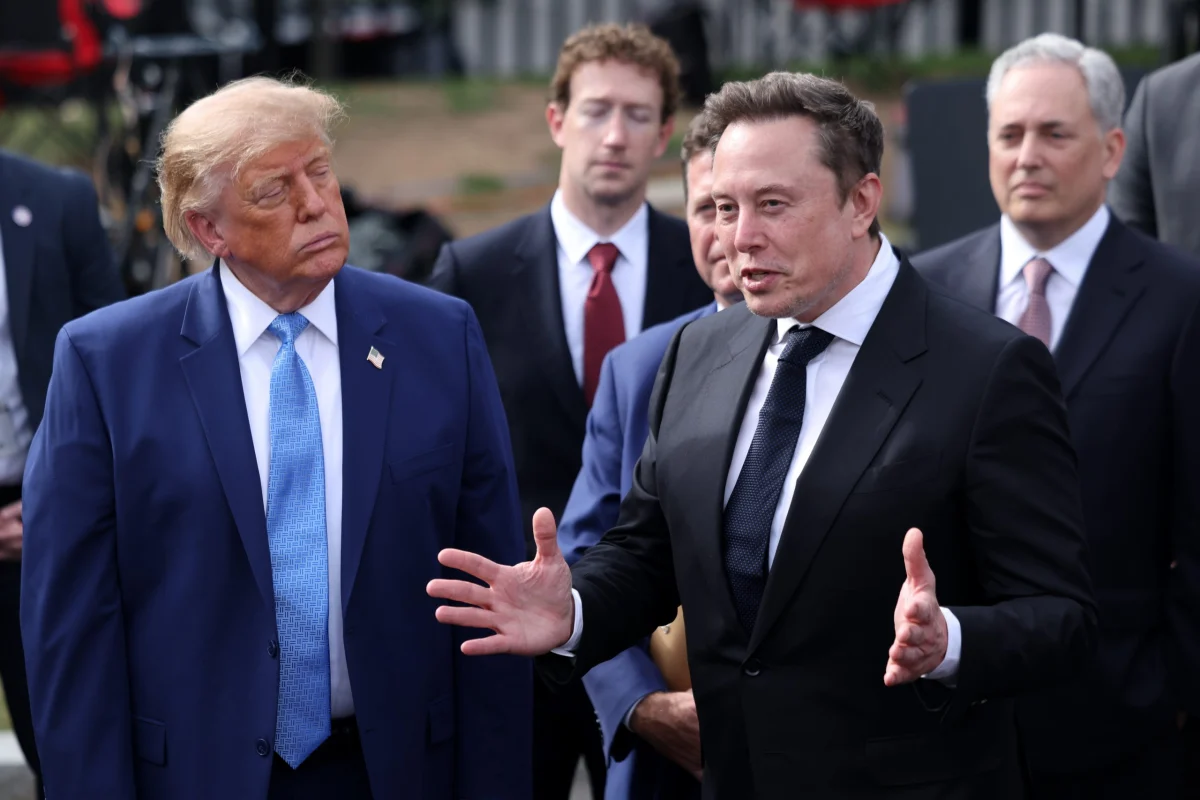
In a significant move poised to reshape the discourse around advanced technology, former President Donald Trump recently hosted a high-profile gathering of the artificial intelligence industry’s most influential figures, announcing a sweeping semantic shift: the U.S. government will now officially refer to "artificial intelligence" as "super intelligence." This rebranding effort was unveiled alongside a "Joint Commitment on Frontier Responsibilities," a pact signed by leading tech executives, which has drawn considerable skepticism from industry observers regarding its enforceability and actual impact.
The assembly, featuring luminaries such as Meta CEO Mark Zuckerberg, Amazon founder Jeff Bezos, Tesla and xAI CEO Elon Musk, and Anthropic CEO Dario Amodei, underscored a renewed focus from the administration on AI governance, albeit with a distinctive approach. While the commitment aims to address burgeoning concerns about AI safety and ethics, its description by Trump as "morally binding" rather than legally enforceable has ignited debate among experts and analysts, raising questions about its ultimate efficacy.
The Evolving Narrative of AI Governance and U.S. Leadership
The backdrop to this announcement is a rapidly accelerating global race for AI dominance, characterized by intense competition between major powers like the United States, China, and the European Union. Historically, the U.S. government has often favored innovation-first policies in the tech sector, with a lighter touch on regulation compared to, for example, the European Union’s comprehensive AI Act, which seeks to establish a global standard for AI safety and ethics through strict legal frameworks. China, on the other hand, has pursued a state-driven approach, integrating AI into its national development strategy with significant government investment and oversight.
Former President Trump’s previous stance on AI had often emphasized the imperative of American leadership without the encumbrance of what he termed "burdensome regulations." Just weeks prior to this recent meeting, he had reportedly expressed strong reservations about the need for AI constraints, suggesting that calls for regulation might be politically motivated or detrimental to U.S. competitiveness. This sudden pivot towards engaging with AI safety, even if through a non-binding framework, marks a notable shift in rhetoric, signaling an acknowledgment of the growing public and expert concerns surrounding advanced AI systems.
Public perception of artificial intelligence has been complex and often contradictory. While AI offers immense potential for economic growth, scientific discovery, and societal improvement – from healthcare advancements to personalized education – it also evokes widespread anxieties. Concerns range from job displacement due to automation and algorithmic bias to the more existential risks associated with highly autonomous and powerful systems. Data from various surveys consistently show that a significant portion of the public worries about AI’s potential to exacerbate inequality, compromise privacy, or even pose long-term threats to human control.
A Semantic Shift: The Rise of "Super Intelligence"
Central to the administration’s new approach is the re-designation of "artificial intelligence" as "super intelligence." This semantic maneuver, formalized by executive order for official U.S. representatives, is more than a mere linguistic preference; it appears to be a deliberate rebranding strategy. Kirsten Korosec, a TechCrunch podcaster, articulated this perspective, suggesting that the primary motivation behind the change was a "rebranding effort around AI." The underlying message, she inferred, was to differentiate: "AI is going to kill us, it’s scary, it is going to take jobs – but super intelligence is not."
This strategic reframing attempts to alleviate the negative connotations often associated with "artificial intelligence," a term that, for many, conjures images of dystopian futures depicted in science fiction. By introducing "super intelligence," the administration may be aiming to project an image of U.S. technological prowess and control, emphasizing the beneficial and transformative aspects of advanced AI while subtly distancing it from the perceived threats. This effort continued with the subsequent announcement of a "Super Intelligence Force," further cementing the new terminology within the national security and technological lexicon.
The psychological impact of terminology in public discourse is profound. Words shape perception, influence policy debates, and can either foster fear or inspire confidence. By shifting to "super intelligence," the administration appears to be attempting to reset the narrative, focusing on the potential for augmented human capabilities and national advantage rather than the inherent risks often highlighted by the term "artificial." However, whether this rebranding will successfully alter public and expert perception, or merely be seen as a superficial change, remains to be seen.
The High-Stakes Gathering: A Chronology of Engagement
The path to this high-profile meeting was swift and marked by surprising turns, particularly concerning Anthropic, a leading AI safety company. Just weeks prior, Anthropic had reportedly found itself in the administration’s "doghouse" due to disagreements, particularly with the Defense Department, over the conditions and ethical guardrails Anthropic sought to impose on the use of its advanced AI technology. This friction highlighted the complex dance between innovation, national security, and corporate ethics in the rapidly evolving AI landscape.
However, the dynamic dramatically shifted with an unexpected invitation for Anthropic CEO Dario Amodei to a late-night dinner with the former President. This private sit-down, a reported 10 p.m. engagement, seemingly paved the way for a rapid rapprochement. Days later, Amodei joined a star-studded luncheon that included the aforementioned tech titans, culminating in the signing of the "Joint Commitment on Frontier Responsibilities."
The guest list for the luncheon read like a who’s who of the global tech industry, signaling the administration’s intent to rally top talent and resources around its AI agenda. The presence of such influential figures underscored the gravity of the discussions and the potential implications of any collective agreement.
However, the haste with which the commitment was assembled was evident. As Sean O’Kane of TechCrunch pointed out, the document itself contained a glaring error: the misspelling of "United States." This seemingly minor detail became a focal point for critics, suggesting a rushed process that prioritized optics and speed over meticulousness and substance. Such an oversight on a document signed by the nation’s leader and top industry executives further fueled skepticism about the depth of consideration given to the pact’s contents.
The "Joint Commitment": A Moral Compass or a Symbolic Gesture?
The "Joint Commitment on Frontier Responsibilities" is arguably the most contentious element of the recent announcements. Described by Sean O’Kane as "deeply non-binding" and "completely voluntary," the pact lacks any legal enforceability or regulatory teeth. This stands in stark contrast to legislative efforts in other regions, which mandate compliance and impose penalties for breaches.
Former President Trump’s characterization of the commitment as "morally binding" introduces a unique and somewhat abstract dimension to governance. While moral commitments can play a role in shaping corporate behavior and fostering a sense of shared responsibility, they inherently lack the coercive power of law. This approach places the onus entirely on the good faith and ethical conscience of the signatory companies, relying on their internal governance mechanisms rather than external oversight.
Anthony Ha, another TechCrunch podcaster, observed that while the agreement itself might not be "super meaningful" in terms of immediate changes, "the fact that this kind of gesture was needed seems significant." This perspective highlights the symbolic importance of the event. Even if the pact is legally inert, the very act of bringing together industry leaders to publicly commit to safety principles signals a growing recognition, at the highest levels of government, of the profound challenges and risks posed by advanced AI. It suggests a political necessity to address public anxieties and demonstrate a proactive stance, even if the practical mechanisms for enforcement remain undefined.
This reliance on voluntary commitments raises critical questions for policy analysts. While fostering industry collaboration is beneficial, many argue that voluntary guidelines alone are insufficient to manage the systemic risks associated with frontier AI. Without clear legal frameworks, independent auditing, and accountability mechanisms, there is a risk that such commitments could be perceived as performative, lacking the teeth required to truly mitigate potential harms or ensure equitable access and development.
Anthropic’s Shifting Fortunes: A Microcosm of AI-Government Relations
The fluctuating relationship between Anthropic and the Trump administration offers a compelling case study in the complexities of AI-government engagement. The initial friction with the Defense Department reportedly stemmed from Anthropic’s insistence on certain ethical conditions for the deployment of its technology, particularly concerning its use in military applications. This tension reflects a broader ethical debate within the AI community about the responsible development and deployment of powerful systems, especially in sensitive domains like national security.
However, as Anthony Ha noted, the administration itself appears to have had internal divisions regarding Anthropic. While the Defense Department expressed strong reservations, the Treasury Secretary, for instance, was reportedly a significant proponent of engaging with the company. This internal divergence underscores the multifaceted nature of AI’s impact and the differing priorities across government agencies. Some parts of the White House may prioritize leveraging cutting-edge technology for economic advantage or specific departmental missions, while others may focus more on risk mitigation, ethical concerns, or national security implications.
This dynamic illustrates the challenge for AI companies navigating the political landscape. They must balance commercial imperatives and the desire for broad impact with their stated ethical principles and the complex demands of government engagement. Anthropic’s journey from being in the "doghouse" to its CEO having a private dinner with the former President, and then participating in a high-level summit, highlights the fluidity and high stakes involved in these relationships. It suggests that despite initial disagreements, the perceived value of engaging with leading AI innovators ultimately outweighed earlier points of contention for certain factions within the administration.
Broader Implications and the Road Ahead
The rebranding of AI to "super intelligence" and the unveiling of a non-binding safety pact carry significant implications, both domestically and internationally. Domestically, it reflects an attempt to steer public perception and potentially influence the direction of future policy debates, emphasizing U.S. leadership and a more optimistic outlook on advanced AI. However, without concrete regulatory steps, it may also fuel concerns among civil society groups and policymakers who advocate for stronger, legally enforceable safeguards. The skepticism voiced by the TechCrunch podcasters resonates with broader calls for robust governance mechanisms that go beyond voluntary commitments.
Globally, this approach positions the U.S. distinctly from the EU’s comprehensive regulatory framework and China’s centralized, state-controlled development model. While the U.S. aims to maintain its innovative edge, relying on "morally binding" pacts could be perceived by some as insufficient in addressing global challenges like AI safety, geopolitical stability, and the responsible deployment of potentially transformative technologies. The international community will be watching to see whether this strategy effectively promotes both innovation and safety, or if it creates a regulatory vacuum that other nations might fill.
Economically, a clear and stable regulatory environment is often favored by investors and businesses. The current approach, while signaling engagement, might introduce a degree of uncertainty given the non-binding nature of the commitments. Companies might question the long-term consistency of policy and the potential for future, more stringent regulations. Conversely, proponents might argue that a light-touch approach fosters rapid innovation and allows the industry to self-regulate more effectively.
Ultimately, the events surrounding the "super intelligence" rebranding and the non-binding commitment represent a critical juncture in the U.S.’s approach to AI governance. The challenge ahead lies in reconciling the imperative for technological leadership with the urgent need to ensure the safety, ethics, and societal benefit of increasingly powerful AI systems. Whether this new nomenclature and framework will usher in an era of responsible "super intelligence" or merely serve as a symbolic gesture in a rapidly evolving technological landscape will largely depend on future actions, genuine industry commitment, and the eventual development of more substantive policy.