Sisilia Frederika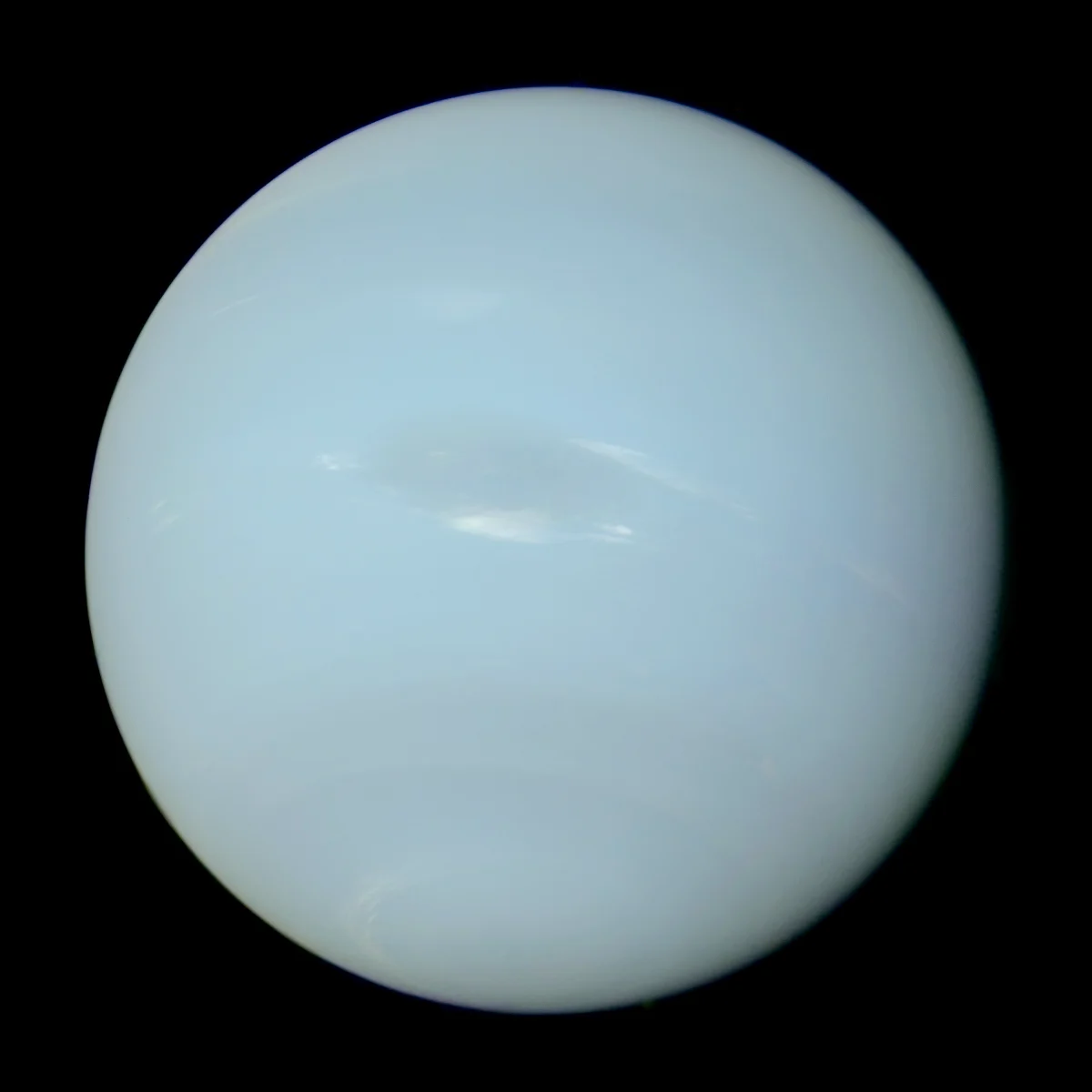
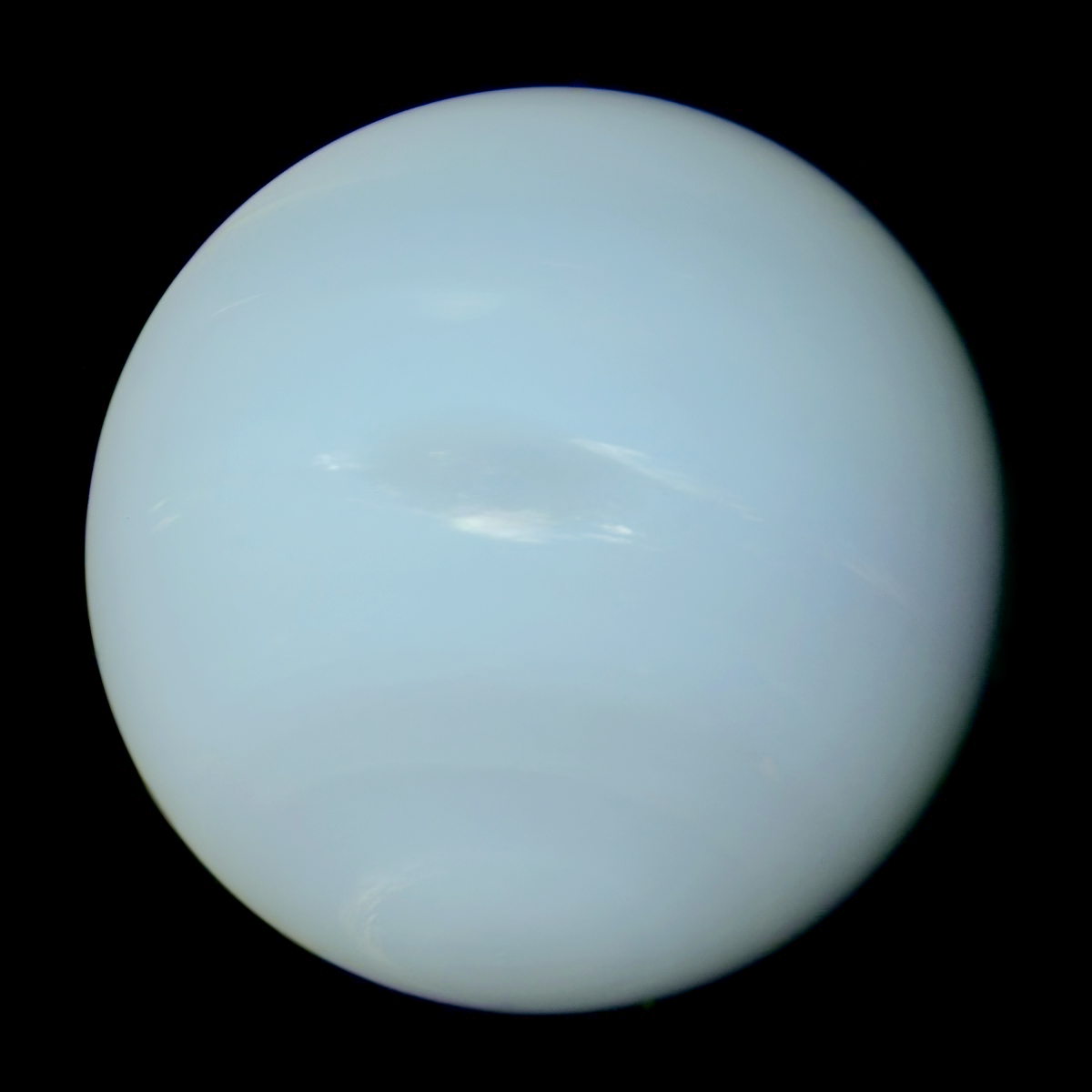
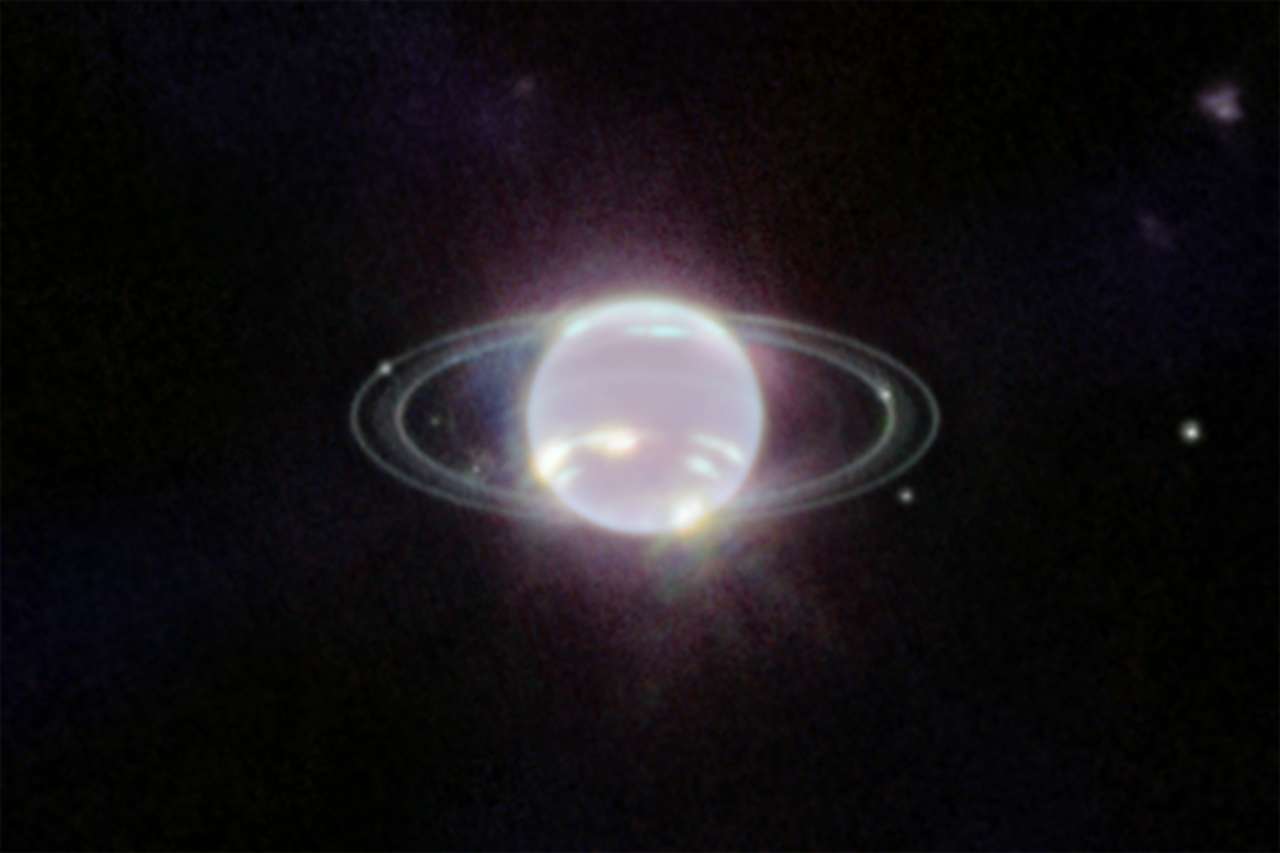
Neptune, the eighth and most distant planet from the Sun, remains one of the most enigmatic frontiers of our solar system. Located approximately 2.8 billion miles (4.5 billion kilometers) from the Sun, this ice giant exists in a realm of perpetual twilight where temperatures drop to a frigid minus 353 degrees Fahrenheit (minus 214 degrees Celsius). Despite its extreme isolation, Neptune is far from a stagnant world. It is a dynamic environment defined by supersonic winds reaching speeds of 1,200 miles per hour and a complex system of rings and moons. However, one of the most enduring mysteries regarding the planet is its axial tilt of 28.3 degrees. New research published by Rodney Gomes of São Paulo State University suggests that this specific orientation is not a relic of the planet’s formation, but rather the result of a multi-billion-year gravitational dance with its largest moon, Triton.
The Puzzle of Planetary Obliquity
In the study of celestial mechanics, a planet’s axial tilt—or obliquity—is a fundamental characteristic that dictates its seasonal cycles and atmospheric behavior. Within our solar system, these tilts vary wildly. Earth’s 23.5-degree lean is responsible for the life-sustaining change of seasons, while Uranus presents a radical outlier, tilted at 98 degrees, effectively orbiting the Sun on its side. For decades, Neptune’s 28-degree tilt was often grouped with Saturn’s 27-degree tilt, with many scientists assuming both were the result of giant impacts during the chaotic early history of the solar system.
However, the "giant impact" hypothesis has struggled to explain the precise mechanics of Neptune’s current state. Unlike the inner terrestrial planets, the outer gas and ice giants are composed of massive envelopes of hydrogen, helium, and ices. While a collision could certainly tilt a planet, maintaining that specific orientation over 4.5 billion years requires a stability that is often disrupted by the gravitational influence of the Sun and other planets. The research by Rodney Gomes provides a more elegant, internal solution: Neptune was not pushed by an outside force, but rather pulled by its own satellite.
Triton: The Captured Galactic Wanderer
To understand Neptune’s tilt, one must first understand Triton. Triton is a geological anomaly and the only large moon in the solar system that orbits its parent planet in a retrograde direction—meaning it travels opposite to the direction of Neptune’s rotation. This "wrong-way" orbit is a smoking gun for astronomers, indicating that Triton did not form from the same disk of gas and dust that birthed Neptune. Instead, Triton was likely a dwarf planet, similar to Pluto, originating in the Kuiper Belt—a vast region of icy bodies beyond the orbit of Neptune.
Current models of the early solar system, such as the Nice Model, suggest that the outer planets underwent significant migration billions of years ago. During this period of instability, Neptune’s gravity likely snagged Triton, pulling it into a chaotic, highly elliptical orbit. This capture event was a transformative moment for the Neptunian system. The gravitational energy of the capture would have likely destroyed any pre-existing moons and sent Triton into a long, slow process of orbital circularization. It is this "tidal evolution"—the process by which the moon’s orbit stabilized—that Gomes identifies as the primary driver of Neptune’s axial shift.
The Mechanics of Resonance and the s8 Frequency
The core of Gomes’s research lies in a phenomenon known as secular resonance. Every planet in the solar system experiences subtle gravitational tugs from its neighbors, which cause its orbit and axis to "wobble" or precess over vast timescales. These wobbles occur at specific frequencies. One such frequency, known as the s8 resonance, is associated with the collective gravitational influence of the solar system’s other major bodies.
According to the simulations conducted by Gomes, Neptune originally possessed a much smaller axial tilt, perhaps close to zero or similar to the low tilt of Jupiter (3 degrees). However, as Triton was captured and began its inward spiral, its gravitational interaction with Neptune began to change the rate at which Neptune’s axis precessed.
"As Triton’s orbit evolved through tidal forces, it acted as a gravitational lever," the research suggests. This lever eventually pushed Neptune’s precession rate into a "sweet spot" where it matched the s8 frequency. Once Neptune entered this resonance, the gravitational influence of the other planets began to pump energy into Neptune’s tilt, much like a child on a swing being pushed at just the right moment to go higher. This resonance effectively "rocked" the planet over, increasing its obliquity to the 28 degrees we observe today.
Chronology of a Cosmic Transformation
The transformation of the Neptune-Triton system did not happen overnight. It was a process spanning billions of years, which can be broken down into four distinct phases:
- The Pre-Capture Era (4.5 to 4.0 Billion Years Ago): Neptune forms as a relatively upright ice giant. It likely possessed a system of "regular" moons that orbited in the same direction as its spin, similar to the Galilean moons of Jupiter.
- The Capture Event (Approx. 3.8 Billion Years Ago): During the Late Heavy Bombardment or a period of planetary migration, Triton is captured from the Kuiper Belt. It enters a retrograde, highly eccentric orbit, scattering or destroying Neptune’s original moon system.
- The Era of Tidal Evolution (3.8 Billion to 1 Billion Years Ago): Triton’s orbit begins to circularize due to tidal friction. This process releases immense heat within Triton (potentially maintaining a subsurface ocean) and exerts a continuous torque on Neptune’s spin axis.
- Resonance and Tilting (Last 1 Billion Years): Neptune’s precession matches the s8 frequency. The axial tilt increases from a few degrees to the current 28.3 degrees. The system reaches a state of relative stability, though Triton continues to move closer to the planet.
Statistical Evidence and Simulation Results
The strength of Gomes’s theory lies in its statistical probability. In a series of complex numerical simulations, Gomes modeled various starting conditions for the Neptune-Triton system. The results were striking:
- Tilt Magnitude: In approximately 25% of the simulations, Triton’s orbital evolution successfully drove Neptune’s tilt to an angle greater than 20 degrees.
- Extreme Cases: Some simulations showed that under specific conditions, Triton could have pushed Neptune to a tilt exceeding 50 degrees, though the 28-degree result was a common "landing zone" for the model.
- Orbital Stability: The simulations accounted for the "inclination" of Triton’s orbit, showing that a retrograde moon is far more effective at inducing axial tilt than a prograde moon of the same mass.
These findings suggest that Neptune’s current state is not a freak accident, but a mathematically probable outcome of capturing a massive Kuiper Belt object.
Scientific Analysis: Implications for Planetary Science
The implications of this research extend far beyond Neptune itself. For years, planetary scientists have struggled to explain why "Ice Giants" (Neptune and Uranus) behave so differently from "Gas Giants" (Jupiter and Saturn). If Neptune’s tilt is indeed caused by a captured moon, it suggests that the physical characteristics of planets are not just a result of their formation, but are heavily influenced by their environment and "capture history."
Furthermore, this model provides a potential blueprint for studying exoplanets. As astronomers discover more "Cold Neptunes" orbiting distant stars, they can now look at the tilt of those planets—inferred through atmospheric observations—to determine if those systems also underwent violent moon-capture events. It highlights the importance of moons not just as secondary bodies, but as primary architects of planetary evolution.
The Ultimate Fate: A 3.6-Billion-Year Countdown
While Triton has spent billions of years shaping Neptune, their relationship is ultimately a destructive one. Unlike our Moon, which is slowly moving away from Earth, Triton’s retrograde orbit causes it to lose orbital energy through tidal interactions. As a result, Triton is spiraling inward toward Neptune.
Current projections suggest that in approximately 3.6 billion years, Triton will cross the Roche limit—the distance at which Neptune’s gravitational pull becomes stronger than the internal gravity holding the moon together. At this point, Triton will be torn apart. The resulting debris will likely form a massive, spectacular ring system that would dwarf the rings of Saturn, eventually raining down into Neptune’s atmosphere.
Until that cataclysmic conclusion, Triton remains a "captured wanderer" that continues to leave its mark on the ice giant. If Rodney Gomes’s research holds, the very seasons we might one day observe on Neptune are the direct legacy of a dwarf planet that strayed too close to a giant billions of years ago. This discovery reinforces a fundamental truth of the cosmos: in the vast machinery of the solar system, even the smallest components can change the course of a giant.