Clarissa Hana
OpenAI has initiated a significant upgrade to its flagship AI chatbot, ChatGPT, with the rollout of a more robust and reliable version, GPT-5.6 Sol, exclusively for its Plus and Pro subscribers. Concurrently, free users are now granted unlimited text-based conversations powered by GPT-5.6 Luna, marking a substantial enhancement to accessibility and capability across the user spectrum. These advancements are strategically designed to refine ChatGPT’s performance, aiming for greater directness, improved factual accuracy, and enhanced consistency, whether handling rapid-fire queries or engaging in complex, multi-step reasoning tasks. A notable addition observed during internal testing is a new control mechanism, allowing users to finely tune the AI’s reasoning and intelligence levels, offering a more personalized and efficient user experience.
The evolution of ChatGPT’s underlying models, from the initial GPT-3 to the current iterations, represents a continuous effort by OpenAI to push the boundaries of natural language understanding and generation. Each new version aims to address limitations of its predecessors, focusing on areas such as hallucination reduction, improved contextual awareness, and more nuanced output. The introduction of distinct models like Sol and Luna suggests a strategic approach to catering to different user needs and subscription tiers, optimizing resource allocation and feature sets. GPT-5.6 Sol, in particular, is positioned as a premium experience, while GPT-5.6 Luna democratizes advanced AI conversational capabilities.
Enhanced Control and Reasoning Capabilities
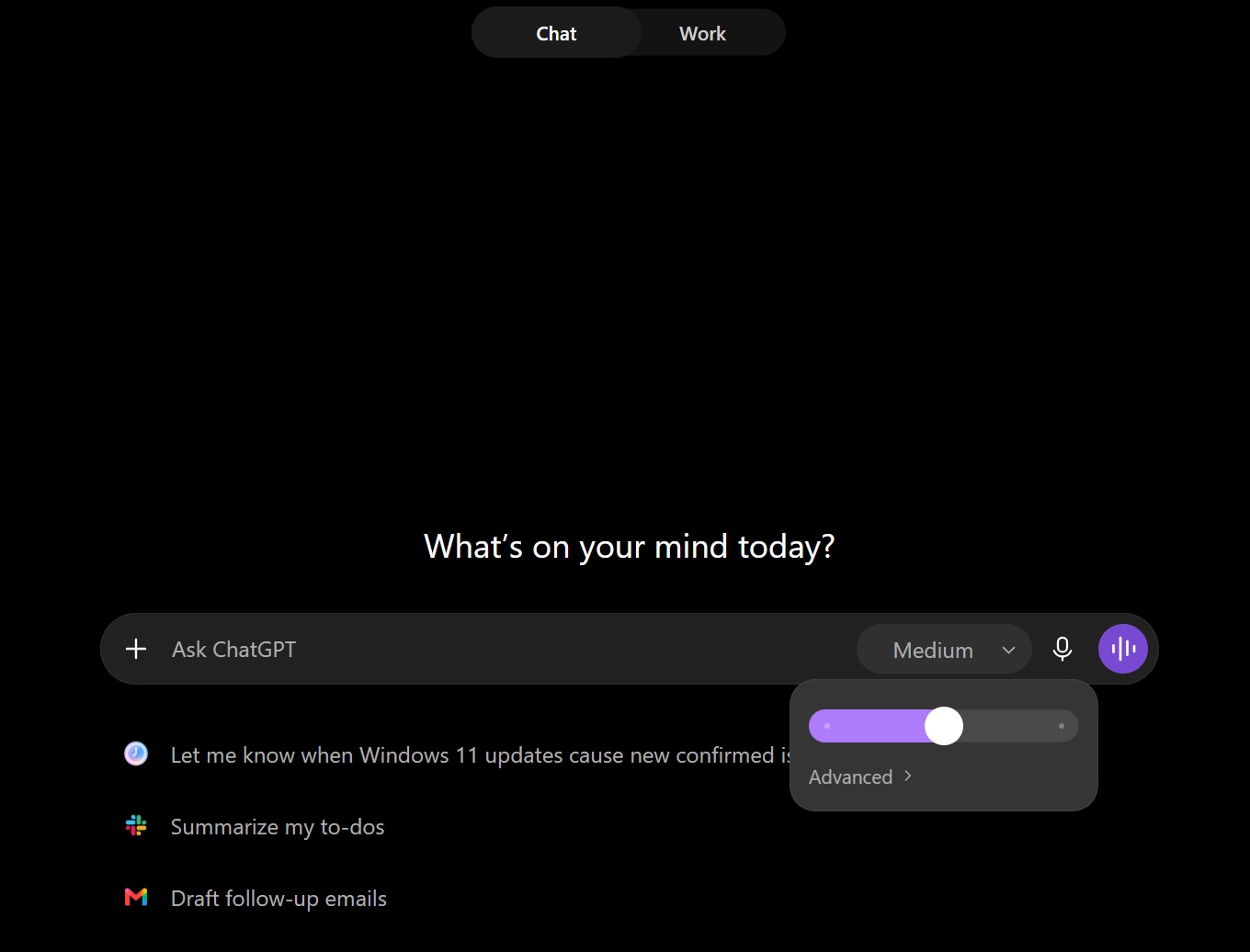
A groundbreaking feature introduced with this update, observed by BleepingComputer during testing, is an "intelligence slider" that provides users with unprecedented control over the model’s reasoning depth. This slider allows users to dynamically adjust the AI’s processing effort, ranging from an "Instant" response mode to a "High" reasoning mode. The "Instant" setting prioritizes speed, delivering answers almost immediately, which is ideal for quick fact-checking or simple inquiries. Conversely, the "High" reasoning mode can extend response times by several minutes, dedicating more computational resources to complex tasks requiring deeper analysis, such as intricate research, sophisticated coding, comprehensive writing projects, strategic planning, or the deliberation of critical decisions. This granular control empowers users to tailor ChatGPT’s performance to their specific needs, balancing speed with depth of analysis.

The visual representation of this feature, a slider interface, allows users to intuitively grasp and manipulate the trade-off between response time and the thoroughness of the AI’s cognitive process. For everyday questions, keeping the slider at a lower setting ensures swift and efficient interaction. However, for tasks demanding a more profound level of insight and accuracy, users can elevate the slider, enabling GPT to engage in more intensive analysis. This adaptive capability signifies a significant step towards making AI tools more practical and versatile for a wider array of professional and personal applications.
GPT-5.6 Sol: Precision, Reliability, and Factual Integrity
OpenAI has explicitly stated that GPT-5.6 Sol has undergone specific tuning to align with typical human conversational patterns within ChatGPT, differentiating it from its applications in longer-running, agentic workflows like those found in Codex and ChatGPT Work. This refinement aims to deliver outputs that are not only more focused but also more adaptable to the specific nuances of each query. The model is designed to avoid unnecessary verbosity and formatting, instead providing a helpful correction or clarification when a simple agreement would be insufficient or misleading.
According to OpenAI’s official announcement, "It delivers more focused answers, adapts its level of detail to the question, avoids unnecessary formatting, and offers a helpful correction when simply agreeing wouldn’t be useful." This directive implies a more intelligent and context-aware response generation mechanism. For instance, a straightforward question like "Who is the president of the United States?" would elicit a concise, single-line answer. In contrast, a more complex query such as "How are elections held in the US?" would trigger a more detailed response, providing comprehensive background information while ensuring the primary recommendation or key information remains easily identifiable.
A significant claim made by OpenAI regarding GPT-5.6 Sol is its reduced propensity for factual errors, particularly in domains involving dates, numerical data, citations, legal precedents, medical information, financial figures, and inferential reasoning. Internal testing conducted by OpenAI reportedly shows a substantial improvement in factual accuracy. Specifically, responses containing at least one factual error were observed to be 68% less frequent with GPT-5.6 Sol when compared to its predecessor, GPT-5.5 Instant. This leap in reliability is crucial for building user trust and enabling more critical applications of the AI. Similarly, GPT-5.6 Luna demonstrated a 62% reduction in such erroneous responses during the same evaluation, indicating that improvements in factual accuracy are being implemented across both premium and free tiers.

The impact of these improvements in factual accuracy cannot be overstated. In an era where AI-generated content is increasingly pervasive, the potential for misinformation or inaccurate data poses a significant risk. By enhancing the reliability of its models, OpenAI is not only improving the user experience but also contributing to a more trustworthy AI ecosystem. This is particularly important for applications in education, research, and professional decision-making, where accuracy is paramount.
Unlimited Access for Free Users with GPT-5.6 Luna
The democratization of advanced AI capabilities is further underscored by the introduction of unlimited text chats for free users, powered by GPT-5.6 Luna. This transition began this week, with some users already observing the updated model in their accounts. The Go subscription tier, priced at approximately $10, has also been seen to benefit from these changes. The move to provide unlimited text chat access signifies a strategic decision by OpenAI to broaden its user base and allow a larger population to experience the benefits of sophisticated AI conversation.
Looking ahead, OpenAI plans to remove rate limits on text chats for these plans starting next week. While this offers unprecedented freedom for conversational AI, it’s important to note that usage will still be governed by abuse prevention mechanisms to ensure fair and responsible access. However, limitations will continue to apply to other functionalities, such as file uploads, image generation, and other specialized ChatGPT tools, which remain exclusive to paid tiers.
For free account users, a new "Think" button has been introduced. This feature provides GPT-5.6 Luna with additional processing time to tackle more challenging questions that require deeper reasoning. OpenAI elaborated on this, stating, "For questions that require deeper reasoning, Free users can tap the new Think button to give GPT-5.6 Luna more time to work through the answer." This thoughtful inclusion ensures that even free users can access more comprehensive and well-considered responses for complex queries, mitigating the potential for the AI to provide superficial answers when more depth is needed. The "Think" button essentially acts as a manual override for the AI’s speed-prioritizing default settings, allowing it to engage its full analytical power when prompted.
The unlimited access to GPT-5.6 Luna for free users is a significant development in the AI landscape. It lowers the barrier to entry for individuals and small organizations who might not have the budget for premium subscriptions but can benefit immensely from advanced conversational AI. This move could spur innovation and experimentation, leading to new use cases and applications of AI across various sectors.
Targeted Improvements and Safety Measures
It is crucial to note that the enhanced GPT-5.6 Sol, with its focus on conversational refinement and reliability, is specifically designed for the standard ChatGPT interface. This updated version will not be integrated into other OpenAI products like Codex or Work, which serve different, often more specialized, functional purposes. This targeted deployment ensures that the optimizations for everyday chat interactions are not inadvertently disruptive to the workflows of users relying on those other platforms.
In addition to functional upgrades, OpenAI is also implementing enhanced safety protocols, particularly for users identified as being under 18 years of age. These protective measures include more stringent content moderation and boundary enforcement around sensitive topics. The specific areas receiving heightened scrutiny include romantic role-playing scenarios, explicit sexual content, the promotion of dangerous activities, discussions related to eating disorders, body-image risks, age-restricted goods, and graphic depictions of violence. This proactive approach to user safety, especially for younger demographics, reflects a growing awareness and responsibility within the AI development community regarding the ethical implications of powerful generative models.
The gradual rollout of these changes, initiated this week, means that users may experience the new features and model updates at different times. This phased deployment strategy allows OpenAI to monitor performance, gather user feedback, and address any unforeseen issues before a full global release. This methodology is standard practice for large-scale software updates, ensuring a smoother transition and minimizing potential disruptions for the vast user base of ChatGPT. The continuous evolution of ChatGPT, driven by user feedback and ongoing research, positions it as a leading platform in the rapidly advancing field of artificial intelligence. The strategic differentiation between Sol and Luna, coupled with enhanced control mechanisms and robust safety features, indicates a mature and user-centric approach to AI development by OpenAI.