admin
admin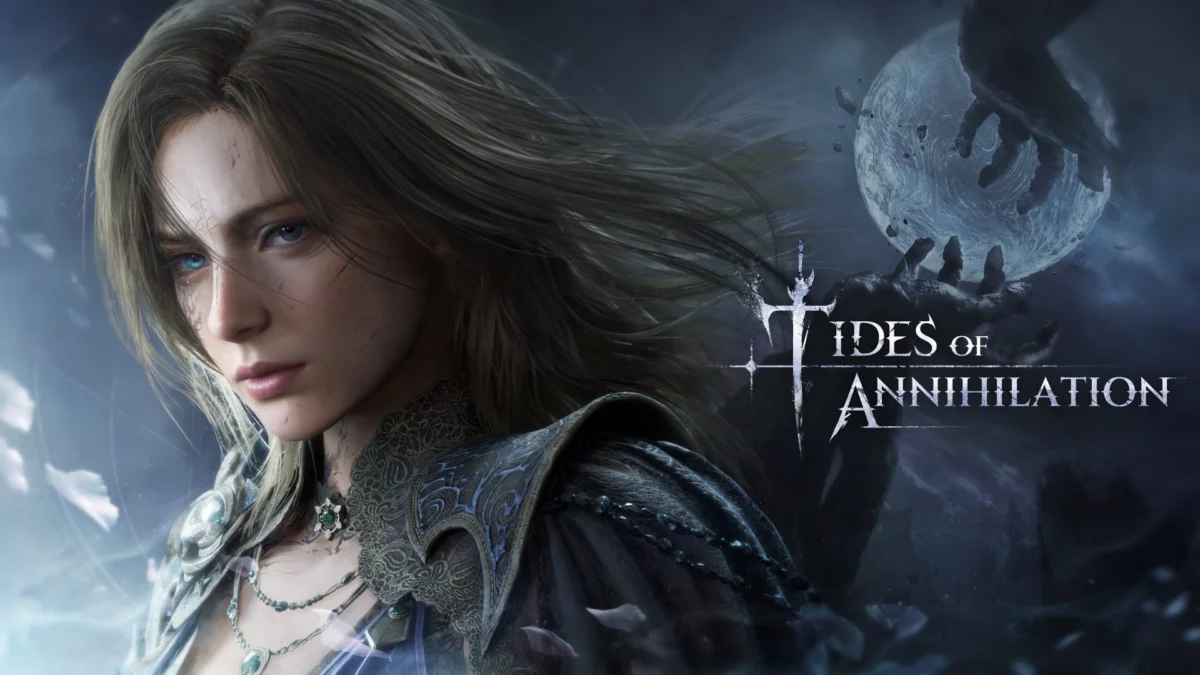
The global gaming landscape shifted significantly during Gamescom 2026 as Eclipse Glow Games, a rising powerhouse in the Chinese development scene, transitioned from secretive previews to a full public demonstration of its flagship title, Tides of Annihilation. After three years of intensive development and a series of carefully managed reveals, the studio provided the first hands-on access to a game that seeks to blend high-octane action-adventure mechanics with a surrealist reimagining of Arthurian mythology. The demonstration, held on the bustling show floor in Cologne, marked a pivotal moment for the project, which first entered the public consciousness during a 2025 State of Play broadcast.
A Three-Year Developmental Journey
The trajectory of Tides of Annihilation reflects the broader "prestige" movement within the Chinese gaming industry, following the trail blazed by titles like Black Myth: Wukong. Development on the project officially commenced in early 2023, led by a team that has now grown to 115 members. While early press glimpses were provided under strict embargo as far back as 2024, the Gamescom 2026 demo represents the most polished version of the title to date.
The studio’s growth has been bolstered by significant capital from Tencent, which holds a majority stake in Eclipse Glow Games. However, Game Director Ary Chen has maintained a firm stance on creative and operational independence. Unlike many high-budget titles from the region that rely on external publishing giants, Tides of Annihilation is slated for self-publication. This strategy suggests a high level of confidence in the game’s global appeal and the studio’s ability to navigate the complexities of Steam and console distribution.
The Narrative Convergence: Modern London and Avalon
Tides of Annihilation is set in an alternate-history version of modern-day London. In this reality, a cataclysmic event has fractured the boundaries between the physical world and the mystical realm of Avalon. This "shattering" has transformed iconic British landmarks into pocket dimensions where historical artifacts and mythological entities coexist.
The Gamescom demo was set within the Great Russell Museum, a fictionalized version of the British Museum. This setting serves as a narrative anchor for the game’s eclectic mythology. Because the British Museum houses artifacts from across the globe, the developers have used it as a lore-friendly justification for the inclusion of non-Arthurian elements. For instance, the demo’s primary antagonist is Anubis, the Egyptian god of the dead, encountered within the museum’s Egyptian wing.
Players control Gwendolyn, a protagonist described by the developers as a figure of "grace and resolve." Her journey involves reclaiming shards of the Holy Grail to stabilize the fracturing world. Accompanying her is Niniane, a companion capable of shapeshifting into a bird. Niniane serves as both a narrative foil and a mechanical tool, assisting in environmental puzzles and uncovering secret routes throughout the twisted city.
Mechanical Analysis: The Spectral Knight System
At the heart of Tides of Annihilation is a combat system that the developers explicitly compare to Capcom’s Devil May Cry and Sony’s God of War. The gameplay is characterized by its speed and the "Spectral Knight" system, which allows Gwendolyn to summon and command legendary figures from the Round Table.
The system is designed around fluidity and customization. Players can configure two distinct sets of knights, with each set consisting of a "main" knight and a "sub-knight." These spirits are not merely aesthetic additions; they represent different combat styles and elemental affinities. During the Anubis boss fight featured in the demo, the necessity of switching between these knights became apparent. The combat requires micro-management of cooldowns and synergistic attacks, rewarding players who can maintain high-speed combos while managing the tactical positioning of their spectral allies.
Despite the inclusion of checkpoints where enemies respawn—a mechanic often associated with the "Soulslike" genre—Ary Chen clarified that the game is "purely an action-adventure game." The focus remains on fast-paced, stylish combat rather than the methodical, high-stakes attrition found in FromSoftware titles. The difficulty, however, is scalable, with the demo featuring a side-quest boss that offered a significantly higher challenge than the main-path encounter.

Technical Prowess and Unreal Engine 5 Integration
Visually, Tides of Annihilation serves as a showcase for current-generation hardware. Built on Unreal Engine 5, the game utilizes advanced lighting techniques to emphasize the contrast between the mundane architecture of London and the ethereal glow of Avalon’s influence.
A significant highlight of the PC version, showcased at the NVIDIA booth during Gamescom, is the implementation of full path tracing. This intensive rendering technique allows for realistic light bounces and reflections, particularly noticeable in the Great Russell Museum’s marble halls and the shimmering effects of Gwendolyn’s spectral summons. The game also supports NVIDIA’s DLSS (Deep Learning Super Sampling) to maintain stable frame rates at 4K resolutions.
While the environments in the demo were relatively linear, this design choice appears to be intentional to maintain high visual fidelity and performance. Ary Chen noted that while the game features semi-open areas for exploration, it avoids the "bustling city" open-world tropes to focus on atmospheric density and combat precision.
Casting and Performance: A Strategic Transition
One of the more surprising announcements surrounding the game was a change in the lead voice cast. Jennifer English, widely known for her role as Shadowheart in Baldur’s Gate 3, was originally cast as Gwendolyn. However, due to health-related priorities, English stepped down from the role.
In a move that highlights the studio’s professional standing, Angela Sant’Albano has taken over the role. Sant’Albano recently gained acclaim for her performance as Grace Ashcroft in Resident Evil Requiem. According to the developers, English was instrumental in the transition, helping the studio find a successor who could maintain the character’s gravitas. This transition appears to have been seamless, with the demo featuring Sant’Albano’s performance during key narrative beats.
Broader Implications for the Global Market
The emergence of Tides of Annihilation underscores a shifting dynamic in the global gaming industry. For decades, Western mythologies like the Arthurian legends were primarily interpreted by Western studios. Eclipse Glow Games is consciously attempting to provide an "Eastern perspective" on these stories. This cross-cultural approach is intended to make the game feel distinct in a crowded market.
Furthermore, the game’s development highlights the maturity of the Chinese "AAA" sector. With a team of 115 and the technical backing of Unreal Engine 5 and NVIDIA, Eclipse Glow Games is positioning itself as a peer to established Western and Japanese developers. The decision to self-publish is particularly noteworthy, as it suggests that Chinese developers are no longer reliant on Western publishers to reach global audiences on platforms like Steam and the PlayStation 5.
Future Outlook and Release Expectations
Despite the polish shown in the Gamescom 2026 demo, Eclipse Glow Games remains cautious regarding a specific release date. When questioned about the game’s length and final boss count, Ary Chen emphasized that the title is still in "active development" and that player feedback from the Gamescom hands-on would be used to refine the experience.
Current estimations based on the developer’s previous statements suggest a target window in late 2026 or early 2027, though this remains unconfirmed. Regarding platforms, the game is confirmed for PC and current-generation consoles. When asked about a potential port for the "Switch 2," Chen stated there are currently no plans, citing the game’s high-end technical requirements, though he did not rule out the possibility for the future.
As the industry moves toward the latter half of the decade, Tides of Annihilation stands as a testament to the blurring lines between regional development styles. By combining British folklore, Egyptian mythology, and cutting-edge rendering technology, Eclipse Glow Games is crafting a title that is as much a technical benchmark as it is a cultural experiment. The success of the game will likely depend on whether the final product can sustain the mechanical depth of its "Spectral Knight" system across a full-length campaign, but the Gamescom 2026 demonstration has undeniably placed the title on the global "must-watch" list.